Table of Contents
- What Custom Garment Design Delivers That Off-the-Rack Cannot
- The Custom Design Process: From Consultation to Final Fitting
- Perfect Fit Through Measurement Precision and Pattern-Making
- Custom Suit Tailoring Calgary: What Local Expertise Adds
- The Cost of Custom Formal Wear in Canada: What You’re Paying For
- How to Choose a Tailor for Formal Wear: Questions That Reveal Real Skill
- Caring for Your Custom Garment So It Lasts
- Conclusion
- Frequently Asked Questions
Last Updated: September 16, 2026
What Custom Garment Design Delivers That Off-the-Rack Cannot
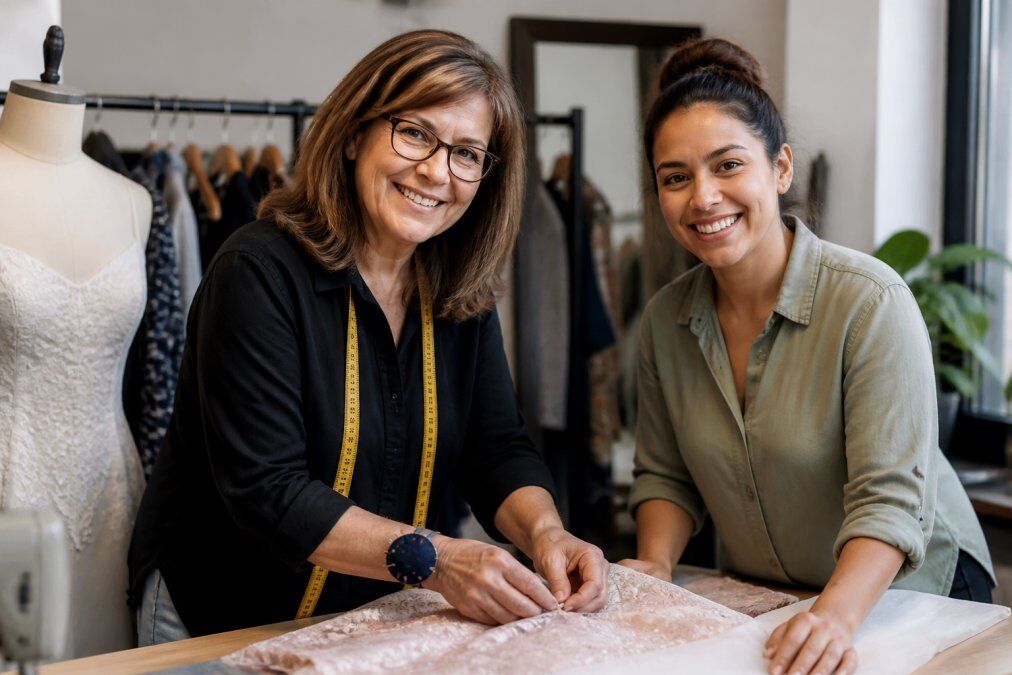
Custom garment design means building clothing from your own measurements, posture, and preferences rather than fitting your body to a pre-set size chart. For formal wear, the difference shows immediately: a jacket that closes without pulling, a gown hem that skims the floor at your exact height, sleeves that end where they should. At Calgary Seamstress, clients bring formal wear to our Southcentre Mall fitting room that technically fits but has never actually suited them.
Off-the-rack sizing is built around an average almost nobody matches. A standard suit jacket assumes shoulders, chest, and sleeve length all scale together, but real bodies do not work that way. One client might need a size 40 chest with a 34 sleeve; the rack only offers those as separate sizes. Buying off the rack means inheriting compromises someone else decided for you.
The benefits go beyond fit. A garment built to your measurements moves with you, sits correctly through the shoulders, and holds its shape through a long event. It also lasts longer, because there is no strain on seams never meant to carry it.
The Custom Design Process: From Consultation to Final Fitting
Every custom piece follows the same arc: consultation, measurement, pattern drafting, construction, and fitting. A suit jacket might need two fittings, while a wedding gown often needs three or more, especially with beading, lace, or a structured bodice.
What to Bring to Your First Consultation
Bring the shoes you plan to wear, since heel height changes hem length, and the undergarments you intend to wear on the day, particularly for gowns. Bring reference photos if you have them, but a good consultation works from conversation too.
A Realistic Step-by-Step Timeline
- Consultation and measurement: 45 to 90 minutes
- Pattern drafting and fabric sourcing: 1 to 3 weeks
- First fitting: 2 to 4 weeks after the pattern is cut
- Alterations and second fitting: 1 to 2 weeks
- Final press and pickup: 2 to 5 days
For a full custom build, plan on six to twelve weeks. For alterations on an existing formal garment, two to four weeks is typical, with rush options when timelines tighten.
Book your first consultation at least three months before a wedding or gala. The construction itself is rarely the bottleneck. Fabric sourcing and fitting availability are what push timelines out, especially in spring and early fall when formal season peaks.
Perfect Fit Through Measurement Precision and Pattern-Making
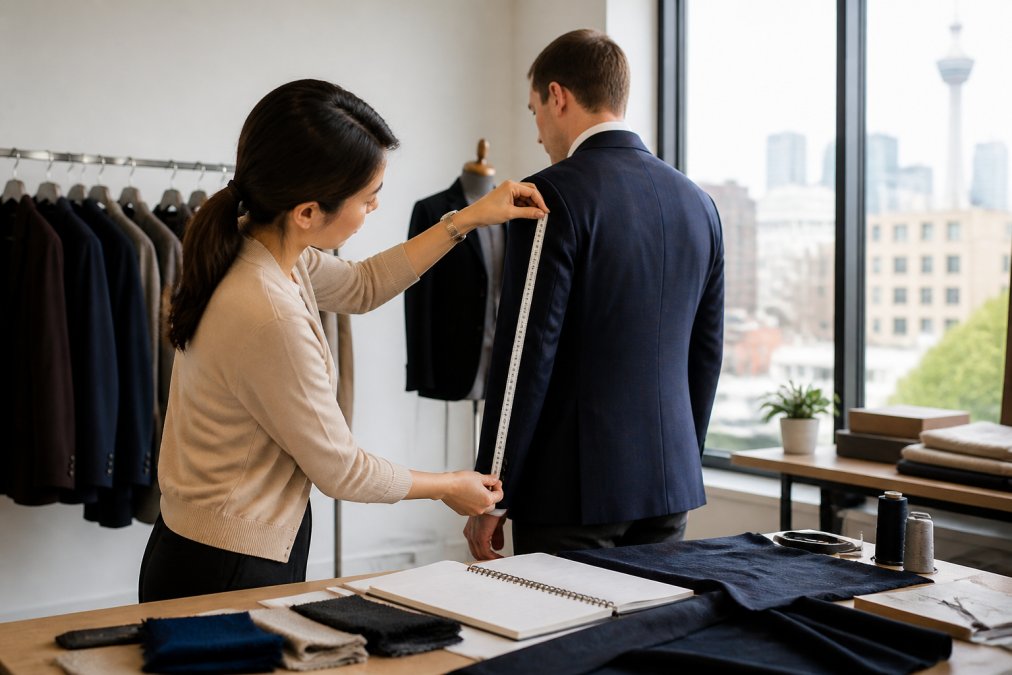
Pattern-making is where custom work is won or lost. A tailor takes fifteen to thirty measurements for a formal garment, and the ones that matter most are not the obvious ones. Shoulder slope, back curvature, and neck-to-shoulder-point distance determine whether a jacket collar sits flat or floats, none appear on a standard size chart.
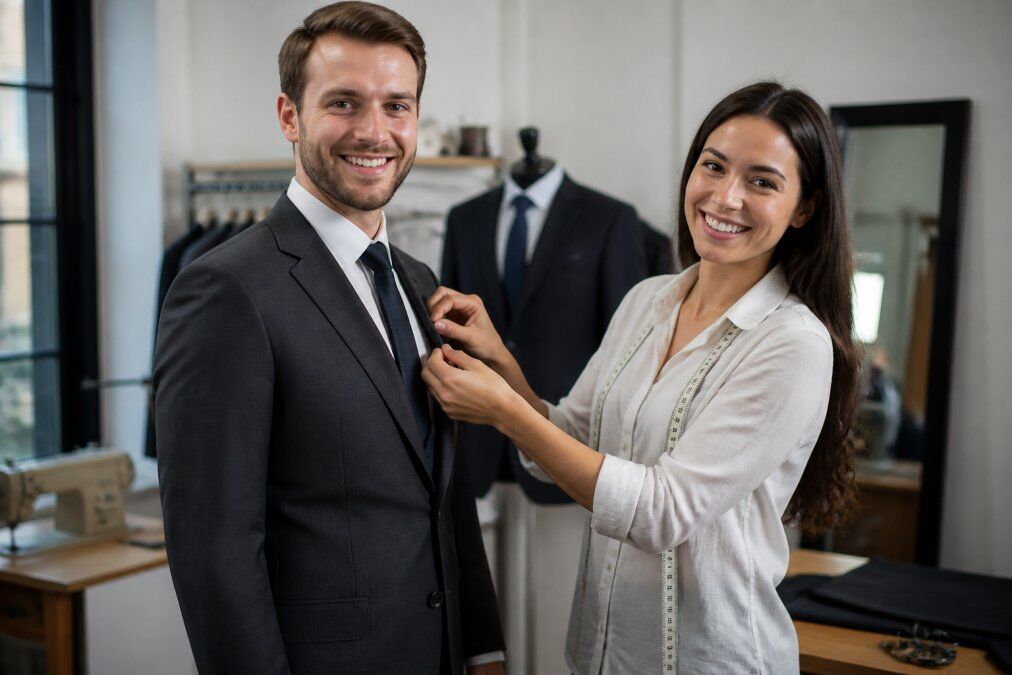
Precision matters most at the shoulders and waist. A jacket half an inch off at the shoulder will pull across the chest no matter how well the rest fits, which is why alterations on a poorly sized off-the-rack jacket often fail: the tailor is fighting a garment never built for your frame.
For gowns, precision shifts to the bodice and hem. A hem even a centimetre off will catch under your feet as you walk, and bodice boning must sit against your ribcage, not float above it, or the silhouette collapses by the end of the night.
Custom Suit Tailoring Calgary: What Local Expertise Adds
Custom suit tailoring Calgary clients rely on comes down to access: a local tailor can fit, adjust, and hand you the finished garment in person.
Avoid booking a tailor who cannot show you finished work in person. Photos on a phone are easy to stage. A finished jacket on a hanger in the shop is not.
If you are searching for a tailor near me in Calgary, ask to see completed garments and speak with a past client. A tailor with nothing to show is a tailor you cannot verify.
The Cost of Custom Formal Wear in Canada: What You’re Paying For
If you are budgeting for a custom suit, gown, or formal piece in Canada, you need to understand what you are paying for and how a custom quote compares against the true cost of buying off the rack and then paying for alterations.
How the Money Actually Breaks Down
A custom quote has four buckets:
- Fabric and trims: the cloth, lining, buttons, interfacing, beading, and lace. This is often the most visible line item but rarely the largest.
- Pattern drafting and cutting: a unique pattern cut for your measurements takes hours before a single seam is sewn. This is the step off-the-rack skips entirely.
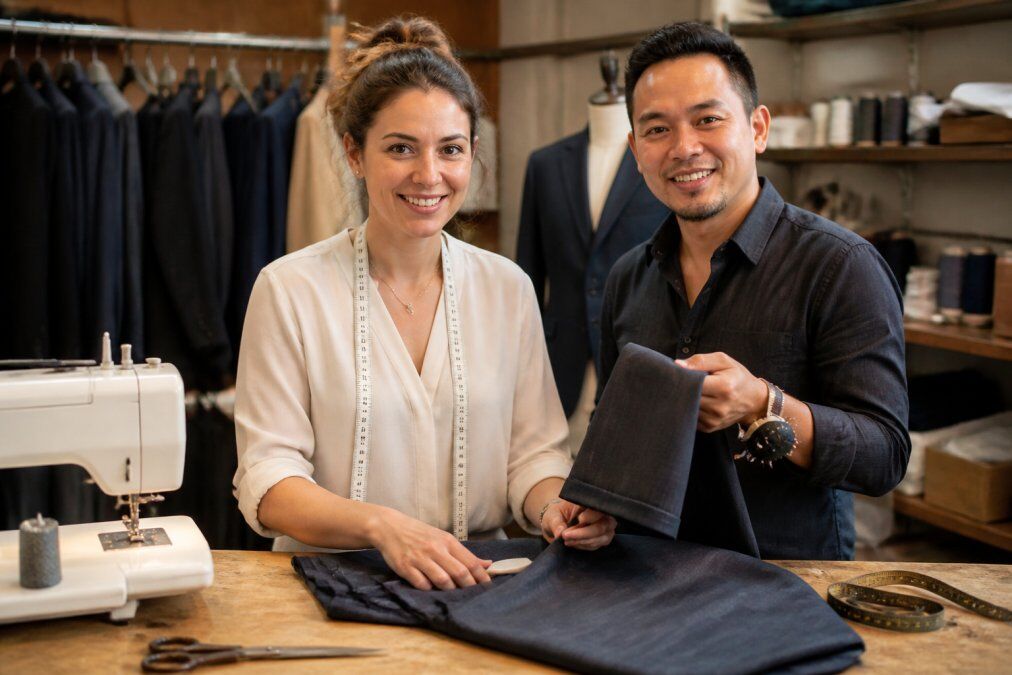
- Construction and hand-finishing: the sewing, pressing, and detail work. Hand-finished buttonholes, canvassed jacket fronts, and structured bodices all add hours.
- Fittings and alterations: each fitting is a scheduled appointment plus rework time. More fittings generally mean a closer final fit.
Made-to-Measure vs. Bespoke vs. Off-the-Rack
- Off-the-rack: lowest upfront cost, but you inherit a size chart built around an average. Alterations can improve the fit but cannot change the underlying pattern.
- Made-to-measure: starts from an existing block pattern that is adjusted to your measurements. Fewer fittings than bespoke, lower cost, and a noticeably better fit than off-the-rack.
- Full bespoke: a unique pattern cut for you from scratch, multiple fittings, and hand-stitched construction. The highest cost and the closest fit.
How to Budget Without Getting Surprised
Budget for the fittings, not just the garment. The number of fittings included in a quote tells you more about the final fit than the headline price does.
Compare quotes on the same terms: garment type, fitting count, fabric tier, and turnaround. A lower quote with one fitting is not cheaper than a higher quote with three if the first result needs rework.
Where to Save and Where Not To
To control cost, the fabric tier is the most flexible lever: a mid-tier cloth in a classic color often looks more expensive than a high-tier cloth in a trend color and is easier to alter later.
How to Choose a Tailor for Formal Wear: Questions That Reveal Real Skill
Questions worth asking before you commit:
- How many fittings are included in the quote?
- Can I see a finished garment you have made or altered?
- What is your turnaround time for a rush job?
- Do you handle both menswear and womenswear, or do you specialize?
- What happens if the garment needs adjustment after I take it home?
Ask specifically about the type of garment you need. A tailor who is excellent with suit jackets may not be the right fit for a beaded wedding gown. Match the specialist to the garment, not just to the shop.
Caring for Your Custom Garment So It Lasts
A custom garment is an investment in longevity, and how you store, clean, and repair it separates a piece that lasts a decade from one that looks tired after two wears.
Cleaning: Less Is More, But Timing Matters
Suits should be brushed after each wear and dry cleaned sparingly, since frequent cleaning breaks down fabric fibres.
Storage: The Part Most People Get Wrong
Store formal wear in a breathable garment bag, not plastic.
Seasonal and Long-Term Storage
If a formal garment will sit for months, clean it before storing, not after, invisible stains and perspiration can set and discolor fabric over time.
Repairs: Fix Small Problems Early
If a seam or hem comes loose, fix it early: a small repair costs far less than a rebuild, and catching the problem before it spreads protects the rest of the garment.
Keep a small repair kit with matching thread and spare buttons from your tailor. A five-minute fix at home can prevent a seam from opening further during an event.
Why This Matters More for Custom Pieces
Off-the-rack garments are built to a price point, and many are designed to be replaced rather than repaired.
Conclusion
Custom garment design solves a problem off-the-rack clothing cannot: it builds the garment around you instead of asking you to fit someone else’s average.
Frequently Asked Questions
What are the primary benefits of custom garment design compared to off-the-rack formal wear?
Custom garment design gives you a perfect fit, fabric selection, and personal style that off-the-rack cannot match. Off-the-rack is built for an average body, so formal wear often needs alterations to shoulders, waist, or hem. Custom work starts from measurement precision and pattern-making, so the finished garment moves with you. It also lasts longer because garment construction is done properly, and you can choose details like lining, buttons, and silhouette to reflect your story.
How long does the custom garment design process take in Calgary?
For a custom suit or dress in Calgary, plan on 4 to 8 weeks from first consultation to final fitting, depending on fabric availability and the number of fittings. Wedding gowns and complex evening dresses often need 6 to 10 weeks to allow for hand-stitched details and multiple fittings. If your event is close, ask about rush service; Calgary Seamstress offers one-hour and 24-hour rush options for alterations and urgent adjustments.
Is custom formal wear more cost-effective in the long run?
Yes, when you consider cost per wear. A custom suit or dress costs more upfront than off-the-rack, but it fits correctly from day one and can be altered as your body changes. Off-the-rack pieces often need $100 to $300 in alterations and may still not fit well, so they get worn less. Custom garments last longer with proper care, and their timeless silhouette means you can wear them to multiple events without looking dated.
What types of formal events are best suited for bespoke clothing?
Bespoke clothing shines at weddings, galas, proms, and formal business events where fit and fabric are noticed. A wedding gown or evening dress benefits from custom design because the silhouette must flatter your exact measurements. For professionals, a bespoke suit or tailored jacket handles long days and photographs well. Even if you need small alterations like hemming or zipper repair, choosing a tailor who understands formal attire ensures the garment looks intentional.
This article was written by the team at Calgary Seamstress. For custom garment design and formal wear tailoring in Calgary, AB, book a consultation online.