Table of Contents
- Can Tailors Fix Puckered Suit Seams?
- Causes of Seam Puckering in Suits
- How to Prevent Suit Seam Puckering
- Suit Seam Repair Cost in Canada
Last Updated: August 5, 2026
Can Tailors Fix Puckered Suit Seams?
Yes, tailors can fix puckered suit seams in many cases, but success depends on what caused the puckering and how much damage has occurred. At Calgary Seamstress, we understand that a puckered seam can ruin an otherwise perfect suit, and the good news is that most issues are repairable if caught early. The key is knowing when a fix is possible and when the damage has gone too far.
Seam puckering happens when fabric gathers or wrinkles along a stitched line, creating an uneven, bunched appearance. It’s one of the most common complaints we hear from clients who’ve had alterations done elsewhere, and it’s also one of the most preventable problems when a tailor knows what they’re doing.
Causes of Seam Puckering in Suits
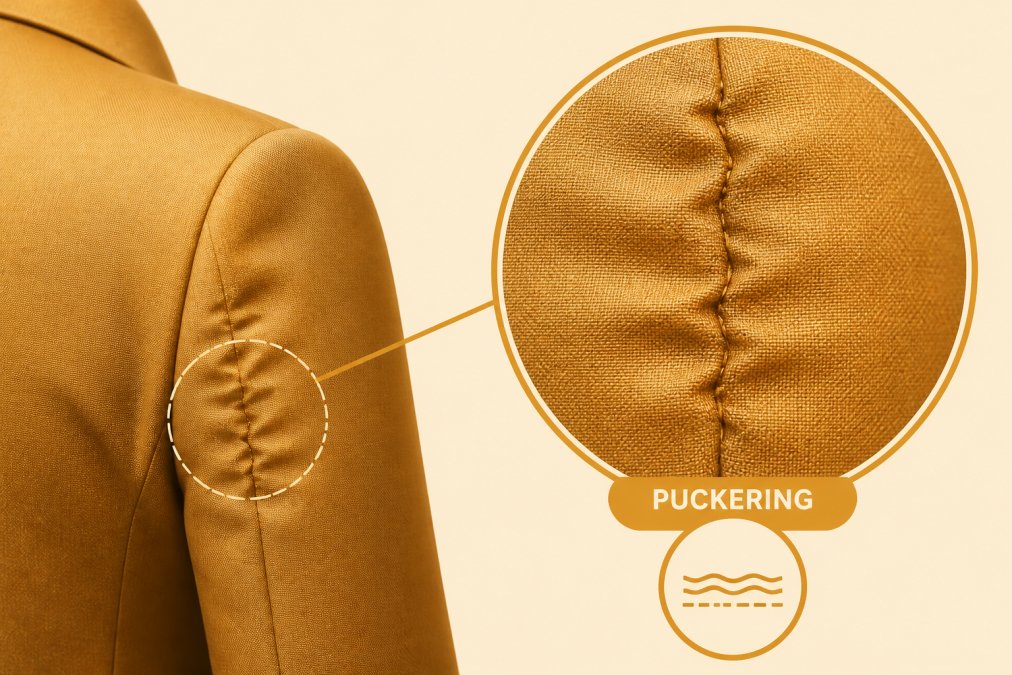
Puckering occurs when stitching pulls fabric tighter than it should, or when the fabric itself shrinks unevenly during pressing. Understanding the root cause matters because it determines whether your tailor can reverse the damage.
Incorrect thread tension is the most common culprit. When a sewing machine’s tension is too tight, it pulls the fabric as the needle passes through, creating that characteristic bunched look. This is especially visible on natural fibers like wool and cotton, which are common in quality suits. A tailor with experience knows how to adjust tension based on fabric weight and fiber content.
Stitch length problems also cause puckering. If stitches are too short or too tight for the fabric type, the thread can gather the material. Synthetic fibers and delicate fabrics are particularly prone to this issue. The solution often involves re-stitching with proper stitch length, typically 2.5 to 3 millimeters for suit seams.
Fabric grain and bias can work against you too. When seams run against the fabric’s natural grain, they’re more likely to pucker, especially on bias-cut pieces. This is why experienced tailors pay attention to how fabric naturally wants to sit.
Pressing mistakes create a different kind of puckering, one that’s actually easier to fix. If a seam was pressed without a press cloth or with too much heat, the fabric can shrink and bunch. This type often responds well to careful re-pressing with proper technique.
Improper needle size for the fabric weight causes tension problems that manifest as puckering. A needle too large for delicate fabric creates larger holes and more drag. Too small, and it struggles through heavier materials.
How to Prevent Suit Seam Puckering
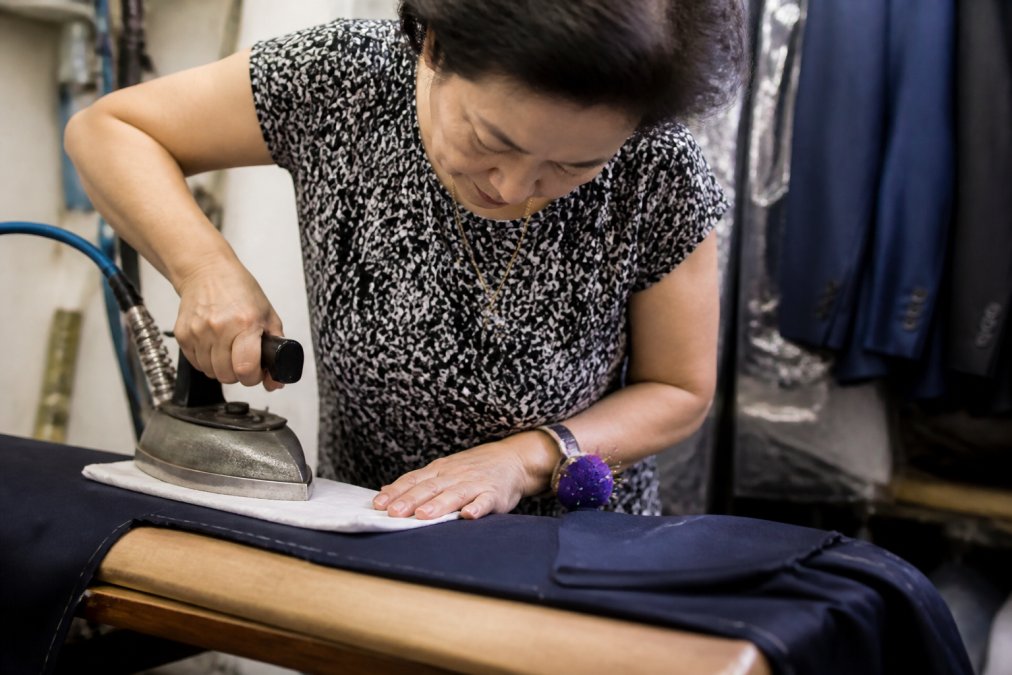
Prevention is always better than repair. If you’re having alterations done, understanding what prevents puckering helps you communicate with your tailor and catch problems early.
Proper pressing technique is non-negotiable. A press cloth must always be used between the iron and fabric, never press directly on suit material. The iron should be hot enough to set the crease without scorching, and the pressure should be firm but not aggressive. Steam helps relax fibers, which reduces the chance of permanent bunching.
Thread and needle matching matters more than most people realize. The thread weight should match the fabric weight, and the needle size should be appropriate for both. A tailor who takes time to match these elements before starting work is protecting your suit.
Seam allowance management prevents many problems. A proper seam allowance, typically around 1.5 to 2 centimeters on suit seams, gives the fabric room to sit naturally. When tailors try to take in seams too aggressively or let them out beyond their original allowance, puckering often follows because the fabric doesn’t have enough give.
Testing on scrap fabric before altering your suit is a hallmark of careful work. A good tailor will test tension and stitch settings on a similar fabric first, ensuring settings are correct before touching your garment. This simple step catches problems before they happen.
Avoiding excessive heat during construction prevents shrinkage-related puckering. Some fabrics, especially blends with synthetic content, are sensitive to heat. Pressing should be done at the end, not during construction, to minimize this risk.
Suit Seam Repair Cost in Canada
The cost to repair puckered seams varies based on the extent of damage and the complexity of the fix. When puckering is caught early, before the fabric has permanently set into a wrinkled shape, repair is often straightforward and relatively affordable. Your tailor will assess whether the seam needs to be completely re-stitched or if careful pressing and minor adjustments will resolve it.
For minor puckering caused by pressing mistakes, a re-pressing with proper technique may be all that’s needed. For tension-related puckering that requires re-stitching, the cost depends on how many seams are affected and how accessible they are. A single seam on a jacket is simpler than multiple seams on a jacket and trousers.
The most important thing to know is that pricing depends on the specific damage, the fabric type, and the scope of work required. Rather than guessing at costs, a professional tailor should examine your suit and provide a quote. At Calgary Seamstress, we offer consultations so you understand exactly what needs to be done and what it will cost before committing to repair work.
Some puckering cannot be fixed, this is the hard truth. If the fabric has permanently shrunk or if the puckering has set into the fibers over time, the damage may be irreversible. A tailor should be honest about this rather than charging you for work that won’t solve the problem. The "point of no return" usually comes after several months of wear, when the fabric has fully set into its wrinkled state.
Puckered seams don’t have to be permanent. The key is catching the problem early and working with a tailor who understands fabric behavior and proper technique. The Textile Exchange publishes standards for natural fiber care that emphasize proper pressing and handling. When you choose Calgary Seamstress for suit repairs, you’re getting someone who knows the difference between a quick fix and a lasting solution. Make an appointment online to have your suit assessed, and let’s get those seams looking flawless again.
Frequently Asked Questions
Why is my suit jacket puckering?
Suit seams pucker for three main reasons: incorrect thread tension during stitching, improper needle size, or heat damage during pressing.
This article was written using GrandRanker