Last Updated: October 31, 2026
Quick Summary
The best fall parka lining options balance warmth, breathability, and fit: fleece for dry cold and short commutes, quilted for everyday cold wear, and mesh or taffeta for layering and active use. Prioritize breathability over thickness, because a thick non-breathable parka lining traps sweat and leaves you colder.
- Fleece lining is the lightest way to add real warmth to a fall jacket.
- Quilted linings hold insulation in a grid so warmth stays even across the back and chest.
- Mesh and taffeta linings are the classic breathable choices for active use.
- Repair the lining when the shell, zipper, and seams are still sound.
- Bring your heaviest fall sweater to a fitting to check shoulder room.
Table of Contents
- What the Best Fall Parka Lining Options Actually Do
- Fleece Lined Parka: Warmth Without the Bulk
- Quilted Parka Lining: The Layer That Holds Heat
- Why a Breathable Jacket Lining Matters More Than Thickness
- Parka Lining Replacement: When to Repair Instead of Replace
- How to Match a Lining to Your Fall Layers and Fit
- Book a Fitting to Get Your Parka Lining Right
- Frequently Asked Questions
What the Best Fall Parka Lining Options Actually Do
A parka lining is the inner fabric layer that sits between your body and the shell, and it decides whether the jacket traps warmth, breathes, or turns clammy by mid-afternoon. Two parkas with identical shells can feel like completely different garments once the lining changes. The best fall parka lining options balance three jobs at once, holding heat, moving moisture, and keeping the fit clean through the shoulders and arms.
Most shoppers judge a parka by its outer fabric and ignore the inside. That’s backwards. In a city where a morning can start at minus five and finish in wet snow, the lining is what you actually feel against your skin for hours.
Below, we break down the real options, where each one fails, and how to tell whether your current parka needs a new lining or a full replacement.
Fleece Lined Parka: Warmth Without the Bulk
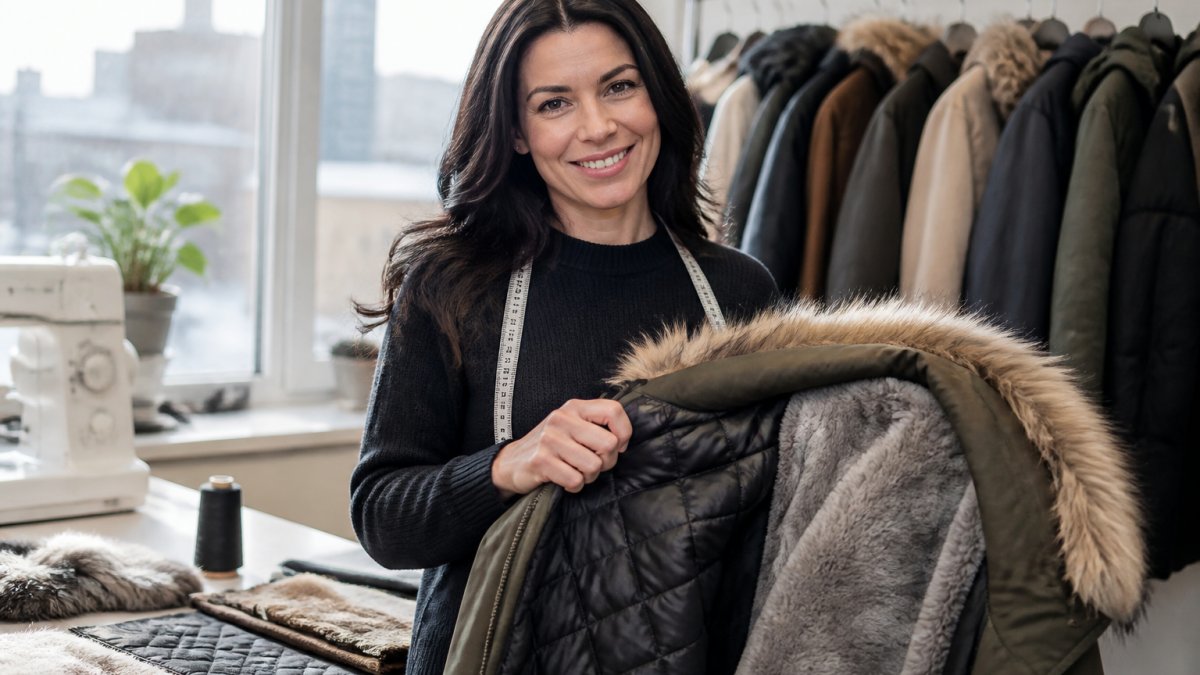
A fleece lined parka uses a soft, brushed synthetic pile bonded to the inside of the shell, so warmth sits directly against your body without a heavy fill. It is the lightest way to add real heat to a fall jacket.
Fleece works best in dry cold and short commutes. It traps air in its pile, which is why a thin fleece layer feels warmer than its weight suggests.
Where Fleece Works and Where It Fails
Fleece wins on weight and comfort. It loses on moisture. Pile fibers hold sweat and shed water slowly, so a fleece lining turns damp and heavy if you walk briskly or get caught in wet snow. It also pills along the cuffs and collar with repeated wear.
- Best for: dry cold, car-to-door commutes, casual wear
- Skip if: you run hot, walk long distances, or face wet slush daily
Quilted Parka Lining: The Layer That Holds Heat
A quilted parka lining stitches a thin layer of insulation between two fabric panels in a grid pattern, which keeps the fill from shifting and creates even warmth across the back and chest. It is the most common lining in serious fall and winter parkas for good reason.
The quilting pattern matters more than most buyers realize. A tighter grid holds fill in place; a loose pattern can let insulation bunch at the bottom hem. Quilted linings also slide on and off easily over sweaters, which keeps your outer layers from bunching at the elbows.
Where quilted linings struggle is bulk. Add a thick sweater underneath and the shoulders start to feel tight, which is a fit problem, not a warmth problem.
| Lining Type | Warmth | Breathability | Bulk | Best For |
|---|---|---|---|---|
| Fleece | Medium | Low | Low | Dry cold, short commutes |
| Quilted | High | Medium | Medium | Everyday fall and winter wear |
| Mesh or taffeta | Low | High | Very low | Layering, active use |
| Sherpa | High | Low | High | Deep cold, standing outdoors |
Best for quilted: daily wear in cold, dry conditions. Skip if: you need to layer heavily underneath.
Why a Breathable Jacket Lining Matters More Than Thickness
A breathable jacket lining lets moisture vapor escape instead of trapping it, and that single property often matters more than how thick the lining feels in the store. Thickness measures warmth on a hanger. Breathability measures comfort after twenty minutes of walking.
Here’s what most guides get wrong: they rank linings purely by warmth. In practice, a thick non-breathable lining makes you sweat, the sweat cools, and you end up colder than you would in a thinner breathable layer. Mesh and smooth taffeta linings are the classic breathable choices, and they also let a quilted mid-layer slide in without friction.
If you overheat easily or walk to transit daily, prioritize breathability over pile depth. Your body regulates temperature better when moisture can leave.
Parka Lining Replacement: When to Repair Instead of Replace
Replacing a parka lining can make sense when the shell, zipper, and seams are still sound but the lining is torn, pilled, or worn through at the underarms.
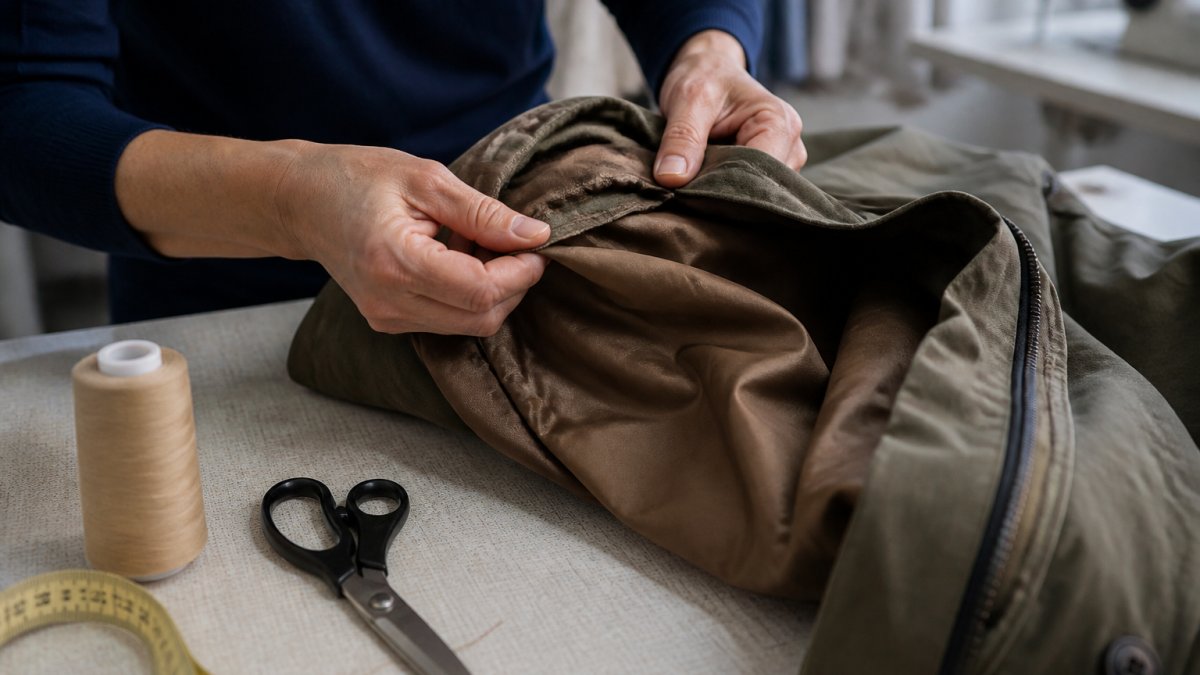
Watch out: the common mistake is patching a lining tear with iron-on tape. It stiffens the surrounding fabric, and the patch peels within a season, pulling more of the original lining with it.
Signs your parka is a repair candidate:
- Lining torn at the underarm or shoulder seam
- Pilling that has worn through to the shell
- A lining that has separated from the hem
- A zipper that still runs smoothly
If the shell is delaminating or the insulation has collapsed into clumps, replacement is the better spend.
How to Match a Lining to Your Fall Layers and Fit
Matching a lining to your wardrobe comes down to two questions: how many layers you wear underneath, and how the jacket should fit over them. Get those right and the lining choice follows.
Start with your heaviest fall sweater. If you plan to wear a thick knit, choose a smooth taffeta or quilted lining that lets the sweater slide in without grabbing. If you mostly wear tees and light shirts, fleece or sherpa gives you more warmth per millimeter.
Then check the shoulders. A lining adds measurable thickness, so a parka that fits perfectly over a t-shirt may pull across the back over a sweater. Bring your actual layers to a fitting rather than guessing.
Book a Fitting to Get Your Parka Lining Right
Getting the lining right is a fitting problem as much as a fabric problem, and that’s where hands-on measurement beats online guesswork. Our team at Calgary Seamstress can help you assess whether your parka needs a new lining or a better fit through the shoulders.
Calgary Seamstress offers custom garment design and bespoke tailoring. Come in with your layers and let us help you match the lining to how you actually wear the jacket.
Frequently Asked Questions
What is the warmest lining for a fall parka?
Quilted parka lining usually holds the most heat because the stitching traps air in small pockets between the outer shell and the inner fabric. Fleece comes close and feels softer against the skin, but it can get clammy if you are moving quickly. For Calgary falls, where mornings sit near freezing and afternoons warm up, a quilted lining paired with a breathable inner layer gives you warmth you can vent rather than a single heavy wall of insulation.
Is fleece or quilted lining better for a fall jacket?
It depends on how you wear the jacket. A fleece lined parka suits people who walk to transit, stand at bus stops or want softness against a light shirt. Quilted parka lining suits anyone layering a sweater underneath or spending long stretches outdoors. If you run warm, fleece can overheat you indoors; quilted lining is easier to open up and cool down. Try both on with the layers you actually wear before deciding.
Are synthetic parka linings breathable?
Some are, and the difference is in the weave, not the fiber name. A breathable jacket lining uses a looser knit or a perforated mesh that lets moisture vapor escape, while a tight, coated synthetic traps it against your back. Check by holding the lining up to light and looking for airflow through the fabric. If you sweat on your commute, ask for a lining with visible mesh panels or a wicking knit rather than a solid polyester sheet.
Can a parka lining be replaced or altered?
Yes, parka lining replacement is a common alteration when the shell is still in good shape but the inside has torn, pilled or lost its loft. Calgary Seamstress can assess whether a parka lining replacement is the right fix for your coat. Bring the parka in for an assessment before the cold settles in.
The right lining turns a jacket you tolerate into one you reach for every morning. If your parka feels clammy, tight, or worn through at the underarms, bring it to Calgary Seamstress at our Calgary Southcentre Mall location. We offer one-hour and 24-hour rush service, expert handling of complex repairs like zippers and linings, and custom garment design built around your measurements. Get started with Calgary Seamstress and wear a parka that fits and feels right from the first cold snap.