Table of Contents
- What You’ll Need Before Starting Cosplay Costume Creation
- Step 1: Define Your Character and Build a Design Brief
- Step 2: Choose Fabrics and Materials for Durability
- Step 3: Pattern Drafting and Toile Fitting
- The Cosplay Commission Process: What Changes When You Hire a Seamstress
- Cost of Custom Cosplay Commissions: What Drives the Price
- Cosplay Project Timeline: How Long Each Stage Takes
- Step 4: Construction, Fittings, and Final Finishing
- Frequently Asked Questions
Last Updated: September 21, 2026
What You’ll Need Before Starting Cosplay Costume Creation
Custom cosplay costume creation starts long before you touch a sewing machine. It starts with a folder of reference images, a tape measure, and a clear idea of who you’re becoming.
The early prep work is what separates a costume that survives a full convention day from one that falls apart by noon.
Here’s what to gather before you cut a single thread:
- Reference images: Front, back, and side views of your character. Save 10-15 shots minimum.
- Character details: Colors, textures, logos, and any props or armor pieces.
- Your measurements: Bust, waist, hips, inseam, shoulder width, and arm length.
- A budget range: Fabric, notions, and tools add up fast.
- A deadline: Work backward from your event date.
Measure yourself in the undergarments you’ll wear with the costume. A corset or padded top changes your numbers by several centimeters, and that throws off every pattern you draft.
Get these five things sorted and the rest of the process moves much faster.
Step 1: Define Your Character and Build a Design Brief
A design brief is a one-page document that lists your character, your key visual details, and your must-have features. It keeps you from buying the wrong fabric three weeks in.
Write down the following:
- Character name and source material
- The three details that make the costume recognizable
- Which parts you’ll build versus buy
- Your skill level and available tools
Most beginners skip this step. Then they buy fabric that doesn’t match, or they start with the hardest piece first.
Start with the piece you’re most confident about. A simple skirt or cape builds momentum before you tackle a complex bodice or wig styling.
Step 2: Choose Fabrics and Materials for Durability
Fabric choice decides whether your costume looks crisp or collapses after one wear. Cosplay gets pulled, sat on, and photographed under hot lights, so durability matters as much as color.
A common mistake is picking fabric by look alone. That shiny satin might photograph beautifully, but it frays, wrinkles, and shows every seam.
Match the fabric to the job:
- Bodices and structured tops: Twill, canvas, or a mid-weight cotton blend.
- Flowing skirts and capes: Chiffon, crepe, or lightweight jersey.
- Armor and props: Thermoplastic sheets, craft foam, or worbla over a fabric base.
- Trim and accents: Bias tape, piping, or appliqué for clean edges.
Buy a little extra of everything. If you run short mid-project, matching a dye lot later is nearly impossible.
Step 3: Pattern Drafting and Toile Fitting
Pattern drafting is the step where your measurements become a real, wearable shape. A toile, sometimes called a muslin, is a test version of your garment sewn in cheap fabric before you cut the good stuff.
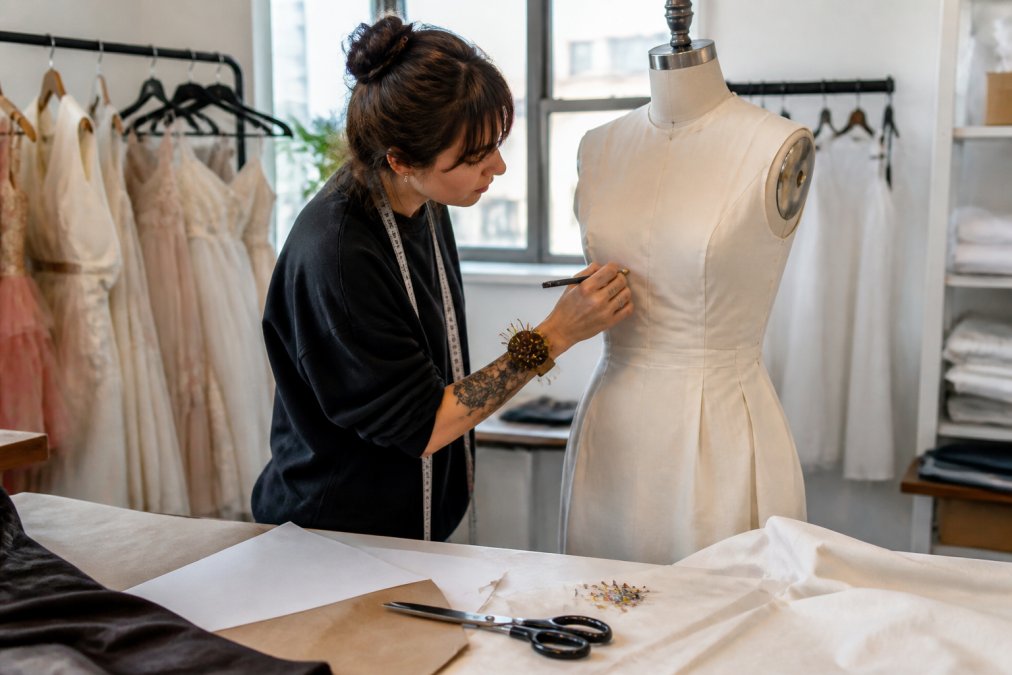
Drafting from scratch gives you the best fit. You can also adapt a commercial pattern and adjust it to your body.
Here’s the order that works:
- Take fresh measurements and compare them to your pattern size chart.
- Trace the pattern onto paper, adding seam allowance.
- Cut and sew the toile in inexpensive cotton.
- Try it on, pin the adjustments, and mark the changes.
- Transfer those changes back to your paper pattern.
Skipping the toile is the fastest way to ruin expensive fabric. If the test version pulls or gaps, the final garment will too, and you’ll have wasted both time and money.
A toile takes an extra afternoon. It saves you from re-cutting a bodice you already sewed once.
The Cosplay Commission Process: What Changes When You Hire a Seamstress
The cosplay commission process is straightforward: you send references and measurements, the maker quotes the job, and you approve the design before construction starts. From there, the seamstress handles drafting, fitting, and finishing. Precision during this initial phase relies heavily on measuring yourself accurately to ensure that every seam and contour aligns perfectly with your body.
Hiring out changes the work but not the goal. You still need clear references and accurate measurements. The difference is that a professional handles the technical steps and the fittings.
A typical commission flows like this:
- Consultation: You share your character, references, and deadline.
- Quote and deposit: The maker prices the build and books your slot.
- Measurements: You provide numbers or attend an in-person fitting.
- Construction: The maker drafts, sews, and sends progress photos.
- Final fitting: Adjustments happen before pickup or shipping.
If you’re local to Calgary, an in-person fitting beats mailed measurements every time. It’s the same reason we recommend coming in for wedding dress alterations rather than guessing from a size chart.
The commission process works best when you bring references and a realistic deadline. The clearer your brief, the fewer surprises you’ll hit at the final fitting.
Cost of Custom Cosplay Commissions: What Drives the Price
The cost of custom cosplay commissions depends on four things: complexity, fabric, labor hours, and your deadline. A simple skirt costs far less than a fully armored build with hand-beaded trim.
If you’re searching for a custom cosplay maker near me, ask for an itemized quote. That way you can see exactly where the money goes.
The main price drivers:
- Complexity: Layers, boning, and structured shapes take more hours.
- Materials: Specialty fabric, trim, and armor supplies raise the total.
- Fit work: Multiple fittings and custom drafting add time.
- Rush timing: A tight deadline often means a rush fee.
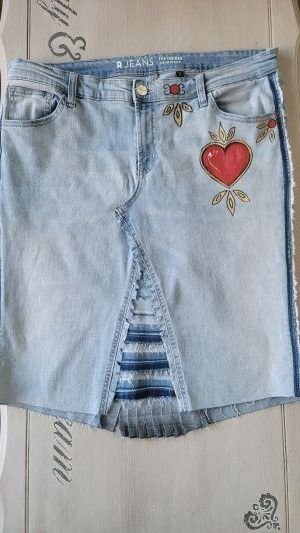
For our own custom garment work, prices are set per piece. A hand painted custom made jeans skirt runs $60, a custom golf dress is $150, and a hand painted dress from recycled jeans with cotton silk is $175. Cosplay builds are quoted by the work involved.
Cosplay Project Timeline: How Long Each Stage Takes
The cosplay project timeline usually runs four to twelve weeks, depending on complexity and how fast you make decisions. Simple pieces take days. Full builds with armor and multiple fittings take months.
Here’s a rough breakdown:
| Stage | Typical Time | What Happens |
|---|---|---|
| Design brief | 1-3 days | Gather references, set budget |
| Fabric sourcing | 3-7 days | Order samples, buy materials |
| Pattern and toile | 1-2 weeks | Draft, sew test, adjust |
| Construction | 2-6 weeks | Sew the final garment |
| Fittings and finishing | 1-2 weeks | Adjust, add trim, press |
Rush timelines are possible. We offer one hour or 24-hour rush service for alterations.
Book your maker early. Convention season fills up fast, and a four-week build becomes a two-week scramble if you wait until the last minute.
Step 4: Construction, Fittings, and Final Finishing
Construction is where the costume becomes real, and fittings are where it becomes wearable. Sew in stages, test the fit often, and leave the delicate finishing work for last.
Work in this order:
- Sew the main garment pieces and baste them together.
- Try it on and check the fit at the shoulders, waist, and hips.
- Adjust seams and re-pin before you commit to a final stitch.
- Add trim, closures, and any armor or prop attachments.
- Press every seam and finish raw edges to stop fraying.
Final finishing is what makes a costume look professional. Press your seams, secure your closures, and check that nothing scratches or pulls when you move.
If a piece needs expert help, that’s where we come in. Our team handles wedding dress alterations and suit tailoring, and the same precision applies to cosplay. Complex work like zippers, cuffs, and original jean hems is exactly the kind of detail we handle every day.
For guidance on fabric care and garment construction, the Government of Canada’s consumer textile labelling guide explains what those fabric labels actually mean. And if you want to understand how fit affects movement and comfort, Threads Magazine’s guide to garment fitting is a solid reference for home sewers.
Frequently Asked Questions
How do I start the process of commissioning a custom cosplay in Calgary?
Start by collecting reference images of the character from multiple angles, then book a consultation with a local seamstress. Bring your ideas, budget range, and event date. A good studio will ask about fabric preferences, comfort needs, and how much movement the costume requires. From there you’ll agree on a design brief, timeline, and deposit before pattern drafting begins.
How long does it take to create a custom cosplay costume?
A cosplay project timeline depends on complexity. A simple garment may take two to three weeks, while armor, layered gowns, or hand-painted pieces can run six to ten weeks or more. Rush options exist, but they usually add cost. Always confirm deadlines in writing and schedule your first fitting at least three weeks before your event to leave room for adjustments.
What should I include in a cosplay commission request?
Include front, side, and back reference images, your measurements (bust, waist, hips, height, inseam), the event date, your budget, and any mobility or sensory needs. Mention whether you want exact character accuracy or a wearable version you can move in. The more detail you give upfront, the fewer surprises appear during the cosplay commission process.
What materials are best for durable custom cosplay costumes?
Choose fabrics that match both the look and the wear. Cotton blends and twill hold shape well for structured pieces, while stretch knits allow movement for action poses. For armor or props, EVA foam and thermoplastic sheets are common. Ask your seamstress about lining, interfacing, and seam finishes, since these hidden layers decide how long a costume survives a convention floor.
Building a cosplay costume that fits and lasts takes planning, the right materials, and honest fittings along the way. Calgary Seamstress can help with the parts that need a professional hand, from custom garment design to precise alterations on a finished piece. Our team offers bespoke creation, expert handling of complex alterations, and one hour or 24-hour rush service when your event is close. Make an appointment online and get a costume that fits the way it should.