
Table of Contents
- Diagnose the Damage: What Is Actually Broken?
- Best Tools for Zipper Repair: What to Keep in Your Kit
- How to Fix a Broken Zipper on a Jacket: Stuck, Separated, and Jammed
- Replacing a Zipper Slider or Pull That Came Off
- Preventing Zipper Damage on Winter Jackets
- Zipper Replacement Cost Calgary: DIY vs Professional Repair
- When to Hand It to a Professional
- Frequently Asked Questions
Last Updated: September 20, 2026
Diagnose the Damage: What Is Actually Broken?
A broken zipper on a jacket is usually one of five specific failures, each needing a different fix. A broken zipper on a jacket is usually one of five specific failures, each needing a different fix. Here is how to tell them apart:
- Stuck zipper: The slider will not move up or down the track.
- Separating zipper: The teeth split open behind the slider after you close it.
- Broken slider: The pull tab snaps off, or the slider itself cracks.
- Missing teeth: One or more teeth are gone from the zipper tape.
- Misaligned teeth: The tracks do not line up, so the slider jams.
Match the Zipper Type Before You Touch It
Zippers come in three main types, and each reacts differently to repair.
Best Tools for Zipper Repair: What to Keep in Your Kit
The best tools for zipper repair are needle-nose pliers, a soft lubricant like petroleum jelly or graphite, a replacement slider, and a small sewing kit with matching thread:
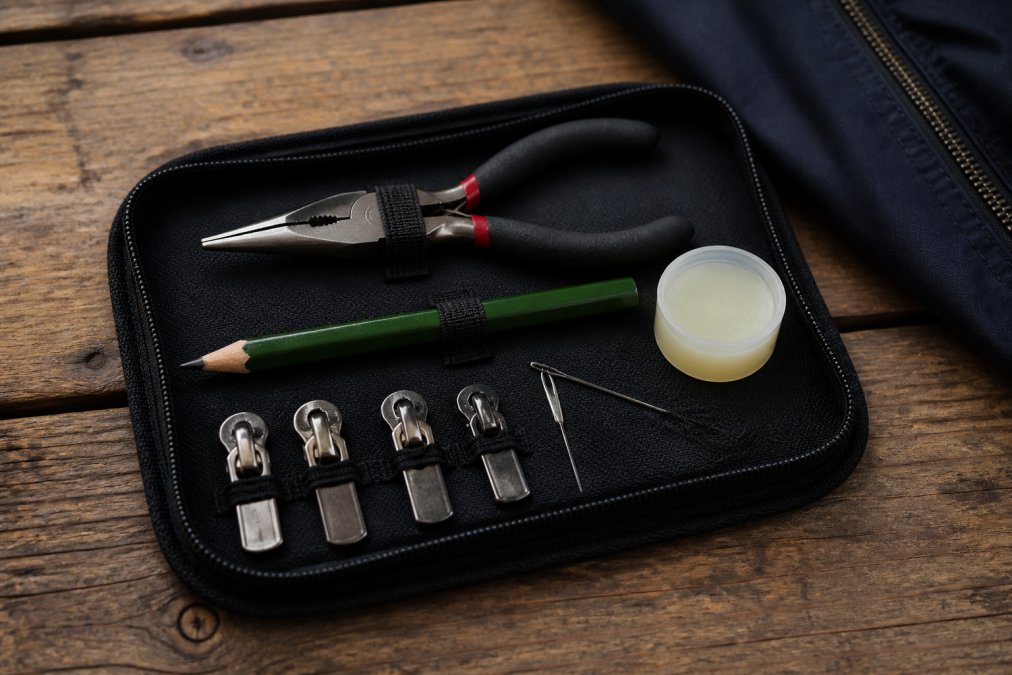
- Needle-nose pliers for pinching and realigning the slider
- Petroleum jelly or graphite to reduce friction on the track
- Replacement sliders in common sizes
- A seam ripper for opening stitching if you need to swap the slider
- Matching thread and a hand needle for securing a zipper stop
- A small brush or old toothbrush to clear grit from the teeth
How to Fix a Broken Zipper on a Jacket: Stuck, Separated, and Jammed
Learning how to fix a broken zipper on a jacket comes down to three moves: free a stuck slider, fix a separating zipper, and replace a broken slider or pull. Work through them in order, most jackets need only one.
Free a Stuck Zipper Without Damaging the Teeth
Never force a stuck zipper. Forcing it bends the teeth and turns a five-minute fix into a full replacement.
Try this instead:
- Hold the fabric flat on both sides of the slider.
- Apply a small amount of petroleum jelly or rub graphite along the teeth.
- Gently work the slider back and forth a few millimetres.
- If it still will not move, check for a trapped thread or fabric edge.
- Use a pin to lift the trapped material away from the teeth.
Close a Zipper That Keeps Separating Behind the Slider
A zipper that splits open behind the slider has a loose slider, not bad teeth: it has widened and no longer presses the teeth together.
Here is the fix:
- Move the slider to the bottom stop.
- Use needle-nose pliers to gently pinch the top and bottom of the slider body.
- Pinch a little at a time. Too much pressure cracks the slider.
- Test the zipper. If it still separates, pinch slightly more.
This works on both metal and coil zippers.
Pinch the slider from the sides, not the top. Squeezing the top flattens the channel and makes the separation worse.
Replacing a Zipper Slider or Pull That Came Off
A broken slider or missing pull is the easiest zipper problem to fix, you replace the part, not the whole zipper. But the job goes wrong when you grab the wrong size or type, so match the part first.
Match the Slider to the Zipper Type
Sliders are not universal: a coil slider will not grip metal teeth, and a metal slider will chew through molded plastic teeth. Before you buy, confirm three things:
- Zipper type: coil, metal, or molded plastic. The slider channel is shaped differently for each.
- Slider number: the size stamped on the old slider or printed on the zipper tape. Common jacket sizes run from #3 (light) to #10 (heavy winter and workwear).
- Slider style: auto-lock (locks in place when you let go) versus non-lock (slides freely). Most jacket zippers use auto-lock sliders so the zipper does not creep open.
Swapping the Slider: Step by Step
- Remove the top stop. The top stop is the small metal or plastic bump that keeps the slider from sliding off the top of the track. Work it loose with a seam ripper or flush cutters. On many jackets it is a metal staple you can pry up and reuse.
- Slide the old slider off the top of the track. If the pull tab is still attached, thread it off with the slider.
- Slide the new slider on, teeth first. Feed both sides of the zipper tape into the slider channel at the same time. Do not force it; if it will not slide on, the slider is the wrong size or type.
- Test the zipper by zipping it up and down a few times before you secure the stop.
- Replace the top stop. Sew a new stop with strong polyester thread, or crimp a metal stop with pliers. A loose stop lets the slider ride off the top and you are back where you started.
If Only the Pull Tab Snapped Off
You may not need a new slider at all. Many sliders accept a replacement pull that clips or threads on in seconds: if the pull ring or loop is intact, a new tab or small split ring will work. If the pull ring itself snapped, the slider has to come off.
Buy two sliders in the correct size. They cost little.
When the Slider Will Not Stay On
If a new slider keeps sliding off the top of the track, the top stop is missing or too small; if it slides off the bottom, the bottom stop has failed. A zipper stop is the small bump at the top or bottom that keeps the slider from sliding off. Fix either with a few tight stitches of strong thread where the stop should sit, or a crimped metal stop.
Material Matters
- Coil zippers: the most forgiving. Sliders are easy to source and the teeth tolerate a slightly loose fit.
- Metal zippers: the slider must match the tooth profile exactly, or it will bend teeth on the first zip.
- Molded plastic zippers: the teeth are chunky and brittle in cold. Warm the jacket indoors first, and never force a stiff plastic slider onto the track.
If you cannot find a matching slider, a full zipper replacement is the honest answer. A mismatched slider damages the teeth and turns a cheap fix into an expensive one.
Preventing Zipper Damage on Winter Jackets
Preventing zipper damage on winter jackets starts with keeping the teeth clean and the track lubricated. Calgary winters are hard on zippers.
Simple habits that add years to a zipper:
- Brush out grit and salt after a snowy commute.
- Rub graphite or a wax pencil along the teeth a few times each season.
- Close the zipper fully before you store the jacket.
- Never yank a zipper that feels tight. Stop and check for a trapped thread.
- Hang the jacket instead of stuffing it into a crowded closet.
Never pull a zipper by the pull tab alone when it is stuck. The tab snaps off, and now you have two problems instead of one.
Zipper Replacement Cost Calgary: DIY vs Professional Repair
Zipper replacement cost in Calgary depends on the jacket and the fix. A DIY slider swap costs only the price of the part, while a full replacement usually means a tailor or dry cleaner who handles outerwear.
What Drives the Cost
Three things move the price more than anything else:
- Zipper type and length. A short coil zipper on a light shell is cheaper to replace than a long, heavy metal zipper on a parka.
- Whether the jacket is lined or insulated. A lined winter jacket means opening the lining, resewing the zipper, and closing the lining again. That is the labour.
- Whether the zipper is sewn into a seam. A zipper set into a seam is faster to replace than one sewn onto a flat panel, because the seam gives the tailor a guide.
In Calgary shops, a simple slider swap is a quick counter job, while a full replacement on a lined winter jacket is a booked job because the jacket has to be opened up and rebuilt.
DIY vs Professional: How to Decide
| Factor | DIY Repair | Professional Repair |
|---|---|---|
| Best for | Stuck or separating zipper | Full zipper replacement |
| Cost | Price of a slider or lubricant | Varies by garment and job |
| Time | 5 to 30 minutes | Depends on shop workload |
| Risk | Damaging teeth if forced | Low, handled by a pro |
| Tools needed | Pliers, lubricant, needle and thread | None, the shop has them |
| Warranty | None | Usually workmanship-backed |
For a stuck or separating zipper, DIY is worth trying first. It costs almost nothing and often works.
The Calgary Angle
Calgary winters are hard on jacket zippers. If you are searching for zipper repair near me in Calgary, a local tailor can assess the jacket in person and tell you whether a repair or replacement makes more sense. Many Calgary tailors and dry cleaners handle zipper replacement.
Try the DIY fix first for stuck or separating zippers. Book a professional for full replacements on lined or insulated jackets, where the labour is in opening and rebuilding the garment, not in the zipper itself.
Questions to Ask a Calgary Shop
- Do you replace the zipper with a matching type and size, or substitute a different one?
- Is the workmanship guaranteed, and for how long?
- How long will the jacket be out of rotation?
- Do you handle rush jobs for winter jackets?
When to Hand It to a Professional
Hand the jacket to a professional when the zipper tape is torn, teeth are missing, or the garment is lined, delicate, or valuable.
Signs it is time to stop DIY:
- Teeth are missing or badly bent
- The zipper tape is ripped or frayed
- The jacket is lined, insulated, or made of delicate fabric
- The zipper is sewn into a seam you cannot easily open
- You have already tried a fix and made it worse
Frequently Asked Questions
How do you fix a zipper that has separated?
When a zipper separates behind the slider, the slider has likely widened and is no longer pressing the teeth together. First, move the slider to the bottom stop. Then use needle-nose pliers to squeeze the top and bottom of the slider gently, about 1 mm at a time. Test the zipper after each squeeze. If the teeth are also bent or missing, the zipper may need a full replacement. For jackets with sentimental value, a tailor can replace the zipper without damaging the fabric.
How do you put a zipper back on its track?
If the zipper pull has come off the track but the slider is intact, you can often reinstall it. Remove the top stop with a seam ripper, slide the slider back onto the tracks from the top, then sew a new top stop using heavy-duty thread. For metal zippers, you can also use a small flathead screwdriver to gently pry open the slider, reinsert the tracks, and squeeze it closed again. If the teeth are misaligned, realign them with pliers before sliding the pull back on.
Can a tailor replace a zipper on a winter coat?
Yes, a professional tailor can replace a zipper on a winter coat, including insulated and lined jackets. The process involves removing the old zipper, installing a new one that matches the original weight and length, and resewing the lining. This is often more cost-effective than replacing the entire coat, especially for high-quality winter jackets. In Calgary, many tailoring shops offer this service, with turnaround times ranging from same-day rush to a few days depending on the shop’s workload.
What is the best lubricant for a stuck zipper?
For metal zippers, graphite from a pencil works well and does not attract dirt. Rub the pencil lead along both sides of the teeth, then work the zipper up and down. For plastic or coil zippers, a small amount of petroleum jelly or a silicone-based lubricant can help, but apply sparingly to avoid staining the fabric. Avoid using oil or grease, which can collect dust and make the problem worse over time. Always test on a hidden area first.