Last Updated: November 14, 2026
Quick Summary
Custom garment fitting is the process of shaping a piece of clothing to one person’s measurements, and it decides how the garment feels on the body. Most clients want a piece that expresses their style and fits without compromise, so structure should be set first and personal design added within it.
- Take accurate measurements over light clothing, with the tape snug but not tight.
- Most custom pieces go through at least one fitting before the final version is finished.
- Bring the sweater you plan to wear most often to a jacket consultation.
- Ask to sit, reach and move during fittings to catch binding at the shoulder.
- Set shoulder width, armhole and back length first, then add details like lining and trim.
Table of Contents
- Personalized Design and Perfect Fit: Two Different Goals
- How Custom Garment Fitting Works
- Designing a Custom Jacket in Calgary
- The Custom Garment Design Process, Step by Step
- Preparing for Your Custom Clothing Consultation
- Comparing Pros and Cons: Which Should Come First?
- Book Your Fall Jacket or Sweater Consultation
- Frequently Asked Questions
Personalized Design and Perfect Fit: Two Different Goals
Custom garment fitting is the process of shaping a piece of clothing to one person’s measurements, and it decides how a garment feels on the body.
Personalized design is about what the garment expresses: fabric, colour, cut, lining, trim and small details that tell people who you are.
Deciding which goal comes first before you choose a fabric helps shape the result.
How Custom Garment Fitting Works
Custom garment fitting starts with measurements and ends with the garment on your body, and each stage affects the next. A tailor who skips the early steps will spend later fittings correcting avoidable problems.
Taking Accurate Measurements
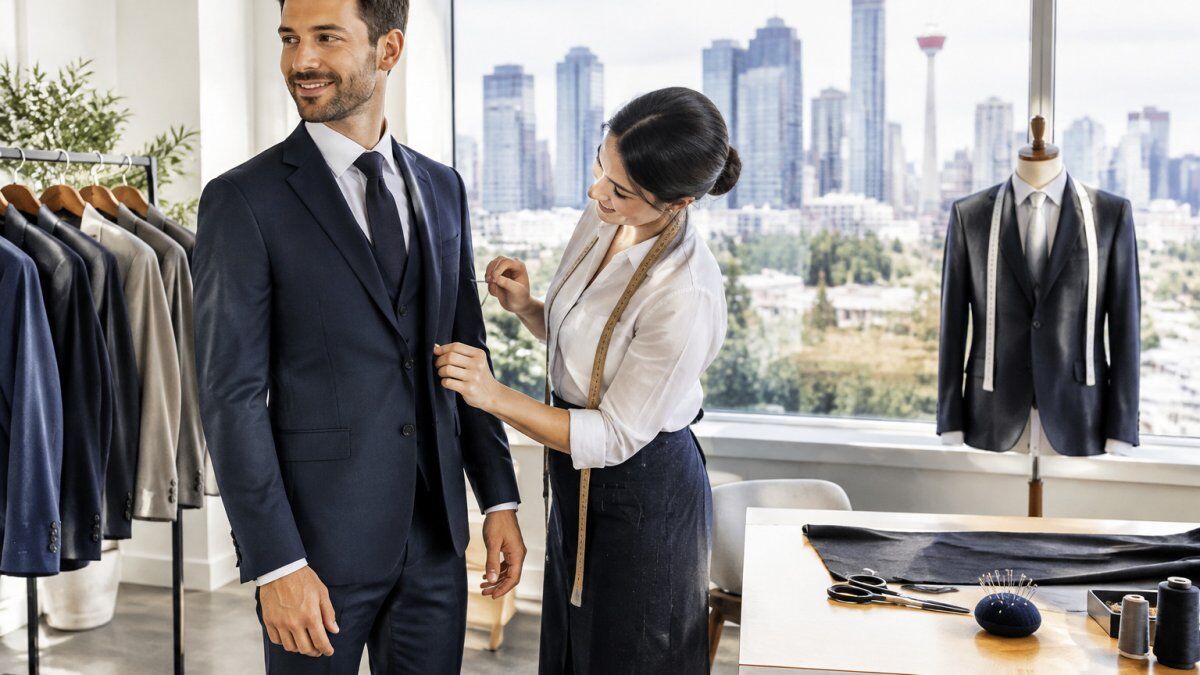
Accurate measurements are the foundation of any custom piece. They record shoulder width, bust or chest, waist, hip, sleeve length and back length, taken over light clothing with the tape snug but not tight.
A common mistake is measuring once and assuming the numbers will hold; posture, weight changes and even the time of day can shift how a garment sits.
Fitting Rounds and Adjustments
Most custom pieces go through at least one fitting before the final version is finished. At the first fitting, the garment is usually assembled in a basic form so the fit can be judged on the body.
Adjustments often happen in small steps: a shoulder seam might move a few millimetres, or a sleeve might be shortened so the cuff sits right at the wrist. Several changes can alter how the design looks, so the client should be part of every decision.
Designing a Custom Jacket in Calgary
Calgary’s fall weather makes jacket design a practical decision as well as a style one.
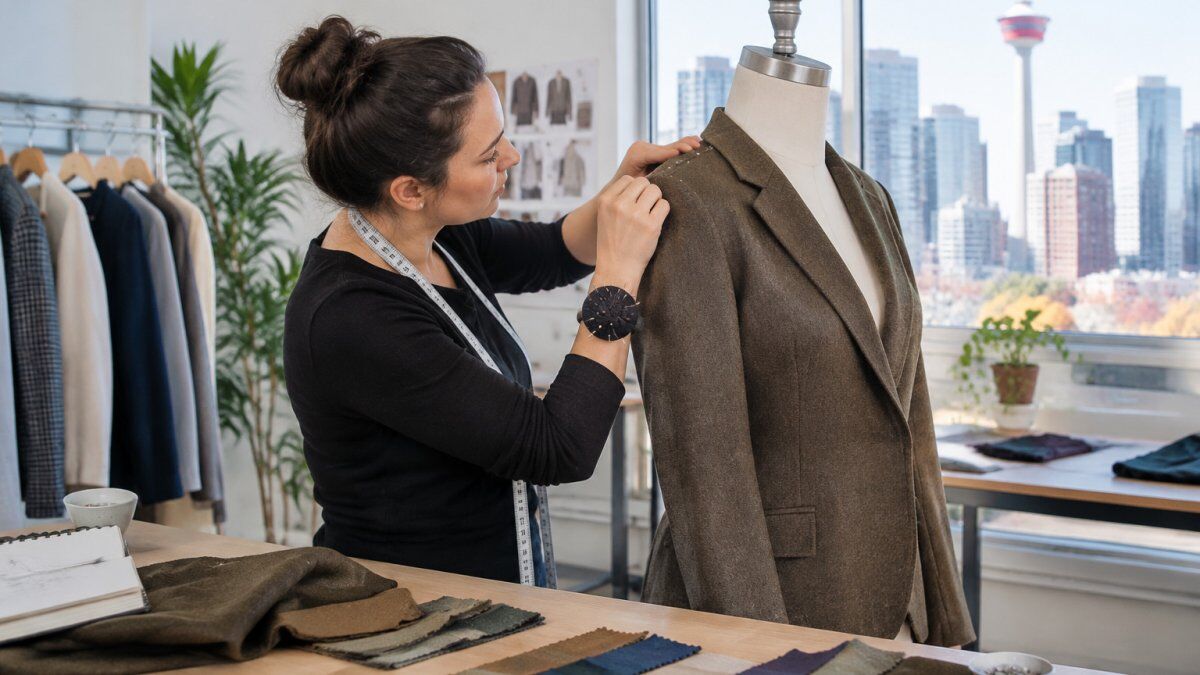
When designing a custom jacket, start with the fabric weight and the layers you expect to wear, then decide on the closure, pockets, collar height and lining, because these affect both warmth and fit. A slightly longer back length adds coverage, while a shorter cut usually suits layering under a coat.
If you already have a jacket in mind, the design process can begin with a sketch, a photo or a favourite garment you want to recreate, working from a reference you like makes the conversation faster and more precise. Clients looking for a tailored suit tailoring fit can ask about that service.
Fitting for Calgary’s Fall, Not a Catalogue Photo
A custom jacket for Calgary has to handle cool mornings that warm by afternoon, wind that finds every gap, and the reality that most people layer a sweater or hoodie underneath for much of the season.
- Layering room at the chest and armhole. If the jacket will be worn over a mid-weight knit, the pattern needs extra ease through the chest and a slightly deeper armhole so the sleeve does not bind when you reach or drive. Bring the sweater you plan to wear most often to the consultation.
- Wind-aware closures and collars. A higher collar, a storm flap or a two-way zipper can make a fall jacket far more usable on a windy afternoon without changing the silhouette. Raise these before the pattern is drafted.
- Fabric weight matched to the season. A mid-weight wool or lined cotton blend usually covers Calgary’s fall range better than heavy winter cloth, which feels restrictive indoors and in a warm car. A smooth lining helps a jacket slide over a sweater instead of catching on it.
- Hem and back length for real movement. A longer back adds coverage on a cold morning but can bunch when you sit or drive; a two-way zipper or slightly shaped hem often solves the problem better than shortening the jacket.
In-Person Fittings in Calgary
Fit is judged on the body, not on a hanger, which is why in-person fittings matter for a custom jacket. Fit is best judged on the body, so trying the garment on and moving in it matters. Sitting, reaching forward and raising your arms tells the tailor more than measurements alone.
Plan a fitting around the layers you will actually wear, since a fitting done in a light shirt will not reveal how the same jacket behaves over a fall sweater.
Watch out: a jacket that fits well standing still can still bind at the shoulder or pull across the back when you drive or reach. Noting which movements feel restricted can clarify the balance of ease and shape you want, while Bossswamee can help you think through how that balance fits your personal style.
Design Details That Suit a Calgary Fall
Once the structure is set, the design work can carry your story. For fall pieces, practical details often double as personal ones, such as a contrast lining, a collar shape that echoes a favourite coat, or reworked buttons. These choices add character without disturbing the fit.
Comparing fabric swatches in person under natural light can matter more than people expect when choosing a fall colour.
The Custom Garment Design Process, Step by Step
The custom garment design process follows a clear order, and knowing the steps makes the timeline easier to plan. Each stage builds on the one before it.
- Consultation. You describe the garment, its purpose and the look you want; the tailor asks about fit preferences and how the piece will be worn.
- Measurements. Key body measurements are taken and recorded for the pattern.
- Pattern and fabric selection. A pattern is drafted or adapted, and fabric and lining options are chosen together.
- First fitting. A basic version is tried on to check the balance of the garment.
- Adjustments. Seams, lengths and shaping are refined based on the first fitting.
- Final fitting and finishing. The completed garment is checked once more, and finishing details are added.
Timelines vary with the complexity of the piece and the number of fittings it needs.
Preparing for Your Custom Clothing Consultation
A consultation goes well when you arrive with a clear picture of what you want and what you need the garment to do. Bring photos, sketches or existing pieces that show the style you like, and note what you do not like just as clearly.
Wear clothing similar to what you will wear with the finished piece, if the jacket will go over a sweater, bring the sweater.
Being specific about your budget and deadline helps when planning options that suit your situation.
Comparing Pros and Cons: Which Should Come First?
Choosing between personalized design and a perfect fit is a real decision, and each priority has trade-offs. The table below summarises how each approach tends to play out.
| Priority | Strengths | Trade-offs | Best suited for |
|---|---|---|---|
| Personalized design | Expresses your style, unique details, one-of-a-kind look | Bold details may limit fit options | Statement pieces, special occasions |
| Perfect fit | Comfort, freedom of movement, polished silhouette | Design may be simpler or more conventional | Everyday wear, work clothing |
| Balanced approach | Design choices made within fit requirements | Requires more fittings and discussion | Most custom jackets and sweaters |
For most clients, starting with fit and then layering in design choices that do not compromise it is a sound approach. A well-fitted jacket with a distinctive lining or trim usually serves the wearer better than a striking design that sits poorly on the body.
How a Garment Carries Your Story Without Losing the Fit
Personalized designs that reflect your unique story and garments that fit flawlessly are not competing goals at the same layer of the garment. Fit lives in the structure, shoulder line, armhole depth, waist suppression, back length and hem, while story lives in the surface and the details.
A useful way to think about it is a hierarchy of decisions:
- Structure first. Shoulder width, armhole shape, chest and waist ease, and back length are set from your measurements. These determine comfort and silhouette, and they are the hardest to change later.
- Design within the structure. Collar style, pocket shape, closure type and lining are chosen so they work with the drafted pattern rather than fighting it. A peak collar or a large patch pocket changes the visual balance, but it does not have to change the fit.
- Story in the details. Contrast lining, topstitching, a monogram, a reworked family button, or a fabric that matches a favourite sweater are low-risk places to put personal meaning. These details rarely affect how the garment moves on the body.
The clients who are happiest with a custom piece typically made two or three structural choices and then put their personality into the details, rather than trying to express everything through the cut. A dramatic silhouette can work, but it usually needs an extra fitting to confirm the shoulders and armholes still allow normal movement.
Watch out: a design detail that looks small on a sketch, a dropped shoulder, an oversized collar, a very short hem, can change how the garment hangs and restrict layering.
Where the Two Goals Pull Against Each Other
Some combinations genuinely trade off. A close-fitting jacket with a defined waist looks sharp but leaves less room for a heavy sweater underneath. A boxy, oversized cut is comfortable and easy to layer but can swallow a smaller frame.
The resolution is usually to decide which goal is non-negotiable for that specific garment and let the other flex.
Additional fittings let you confirm that a design choice has not quietly compromised movement at the shoulder, the elbow or the hem.
Book Your Fall Jacket or Sweater Consultation
Fall is a good time to plan a custom jacket or sweater, because the cooler weather calls for pieces that fit well over layers. A consultation is a practical way to talk through your design goals and set a realistic timeline. You can book online to start planning your piece.
BUTTON: Book Your Consultation
CARD_TITLE: Ready for a jacket that fits your story?
CARD_TEXT: Calgary Seamstress designs and fits custom jackets and sweaters for everyday wear and special occasions.
Frequently Asked Questions
What is the difference between custom garment design and custom garment fitting?
Custom garment design covers the look of a piece: fabric, cut, colour, lining and details such as a monogram or thread choice. Custom garment fitting covers how the finished piece sits on your body: the measurements taken, the shoulder and sleeve placement, and the adjustments made during fittings. Many clients want both, and the two goals sometimes pull in different directions. A jacket can be designed around a bold fabric but still need fitting changes to sit well through the shoulders. Discuss both goals at your consultation so the design and the fit are planned together.
How many fittings might a custom garment require?
Most custom garments need at least one fitting, and a fall jacket or structured sweater often needs two or more. The first fitting checks the basic shape and proportion on the body. Later rounds refine sleeve length, shoulder line and closure placement. The number depends on the garment’s complexity and how closely you want it to match your measurements. Plan extra time for fittings when you are working toward a specific date, and book the first appointment early.
What measurements are needed for a custom jacket or sweater?
A custom jacket usually requires chest, waist, hip, shoulder width, sleeve length from the shoulder point, back length and neck. A sweater may need fewer measurements but still depends on chest, length and sleeve dimensions. Your seamstress may also ask how you prefer the garment to sit, such as fitted or relaxed through the body. Wearing the layers you normally wear under the garment helps the measurements reflect real use, which matters for fall outerwear.
What should I bring to a custom garment consultation in Calgary?
Bring a jacket or sweater you already wear and like, because it gives a clear reference for fit and length. Photos or sketches of the design you have in mind are useful, as are fabric samples if you have chosen any. Note the garments you wear most often and how you want the new piece to feel. If you have a specific date or event, mention it early so the timeline can be checked before design decisions are made.