Last Updated: November 16, 2026
Quick Summary
To style a bespoke suit for fall in Calgary, start with navy or grey in a medium-weight wool, since it layers well over knitwear. Then relax the outfit one piece at a time: swap the dress shirt for a fine-gauge knit, trade dress shoes for suede loafers or clean sneakers, and drop the tie last.
- Choose navy or grey for the most styling options in a first bespoke suit.
- Pick a medium-weight wool, 260-320 g/m, for fall wear in Calgary.
- Change one variable at a time, keeping the suit’s structure intact.
- Check shoulders, sleeve length and trouser break before you style it.
- Test the full outfit at home and note any pulling for your tailor.
Table of Contents
- Start With the Suit: Colour, Fabric and Fit
- How to Wear a Bespoke Suit Casually
- What to Wear With a Bespoke Suit: Shirts, Knitwear and Shoes
- Bespoke Suit Fit Guide: What Should Be Right Before You Accessorize
- Styling a Bespoke Suit With No Tie
- Dressing for Calgary’s Fall Weather and Occasions
- Keeping Your Bespoke Suit Looking Sharp Between Wears
- Book Your Fit Check at Calgary Seamstress
- Frequently Asked Questions
Start With the Suit: Colour, Fabric and Fit
Styling a bespoke suit starts long before you put it on. The colour, cloth and cut decide what you can wear it with, so get those right first. Navy and grey are the most versatile choices for a first suit, because they work with many shirts, knitwear and shoes. Check the fabric weight too. A medium-weight wool holds its shape through a Calgary fall and drapes well over a sweater.
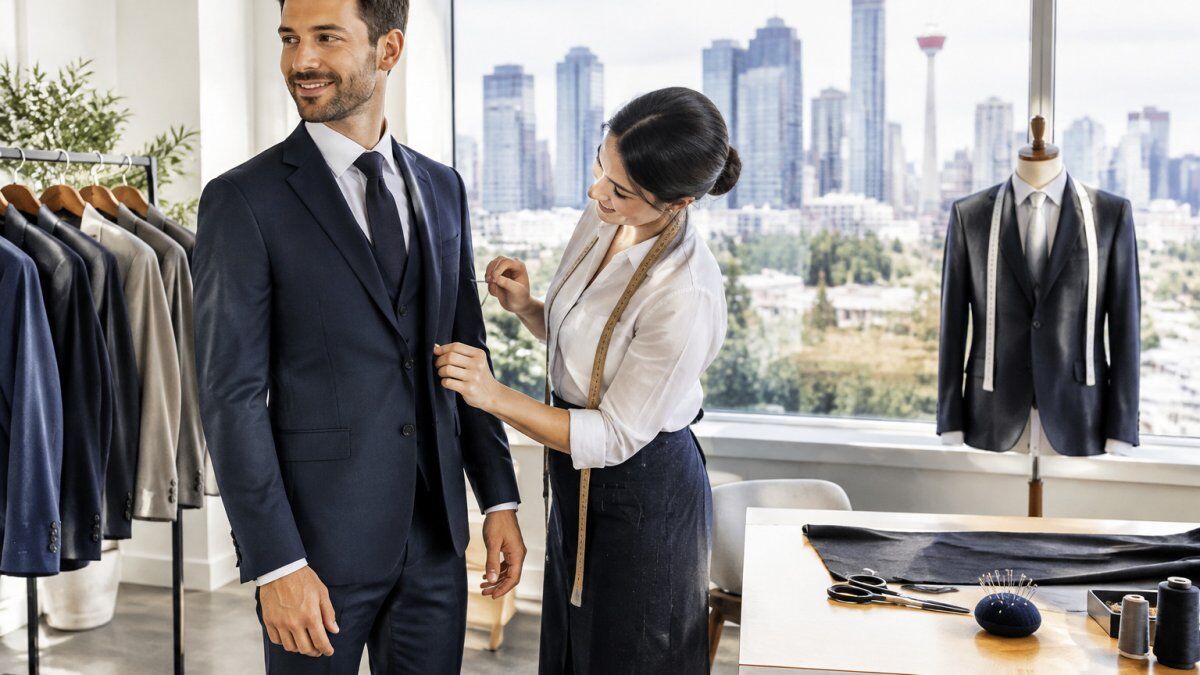
Fit matters more than any accessory. Shoulders should sit flat, the jacket should close without strain, and the sleeves should show a small amount of shirt cuff. Trousers should break lightly over the shoe.
- Choose navy or grey for the most styling options
- Pick a medium-weight wool for fall wear
- Check shoulders, sleeve length and trouser break before you style it
How to Wear a Bespoke Suit Casually
A suit does not have to feel formal, but casual styling works best when you change one variable at a time rather than stripping the outfit down all at once. The reliable method is to keep the suit’s structure intact and relax the pieces around it: swap the dress shirt for knitwear, swap the leather sole for a rubber-soled shoe or a clean sneaker, and drop the tie last. If you change the jacket, the shirt, the shoe and the accessory together, the outfit reads as mismatched rather than relaxed.
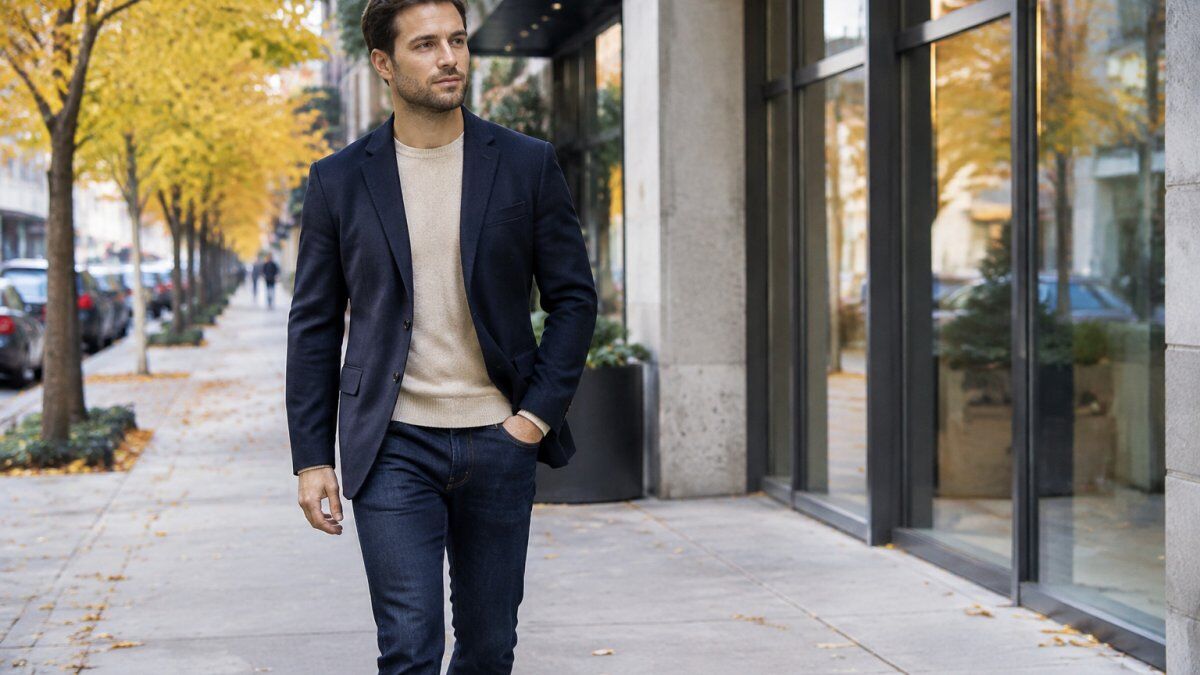
Start with the jacket. A lightly lined or unlined jacket in a medium-weight wool drapes softly over a sweater and moves better on a mild Calgary fall afternoon, while a fully lined jacket holds a sharper line and layers more cleanly over a fine-gauge knit when the temperature drops. For fall, a medium-weight wool in the 260-320 g/m range is the practical middle ground: heavy enough to hang cleanly over a crewneck, light enough to wear indoors without overheating.
Build the casual outfit in this order:
- Keep the suit trousers and jacket as the base, do not size up for layering.
- Choose a fine-gauge merino or cashmere crewneck in navy, grey, oatmeal or charcoal over a collared shirt, or wear the knit directly against the skin if the cloth is soft enough.
- Swap the dress shoe for a suede loafer, a derby, or a clean minimal sneaker in white or dark leather.
- Add one casual layer, an overshirt, a quilted vest, or a roomy topcoat, for the walk between the car and the office.
- Leave the pocket square out, or use a simple linen fold in a tone close to the suit.
Dark jeans or chinos still work, but keep the rise and leg line close to the suit trouser so the jacket hem sits correctly. A slim chino in olive, stone or charcoal is the safest fall choice; dark indigo denim works if it is clean and uncuffed. Keep colours within two or three tones, navy with grey and brown, or charcoal with oatmeal and black, so the outfit looks planned rather than assembled.
Watch out: a casual outfit fails most often at the shoulder and hem. If the jacket bunches over a thick sweater, the knit is too heavy for the cut; if the trouser pools over a sneaker, the break is too long for a casual shoe. Test the full outfit at home before you wear it out, and note any pulling at the button or seat for your tailor.
What to Wear With a Bespoke Suit: Shirts, Knitwear and Shoes
Start with a white or light blue dress shirt for a classic look. For a more relaxed outfit, a fine-gauge knit or a crewneck sweater layered over a collared shirt adds warmth without bulk. You can also wear a plain T-shirt under the jacket for a clean, modern look.
Shoes set the tone. Loafers or dress shoes suit formal events, while clean white sneakers work for a smart-casual day. Brown or dark leather shoes pair well with navy suits, and black shoes suit grey ones best. Keep belts and shoes in the same colour family.
For a complete outfit, follow this order:
- Choose the suit colour and fabric
- Pick a shirt or knitwear layer
- Match your shoes to the suit
- Add one accessory, such as a pocket square
The table below sums up the shoe and shirt pairings the section describes.
| Suit colour | Shoe pairing | Shirt or knit |
|---|---|---|
| Navy | Brown or dark leather | White or light blue shirt |
| Grey | Black leather | White or light blue shirt |
| Any | Clean white sneakers | Plain T-shirt or crewneck knit |
| Any | Loafers or dress shoes | Dress shirt for formal events |
Bespoke Suit Fit Guide: What Should Be Right Before You Accessorize
Fit comes first, and no accessory can fix a poor fit. Before you add a tie or pocket square, check that the jacket sits well across the back and chest. The seams should lie flat. The trousers should not pool at the ankle or pull tight across the seat.
Check the trouser leg as well. A slight break at the shoe looks clean, while a full break can look careless. If something feels wrong after delivery, do not ignore it. Small alterations often solve fit problems that look minor at first. The tailoring tips for fall suits that fit every layer cover how to check fit across the jacket, knitwear and coat. Suit Tailoring at Calgary Seamstress can help with jacket and trouser adjustments.
Styling a Bespoke Suit With No Tie
Going without a tie is the fastest way to make a bespoke suit feel current, but the collar and the shirt fabric do most of the work once the tie is gone. A spread or semi-spread collar holds its shape open and frames the face; a button-down collar reads more casual and pairs well with knitwear; a slim point collar can look unfinished when left open unless it has a firm interlining. Choose a shirt with a slightly structured collar rather than a soft one, because an open collar with no support collapses under a jacket.
Shirt fabric matters more without a tie. A poplin or broadcloth in white or light blue looks crisp and formal-adjacent, while an oxford cloth or a brushed cotton reads softer and suits a fall office day. For cooler Calgary mornings, a fine-gauge merino crewneck or a lightweight turtleneck under the jacket replaces the tie entirely and adds warmth without bulk. Keep the knit close to the body so the jacket still closes cleanly.
A pocket square is the natural substitute for a tie’s colour. Use a simple presidential fold in white linen for a clean look, or a puff fold in a tone that echoes the shirt or the knit. Keep the rest of the outfit understated, no tie, no lapel pin, one accessory, so the suit stays the focus.
Watch out: an open collar with a stiff, wide-spread shirt and no tie can look like a forgotten tie rather than a deliberate choice. If the collar stands away from the neck, choose a narrower spread or add a lightweight knit layer to soften the line. Test the collar under the jacket in a mirror before you commit to the look.
Dressing for Calgary’s Fall Weather and Occasions
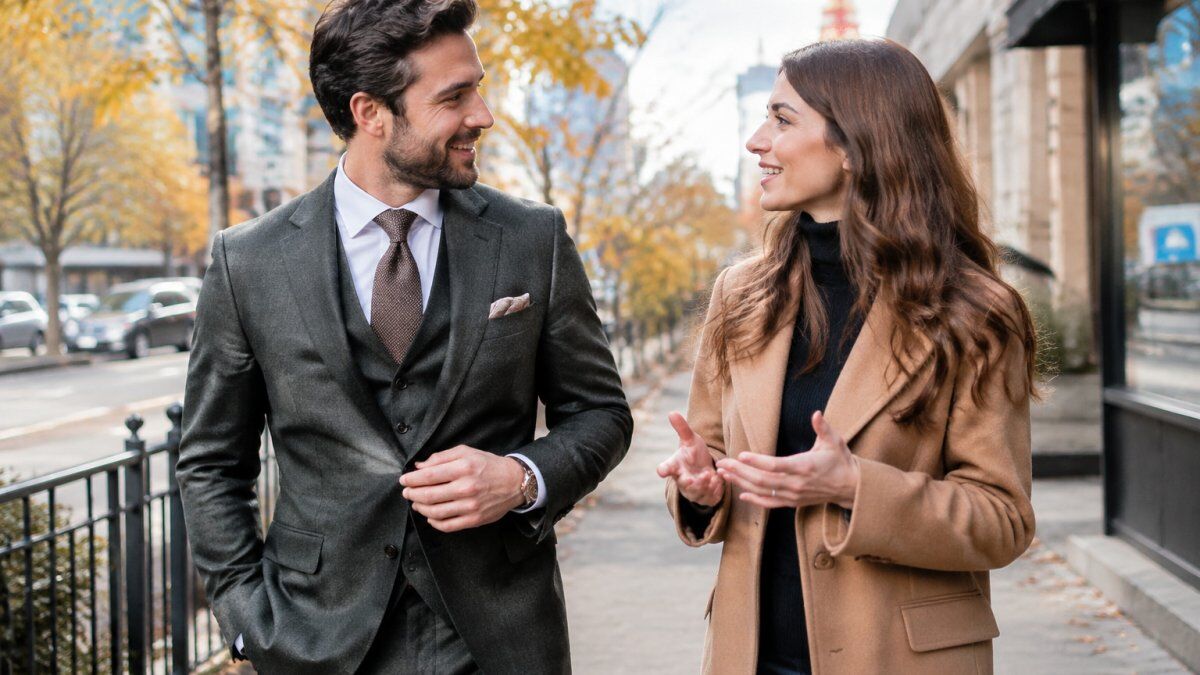
Calgary falls can swing from mild afternoons to cold evenings, so plan layers. A bespoke suit jacket works well over a fine knit on a cool day. Add a warm coat over the top for the walk to the car. Choose a coat that is roomy enough to fit over the suit jacket without bunching at the shoulders.
Match the outfit to the occasion. A dark navy suit with a shirt and loafers works for a business lunch or a dinner. For a casual office day, drop the tie and add a sweater. For a more relaxed weekend outing, pair the jacket with dark jeans and sneakers.
Keeping Your Bespoke Suit Looking Sharp Between Wears
Hang the jacket on a wide wooden hanger so the shoulders keep their shape. Let it rest for a day between wears, and brush it lightly to remove dust. Steam out creases rather than pressing them flat.
Store the suit in a breathable garment bag, away from direct sunlight. Rotate your suits so each one gets time to recover. Small repairs, such as a loose button or a fraying hem, are easier to fix when they are caught early.
Book Your Fit Check at Calgary Seamstress
A good fit is the foundation of every outfit. If your bespoke suit feels off, or you want to check how it sits before you style it, book a fit check with our team at Calgary Seamstress. Our team can review the jacket, sleeves and trousers and discuss possible adjustments. Book your fit check to find a suit-adjustment tailor in Calgary, or read how to taper suit pants properly before you accessorize.
For more on layering a suit for Calgary’s cold months, see what to wear with a brown wool parka and why custom outerwear suits Calgary winters.
Frequently Asked Questions
How do you style a bespoke suit?
Start with a versatile colour such as navy or grey and a fabric suited to the season. Pair the suit with a collared shirt or fine knitwear, choose shoes that match the formality of the event, and keep accessories restrained. A pocket square or a simple watch is usually enough. Before you style it, make sure the jacket shoulders sit cleanly and the trousers break correctly over the shoe, because styling cannot fix a poor fit. For fall in Calgary, a mid-weight wool with a layer such as a tailored overcoat works well.
Can you wear a bespoke suit casually?
Yes. Wear the jacket without a matching waistcoat, pair it with a crewneck sweater or an open-collar shirt, and swap formal shoes for loafers, suede boots or clean leather sneakers. Dark jeans or chinos can replace matching trousers, which keeps the look relaxed while the tailoring still reads as deliberate. Choosing an unlined or lightly lined jacket in a textured fabric makes the casual approach feel natural, especially on autumn days when a jacket layered over knitwear is practical.
Can you wear a bespoke suit without a tie?
Yes, and it is a common choice for business casual settings and evening events with a relaxed dress code. Open the collar of a crisp shirt, leave one or two buttons undone, and consider a fine knit or a silk pocket square for texture. Keep the shirt collar sharp enough to frame the lapels. Without a tie, the fit of the shoulders and the length of the sleeves becomes more visible, so confirm these before you leave the house.
What shoes go best with a bespoke suit?
Dress shoes in black or dark brown leather suit a formal look, while loafers and suede boots suit a casual one. Match the shoe colour to the belt and the suit tone as closely as you can. White sneakers work for a more informal, streetwear-inspired outfit, but they are best with unlined, lighter suits. Polish leather shoes before the season begins, and keep them dry on wet Calgary days, since slush and road salt can damage good leather quickly.