
Table of Contents
- What You’ll Need Before You Start
- Step 1: Assess the Hole and Match Your Thread
- Step 2: Stabilize the Edges Before You Stitch
- Step 3: Choose and Work the Right Stitch to Repair a Small Hole
- Fabric Repair Kit Essentials for Home Mending
- How Long Does It Take to Hand Sew a Small Hole?
- Common Mistakes That Make Small Holes Worse
- When to Seek Professional Tailoring Services
- Frequently Asked Questions
Last Updated: September 24, 2026
What You’ll Need Before You Start
A small hole in a favorite shirt or pair of jeans doesn’t mean the garment is finished. With the right tools and about 15 minutes, most small holes can be repaired so they’re barely visible. This guide from Calgary Seamstress walks through each step, from matching thread to finishing the stitch. The key is doing a little prep work first, because rushing the setup is what makes home repairs look messy.
Here’s what to gather before you thread a needle:
- Hand sewing needles in a few sizes
- Thread that matches your fabric color and weight
- Small sharp scissors or thread snips
- A thimble (optional but helpful)
- An iron and ironing board
- A small piece of fusible interfacing or lightweight fabric for backing
- Tailor’s chalk or a washable fabric marker
For stretchy fabrics like knits, look for a needle labeled for jersey or ballpoint. For woven fabrics like cotton or linen, a standard sharp needle works fine. If you’re not sure what you have, a basic fabric care and repair guide from the Government of Canada can help you identify common fiber types before you start.
Step 1: Assess the Hole and Match Your Thread
The first step is sizing up the damage. Hold the garment up to a window or bright light. A small hole is usually under 1 cm across, with clean edges and no fraying beyond the immediate area. If the fabric around it feels thin or weak, the hole may spread, and that changes your approach.
Next, match your thread. Pull a thread from an inside seam of the garment if you can, since it will match the original color and weight exactly. If that’s not possible, take the garment to a fabric store and compare spools under natural light. Thread that’s too thick will pucker the repair. Thread that’s too thin will disappear but won’t hold.
For knits, use a thread with a bit of stretch. For denim or canvas, a heavier thread holds up better. Cut a piece about 45 cm long. Longer than that and it tangles. Shorter and you’ll run out mid-stitch.
Step 2: Stabilize the Edges Before You Stitch
Stabilizing the hole keeps it from growing while you work. Turn the garment inside out and lay it flat on your ironing board. Press the area around the hole gently with a warm iron. Don’t press directly on the hole itself, since heat can stretch loose threads.
If the edges are fraying, place a small square of fusible interfacing behind the hole. Fuse it with the iron according to the package directions. This gives your stitches something to grab onto. For very small holes with clean edges, you can skip the interfacing and just work directly on the fabric.
A common mistake here is pulling the fabric tight in an embroidery hoop. That stretches the hole wider. Keep the fabric relaxed and flat instead.
Step 3: Choose and Work the Right Stitch to Repair a Small Hole
The right stitch depends on the fabric. For woven fabrics, a simple running stitch or a whip stitch closes the hole neatly. For knits, a duplicate stitch blends the repair into the texture. For denim, a small darn with parallel stitches is the strongest option. Reinforcing these seams often provides the perfect opportunity for attaching woven labels to identify your work or finish a garment professionally.
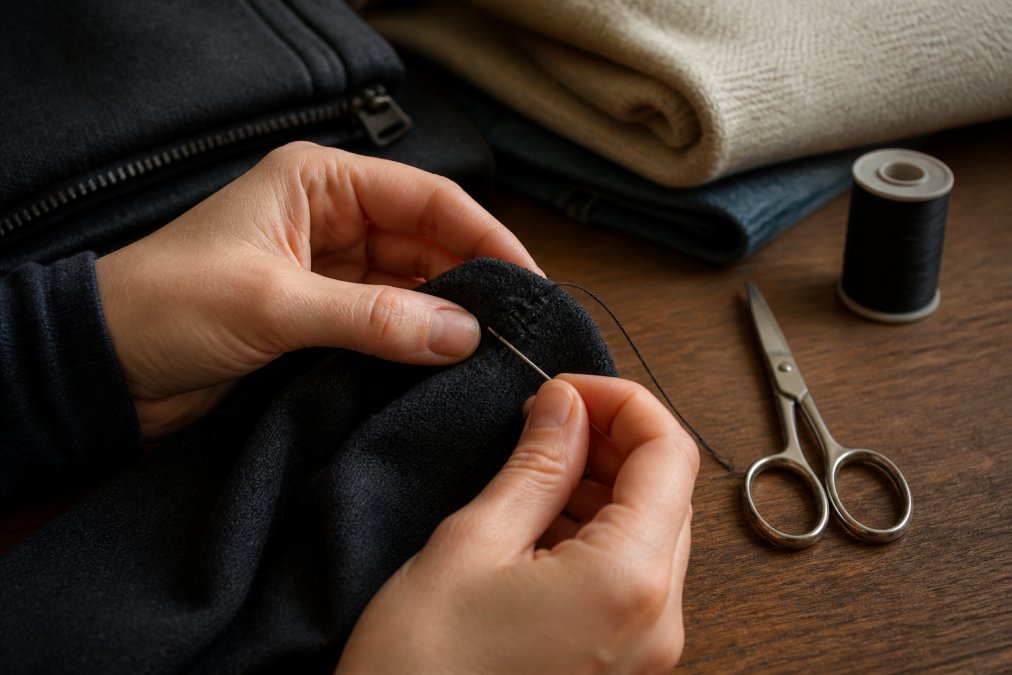
Here’s how to work a basic whip stitch for a small hole:
- Thread your needle and knot the end.
- Bring the needle up through the fabric just outside one edge of the hole.
- Cross over the hole and take a small stitch on the opposite edge.
- Pull gently so the edges meet without puckering.
- Repeat across the hole, keeping stitches even.
- Finish with a small knot on the inside.
Fabric Repair Kit Essentials for Home Mending
A basic fabric repair kit essentials list saves you a trip to the store mid-repair. You don’t need much, and most of it fits in a small tin.
|
Item |
Why You Need It |
Best For |
|---|---|---|
|
Hand needles (assorted) |
Different fabrics need different points |
Wovens and knits |
|
Matching thread |
Blends the repair into the fabric |
All repairs |
|
Small scissors |
Clean thread cuts prevent fraying |
Trimming edges |
|
Fusible interfacing |
Supports weak or fraying edges |
Thin or worn fabric |
|
Thimble |
Pushes the needle through thick fabric |
Denim and canvas |
|
Tailor’s chalk |
Marks stitch lines that wash out |
Precise work |
You can build a kit for everyday mending without spending much. Keep it in a drawer with your iron so it’s ready when a hole appears.
How Long Does It Take to Hand Sew a Small Hole?
Hand sewing a small hole usually takes 10 to 20 minutes from setup to finish. Most of that time goes into matching thread and stabilizing the edges. The stitching itself is quick, often under five minutes for a hole under 1 cm.
If you’re new to hand sewing, expect closer to 25 minutes the first time. Speed comes with practice, and a simple whip stitch is one of the easiest to learn. Larger holes, thicker fabrics, or holes in tricky spots like a sleeve seam take longer.
Common Mistakes That Make Small Holes Worse
The biggest mistake is stitching too tightly. Pulling thread hard puckers the fabric and creates a visible dent around the repair. Pull just enough to close the gap.
Other mistakes to avoid:
- Skipping the stabilization step, which lets the hole fray wider
- Using thread that’s too thick for the fabric weight
- Cutting the thread too long, which causes tangles and knots
- Pressing the iron directly on the hole and stretching the edges
- Leaving a knot on the outside, which shows through the fabric
A repair that looks worse than the hole is usually a tension problem, not a stitching problem. Go slow and check the fabric as you go.
When to Seek Professional Tailoring Services
Some repairs are worth handing off. If the hole is larger than a coin, sits on a seam or zipper, or the fabric is delicate like silk or lace, a professional can match the repair to the garment. The same goes for cherished pieces, like a wedding dress or a tailored suit jacket, where a visible fix would stand out.
In cases like that we can provide a patch with artistic flair
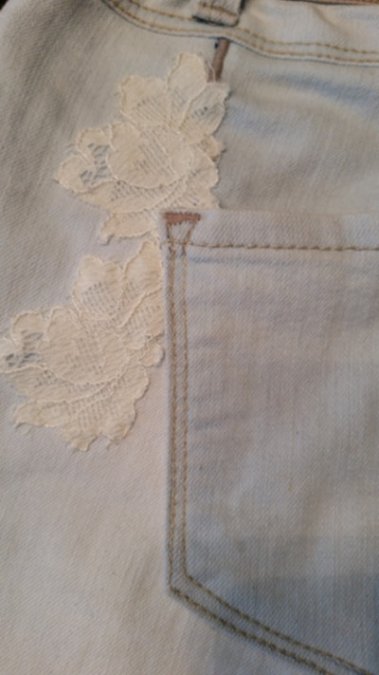
Calgary Seamstress handles everything from everyday pant hemming and zipper repairs to wedding dress alterations and suit tailoring. If you’re searching for tailoring services near me in Calgary, AB, our team at Southcentre Mall can assess the damage and recommend the right fix. We also offer rush service for time-sensitive repairs. For more complex work, professional alteration guidance from the Government of Canada can help you understand what to expect.
Frequently Asked Questions
What is the best stitch to repair a small hole in fabric?
For a small hole in woven fabric, the ladder stitch hides the repair best because it pulls the edges together invisibly from the outside. For knits like t-shirts, a duplicate stitch follows the existing loops and keeps the fabric stretchy. For tiny holes in denim or canvas, a simple running stitch with matching thread works. The right choice depends on fabric type and hole size, but the ladder stitch is the most versatile for everyday garments.
What tools do I need for basic fabric mending at home?
A basic fabric repair kit essentials list includes hand needles in assorted sizes, polyester thread matched to your garment, small sharp scissors, a thimble, and fine pins. Adding a needle threader, seam ripper, and a small piece of fusible interfacing helps with trickier repairs. Keep these in a dedicated tin or pouch so you are not hunting for supplies when a hole appears. Most of these items are inexpensive and last for years.
Can you fix a hole in fabric without sewing?
Yes, for very small holes in stable fabrics, fusible interfacing or iron-on repair tape can close the gap without a needle. Peel-and-stick fabric patches also work on the inside of a garment for quick fixes. However, these methods are less durable than stitching and may peel after washing. For anything you wear often or care about, hand sewing gives a longer-lasting result.
How long does it take to hand sew a small hole?
A small hole under a centimeter usually takes 10 to 20 minutes to hand sew, including threading the needle and matching the fabric. Larger holes or knit repairs that need duplicate stitching can take 30 to 45 minutes. Timing also depends on your experience and how carefully you blend the repair. If a hole has damaged edges or sits on a seam, add extra time for stabilizing before you stitch.
A small hole doesn’t have to end a garment’s life, but some repairs need a skilled hand. Calgary Seamstress offers expert wedding dress alterations, suit tailoring, and everyday clothing repairs, with one-hour and 24-hour rush options available. Our team at Southcentre Mall handles delicate fabrics and complex fixes with care. Make an appointment online and get your garment back to looking its best.