Last Updated: November 13, 2026
Quick Summary
The five alterations most often needed for a mother of the bride outfit are hemming for the right length, sleeve adjustments for a polished fit, waist and bodice changes, careful work on beaded or embellished pieces, and a well-prepared first fitting. Bring the shoes and undergarments you plan to wear, since heel height changes the final hem length.
- Measure the hem in the exact shoes you plan to wear, since heel height changes length.
- Check sleeves with your arms both raised and lowered to confirm movement.
- Tell your seamstress about any beading, sequins or appliqué before the first fitting.
- Bring the undergarments and shapewear you will wear, because they change how the bodice sits.
- Plan for more than one fitting if the outfit needs several changes.
Table of Contents
- Why a Mother of the Bride Outfit Usually Needs Alterations
- Formal Dress Hemming for the Right Length
- Formal Dress Sleeve Alterations for a Polished Fit
- Waist, Bodice and Seam Adjustments
- Alterations for Beaded Dresses and Delicate Embellishment
- How to Prepare for a Dress Fitting
- Booking Your Mother of the Bride Fitting in Calgary
- Frequently Asked Questions
Why a Mother of the Bride Outfit Usually Needs Alterations
Most mother of the bride outfits are bought off the rack, and few fit a body perfectly on the first try. Ill-fitting hems, gaping sleeves, and waistlines that sit in the wrong place are common issues with off-the-rack formal wear. A good alteration turns a decent outfit into one that looks tailored and confident on the day.
The key is knowing which changes matter most. Below, we cover the five alterations we see most often for mother of the bride outfits, and how to approach each one.
Formal Dress Hemming for the Right Length
A hem sets the overall balance of a formal outfit. The right length depends on the style of the dress, the heel height you plan to wear, and whether the fabric is lined. Hemming too short can look dated, while a hem that is too long can catch underfoot during a long evening.
Bring the shoes you intend to wear to the fitting. Heel height changes the final length by a noticeable margin, so a hem measured in flats will often be wrong once you are standing in heels. Ask whether the hem will be finished by hand or machine, especially for chiffon or lace, since delicate fabrics need a finish that will not show.
Watch out: a hem taken up too far can leave the lining exposed or shorten the skirt beyond the style’s intended proportion. Ask the seamstress to confirm the new length before the final cut.
Formal Dress Sleeve Alterations for a Polished Fit
Sleeves are one of the most visible fit issues on a mother of the bride dress. A sleeve that is too wide at the underarm will pull, while one that is too tight restricts movement when you lift your arms for photos or hugs. Sleeve alterations are often the difference between an outfit that looks polished and one that looks slightly off. Because sleeve adjustments can affect the overall fit and the work involved, they are worth considering alongside the other changes in a wedding dress alterations cost breakdown.
Common adjustments include taking in the sleeve at the seam, shortening the length, or adjusting the cuff. For sheer or lace sleeves, the work needs extra care so the seam does not show through the fabric. Try on the outfit with your arms raised and lowered so the fit can be checked in both positions. For fitted tops and blouses that pair with a dress or jacket, our Blouse / Top Alterations service can handle the same kind of sleeve and seam work on a smaller piece.
Waist, Bodice and Seam Adjustments
The waist and bodice determine how the outfit sits on your shoulders and torso. Small changes here can make a large difference, because the bodice carries the weight of the design and the fit of the neckline. A bodice that gapes or sits too low can change the whole look.
Ask for the bodice to be checked with the undergarments you plan to wear, since the right support changes how the top sits. Adjustments may involve taking in side seams, adjusting darts, or tightening the waist seam. Each change should be checked from the front, side and back before the work is finished.
Alterations for Beaded Dresses and Delicate Embellishment
Beaded and embellished outfits need more careful handling than plain fabrics, and the approach depends heavily on how the embellishment is attached. Beads can be fragile, and stitching through them can crack the finish, loosen the thread, or leave visible puncture marks on the surface.
Fabric and embellishment type drives what is realistic:
- Hand-sewn beading on a stable backing is usually the most workable. Individual beads or small clusters can be lifted, the seam taken in, and the beading reattached by hand along the new line.
- Glued or fused embellishment is the most limiting. Heat and pressure used in pressing can lift or discolor the adhesive, so alterations are often confined to seams away from the decorated area.
- Sequins on stretch fabric need the seam re-sewn with a stitch that allows the fabric to move, or the sequins will pop along the new seam line.
- Lace appliqué and re-embroidered lace can usually be repositioned, but the motif has to be matched at the seam so the pattern reads continuously across the join.
- Beaded illusion mesh and sheer overlays are the least forgiving. A seam through the mesh is hard to hide, so many alterations are done at the lining instead and the overlay is left intact.
Tell the seamstress about any beading, sequins or appliqué before the first fitting, and ask specifically whether the work will be done in place or with the embellishment removed and reattached. Ask, too, how the finished seam will be pressed, since direct heat on embellishment is one of the most common causes of damage.
How to Prepare for a Dress Fitting
Preparation makes the first fitting far more productive, and in Calgary the logistics matter as much as the checklist. Build the appointment around these items:
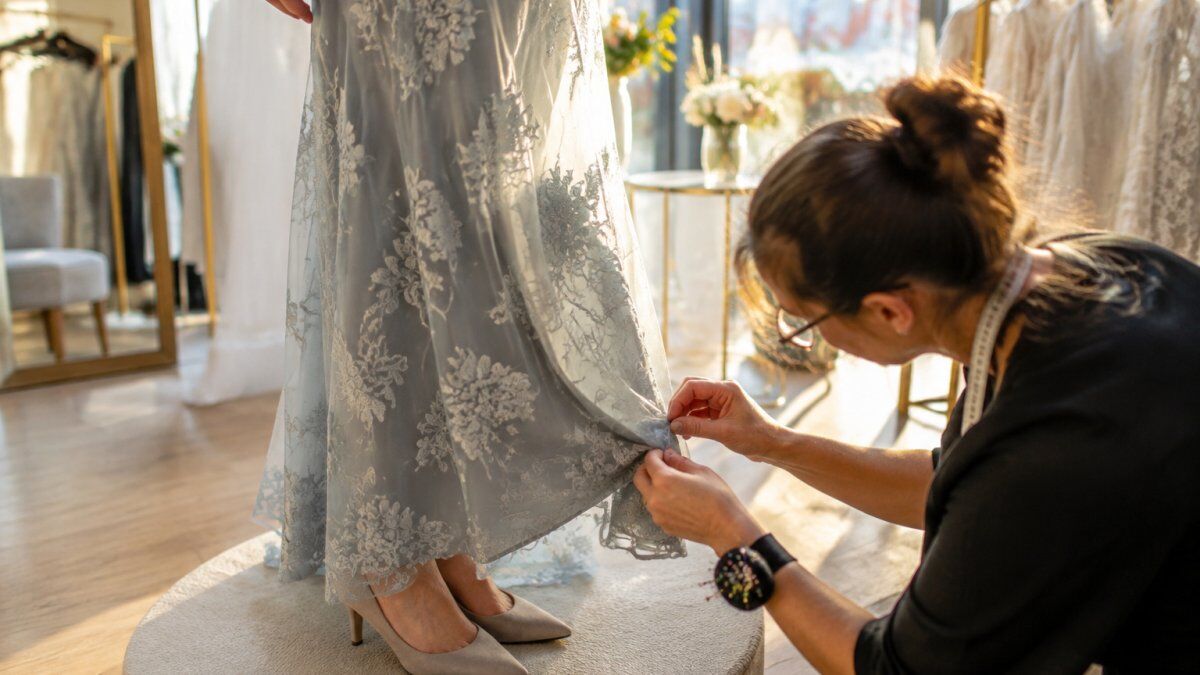
- Shoes, worn in. Heel height changes the hem by a noticeable margin, and a hem measured in flats will often be wrong once you are standing in the shoes you plan to wear. Bring the exact pair, not a similar pair.
- Undergarments and shapewear. The right support changes how the bodice sits and how the fabric hangs. A fitting done without them usually has to be repeated.
- Jewellery and accessories you plan to wear. Necklace depth and earring size affect how a neckline reads, and a statement piece can change where you want the bodice to sit.
- A written list. Note what you want changed and what you already like about the outfit, so the fitting stays focused and nothing is forgotten between appointments.
- Reference photos. Bring images of the look you have in mind, plus any concerns about comfort, sleeve movement, how the bodice feels when you sit, whether the waistband digs in after an hour.
Plan for more than one fitting if the outfit needs several changes, and allow enough time before the event for final adjustments and any rework. A common pattern is a first fitting for measurements and pinning, a second to check the work in progress, and a short final appointment to confirm the finished fit.
Watch out: arriving without the shoes or undergarments you plan to wear is the single most common reason a fitting has to be redone, and it adds an extra appointment to the schedule.
Booking Your Mother of the Bride Fitting in Calgary
Start the process early. A good fitting schedule gives you room for more than one appointment and any rework that may be needed. Calgary Seamstress has been providing alteration and tailoring services from our location in Southcentre Mall, and we work with many formal garments, including dress alterations.
Pricing depends on the scope of the work, so the best way to get an accurate figure is to contact us for a quote. You can also review the appointment process and book a time that suits your schedule on our booking page.
Mother of the bride outfits deserve a fit that feels as good as it looks. Bring your shoes, your undergarments and your plans, and the team can help you get there.
Ready to get your outfit fitted just right? Book your appointment with Calgary Seamstress and get a precise fit that moves with you.
Frequently Asked Questions
What alterations are most common for a mother of the bride outfit?
The most common requests are hemming for the right length, adjusting sleeves, taking in or letting out the bodice and waist, and fitting the shoulders. Dresses with lace or beading often need extra care. Pricing depends on the garment and the work involved, so contact Calgary Seamstress directly for a quote.
How should a mother of the bride outfit fit?
The bodice should sit smoothly without pulling across the bust, the waist should sit where you want it, and the hem length should suit your shoes. Sleeves should sit at the shoulder seam without bunching. Trying the outfit on with the undergarments and shoes you plan to wear gives the most accurate result.
Can a tailor alter a dress with lace or beading?
Yes, but delicate embellishment needs careful handling. Tell the tailor about every embellished area at the first appointment so they can plan the work.
What should I bring to a dress fitting?
Bring the shoes you plan to wear, the undergarments or shapewear you will use on the day, and any accessories that affect fit such as a belt or jacket. Bring photos of how you want the outfit to look if you have them. Wearing the same undergarments keeps the fit consistent.