Last Updated: November 20, 2026
Quick Summary
Tailoring ready-to-wear suits gives you a closer fit without paying for a full bespoke build. Alterations can correct sleeve length, trouser hems, waist and overall proportion, improving both appearance and comfort. Shoulder fit is the hardest area to change, so it should be right at purchase.
- Shoulder fit is the most important factor and is the hardest to alter, so get it right at purchase.
- Sleeves can usually be shortened, and the cuff should show a small amount of shirt.
- Bring the shirt and shoes you plan to wear, since sleeve length and trouser break depend on them.
- Tell your tailor about the sweater or jacket you will layer, so the fit allows for it.
- Ask the tailor to show the seam allowance on your garment before agreeing to any work.
Table of Contents
- Why a Ready-to-Wear Suit Rarely Fits Off the Rack
- Ready-to-Wear, Made-to-Measure and Bespoke: How They Compare
- Benefits of Tailoring Ready-to-Wear Suits for a Better Fit
- Suit Jacket Alterations That Make the Biggest Difference
- Suit Pants Hemming, Waist Adjustments and Other Common Fixes
- Alteration Limits, Costs and Timelines to Expect
- Signs of Quality Tailoring to Check Before You Commit
- Booking Your Suit Fitting at Calgary Seamstress
- Frequently Asked Questions
Why a Ready-to-Wear Suit Rarely Fits Off the Rack
Most men and women who buy a suit off the rack walk out with a jacket that is close, but not right. The shoulders sit a little wide, the sleeves run long, and the trousers pool at the ankle. Ready-to-wear suits are cut for an average body in a range of sizes, so very few people match the pattern exactly. Fall is a good time to fix this, since jackets and sweaters layer over the suit and can make a poor fit even more noticeable.
Ready-to-Wear, Made-to-Measure and Bespoke: How They Compare
Buyers usually choose between three routes. Each one trades cost, time and control differently.
| Option | Typical Fit | Lead Time | Best For |
|---|---|---|---|
| Ready-to-wear | Standard sizing, adjusted after purchase | Immediate | Buyers who need a suit this week |
| Made-to-measure | Pattern adjusted to your measurements | Several weeks | Buyers who want a close fit without full custom work |
| Bespoke | Cut and built from a pattern made for you | Several months | Buyers who want complete control over fit and style |
Ready-to-wear is the fastest and usually the least expensive starting point. Its main weakness is that the fit is generic until a tailor adjusts it. Made-to-measure and bespoke give a better starting fit, but they cost more and take longer. For most Calgary professionals, a well-altered ready-to-wear suit delivers the best balance of cost and fit.
Benefits of Tailoring Ready-to-Wear Suits for a Better Fit
Tailoring a ready-to-wear suit is a practical way to get a closer fit without paying for a full bespoke build.
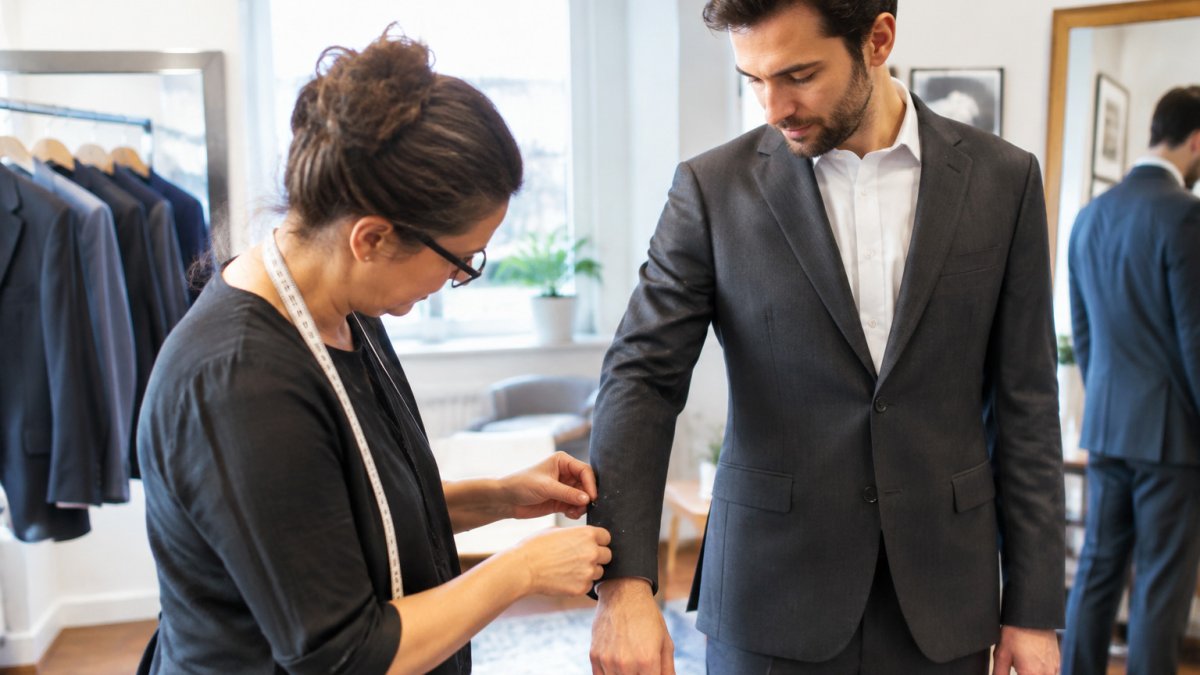
- Better shoulder and jacket fit. The shoulder seam is the hardest part to alter, so it matters most to get the right size at purchase.
- Correct sleeve length. Sleeves that show the right amount of shirt cuff look sharper and more deliberate.
- Trousers that break correctly. A clean hem removes the bunching and pooling that make a suit look cheap.
- Waist and seat fit. Taking in or letting out the waist makes the trousers sit smoothly without gaping.
- Better overall proportion. A suit fitted to your frame makes you look taller and more balanced.
- Greater comfort. A suit that moves with you is easier to wear all day.
- Longer garment life. Well-fitted clothing puts less strain on seams and fabric, so it lasts longer.
How Tailoring Improves Silhouette and Proportions
Silhouette is the outline a suit creates on your body. A jacket that is too long in the body or too wide in the shoulders hides your natural shape. Tailoring brings the jacket back to your frame, so the line from shoulder to hem looks intentional. Trouser taper works the same way: a tapered leg that follows the line of your leg looks modern, while a loose, baggy leg looks dated.
Concealing Fit Issues and Emphasizing Strengths
Good tailoring also works in both directions. A skilled tailor can soften a broad back, balance uneven shoulders, or shorten a long torso visually. The same work can emphasize strengths, such as a trim waist or well-built shoulders. The aim is not a different body, but a suit that presents yours at its best.
Suit Jacket Alterations That Make the Biggest Difference
Not every fix carries the same weight. Some alterations change the entire look of a jacket, while others are small refinements. When we review a ready-to-wear jacket, we check the following areas first.
- Shoulders. Shoulder fit is the most important factor and is the hardest to change, so it should be right when you buy.
- Sleeve length. Most sleeves can be shortened, and the cuff should show a small amount of shirt.
- Jacket body and length. Taking in the sides can clean up the fit around the waist and back.
- Button stance. The buttons should sit where the jacket closes smoothly without pulling.
Ask your tailor about the limits of your specific jacket before you start.
Suit Pants Hemming, Waist Adjustments and Other Common Fixes
A standard hem is often the first fix people need for suit trousers, but the waist and seat also matter.
Other common fixes include:
- Hemming to the right break for your shoe style
- Taking in the waist for a closer fit
- Tapering the leg from knee to ankle
- Adjusting the seat for comfort when sitting
Alteration Limits, Costs and Timelines to Expect
Every ready-to-wear suit has a ceiling on what a tailor can do, and knowing that ceiling before you buy can save money and disappointment. Seam allowance, the extra fabric folded inside each seam, is one factor that sets that ceiling.
Construction details set hard limits. Shoulders are the least forgiving area because the sleeve head and armhole are shaped and padded; moving a shoulder seam meaningfully usually requires rebuilding the jacket and rarely makes financial sense on a ready-to-wear piece. Buttonholes are cut, not sewn shut, so a jacket cannot be shortened past the lowest buttonhole without losing the closure. Lining, pocket placement, and fabric pattern also constrain results: a strong plaid or stripe must be matched at every seam, which limits how far a tailor can move a panel without breaking the pattern. Before any work begins, ask your tailor to open the seam and show you the allowance on the specific garment. Because seam allowances and pattern matching can only do so much, curated clothing fit begins with choosing garments whose proportions and construction already suit the wearer.
Cost depends on the work involved. For a quote on your specific suit, check the Calgary Seamstress website or contact the shop directly, since pricing varies with the garment.
Before a wedding, interview, or formal event, book your appointment early so there is room for a follow-up if something needs refining.
Ask what the seam allowance allows before you agree to any work.
Signs of Quality Tailoring to Check Before You Commit
Judging a tailor is less about a checklist and more about how they handle the conversation before any stitching starts. Our guide to finding a reliable tailor in Calgary walks through the questions to ask before you commit. The best signal is whether the tailor asks about the layers you plan to wear over the suit and adjusts the fit accordingly. A tailor who measures you in a thin shirt for a suit you will wear over a sweater is setting up a poor result.
Come prepared to the first appointment. Wear the shirt and shoes you plan to pair with the suit, since sleeve length and trouser break both depend on them. Bring the jacket and trousers together, not one at a time, so the tailor can judge proportion as a set. If you are planning fall layering, bring the sweater or jacket you intend to wear underneath so the tailor can allow for it in the chest and sleeve.
Evaluate the tailor on process, not just samples. Ask how many fittings a typical suit job requires and what happens if the first result is not right. A good tailor explains the seam allowance on your specific garment, names the alterations that are realistic, and tells you plainly which changes are not worth doing. Ask to see examples of work on garments similar to yours, and ask how they handle patterned fabric where seams must match. Clear answers on limits are a better sign than a long list of promises.
Watch out: a tailor who quotes a price without examining the garment’s seams and construction is guessing. The allowance and construction decide the work, so a quote given before the jacket is turned inside out is not a real quote.
Once the work is done, check the finished garment the same way. Seams should lie flat without puckering, trouser breaks should match on both sides, and the jacket should move with you across the back and shoulders. Try the suit on with the shirt and shoes you brought, and sit, reach, and walk before you accept it. If something is off, raise it at the fitting rather than after you leave, while the tailor can still correct it.
Booking Your Suit Fitting at Calgary Seamstress
At Calgary Seamstress, we handle ready-to-wear suit alterations including jacket sleeves, body fit, and trouser hemming and waist adjustments. We have operated at the Southcentre Mall location for 38 years. We aim to set clear expectations from the start by confirming what can be changed before any work begins.
Fitting is sometimes mandatory, so plan on coming in with the shoes and shirt you intend to wear. If you are preparing for a wedding, formal event, or important meeting, book your appointment early so there is time for adjustments. You can book your suit tailoring appointment online, and our team will help you plan the right fitting schedule.
If you are weighing the cost of a single change, you can also review our guidance on how much it costs to hem pants before you book. Suit pants alterations and other common fixes are covered in more detail in our guide to tapering suit pants.
Fall is a practical time to tailor a suit, jacket or sweater, because layering exposes fit problems quickly. Book your fitting with Calgary Seamstress and get a suit that fits the way you do.
Frequently Asked Questions
What are the benefits of tailoring a ready-to-wear suit?
Tailoring a ready-to-wear suit improves how it sits on your shoulders, chest and waist, so the jacket hangs cleanly and the trousers break correctly over your shoes. Sleeve and jacket length can be matched to your arms, and trouser hems adjusted to your inseam. Alterations also let you conceal minor fit issues and emphasize your strengths. A well-fitted suit looks more polished and feels more comfortable to move in,
Can a tailor make an off-the-rack suit fit like a custom suit?
A tailor can get very close, but not every change is possible. Most fit issues in the jacket and trousers can be corrected, including sleeve length, jacket length, waist and hem. Major changes to the shoulders or chest are harder because they affect the structure of the garment. A custom suit is cut from your measurements from the start, so it offers the most precise fit. For most buyers, a ready-to-wear suit with careful alterations provides a strong balance of fit, quality and cost.
How should a suit jacket fit before alterations?
Before any alterations, the shoulder seams should sit at the edge of your shoulder without drooping, and the jacket should lie smoothly across your back without pulling. The sleeve should end at the base of your thumb, with a small amount of shirt cuff showing. The jacket should close comfortably over your chest without gaping. These fit points are what a tailor checks first, because shoulders and chest are the hardest to change while the sleeve length and jacket length are usually the easiest to adjust.
What alterations cannot be made to a ready-to-wear suit?
Some changes are limited by how the garment was built. Shoulder width is difficult to alter because it depends on the jacket’s internal construction, and the amount of fabric available in seams and hems sets a limit on how much a garment can be let out or taken in. A suit with a small seam allowance or a pattern that does not match when altered may be restricted. Ask a tailor to check the seam allowance before committing to a larger change, so you know whether the alteration is realistic.