Table of Contents
- What to Look for Before You Buy a Women’s Suit
- Women’s Suit Fitting Guide: The Areas That Matter Most
- Common Women’s Suit Alterations Explained
- How to Find a Reputable Tailor for Your Suit
- How Long Do Suit Alterations Take?
- Professional Jacket Tailoring Cost: What Affects the Price
- The Alteration Process from First Fitting to Final Pickup
- Conclusion
- Frequently Asked Questions
Last Updated: October 6, 2026
What to Look for Before You Buy a Women’s Suit
The best way to get women’s suit alterations done right is to buy a jacket that already fits your shoulders. A tailor can adjust almost anything else. Shoulders are the hardest fix.
That single rule saves you money and heartbreak.
So before you pay for anything, check these points in the mirror:
- Shoulders: The seam should sit at the edge of your shoulder bone. Not past it. Not before it.
- Jacket length: The hem should cover your seat and end around mid-thigh.
- Sleeve length: The cuff should hit the wrist bone, not your knuckles.
- Button stance: The top button should sit at your natural waist, just above the belly button.
- Trouser rise: The waistband should stay put when you sit down.
- Fabric seams: Check for puckering along the back and sides. It signals a poor cut.
One more thing most shoppers skip: wear the shoes and undergarments you plan to pair with the suit. Heels change hem length. A different bra changes how the jacket drapes.
Buying a jacket that’s too small is a bigger mistake than buying one that’s too big. A tailor can take fabric in. Adding fabric is nearly impossible without visible seams.
Women’s Suit Fitting Guide: The Areas That Matter Most
A good women’s suit fitting guide starts with one idea: fit is about movement, not just measurements. You should be able to sit, reach, and raise your arms without the jacket pulling.
Here’s what to test during any fitting:
- Sit down. The jacket should not bunch at the back of the neck.
- Cross your arms. You should feel snug, not strangled.
- Raise both arms. The whole jacket shouldn’t lift with them.
- Button up. There should be no X-shaped pull across the chest.
- Walk a few steps. Trousers shouldn’t twist or ride up.
The jacket back and shoulders carry most of the fit. If the back ripples when you stand still, the jacket is too tight across the upper back. If it tents out, it’s too loose.
Women’s bodies vary more than most off-the-rack sizing allows. That’s normal. It’s also why alterations exist. The Competition Bureau of Canada’s guidance on textile labelling and care is worth a look if you want to understand what garment labels legally must tell you.
Common Women’s Suit Alterations Explained
Most suit alterations fall into two groups: jacket work and lower-body work. Here’s what each one involves and when you actually need it.
Jacket Alterations: Sleeves, Waist, and Shoulders
Sleeve shortening is the most common jacket fix. It’s also the cheapest. A tailor opens the cuff, trims the sleeve, and reattaches the buttons and lining.
Taking in the waist follows close behind. This is a side-seam or back-seam job. It shapes the jacket to your torso without touching the shoulders.
Shoulder adjustments are the big one. They require opening the jacket at the armhole and resetting the sleeve. That’s real surgery, and it costs the most. Only do it if the jacket is otherwise perfect.
- Sleeves: Quick, low cost, high impact
- Waist: Moderate work, big visual change
- Shoulders: Complex, expensive, use sparingly
Trouser and Skirt Alterations
Hemming is the everyday job. A tailor marks the length while you wear the actual shoes, then finishes the edge.
Waist adjustments handle gaping at the back. Taking in the seat smooths the fit through the hips.
Skirt suits need the same care. A pencil skirt hem should sit just below the knee, and the vent should lie flat, not flare.
Always ask your tailor to keep the original hem fabric when shortening trousers. It gives you room to lengthen later if your needs change.
How to Find a Reputable Tailor for Your Suit
Finding a good tailor comes down to three checks: portfolio, communication, and fit philosophy. A reputable tailor will show you past work and explain what’s possible before touching your suit.
Ask these questions before you commit:
- Can I see photos of similar suits you’ve altered?
- Do you do the work here, or send it out?
- What happens if I’m not happy with the fit?
- How many fittings are included?
A tailor who rushes you through a fitting is a red flag. So is one who promises a perfect result without pinning anything.
Word of mouth still works best. Ask coworkers, friends, or anyone whose suit fits well where they go. In Calgary, a tailor near you with a steady local following is usually a safer bet than a big chain. Having a baseline understanding of your own proportions ensures that you can accurately measure yourself before heading to the shop to discuss your desired adjustments.
How Long Do Suit Alterations Take?
Rush service can cut turnaround time to a day or less, but it costs more and depends on the workload.
Here’s a rough guide:
| Alteration Type | Typical Turnaround | Notes |
|---|---|---|
| Hemming (trousers or skirt) | 3-7 days | Fastest job |
| Sleeve shortening | 5-10 days | Needs cuff work |
| Waist take-in | 5-10 days | Side or back seam |
| Shoulder adjustment | 2-3 weeks | Complex rebuild |
| Full suit overhaul | 2-4 weeks | Multiple fittings |
Plan backward from your event. If your gala is in three weeks, shoulder work is risky. A hem is fine.
Book your first fitting at least three weeks before any event. That buffer covers a second fitting and any surprise fixes.
Professional Jacket Tailoring Cost: What Affects the Price
Professional jacket tailoring cost depends on the complexity of the job, the fabric, and the number of fittings. Simple jobs cost less. Structural rebuilds cost more.
The main cost drivers:
- Job complexity. Sleeves and hems are quick. Shoulders and linings are not.
- Fabric type. Delicate or lined fabrics take longer to handle.
- Number of fittings. More fittings mean more labor.
- Turnaround time. Rush work usually carries a premium.
- Garment condition. Worn seams or damaged lining add work.
Pricing depends on the work involved. The best move is to bring your suit in for a quote. You’ll get a clear number before any needle touches fabric.
If you want to understand what fair tailoring looks like as a trade, the Government of Canada’s information on skilled trades and apprenticeship explains how formal training works in this field.
The Alteration Process from First Fitting to Final Pickup
The alteration process runs through five clear stages. Knowing them ahead of time makes the whole thing less stressful.
1. Consultation and quote. You bring the suit in. The tailor looks at the fit and explains what’s possible. You get a price and a timeline.
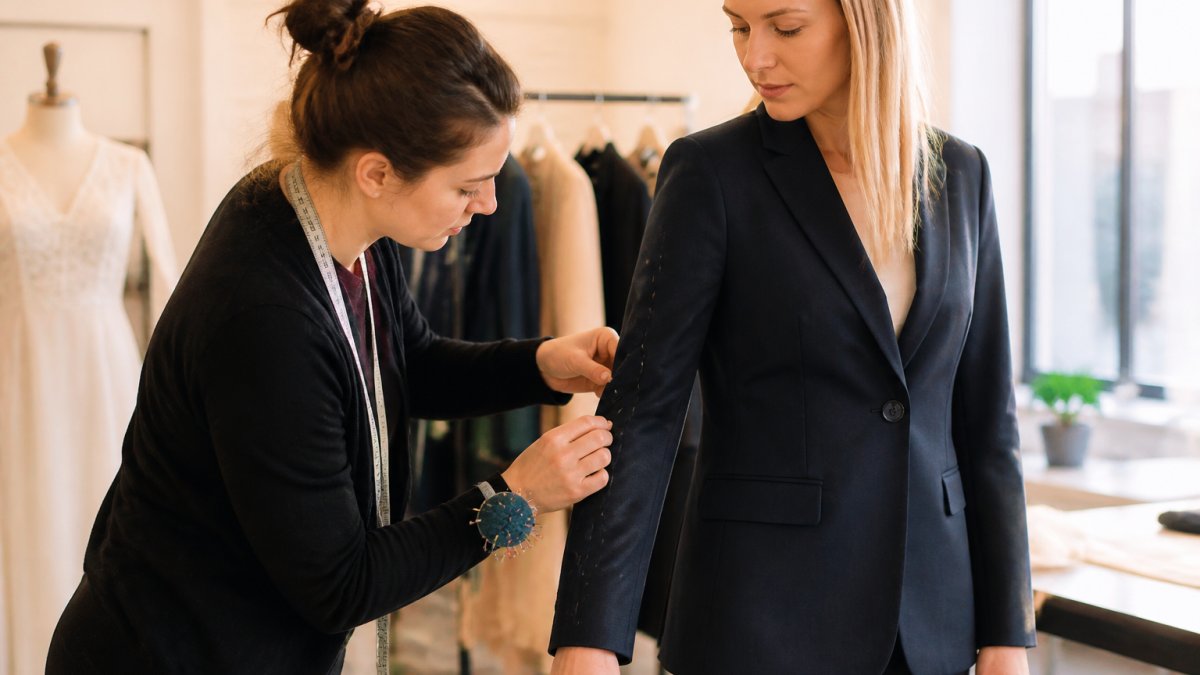
2. First fitting and pinning. You wear the suit. The tailor pins the changes while you stand and move. This is where you speak up about comfort.
3. Sewing. The tailor takes the suit apart where needed and rebuilds it. This happens off your body.
4. Second fitting. You try the suit again. Small tweaks get marked. Most suits need one round of fine-tuning.
5. Final pickup. You check the fit one last time, then take it home.
A common mistake is staying quiet during the first fitting. If something feels off, say so. It’s far easier to fix before the sewing starts.
Conclusion
Getting a suit to fit well takes planning, not luck. Buy for the shoulders, speak up at every fitting, and give yourself a realistic timeline before your event.
That’s where Calgary Seamstress comes in. Our team handles suit tailoring and pants alterations with the same care we bring to every garment. We offer one-hour and 24-hour rush service when your event is close. And you’ll find us at Calgary Southcentre Mall, a local small business serving Calgary and the surrounding area.
Make an appointment online and let us get the fit right the first time.
Frequently Asked Questions
What should I look for when choosing a tailor for a women’s suit in Calgary?
Look for a tailor who specializes in women’s garments and has experience with the specific alterations you need. Ask to see examples of their work, particularly on similar suits. A good tailor will listen to your concerns, explain what’s possible, and be honest about limitations. In Calgary, visit the shop in person if you can, check for a clean, organized workspace, and ask about turnaround times and pricing structure before committing. Trust your instincts if the tailor seems rushed or dismissive.
How much do women’s suit alterations typically cost in Calgary?
Pricing depends on the complexity and number of alterations required. Because every suit and every body is different, contact Calgary Seamstress directly for a personalized quote based on your specific suit and alteration requirements.
How long do suit alterations take?
If you have a tight deadline, ask about rush services. Calgary Seamstress offers one-hour and 24-hour rush service for urgent needs, but availability depends on the scope of work. Always communicate your deadline upfront.
Can all women’s suits be altered to fit perfectly?
Most suits can be significantly improved with alterations, but some limitations exist. Shoulders are the hardest area to change because the jacket’s structure and proportion are set there. If a jacket is more than one size too large in the shoulders, it may not be worth altering. Sleeves, waist, and length can usually be adjusted. A skilled tailor will assess your suit and tell you honestly what can and cannot be achieved before you commit.