Table of Contents
- Best Beach Wedding Venues in Canada
- Beach Wedding Permits and Legal Requirements in Canada
- Beach Wedding Attire for Canada’s Coastal Climate
- Cost of a Beach Wedding in Canada: What to Budget For
Last Updated: July 30, 2026
Planning a beach wedding in Canada requires permits, weather contingency plans, vendor coordination, and attire suited to coastal conditions. This guide from Calgary Seamstress covers venue scouting, legal requirements, attire, and budgeting so you can execute your waterfront ceremony fully prepared.
Best Beach Wedding Venues in Canada
Canada’s coastline spans three oceans, offering venues from rugged Pacific shores to warm-water bays. Your venue determines permit requirements, guest capacity, catering logistics, and ceremony backdrop.
Most sought-after regions:
- British Columbia: Tofino and Long Beach offer dramatic Pacific scenery with temperate rainforest backdrops for late-summer ceremonies.
- Prince Edward Island: Red sand beaches near Cavendish feature sheltered bays with calmer wind conditions than open Atlantic coastlines.
- Nova Scotia: The South Shore, including Lunenburg and Chester, offers scenic views with working fishing villages as backdrops.
- Ontario: Sandbanks Provincial Park and Sauble Beach provide beach ceremonies without destination logistics.
- New Brunswick: Parlee Beach near Shediac is one of the warmest saltwater beaches in eastern Canada, accommodating larger receptions.
| Region | Beach Type | Best Season | Wind Exposure | Venue Capacity |
|---|---|---|---|---|
| Tofino, BC | Pacific open coast | July – September | High | Small to mid-size |
| PEI North Shore | Sheltered bay | June – September | Moderate | Small to large |
| Nova Scotia South Shore | Atlantic cove | July – August | Moderate-high | Small to mid-size |
| Sandbanks, ON | Freshwater lake | June – August | Low-moderate | Mid-size to large |
| Parlee Beach, NB | Warm saltwater | July – August | Low-moderate | Mid-size to large |
Beachfront resorts in BC and PEI increasingly offer all-inclusive packages bundling officiant, catering, and photography, simplifying coordination but limiting vendor flexibility.
For intimate micro-weddings or elopements, book a provincial park ceremony site. Parks Canada and provincial park systems offer designated ceremony areas with lower fees and no minimum guest counts. Check availability early since popular sites book out by February for summer dates.
Beach Wedding Permits and Legal Requirements in Canada
Permit requirements vary by province and whether the beach is federally, provincially, or municipally managed. This is the critical step most guides skip.
According to Parks Canada’s special events permit guidelines, any organized event on federal parkland requires a Special Events Permit, submitted well in advance with fees varying by park and group size. Provincial parks operate under separate legislation. Municipal beaches require contacting the relevant city or town directly; many require a parks use permit and liability insurance.
Key permit and legal checklist:
- Identify who manages the beach (federal, provincial, or municipal)
- Apply for a special events or parks use permit at least 60-90 days before your date
- Obtain liability insurance ($2 million minimum coverage typically required)
- Confirm your officiant is licensed in the ceremony province
- Obtain your marriage license from the provincial vital statistics office where you’re marrying
- Check local bylaws for restrictions on amplified sound, open fires, and structures
- Confirm tide schedules and site accessibility at your planned time
- Review eco-protection rules for protected coastal ecosystems
Marriage license requirements are provincial. As documented in Service Canada’s provincial marriage information, each province sets its own rules for who can perform ceremonies, waiting periods, and documentation.
Skipping the permit process is the most common and costly mistake couples make. An unpermitted ceremony can be shut down mid-event by park staff or bylaw officers. Start the permit process before finalizing other vendor bookings.
Many coastal areas fall under the Species at Risk Act or provincial wildlife protection legislation. Avoid confetti, balloon releases, and single-use plastics. Biodegradable flower petals and seed paper are compliant alternatives.
Beach Wedding Attire for Canada’s Coastal Climate
Coastal conditions make beach wedding attire a functional decision. Wind, sand, humidity, and uneven terrain eliminate many traditional dress options.
For brides, lightweight fabrics like chiffon, charmeuse, and soft crepe photograph beautifully in natural lighting and move well in coastal wind. Avoid heavily boned corsets and cathedral-length trains, which collect sand and become unmanageable on soft ground.
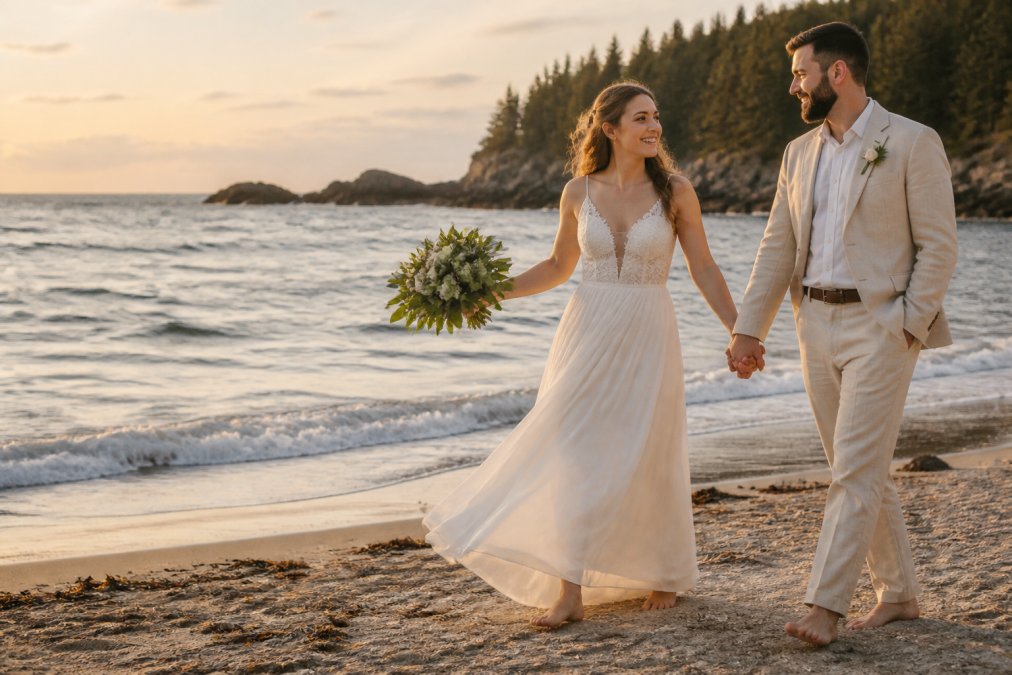
Sand-friendly footwear is non-negotiable. Stilettos sink immediately. Flat sandals, wedge heels, or bare feet are practical choices. Many brides wear elegant flat sandals for the ceremony and switch to heels for the indoor reception.
For the bridal party, coordinate attire to the coastal climate. Linen suits in light tones work well for grooms and groomsmen. Shorter bridesmaid dresses in lightweight fabrics prevent hem-dragging-in-sand problems. A dress fitting perfectly in a boutique can behave differently in wind and humidity. Alterations accounting for movement, including secure closures and comfortable walking length, make the difference between a comfortable ceremony and a stressful one.
Lightweight, flowing fabrics in natural fibres photograph better in natural coastal lighting and handle wind gracefully. Heavy structured fabrics fight the environment instead of working with it.
For grooms, linen or lightweight wool blends prevent overheating during summer ceremonies. Avoid dark colours in full sun.
Cost of a Beach Wedding in Canada: What to Budget For
A beach wedding in Canada ranges from a low-cost elopement to a full destination event. Venue type, guest count, and vendor coordination drive costs most significantly.
Typical cost categories:
- Venue and permits: Provincial park ceremony sites are most affordable; resort venues with all-inclusive packages sit at the higher end.
- Officiant: Licensed officiants vary in fee based on location and ceremony length. Destination locations may require travel fees.
- Photography and videography: Seaside photography in natural lighting is technically demanding. Experienced photographers command higher rates.
- Catering: Outdoor catering at beach locations involves significant logistics: transport, equipment, food safety in heat, and waste management.
- Decor: Wind-resistant decor is specialized. Ceremony arches need weighting or staking. Floral arrangements require wind-tested designs.
- Wedding attire alterations: Professional alterations ensure your dress moves well and fits securely in wind and movement. Contact Calgary Seamstress directly for a quote tailored to your gown.
| Cost Category | Lower-Cost Approach | Higher-Cost Approach |
|---|---|---|
| Venue | Provincial park permit site | Beachfront resort package |
| Catering | Local food truck or picnic style | Full-service outdoor catering |
| Photography | Single photographer, natural light | Lead + second shooter, drone |
| Decor | Minimal, wind-resistant naturals | Full ceremony arch, florals, lighting |
| Attire alterations | Basic hem and fit | Complex restructuring, custom work |
| Guest count | Micro-wedding, under 20 | Full reception, 80+ guests |
Hidden costs are in logistics, not aesthetics. Transport, permits, weather contingency plans, and vendor travel fees add up quickly. Build a contingency fund of 10-15% of your total budget for weather-related pivots and last-minute logistics.
A beach wedding in Canada is achievable at almost any budget, but couples who enjoy it most sort operational details early. Calgary Seamstress specializes in wedding dress alterations and custom fitting, ensuring your dress moves, fits, and holds up for an outdoor coastal ceremony. With rush service available and meticulous craftsmanship on complex alterations including closures, hems, and structural adjustments, you won’t scramble in final weeks. Make an Appointment Online to discuss your dress before your beach wedding date.
Frequently Asked Questions
Do you need a permit for a beach wedding in Canada?
Yes, in most cases. Public beaches in Canada are managed by municipal, provincial, or federal authorities, and hosting a ceremony typically requires a special event permit. Requirements vary by province and municipality, for example, beaches in British Columbia provincial parks fall under BC Parks jurisdiction, while beaches in national parks require a permit from Parks Canada. Apply well in advance, as popular coastal locations book up quickly, especially in summer.
What are the best beach wedding venues in Canada?
Canada offers diverse beach wedding venues, from the rugged shores of Prince Edward Island and Nova Scotia's South Shore to the Pacific beaches of Vancouver Island and the freshwater lakefront settings in Ontario and Alberta. Beachfront resorts often bundle all-inclusive packages covering catering, decor, and officiant coordination. Public beaches offer a more intimate, budget-friendly coastal ceremony option, though they require permits and more independent vendor coordination.
What should guests wear to a beach wedding in Canada?
Beach wedding attire in Canada should balance elegance with practicality. Guests are typically advised to skip stilettos in favour of wedges, block heels, or sand-friendly footwear like dressy sandals. Lightweight fabrics such as linen, chiffon, and cotton suit the coastal climate. Because Canadian coastal weather can shift quickly, a light wrap or blazer is a smart addition. The dress code, whether casual coastal or semi-formal, should be clearly communicated on the invitation.
How much does a beach wedding cost in Canada?
The cost of a beach wedding in Canada varies widely depending on venue type, guest count, province, and vendor choices. All-inclusive beachfront resort packages can simplify budget management by bundling catering, decor, and coordination. Public beach ceremonies tend to have lower venue costs but require separate vendor contracts. Permit fees, travel logistics for destination guests, and weather contingency rentals like tents all factor into the total. Request itemized quotes from local vendors to build an accurate budget.
Can you alter or customize a wedding dress to suit a beach ceremony?
Absolutely. Many brides choose to have their wedding dress altered specifically for a beach setting, shortening the hem to avoid sand, adding a detachable train, or converting a structured silhouette into a more breezy, flowing gown. A professional seamstress can advise on fabric choices and structural adjustments that keep the dress comfortable in coastal conditions. If your wedding is approaching, look for a tailor offering rush alteration services to meet your timeline.
This article was written using GrandRanker