Table of Contents
- Questions About Your Seamstress’s Experience and Expertise
- Wedding Dress Fitting Checklist: What to Discuss at Your First Appointment
- Understanding Wedding Dress Alteration Timeline and Turnaround
- Wedding Dress Alterations Cost in Your Area: What to Ask
- Wedding Dress Bustle Options and Other Design Questions
- Questions About Communication, Revisions, and Guarantees
- What to Bring and How to Prepare for Your Fittings
- Frequently Asked Questions
Last Updated: October 20, 2026
Questions About Your Seamstress’s Experience and Expertise
Your wedding dress is one of the most important garments you’ll ever wear. Choosing the right wedding dress seamstress makes all the difference between a perfect fit and a costly mistake. Before you book your first appointment, ask about their background and track record.
Start by asking how long they’ve been working with wedding dresses. Experience matters tremendously in this specialty. A seamstress who has altered hundreds of bridal gowns knows how to handle delicate fabrics, preserve beading and embroidery, and navigate the unique challenges that come with formal wear.
Ask to see a portfolio of their work. Request photos of wedding dresses they’ve altered, including before-and-after shots. Pay attention to the quality of seams, the precision of hems, and how well they’ve preserved the original design details. A strong portfolio is your best assurance they know what they’re doing.
Ask specifically about experience with YOUR dress style. If you have a heavily beaded gown, ask if they’ve worked with similar pieces. If your dress has delicate lace, confirm they’ve handled lace overlays before. Specialization within specialization matters.
Inquire about their training and qualifications. Many skilled seamstresses have formal training in garment construction or tailoring. Some may have certifications or apprenticeships. Understanding their background helps you gauge their expertise level.
Ask if they’ve worked with your specific dress designer before. Some designers have quirky construction methods or use unusual materials. A seamstress familiar with your designer’s techniques can anticipate potential challenges.
Wedding Dress Fitting Checklist: What to Discuss at Your First Appointment
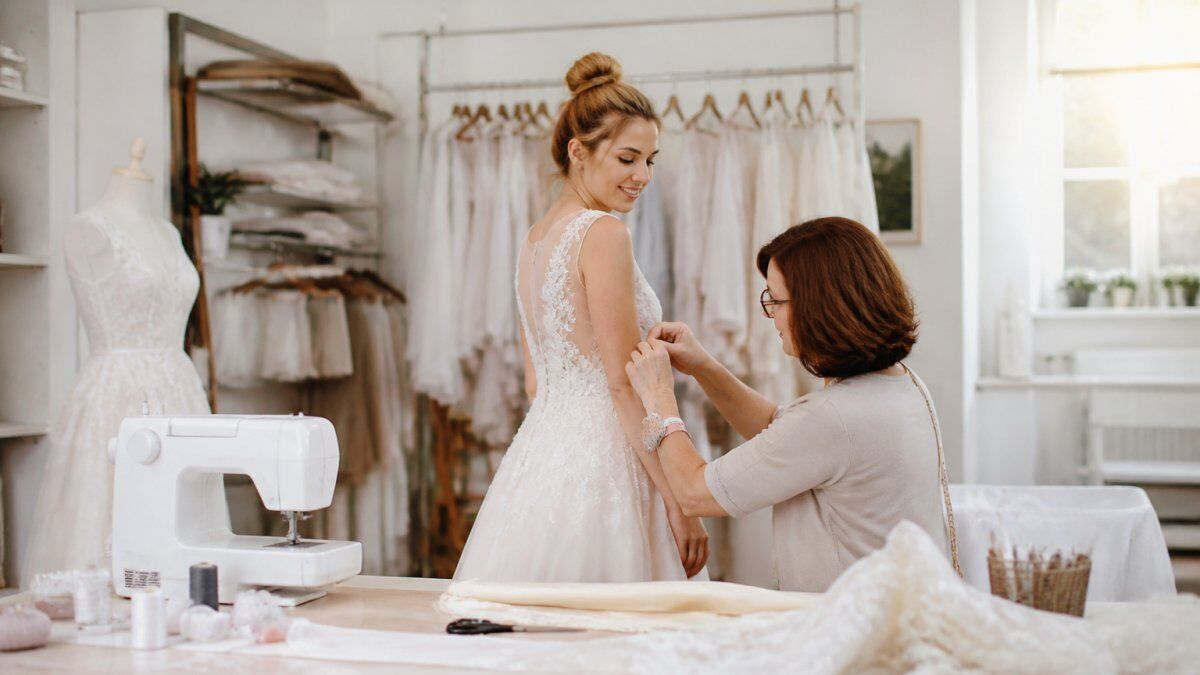
Your first fitting appointment sets the tone for the entire alteration process. Come prepared with a clear list of what needs adjusting. This is where you establish communication and make sure your wedding dress seamstress understands your vision.
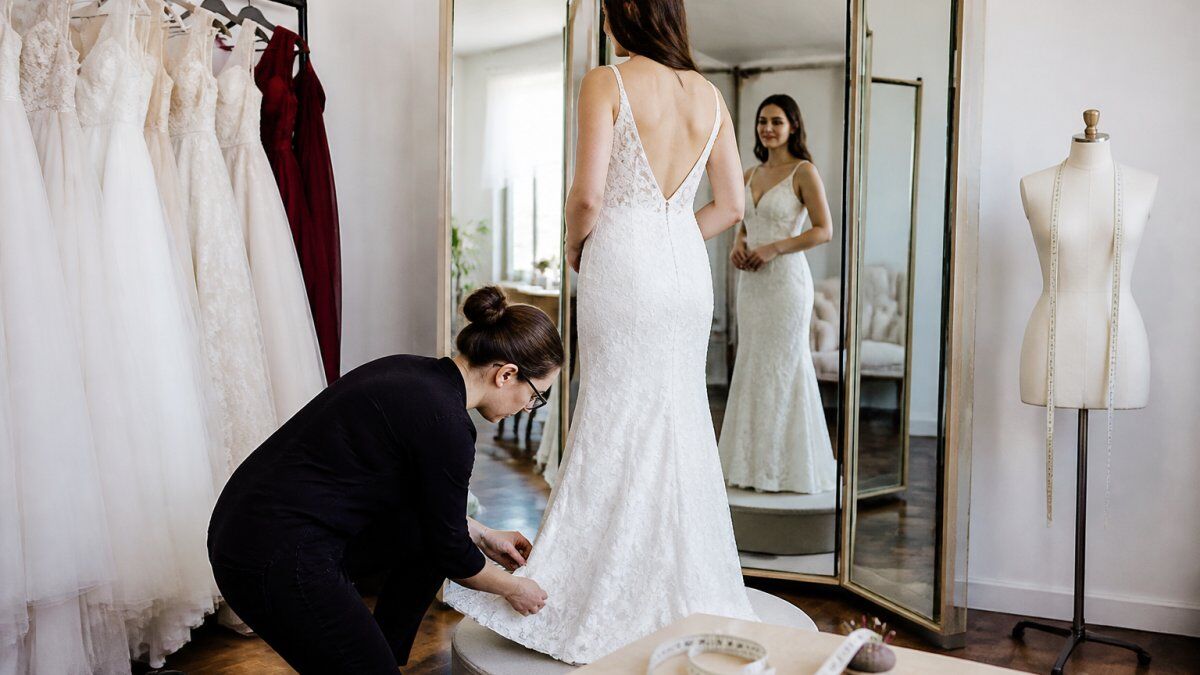
Bring a detailed checklist of alterations you need. Don’t assume the seamstress will catch everything. Walk through your dress section by section: Does the bodice fit properly? Are the straps the right length? Does the waistline sit where you want it?
Discuss the hem length in detail. Bring the shoes you’ll wear on your wedding day. Stand in your shoes and have the seamstress mark where the hem should hit.
Ask about sleeve adjustments if needed. Wedding dress sleeves can be tricky. Discuss whether they need to be taken in, let out, shortened, or repositioned. Show the seamstress exactly how you want them to fit.
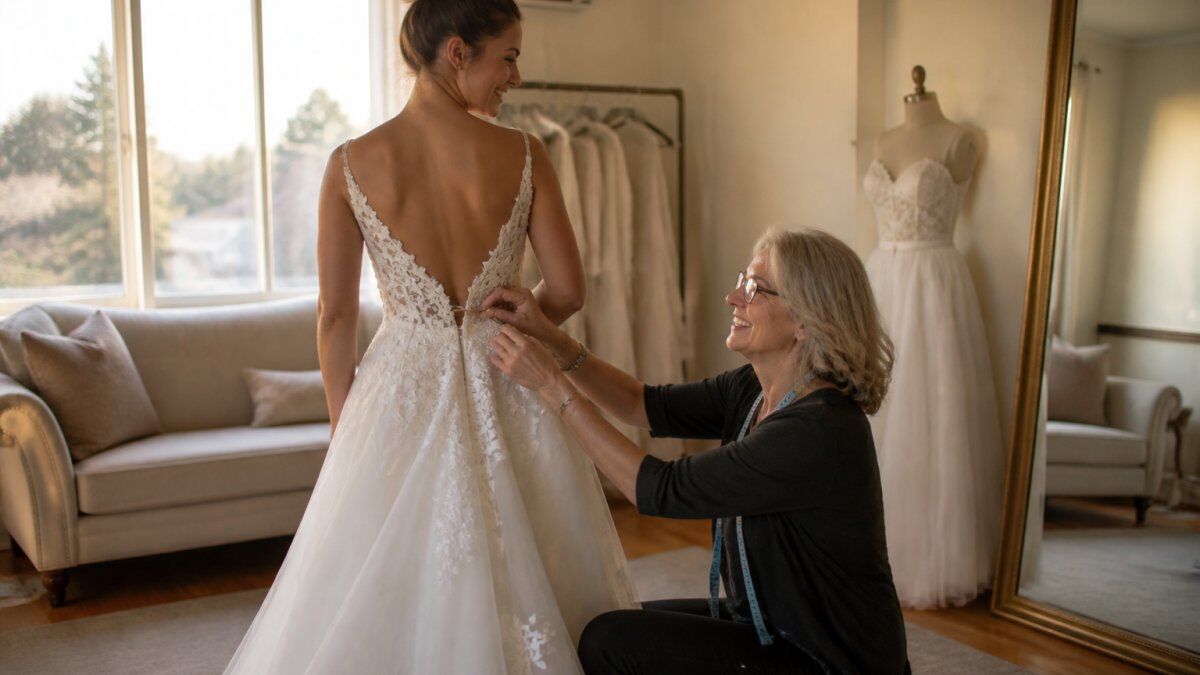
Talk about the bodice fit. This is crucial. Ask whether the dress needs to be taken in or let out at the sides, back, or bust. Discuss any gaping or pulling you’re experiencing.
The first appointment should result in a written summary of all agreed-upon alterations. Ask your seamstress to document what will be done, how many fittings you’ll need, and the timeline. This prevents misunderstandings later.
Bring a trusted friend or family member to your appointment. A second set of eyes helps catch details you might miss. They can also help you remember the seamstress’s recommendations and take notes.
Discuss any concerns about the dress’s construction. If you’ve noticed loose seams, fraying, or damage, mention it now. Ask whether these issues can be repaired as part of the alteration process or if they require separate attention.
Understanding Wedding Dress Alteration Timeline and Turnaround
Time is often the biggest stress point for brides. Ask your wedding dress seamstress for a realistic timeline upfront. Don’t assume rush service is always available, and understand that quality takes time.
For a typical wedding dress alteration, most seamstresses need 4 to 8 weeks. This allows time for multiple fittings, adjustments between appointments, and careful finishing work. If your wedding is sooner, ask about rush options and what additional cost that might involve.
Understand the fitting schedule. Most brides need at least two to three fittings. The first fitting is for initial alterations and marking. The second fitting checks the adjustments and identifies any fine-tuning needed.
Ask about the seamstress’s current workload. During peak wedding season, turnaround times get longer. If you’re getting married in June, July, or August, book early and confirm availability immediately. A busy seamstress might have a waiting list.
| Phase | Typical Duration | What Happens |
|---|---|---|
| Initial consultation | 1 fitting | Measurements, marking, initial alterations discussed |
| First alterations | 1-2 weeks | Seamstress completes initial work |
| Second fitting | 1 fitting | Check fit, mark any additional adjustments |
| Final adjustments | 1-2 weeks | Seamstress refines work based on second fitting |
| Final fitting | 1 fitting | Confirm all details, final approval |
Ask what happens if you need changes after the alterations are complete. Do they charge extra? How many revisions are included? Understanding their revision policy prevents surprises later.
Confirm the deadline. Tell your seamstress your wedding date and ask them to confirm they can complete all work at least one week before. This gives you a buffer in case any last-minute issues arise.
Wedding Dress Alterations Cost in Your Area: What to Ask
Cost is a practical concern that deserves a straightforward conversation. However, don’t lead with price alone. Quality alterations are an investment in how you look on your wedding day.
Ask for a detailed quote. Don’t accept vague pricing. Request a breakdown of costs for each alteration: hem, bodice adjustment, sleeve work, bustle installation, and any other changes. This transparency helps you understand where your money is going.
Understand what’s included in the quote. Some seamstresses include a certain number of fittings in their base price. Others charge per fitting. Ask whether revisions or adjustments are included or if they cost extra.
Ask about payment terms. Do they require a deposit upfront? When is the balance due? Most seamstresses ask for a deposit to secure your booking and reserve their time, with the remainder due at the final fitting or upon completion.
Inquire about rush fees. If you need faster turnaround, expect to pay more. Ask specifically what the additional cost would be for expedited service. Some seamstresses offer one-hour or 24-hour rush options, though these come at a premium.
Beware of prices that seem too low. Wedding dress alterations require skill and precision. Unusually cheap quotes often indicate inexperience or lower-quality work. Your dress deserves better than a bargain basement approach.
Ask whether the cost includes special finishes. Invisible stitching, hand-sewn hems, or careful beading work might cost more than basic alterations. Confirm what level of finish you’re getting for your quoted price.
Request a written estimate. Get everything in writing so there’s no confusion about what you’re paying for and what’s included. This protects both you and the seamstress.
Wedding Dress Bustle Options and Other Design Questions
A bustle is a functional and often beautiful feature that keeps your train off the ground during your reception. Ask your wedding dress seamstress about bustle options and which would work best for your dress.
There are two main bustle styles: the American bustle and the French bustle. An American bustle gathers the train up from the hem and attaches it to the waistline or bodice.
Discuss how the bustle will affect the look of your dress. Some brides want the bustle to be invisible from the front. Others like the visual interest it creates.
Ask about the mechanics of the bustle. How many attachment points will there be? Will it use buttons, hooks, or other fasteners? Make sure you understand how to put the bustle up and take it down.
Inquire about other design modifications you might want. Can the seamstress add or remove straps? Can they adjust the neckline? Can they modify the length of a train? Understanding what’s possible helps you envision your final look.
Ask about preserving original design details. If your dress has special beading, lace, or embroidery, confirm that alterations won’t damage these features. A skilled seamstress knows how to work around delicate details.
Questions About Communication, Revisions, and Guarantees
Clear communication prevents misunderstandings and ensures you end up with the dress of your dreams. Ask your seamstress how they prefer to stay in touch.
Will they call, text, or email you with updates? How often will you hear from them? Some seamstresses provide regular check-ins. Others only contact you when your dress is ready for the next fitting. Establish a communication preference upfront.
Ask about their revision policy. What if you’re unhappy with the first set of alterations? How many free revisions are included? At what point do additional revisions cost extra? Having this conversation early prevents conflict later.
Discuss what “finished” looks like. Ask for a clear description of what you should expect when your dress is complete. Should seams be perfectly invisible? Should hems be hand-stitched? Should all threads be cut and cleaned up? Understanding their standards ensures you’re on the same page.
Ask whether they offer any guarantee on their work. Do they stand behind their alterations? What happens if a seam comes loose after the wedding? Some seamstresses offer a limited warranty on their work. This is a sign of confidence in their craftsmanship.
Request photos of your dress at each stage of the alteration process. This gives you documentation of the work and helps catch any issues early. It also provides peace of mind that your dress is being cared for properly.
Confirm how they’ll handle your dress between fittings. Will it be stored carefully? Will it be protected from dust and damage? Your dress is precious, and you want to know it’s being treated that way.
Ask about their cancellation or postponement policy. Life happens, and sometimes wedding dates change. Understand what happens to your deposit and alterations if you need to reschedule.
What to Bring and How to Prepare for Your Fittings
Preparation makes your fitting appointments more productive and efficient. Bring the right items to each appointment so your seamstress can do their best work.
Wear the undergarments and shoes you’ll wear on your wedding day. This is non-negotiable. Your undergarments affect how the dress sits on your body. Your shoes determine the correct hem length.
Bring any accessories you’re wearing with your dress. If you’re wearing a veil, bring it. If you’re wearing jewelry, bring it.
Wear your hair and makeup the way you’ll wear them on your wedding day if possible.
Bring reference photos if you have them. If you’ve seen a bustle style you love or a hemline you prefer, bring pictures. Visual references help your seamstress understand your vision.
Bring a notebook to write down recommendations and instructions. Your seamstress will likely give you specific guidance about care between fittings or adjustments you should watch for. Write it down so you remember.
Arrive early to your appointments. This gives you time to relax and get comfortable before the fitting starts. A calm bride is easier to fit than a rushed one.
Ask about dress care between fittings. Should you hang it in a garment bag? Should you keep it in a specific location?
Getting your wedding dress fitted perfectly requires asking the right questions and choosing a seamstress you trust. We handle every detail with meticulous care, from complex beading to delicate lace work. Make an Appointment Online to discuss your dress and start your alteration journey with us.
Frequently Asked Questions
When should I book a wedding dress seamstress?
Book your seamstress as soon as you have your dress, ideally 3-4 months before your wedding. This allows time for multiple fittings and any necessary revisions. If your wedding is sooner, ask about rush service availability. Your first appointment should happen early enough that alterations won’t feel rushed, and your final fitting should be 1-2 weeks before the wedding.
How many fittings do I need for wedding dress alterations?
Most brides need 2-3 fittings: an initial consultation to assess the work, a second fitting after initial alterations, and a final fitting close to the wedding date. Complex alterations or significant size changes may require an additional fitting. Ask your seamstress how many fittings are included and whether extra fittings cost more. Clear communication about the fitting schedule prevents surprises.
What should I bring to my wedding dress fitting?
Bring your wedding shoes, undergarments you’ll wear on the day, and any accessories like a veil or belt that affect how the dress hangs. Wear similar undergarments to each fitting for consistency. Bring photos of inspiration if you’re unsure about bustle style or other design changes. Ask your seamstress if there’s anything specific she recommends bringing based on the alterations you need.
How long do wedding dress alterations typically take?
Standard wedding dress alterations take 4-8 weeks depending on complexity. Rush service may be available for an additional fee if your timeline is tight. Ask your seamstress for a specific timeline at your first appointment, including when each fitting will occur and when the dress will be ready for final pickup. Confirm whether holidays or busy seasons affect turnaround time.