Last Updated: October 23, 2026
Quick Summary
A wedding dress fitting is a working appointment where a seamstress pins, marks, and adjusts your gown on your body, and you should expect to stand on a pedestal for 30 to 60 minutes at a time while being pinned and asked to walk, sit, and turn. Most brides need two to three fittings, and the first visit is about assessment, the middle visits about adjustment, and the final visit about confirmation.
- Bring the exact bra, shapewear, and shoes you plan to wear on the wedding day to every fitting.
- A wedding dress fitting typically takes 30 to 90 minutes, with the first fitting running longest.
- The first fitting usually happens 6-8 weeks before the wedding, with the final fitting 1-2 weeks before.
- Keep your fitting group small, since one or two people give useful feedback and five give conflicting opinions.
- Speak up the moment something pulls, pinches, or feels loose rather than nodding along with adjustments.
Table of Contents
- What to Expect at a Wedding Dress Fitting: The Basics
- What to Wear Under a Wedding Dress for Fittings
- What to Bring to a Wedding Dress Fitting
- How Many Wedding Dress Fittings Do You Need?
- How Long Does a Wedding Dress Fitting Take?
- What Happens During the Fitting Appointment
- Common Mistakes to Avoid at Your Wedding Dress Fitting
- Conclusion
- Frequently Asked Questions
What to Expect at a Wedding Dress Fitting: The Basics
Here is the short version. You will stand on a pedestal in your gown, often for 30 to 60 minutes at a time. You will be pinned. You will be asked to walk, sit, and turn.
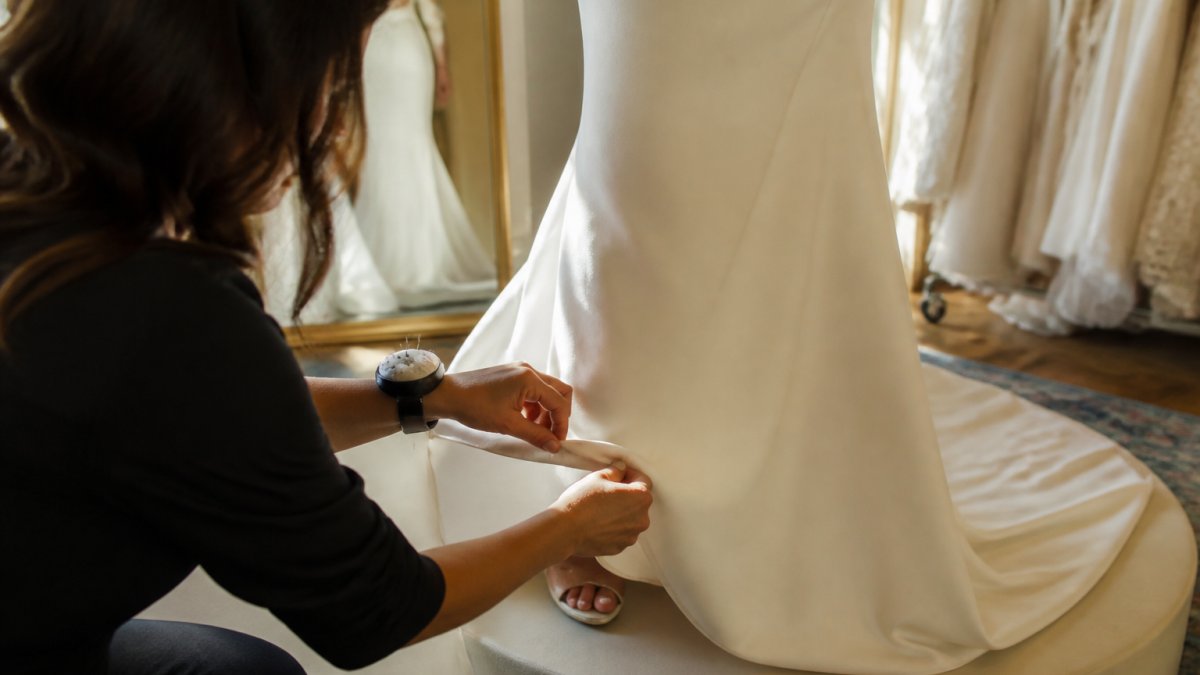
The single biggest misconception is that fittings are passive. They are not. A fitting is a working session, and the more feedback you give, the better the gown fits. If something pulls, pinches, or feels loose, say so the moment you feel it.
Wear the exact undergarments and shoes you plan to wear on the wedding day to every fitting, not just the last one. Hem length, bodice fit, and posture all shift with heel height and bra shape, and adjusting for them late means redoing work you already paid for.
What to Wear Under a Wedding Dress for Fittings
What to wear under a wedding dress for fittings matters more than most brides expect, because the seamstress is fitting the gown to the shape you present that day. Bring the bra, shapewear, and shoes you intend to wear on the wedding day. If you have not chosen them yet, bring your best approximation rather than nothing.
- Bra: The exact bra, or a strapless option if your gown is strapless. A different bra changes the bust line and can throw off an already-fitted bodice.
- Shapewear: Whatever you plan to wear underneath, including smoothing shorts or a slip. Fit is measured over these layers.
- Shoes: The wedding shoes, or a pair with an identical heel height. Hem length is set to the shoe, full stop.
- Underwear: Light-colored and comfortable. You will be standing and moving in front of another person for an extended period.
If your gown has a low back or a sheer panel, bring options that work with the design rather than fighting it. A seamstress can build in support, but she needs to see how the gown behaves over what you will actually wear.
What to Bring to a Wedding Dress Fitting
What to bring to a wedding dress fitting comes down to three categories: the gown itself, the accessories that affect fit, and the people whose opinion you actually trust. Bring the dress, your shoes, your undergarments, and any belt, sash, jacket, or veil that changes how the gown sits. Accessories alter silhouette, and a sash pinned on at the final fitting can undo work done earlier.
Bring a trusted friend or family member, but keep the group small. One or two people give useful feedback. Five people give you five conflicting opinions and a headache. If you are bringing children, bring a second adult to watch them so your appointment is not interrupted every few minutes.
Also bring a notebook or use your phone to note decisions. Fittings involve a dozen small choices, and memory is unreliable under pressure.
Do not schedule a fitting right after a big meal, and do not book one during a stressful week. Bloating and tension both change how a gown feels, and brides who arrive uncomfortable tend to approve adjustments they later regret. Book a calm slot in your day.
How Many Wedding Dress Fittings Do You Need?
Most brides need two to three fittings, though gowns with heavy beading, lace appliqué, or significant structural changes often need four. The number depends on how much alteration the gown requires, how complex the fabric is, and how far out from the wedding you started.
If you are following a full wedding dress alterations timeline, the pattern usually looks like this:
| Fitting | Typical Timing | Main Focus |
|---|---|---|
| First fitting | 6-8 weeks before the wedding | Assessment, pinning, major adjustments |
| Second fitting | 3-4 weeks before | Checking the adjustments, refining fit |
| Final fitting | 1-2 weeks before | Confirming everything, steaming, pickup |
| Rush fittings | As little as 24 hours | Compressed schedule for late bookings |
Brides who start alterations late often compress this into two sessions. It can work, but it leaves less room to correct a problem. If your wedding is close, ask about rush service when you book rather than hoping the schedule absorbs it.
How Long Does a Wedding Dress Fitting Take?
A wedding dress fitting typically takes 30 to 90 minutes, with the first fitting usually running longest because it involves the most pinning and discussion. Later fittings are shorter, often 30 to 45 minutes, because the work is mostly checking rather than adjusting.
First Fitting vs. Final Fitting: Time Differences
The first fitting is the longest and most involved. Expect to stand for extended periods while the seamstress pins the bodice, marks the hem, and assesses the shoulders and sleeves. Bring water and wear comfortable shoes for the walk in, even if you change into your wedding shoes for the fitting itself.
The final fitting is short and focused. You try the finished gown, walk in it, sit in it, and confirm the hem, bust, and waist all sit where they should.
What Happens During the Fitting Appointment
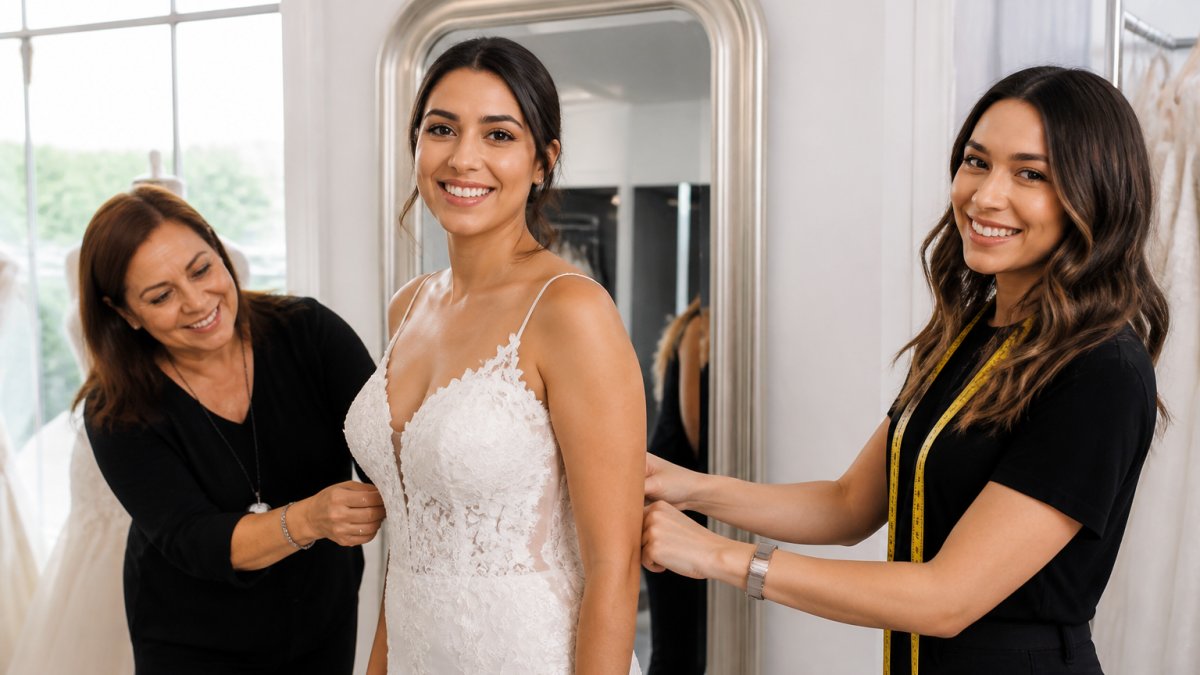
During the appointment, the seamstress assesses the gown on your body, pins the adjustments, and explains what will change.
Expect the seamstress to look at the gown from several angles, including from behind and from the side, because most fit problems show up there first. She will check the shoulder seams, the bust line, the waist, the hem, and the train.
This is also where you talk. If you are unsure how to choose the right professional for this work, our guide on how to find professional wedding dress alterations covers what to ask and what to check before you commit.
At Calgary Seamstress, we schedule fittings so you have time to ask questions and see the pinned result before anything is finalized. Appointments can be booked through our wedding dress alterations service, and we offer one-hour and 24-hour rush service when timelines are tight.
Common Mistakes to Avoid at Your Wedding Dress Fitting
The most common mistake at a wedding dress fitting is bringing too many opinions and not enough honesty about how the gown actually feels. Brides often nod along with adjustments they are unsure about, then discover the problem weeks later when there is little time to fix it.
Other mistakes we see regularly:
- Skipping the shoes. Hem length is set to heel height. Changing shoes after the hem is marked means the gown drags or hovers.
- Losing or gaining weight between fittings. Small changes are normal, but significant shifts after the final fitting can undo the work.
- Booking the final fitting too early. A gown fitted weeks before the wedding can shift with final weight changes or stress.
- Ignoring the bust and shoulders. Brides focus on the waist and forget that a gown that slips off the shoulder will do so all night.
- Not testing movement. Walk, sit, dance, and raise your arms during the fitting. If the gown restricts you, you need to know now.
If something goes wrong despite all this, our article on what to do when your wedding dress doesn’t fit after alterations walks through the practical options.
The brides who leave happiest are the ones who treat the fitting as a working session: they bring the right undergarments and shoes, they speak up the moment something feels wrong, and they test the gown in motion before approving it.
Conclusion
A wedding dress fitting is a working appointment, not a formality, and the brides who prepare for it properly walk out with a gown that fits the way they imagined. If you are ready to book, you can plan by understanding what different adjustments involve. Calgary Seamstress handles wedding dress alterations, suit tailoring, and custom garment work from our Calgary Southcentre Mall studio, with rush options when your date is close. Book an appointment online and let us get your gown fitting exactly right.
Frequently Asked Questions
What happens at a wedding dress fitting?
A fitting is a working appointment, not a fashion show. Your seamstress will help you into the dress, check the hem, bust, waist, straps and train, and pin the areas that need adjusting. You will stand on a pedestal, walk, sit and turn so the fit can be judged in motion. You will discuss hem length, bustle options and any changes to the neckline or straps. Most brides leave with a clear list of what will be altered and a date for the next appointment.
What should I wear to a wedding dress fitting?
Wear or bring the underwear you plan to wear on the wedding day, including a strapless or seamless bra if that suits your dress. A nude or light-colored bra and underwear avoid showing through lighter fabrics. Bring the shoes you will wear with the dress, or shoes with the same heel height, because hem length is set from them. Avoid heavy self-tanner or dark deodorant that can mark the gown.
What should I bring to my first wedding dress fitting?
Bring your wedding shoes, the undergarments you plan to wear, and any accessories you want to check with the dress, such as a veil, belt or jewelry. Bring hair ties or clips if you want to see how the dress looks with your hair up. A friend or family member can help with photos, but keep the group small so the appointment stays focused. If you have inspiration photos for changes, bring those too.
How many wedding dress fittings will I need?
Most brides need two to three fittings. The first is usually the main alteration appointment where the dress is pinned and measured. A second fitting checks that the changes were made correctly and fine-tunes the fit. A final fitting, often one to two weeks before the wedding, confirms everything is right and the dress is ready to take home. Complex gowns with heavy beading, lace or a full train may need an extra appointment.
How long does a wedding dress fitting take?
A first fitting usually takes about 60 to 90 minutes because the dress is pinned, measured and discussed in detail. Follow-up fittings are often shorter, around 30 to 45 minutes, since only small adjustments are checked. A final fitting may take 20 to 30 minutes. Allow extra time for heavily detailed gowns, bustling a train, or trying on accessories. Arrive a few minutes early so the appointment does not run short.
When should I schedule my first wedding dress fitting?
Book your first fitting about six to eight weeks before the wedding, once your dress has arrived and your shoes and undergarments are settled. This leaves room for two or three follow-up appointments without rushing. If your wedding is sooner, ask about rush service, since some studios can turn alterations around in 24 hours or within a week depending on the work needed. Confirm the timeline with your seamstress at the first visit.
Should I wear my wedding shoes to a dress fitting?
Yes. Hem length is set based on your shoes, so wearing the actual wedding shoes, or a pair with the same heel height, gives the most accurate result. If your shoes are not ready, bring a pair with the same heel height and sole thickness. Wearing them at every fitting keeps the hem consistent and prevents surprises on the wedding day.
What questions should I ask my bridal seamstress?
Ask what the alteration plan includes and which areas will be adjusted. Ask how many fittings are expected and when the final one will be. Ask about the timeline and whether rush service is available if your wedding is close. Ask how the bustle will work and whether it is included. Ask what to bring to the next appointment and how to care for the dress between fittings. Clear answers at the first visit make the rest of the process calmer.