Table of Contents
- Understanding Lace Wedding Dress Alterations
- Factors That Affect Lace Wedding Dress Alteration Costs
- Average Cost of Wedding Dress Alterations Canada
- Creating Your Alteration Budget
- Wedding Dress Fitting Timeline
- What to Bring to Wedding Dress Fittings
- Questions to Ask Your Seamstress
- Protecting Your Investment
Last Updated: August 27, 2026
Understanding Lace Wedding Dress Alterations
Lace wedding dress alterations require specialized tailoring that demands both technical skill and artistic sensitivity. Unlike standard dress alterations, working with lace requires careful handling of delicate patterns, multiple layers, and intricate detailing that can’t be rushed or approached with generic techniques.
Most wedding dresses need alterations because designers cut to standard sizing, which rarely matches individual proportions. Your dress might be too long, too loose in the bodice, too tight in the hips, or need neckline adjustments. When lace is involved, these adjustments become complex because the fabric tears easily, shows alterations visibly, and requires matching existing patterns. Understanding what lace wedding dress alterations involve helps you budget realistically and avoid surprises.
Factors That Affect Lace Wedding Dress Alteration Costs
Several factors determine alteration costs, and they combine to create the final price and timeline.
Complexity of Lace Patterns and Layers
Most lace wedding dresses feature multiple layers: the lace overlay, base fabric, tulle, and structural elements. When altering a hem, the seamstress must carefully separate these layers, adjust each individually, and reattach them while maintaining visual continuity of the lace pattern.
A dress with intricate floral lace patterns that must be matched at seams costs significantly more to alter than one with a simple, repeating geometric pattern. If your dress has a dramatic train with lace flowing into the main skirt, the seamstress must ensure pattern alignment remains seamless after length adjustments. Lace patterns that include beading, sequins, or embroidery add complexity because these elements can’t be moved, the seamstress must work around them, requiring more time and skill.
Type of Alterations Needed
The specific alterations you need directly impact cost and difficulty. Hemming a lace dress requires matching the lace pattern and hand-stitching or using specialized techniques to secure the hem without creating a visible line. Taking in or letting out seams at the sides, back, or bodice involves opening existing seams, adjusting fabric, and resewing while keeping lace patterns aligned. Neckline adjustments require careful work since the neckline is often a focal point with detailed lace work. Sleeve and strap adjustments affect how the entire dress sits on your body and often require adjusting the bodice fit as well.
Condition and Delicacy of the Fabric
The condition of your dress when brought to the seamstress affects how carefully she must work. A brand-new dress in perfect condition allows for more straightforward alterations, while a dress that’s been worn or stored may have more fragile fabric requiring extra care.
Some lace is naturally more delicate than others. Vintage-inspired lace, handmade lace, or lace with very fine details requires a seamstress with specific experience. A seamstress who specializes in lace wedding dress alterations, like those at Calgary Seamstress, understands how different lace types respond to handling, stitching, and adjustments. The weight of the lace also matters, heavy, structured lace holds its shape more easily than lightweight, flowing lace.
Average Cost of Wedding Dress Alterations Canada
Wedding dress alteration pricing varies significantly across Canada depending on the complexity of the work, the experience level of the seamstress, and the specific alterations needed. A basic alteration such as a simple hem costs less than complex lace work involving pattern matching and multiple layers. Bridal specialists in major Canadian cities typically charge more than general tailors, but they bring expertise specifically suited to delicate wedding fabrics.
The best approach is to get a consultation with a professional seamstress who specializes in lace wedding dress alterations. During this consultation, the seamstress will examine your dress, discuss your specific needs, and provide a detailed estimate. For the most accurate pricing for your specific dress and alterations, contact Calgary Seamstress or a bridal alteration specialist in your area.
Creating Your Alteration Budget
Budgeting for lace wedding dress alterations requires thinking beyond the initial quote. Account for multiple fittings, potential adjustments, and the reality that alteration work sometimes reveals additional needs once the seamstress begins working on your dress.
Setting a Realistic Budget Range
Recognize that lace wedding dress alterations are an investment in ensuring your dress fits perfectly on your wedding day. A seamstress who rushes through work to keep costs low may miss details or create visible alterations that detract from your dress’s appearance.
When setting your budget, plan for the alterations you know you need, plus a buffer for unexpected adjustments. Ask potential seamstresses for their full range of pricing. Understanding whether they charge by the hour, by the alteration type, or by the project helps you anticipate costs. Some seamstresses offer package pricing for multiple alterations, which can be more economical than paying per alteration.
Planning for Multiple Fittings
Most brides require at least two fittings: an initial fitting where the seamstress takes measurements and pins the dress to show what alterations will look like, and a final fitting where you try on the completed alterations and make any last-minute adjustments. Some brides need three or more fittings, especially if alterations are complex.
Plan your fitting schedule to allow adequate time between appointments for the seamstress to complete work. Rushing the process limits your options if adjustments are needed and may result in higher rush fees.
Wedding Dress Fitting Timeline
Most professional seamstresses recommend starting alterations at least three to four months before your wedding. This timeline allows for an initial consultation, the first fitting and pinning, completion of initial alterations, a second fitting for adjustments, and any final tweaks needed.
The actual time the seamstress spends working on your dress depends on complexity. Simple hemming might take one to two weeks. Complex lace work involving pattern matching, multiple layers, and detailed adjustments can take three to four weeks or longer. Between your first and second fitting, typically two to three weeks pass while the seamstress completes initial alterations. After your second fitting, allow another one to two weeks for final adjustments. investing in quality clothing.
Aim to have all alterations completely finished at least one to two weeks before your wedding, allowing time for unexpected adjustments.
What to Bring to Wedding Dress Fittings
Arriving prepared for your fitting appointments ensures the seamstress can do her job effectively and you get the most accurate alterations possible.
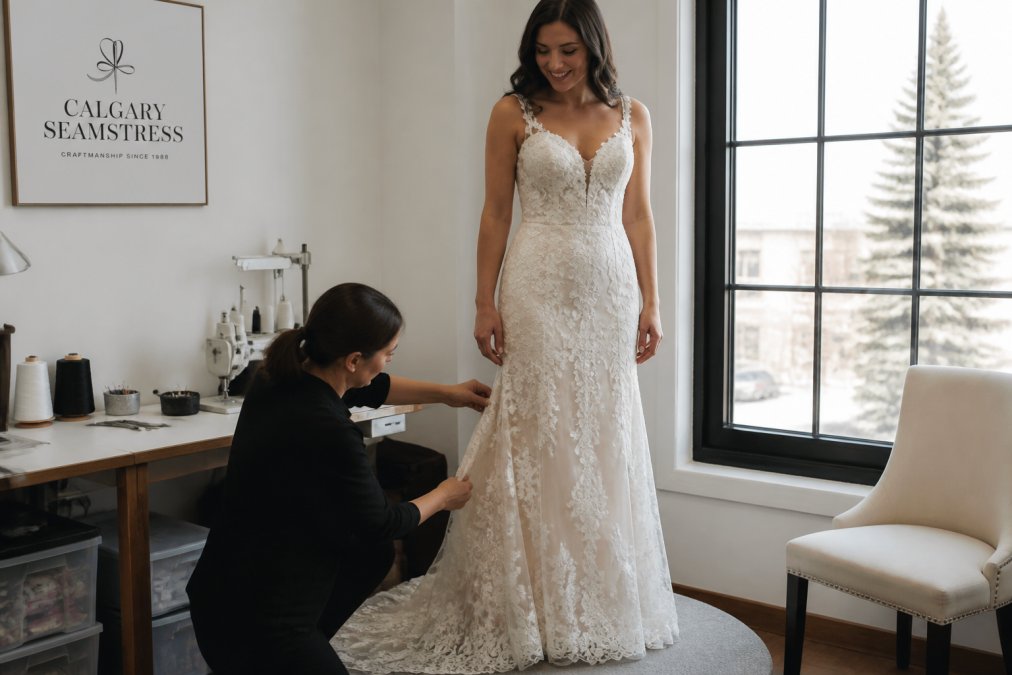
Bring the undergarments you plan to wear on your wedding day (the American Academy of Dermatology). Your wedding day undergarments change how the dress fits. If you bring a different bra to your fitting than the one you’ll wear at the wedding, the neckline, armhole fit, and overall silhouette will be different. The seamstress needs to see exactly how the dress will sit on your body in its final configuration.
Bring the shoes you’ll wear at the wedding, or shoes with a similar heel height. Heel height affects your posture and how the dress drapes. A dress hemmed while wearing flat shoes will be too long when you wear heels. Bring any undergarments or accessories you’ll wear under the dress, such as a slip or petticoat, that affect how the dress sits on your body.
Bring photos or inspiration images if you have a specific vision for how you want the dress altered. Bring a notebook or your phone to take notes during the fitting. Bring any jewelry or accessories you’ll wear on your wedding day if they affect how the dress fits.
Questions to Ask Your Seamstress
The consultation with your seamstress is your opportunity to ensure you’re both on the same page about what you want and what the process will involve.
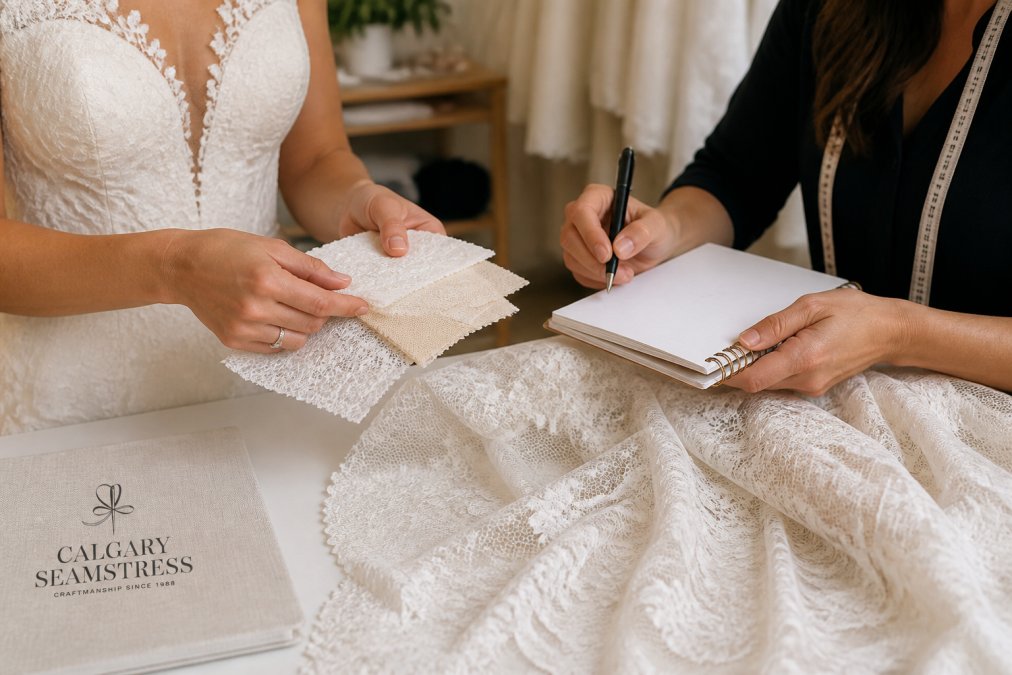
Ask about the seamstress’s specific experience with lace wedding dress alterations. How many lace dresses has she altered? What types of lace has she worked with? Does she have photos of previous work? A seamstress who specializes in bridal work brings expertise that general tailors may not have. At Calgary Seamstress, the team specializes specifically in wedding dress alterations, understanding the unique demands of lace and bridal fabrics.
Ask for a detailed breakdown of the alterations she recommends and why. For each alteration, ask what the process will involve, how long it will take, and what the cost will be. Ask about the timeline and what happens if adjustments are needed after the first fitting. Ask about her approach to matching lace patterns and whether she’s worked with your specific dress designer before. Ask to see before-and-after photos of previous lace wedding dress alterations. Ask about her cancellation or refund policy and any specific care or storage recommendations for your dress between fittings.
Protecting Your Investment
Your wedding dress is a significant investment, both financially and emotionally. Protecting that investment throughout the alteration process and beyond ensures your dress remains in perfect condition for your wedding day and for preservation afterward.
Choose a seamstress carefully. The cheapest option isn’t always the best value when it comes to lace wedding dress alterations. A seamstress who rushes work or lacks experience with delicate fabrics may damage your dress or create poorly executed alterations. Calgary Seamstress and other specialized bridal tailors charge appropriately for the expertise and care required to handle lace properly.
Communicate clearly about your expectations and any concerns. Between fittings, store your dress properly on a padded hanger in a cool, dry place away from direct sunlight. Don’t fold it or store it in a plastic bag, which can trap moisture and damage delicate lace.
When you pick up your dress after alterations, inspect it carefully in good lighting. Check that all seams are secure, that lace patterns are aligned, and that the fit matches what was discussed. If you notice any issues, bring them to the seamstress’s attention immediately.
After your wedding, preserve your dress properly. Professional wedding dress preservation services clean, preserve, and store the dress in archival conditions that prevent yellowing, fabric degradation, and damage from moisture or insects. This is particularly important for lace dresses.
Budgeting for lace wedding dress alterations requires understanding the complexity of the work, planning for multiple fittings, and choosing a seamstress with genuine expertise in bridal fabrics. The investment in professional alteration work ensures your dress fits perfectly and looks flawless on your wedding day. At Calgary Seamstress, our team specializes in lace wedding dress alterations with meticulous attention to pattern matching, fabric handling, and the precise fit that makes your dress feel like it was made specifically for you. Make an Appointment Online to discuss your dress alterations and get started on the fitting process.
Frequently Asked Questions
Why are lace wedding dress alterations more expensive?
Lace requires specialized handling because the fabric is delicate and often features intricate patterns that must be preserved during alterations. Seamstresses must carefully match lace designs when hemming, taking in seams, or adding closures. Multiple layers of lace and underlining increase complexity. Hand-stitching is often necessary to avoid damaging the lace, which takes more time than machine work. The skill required to alter lace without compromising its appearance justifies higher costs compared to simple fabric alterations.
How many fittings are typically required for a lace gown?
Most brides need 2-3 fittings for lace wedding dress alterations. The first fitting establishes measurements and marks alterations. The second fitting allows you to see initial changes and request adjustments. A third fitting confirms everything fits perfectly before your wedding day. Rush timelines may compress this to 1-2 fittings, but more fittings generally produce better results because your seamstress can refine fit and ensure lace patterns align properly.
What is the average cost of wedding dress alterations in Canada?
Wedding dress alteration costs in Canada vary significantly based on the complexity of your dress, the specific changes needed, and your location. Lace wedding dresses typically cost more to alter than simple fabrics because of the delicate handling required. Pricing depends on factors like the number of layers, pattern complexity, and the extent of alterations. For accurate pricing tailored to your specific dress, contact a local seamstress for a consultation and quote.
When should I book my first alteration appointment?
Book your first fitting appointment 3-4 months before your wedding day. This timeline allows multiple fittings and adjustments without rushing. If your wedding is sooner, many seamstresses offer expedited services, though these may cost more. Contact your seamstress immediately if your wedding is within 6 weeks to confirm they can accommodate your timeline and discuss any rush fees.
This article was written using GrandRanker