Table of Contents
- What Affects Wedding Dress Alterations Cost
- Wedding Dress Alteration Timeline: Planning Your Fittings
- What to Bring to a Bridal Fitting Appointment
- Average Cost of Wedding Dress Hem and Common Alterations
Last Updated: August 4, 2026
What Affects Wedding Dress Alterations Cost
Wedding dress alteration costs depend on fabric type, extent of alterations, construction complexity, and rush fees.
Fabric type significantly impacts pricing. Delicate materials like silk charmeuse, lace, and tulle require different handling than structured fabrics like mikado. Lace appliqués, beading, and embellishments demand precision work to avoid damage, often requiring hand-stitching around beads or careful reattachment after hemming.
The extent of alterations matters enormously. A simple hemline adjustment costs far less than taking in a bodice, adding cups for bust support, or restructuring a bustle. Multiple alterations compound labor costs substantially.
Construction complexity affects pricing. Wedding dresses often have multiple layers of tulle, silk underlining, and structured boning. Tailors may need to adjust these internal elements along with outer fabric. Intricate trains or cathedral-length hemlines require more careful work than simple A-line silhouettes.
Rush fees apply for expedited timelines. Standard alterations take 4-8 weeks; faster completion commands a premium.
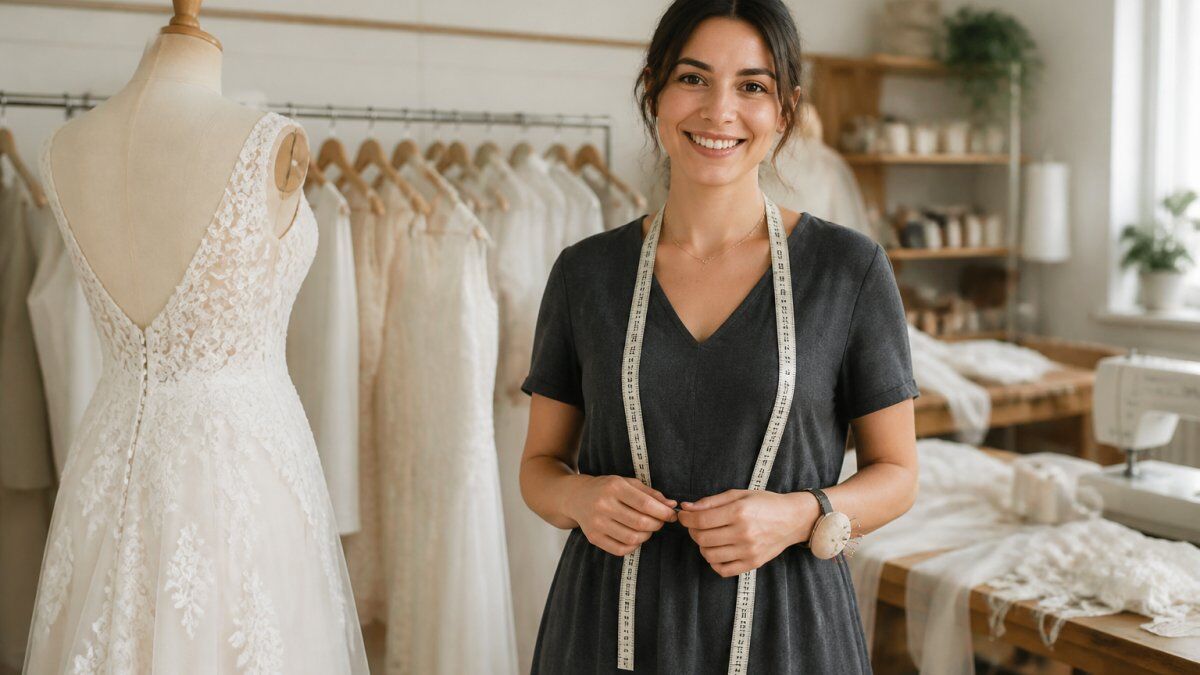
At Calgary Seamstress, we assess each dress individually during your fitting appointment to provide an accurate estimate.
Wedding Dress Alteration Timeline: Planning Your Fittings
The timeline for wedding dress alterations typically spans 4 to 8 weeks from first fitting to final pickup.
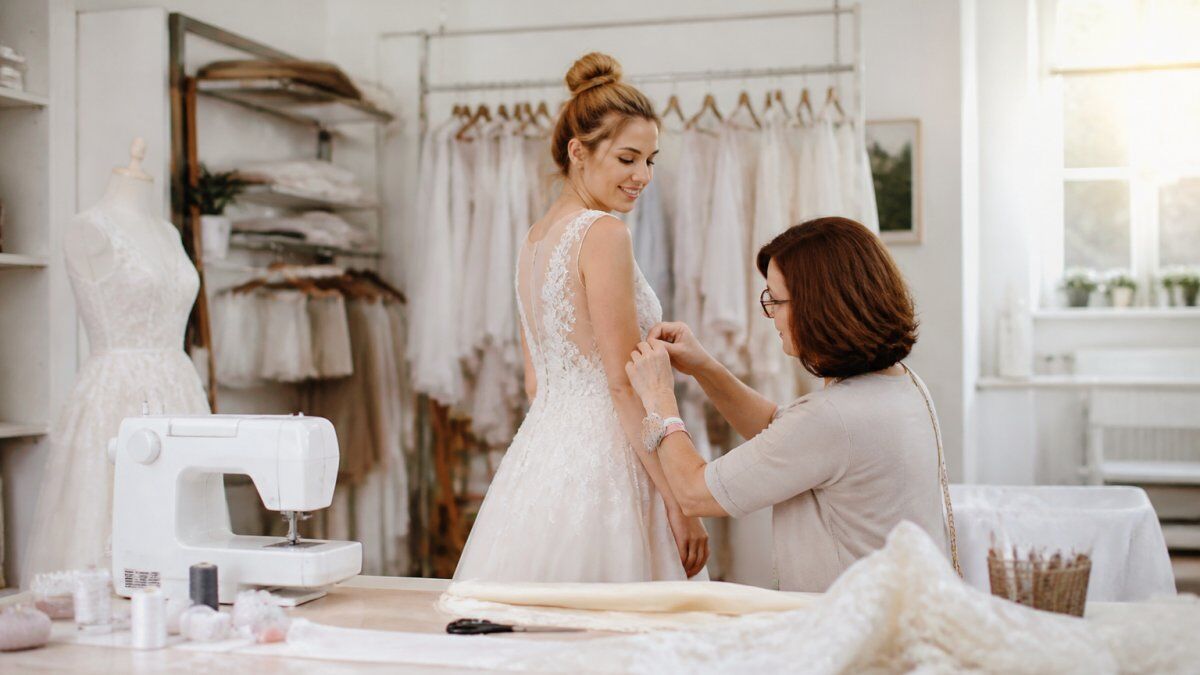
Initial fitting (Week 1): Schedule your first appointment 3 to 4 months before your wedding. The tailor measures, pins, and discusses alterations needed. This 45-minute to one-hour appointment establishes the alteration plan.
First alterations (Weeks 2-4): The tailor completes initial work including hemming, taking in seams, and restructuring the bodice. Complex work like adding cups or reattaching beading happens during this phase.
Second fitting (Week 4-5): You try on the dress and see alterations. The tailor notes any adjustments needed for final work.
Final alterations (Weeks 5-7): The seamstress completes adjustments and finishing work like hemstitching and final seam stitching.
Final fitting (Week 7-8): Your last appointment confirms everything is perfect. Walk around and sit down to ensure flawless fit.
If your wedding is sooner than 3 months away, discuss rush timelines with your tailor immediately.
What to Bring to a Bridal Fitting Appointment
Showing up prepared ensures accurate measurements and a perfect fit on your wedding day.
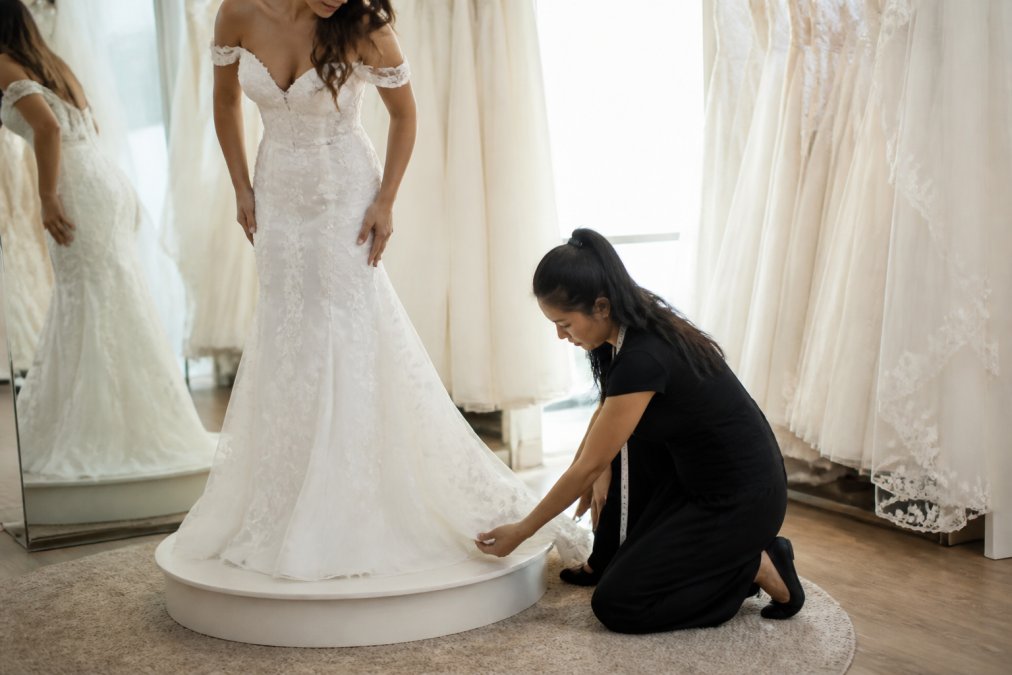
Bring your wedding shoes. Heel height directly affects hemline length. Wear the exact shoes you’ll wear at the wedding.
Wear the undergarments you’ll wear on your wedding day. This includes your bra, shapewear, or special bridal undergarments that affect how the dress sits.
Bring a trusted friend or family member. A second opinion helps spot fit issues and provides emotional support.
Bring any jewelry or accessories you’ll wear. Statement necklaces, belts, and tiaras affect how the neckline and bodice should sit.
Wear your hair as you plan to wear it for the wedding. Hair height and volume affect how the bodice and neckline appear.
Bring a list of specific concerns. Note areas that feel tight, loose, or uncomfortable, and mention any alterations you’re considering.
Bring inspiration photos if helpful. Show your tailor images of bustle styles, neckline modifications, or other changes you’re imagining.
Average Cost of Wedding Dress Hem and Common Alterations
Wedding dress alteration costs vary based on fabric type, complexity, and tailor experience.
Hemming is typically the most straightforward alteration. Complex hemming with multiple tulle layers, trains, or delicate lace requires additional time and precision.
Taking in the bodice addresses dresses too loose in the chest, waist, or torso. This involves adjusting side or back seams and may require repositioning darts. Dresses with boning require careful work around structural elements.
Letting out seams accommodates tight dresses, but only if sufficient seam allowance exists. Many wedding dresses have minimal seam allowance, limiting how much can be let out.
Adding cups or bust support involves sewing structured cups into the bodice for lift and support. This requires precision stitching and proper placement.
Bustle alterations create a mechanism to lift the train for the reception. Single bustles use one pick-up point; double bustles use multiple points. Work involves adding buttons, hooks, or loops and hand-stitching them securely.
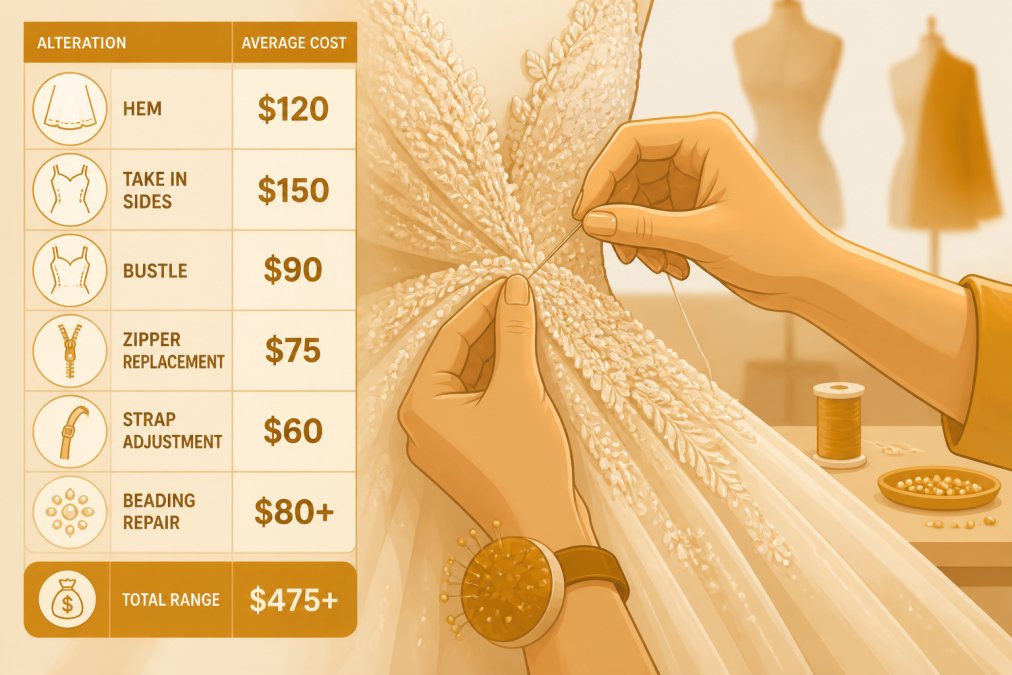
Lace appliqué and beading work involves carefully removing and reattaching decorative elements when the dress is altered. This hand-work is labor-intensive and requires skill to maintain the original aesthetic.
Neckline and sleeve modifications change the dress’s overall appearance. These alterations require careful work, especially with embellishments, and may require pattern adjustments.
Fabric-specific considerations affect costs significantly. Delicate silks require specialized stitching techniques. Tulle and layered skirts demand precision to ensure all layers align. Heavily beaded dresses cost more because embellishments must be carefully removed and reattached.
Professional versus DIY work matters significantly. Mistakes on a wedding dress are expensive to fix. Amateur alterations often show and may require professional correction, ultimately costing more than professional work initially.
Hidden fees checklist helps avoid surprises. Ask whether estimates include fitting appointments, adjustment rounds, rush fees, pressing and finishing work, and specialty services like beading repair. Understanding what’s included prevents sticker shock at final pickup.
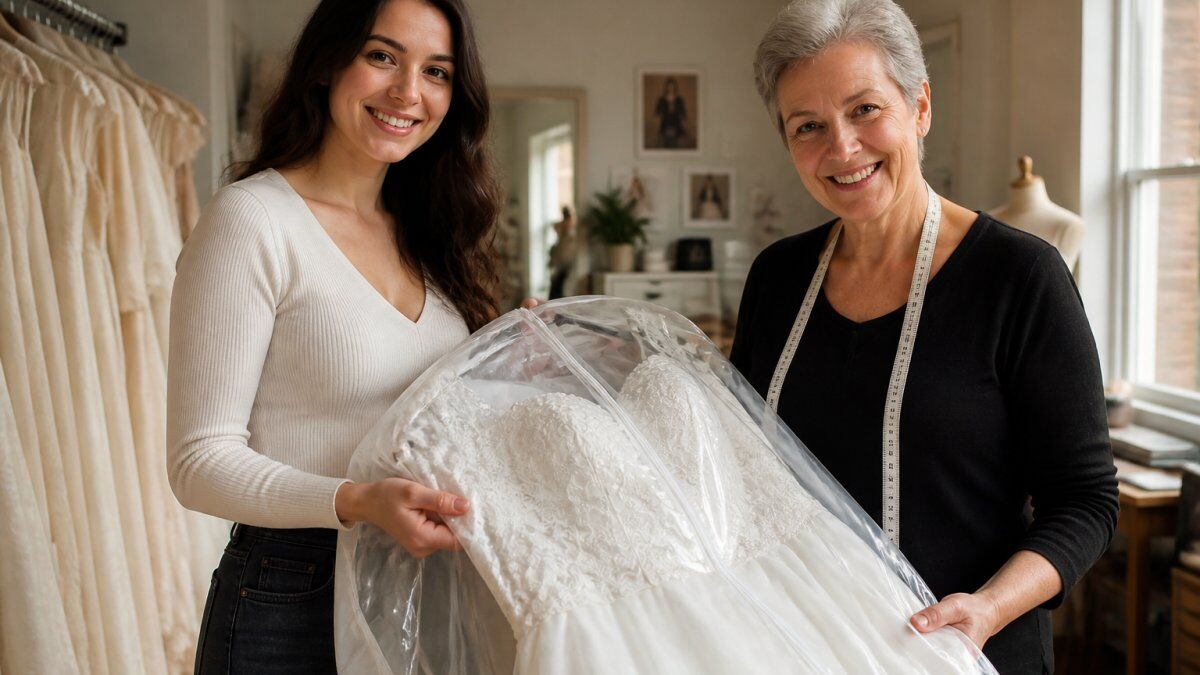
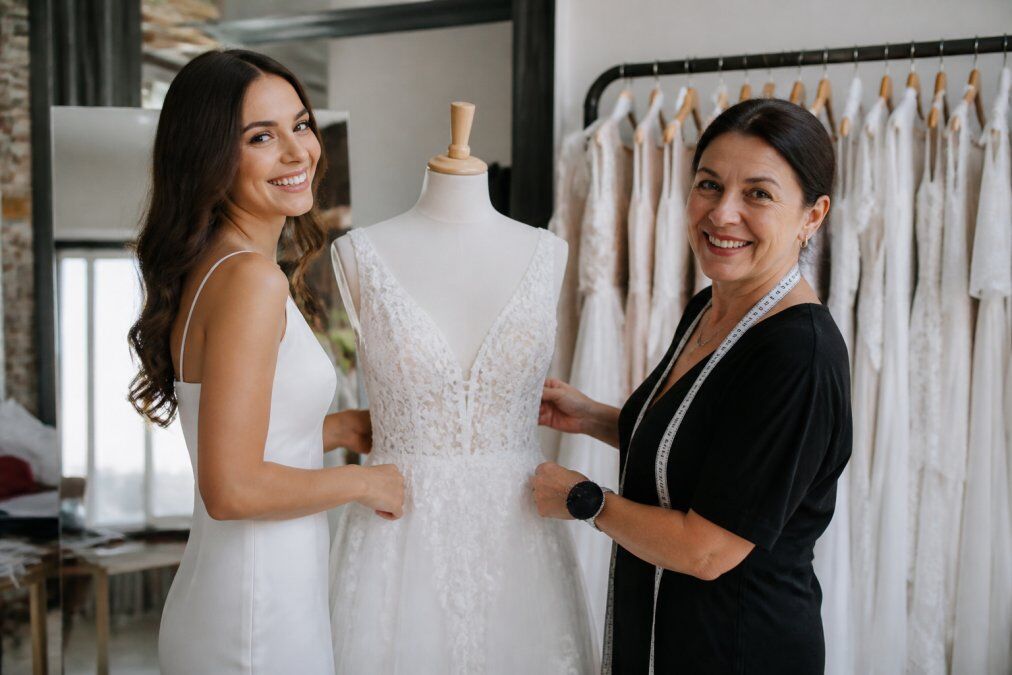
Finding the right tailor for your wedding dress alterations is crucial. Your dress should fit flawlessly so you can focus on your day. Start your search early, ideally 3 to 4 months before your wedding, and schedule consultations with several tailors. At Calgary Seamstress, we specialize in wedding dress alterations and understand the precision required for bridal gowns. Our team handles everything from delicate lace work to complex bustle construction. Make an appointment online to discuss your specific alterations and get started on your fitting timeline.
Frequently Asked Questions
How much does wedding dress alteration typically cost in Canada?
Wedding dress alterations cost depends on the extent of changes, fabric type, and complexity of details like beading or lace applique. Simple hemming costs less than extensive bodice work or custom bustles. For a precise quote tailored to your specific gown, consult with a professional bridal specialist who can assess your dress during a fitting appointment and provide an estimate based on the actual work required.
What should I bring to my bridal fitting appointment?
Bring your wedding shoes (the exact heel height you'll wear), undergarments you plan to use on your wedding day, any jewelry that affects the fit, and a list of specific concerns. Wear your hair styled similarly to your wedding day if possible. Bring photos or sketches if you have design ideas for custom elements. If you've had previous alterations elsewhere, bring documentation. Having these items ensures your seamstress can assess the fit accurately and make recommendations that account for your complete wedding day look.
How many fittings do I need for wedding dress alterations?
Most brides require two to three fittings: an initial consultation to assess needed changes, a progress fitting after initial alterations, and a final fitting for adjustments. Complex alterations or custom work may require additional fittings. The wedding dress alteration timeline typically spans 6-12 weeks from start to finish, depending on the extent of changes and your wedding date. Your bridal specialist will recommend the fitting schedule based on your specific gown and alterations.
Why are wedding dress alterations expensive compared to regular clothing alterations?
Bridal gowns demand specialized expertise due to delicate fabrics like silk, tulle, and lace, plus intricate construction with boning, cups, and layered details. Alterations to beading or lace applique require meticulous hand-work. Bustles and train adjustments involve complex garment construction knowledge. A professional bridal specialist invests years mastering these techniques. The higher cost reflects the skill, time, and care needed to preserve the gown's integrity while achieving a flawless fit—mistakes are costly and visible on your wedding day.
What hidden fees should I watch for in wedding dress alteration quotes?
Ask explicitly about rush fees (expedited work costs more), fitting appointment charges, fabric-matching costs, beading or embellishment labor, bustle installation, and preservation or steaming services. Some shops charge separately for each fitting. Confirm whether the quote includes all necessary adjustments or if additional work discovered during fittings incurs extra fees. Request a detailed written estimate that breaks down labor costs by alteration type. This prevents surprises and helps you budget accurately for your complete alteration package.