Table of Contents
- When to Start Your Wedding Dress Alterations Timeline
- What to Bring to Your Bridal Fitting Appointments
- Your First Fitting: Initial Assessment and Measurements
- The Progress Fitting: Reviewing Major Adjustments
- Average Cost of Wedding Dress Alterations
- Final Fitting and Wedding Day Preparation Checklist
- Common Mistakes to Avoid During the Alteration Process
- Emergency Alteration Protocols and Rush Services
Last Updated: August 20, 2026
When to Start Your Wedding Dress Alterations Timeline
The ideal time to begin your wedding dress alterations timeline is 8-12 weeks before your wedding day. This window gives your seamstress enough time to complete major adjustments, schedule multiple fittings, and make refinements without rushing. Starting too early (more than 4 months ahead) risks obsolete alterations if your body changes. Starting too late (fewer than 6 weeks out) forces emergency mode, compromising quality. According to The Bridal Association’s 2026 Wedding Planning Guide, brides who begin alterations within the recommended 8-12 week window report significantly higher satisfaction with their final fit.
At Calgary Seamstress, we recommend booking your first fitting appointment as soon as you have your dress in hand and a confirmed wedding date.
Schedule your first fitting during a time when your weight is stable. Avoid booking immediately after significant dietary changes or during periods when you’re adjusting medications that affect water retention.
What to Bring to Your Bridal Fitting Appointments
Preparation for your bridal fitting appointments directly impacts the quality of your wedding dress alterations timeline.
Essential items for every fitting:
- Your wedding dress (clean and pressed)
- The undergarments and shapewear you’ll wear on your wedding day
- Your bridal shoes, including the exact heels you’ll be wearing (heel height affects hemline placement)
- Any jewelry or accessories that will sit on the neckline, waist, or shoulders
- Photos or sketches of your vision if you want specific customizations
- Your wedding date and ceremony start time
- Any concerns or problem areas you’ve noticed
Why undergarments matter: Your seamstress must see how the dress fits with the exact undergarments you’ll wear. Shapewear changes your silhouette significantly, and a dress hemmed without it will be too long on your wedding day.
Heel height is non-negotiable: Even half an inch affects the overall proportion of your gown. If you haven’t selected your shoes yet, bring a pair in the approximate heel height you’re considering.
The single most important thing you can bring is the exact undergarments and shoes you’ll wear on your wedding day. Without these, even expert measurements won’t produce an accurate fit.
Your First Fitting: Initial Assessment and Measurements
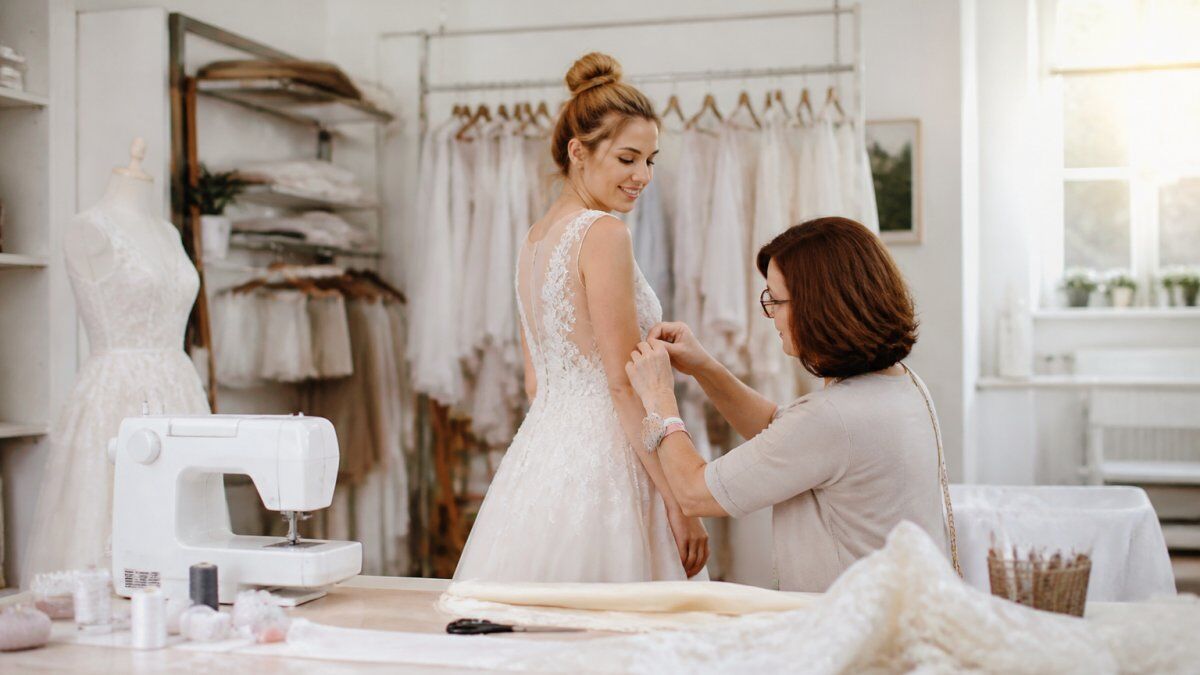
Your first fitting is where your seamstress evaluates the bridal gown, takes precise measurements, and identifies which alterations are necessary. This appointment typically lasts 45 minutes to an hour and sets the foundation for your entire wedding dress alterations timeline.
How the seamstress evaluates the bridal gown
During your first fitting, your seamstress will examine the dress from multiple angles, checking the bodice fit across the bust, shoulders, and back, how the waist sits, and whether the skirt volume flatters your frame. Pulling at the bust or back indicates the bodice needs to be let out. Gaps suggest the dress needs to be taken in. Bunching fabric often means the seamstress needs to adjust seams or add darts for better shape.
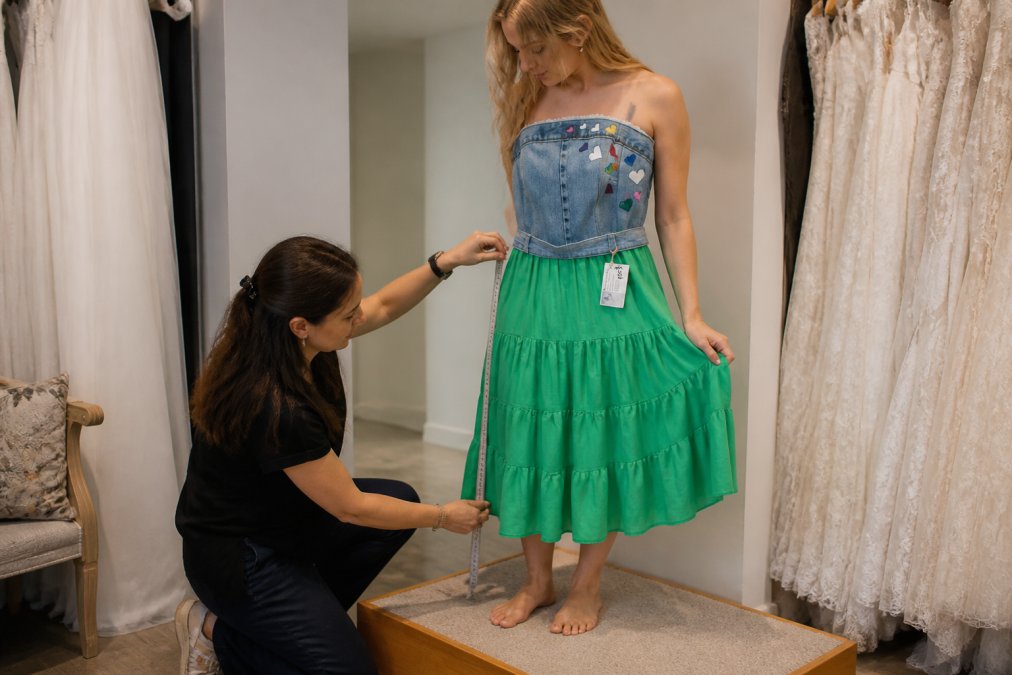
The seamstress will also assess the dress construction, checking seam placement, fabric quality, and whether the gown can accommodate your desired alterations. Your seamstress will explain any limitations and suggest alternatives if certain alterations aren’t feasible.
Common alterations identified at the first fitting
Most wedding dresses require hemming. Your seamstress will measure from the floor to determine the correct hemline length, accounting for your heel height and any train you want to preserve.
Bodice adjustments are common when off-the-rack gowns don’t fit your frame perfectly. Taking in the bodice at the side seams, back, or shoulders creates a more fitted silhouette. Letting out the bodice provides extra room in the bust or waist.
Waist suppression (taking in at the waist) is one of the most frequent alterations. Sleeve adjustments address sleeves that are too long, too loose, or positioned incorrectly. Your seamstress may shorten sleeves, taper them for a slimmer fit, or adjust the armhole to sit properly on your shoulders.
Train alterations include hemming the train, adding a bustle (which allows you to lift the train for the reception), or removing the train entirely. Bustles come in several styles: the American bustle lifts the train to the waist, the French bustle creates a more gathered look, and the pick-up bustle uses loops to hold sections of the train.
Strap and neckline adjustments address gowns where these elements sit awkwardly. Your seamstress can adjust the neckline depth or width to flatter your frame.
The Progress Fitting: Reviewing Major Adjustments
Your progress fitting typically occurs 4-6 weeks before your wedding. At this appointment, your seamstress shows you the major alterations they’ve completed and confirms that the changes match your expectations. This is the midpoint of your wedding dress alterations timeline where adjustments can still be made without rushing.
During the progress fitting, you’ll try on the dress and assess how the bodice alterations feel. Your seamstress will check the hemline to ensure it’s at the correct length with your shoes and may make minor adjustments if needed. If you’ve chosen a bustle, your seamstress will show you how it works.
This fitting is also where you address any concerns that have emerged since your first appointment. If you’ve lost or gained weight, your seamstress can adjust their plan accordingly.
If you notice significant fit issues at your progress fitting, communicate them immediately. Waiting until the final fitting to mention problems leaves little time for your seamstress to make corrections.
Average Cost of Wedding Dress Alterations
Wedding dress alteration costs vary based on the complexity of the work, the fabric type, and the number of alterations needed. Delicate fabrics like silk charmeuse or lace require more careful handling and often cost more to alter than heavier fabrics. wedding organization tips.
Many seamstresses charge per alteration rather than as a flat fee. According to The Wedding Industry Report 2026, brides should budget for comprehensive alteration work that reflects the skill and time involved.
At Calgary Seamstress, we specialize in wedding dress alterations and understand that your gown is irreplaceable. Our approach focuses on meticulous craftsmanship. Working with a local seamstress who specializes in bridal gowns provides better value than general tailors. Bridal specialists understand the unique demands of wedding dresses, the delicate fabrics, the importance of perfect fit, and the time-sensitive nature of wedding planning.
Ask your seamstress for a written estimate that breaks down each alteration and its cost. This prevents surprises and lets you prioritize which alterations matter most if budget is a concern.
Final Fitting and Wedding Day Preparation Checklist
Your final fitting occurs 1-2 weeks before your wedding. This is your last chance to ensure everything is perfect before you walk down the aisle.
What happens at the final fitting
Try on the dress and check that all alterations are complete and correct. The hemline should be even and the correct length. The bodice should fit smoothly without pulling or gapping. Sleeves should sit properly on your shoulders. Straps should be secure and comfortable. The neckline should sit as intended.
Walk around, sit down, and move your arms to ensure the dress allows full range of motion. You’ll be dancing, hugging family members, and navigating stairs on your wedding day. The dress needs to feel comfortable and move with you naturally.
If you’ve chosen a bustle, your seamstress will show you exactly how it functions and may practice bustling the train so you understand the mechanics.
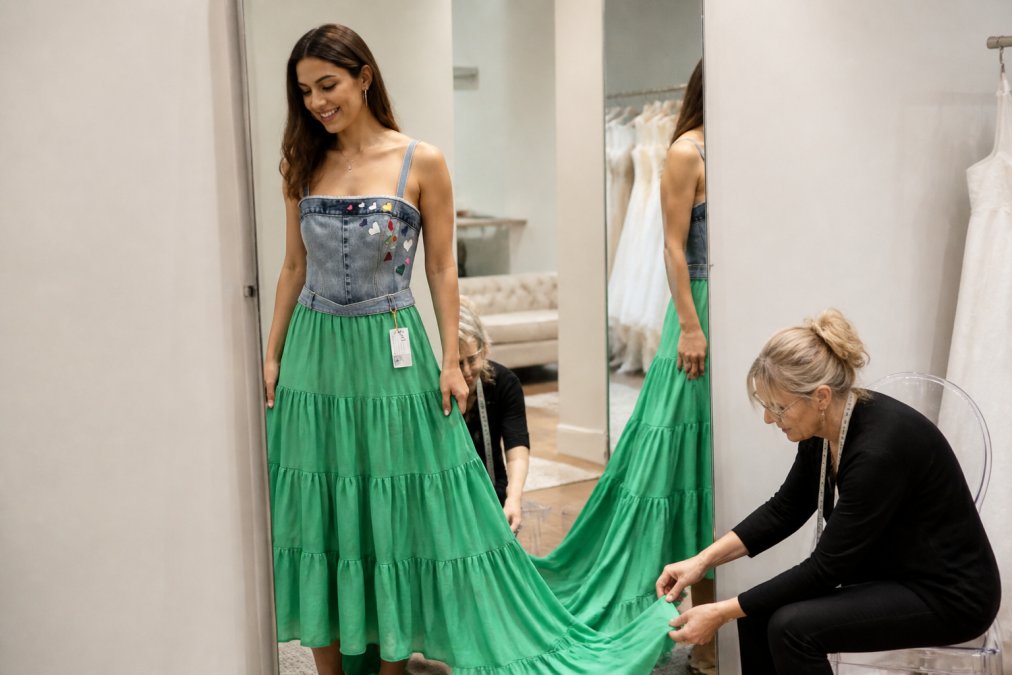
Your seamstress will make final minor tweaks, such as adjusting the hem by a quarter inch, tightening a strap slightly, or adding extra stitches to reinforce a seam.
Post-alteration storage and transport
After your final fitting, proper storage and transport of your dress is critical. Store your dress in a cool, dry place away from direct sunlight. Hang it on a padded hanger rather than a wire hanger, which can create permanent creases.
Avoid storing your dress in a plastic garment bag for extended periods. Plastic traps moisture and can cause yellowing or mildew. Breathable garment bags or cotton sheets provide better protection.
Transport your dress carefully on your wedding day. Hang it in a vehicle rather than laying it flat. After your wedding, have your dress professionally cleaned before storing it long-term.
Common Mistakes to Avoid During the Alteration Process
One frequent mistake is starting alterations too late. Rushing through a wedding dress alterations timeline compromises quality and creates unnecessary stress. Begin your process 8-12 weeks before your wedding.
Another mistake is not communicating clearly with your seamstress. If you have specific visions for your dress, describe them clearly at your first fitting. Miscommunication often leads to alterations that don’t match your expectations.
Many brides make weight-related mistakes by not maintaining stable weight during the alteration process. Significant weight fluctuations mean your seamstress has to re-do work they’ve already completed.
Wearing different undergarments to different fittings is another common error. Wear the same undergarments and shoes to every appointment so your seamstress gets consistent measurements.
Some brides wait too long to address fit concerns. If something doesn’t feel right at your progress fitting, speak up immediately. Waiting until the final fitting leaves little time for corrections.
Neglecting to discuss your wedding day timeline with your seamstress is also problematic. If you’re getting ready at a location far from your seamstress’s studio, communicate this. If you need your dress ready by a specific time, make sure your seamstress knows.
Emergency Alteration Protocols and Rush Services
Life happens. Wedding dates change, dresses arrive later than expected, or unforeseen circumstances compress your alteration timeline. Many seamstresses offer rush services for brides in urgent situations.
Rush services typically involve expedited scheduling and priority work. Your seamstress may fit you into their schedule sooner, work on your alterations before other clients’ projects, or extend their hours to complete your work faster. Rush services usually carry an additional fee to compensate for the disruption to the normal workflow.
One-hour rush services are available for minor emergency alterations like repairing a seam, fixing a zipper, or hemming a simple garment. Twenty-four-hour rush services handle more substantial work. Calgary Seamstress offers one-hour or 24-hour rush service for emergency bridal alterations when necessary.
To access emergency services, contact your seamstress immediately and explain your situation. They’ll assess whether they can accommodate your timeline and what rush fees apply.
Emergency alteration protocols exist for genuine crises, not for procrastination. Starting your wedding dress alterations timeline on schedule eliminates the need for rush services and ensures your seamstress has adequate time to deliver their best work.
Preparing for your wedding dress alterations timeline requires planning, clear communication, and realistic expectations about timing. Your dress is one of the most important elements of your wedding day, and it deserves meticulous attention from a seamstress who understands bridal work. The 8-12 week timeline allows your seamstress to complete quality alterations without rushing, schedule multiple fittings for refinement, and address any issues that emerge during the process. At Calgary Seamstress, we specialize in wedding dress alterations and work closely with every bride to ensure their gown fits flawlessly and reflects their vision. Make an Appointment Online to begin your alteration journey with our team, and let us help you feel confident and beautiful on your wedding day.
Frequently Asked Questions
How long does the complete wedding dress alterations timeline typically take?
Most wedding dress alterations take 8 to 12 weeks from your first fitting to final pickup. This timeline allows for three fittings: an initial assessment, a progress fitting to review major adjustments like hemming, bustle attachment, and bodice suppression, and a final fitting for minor tweaks. If your wedding is sooner, rush services may be available, though they may affect pricing and the number of fitting appointments.
What should I bring to my bridal fitting appointments?
Bring the undergarments you plan to wear on your wedding day, including your bridal shapewear and the exact shoes or heels you'll wear (or heels of the same height). Wear your hair and makeup similarly to how you'll style them for the wedding. If you have jewelry or a veil, bring those too. This ensures accurate measurements and hemline placement. Also bring any reference photos of alterations you want, such as bustle styles or lace placement adjustments.
What are the most common pitfalls to avoid during wedding dress alterations?
Avoid significant weight fluctuations between fittings, as this requires rework and delays. Don't skip fittings or try to rush the process by skipping the progress fitting. Never alter the dress yourself or have an inexperienced person attempt repairs. Communicate clearly about your vision for the hemline, train, and bustle at the first fitting. Don't wait until the last minute to book alterations, and avoid choosing a seamstress based solely on price rather than experience with bridal gowns.
What is the average cost of wedding dress alterations?
Wedding dress alteration costs vary widely depending on the complexity of the work. Basic hemming and minor adjustments typically start around $150 to $300, while comprehensive alterations involving the bodice, waist suppression, bustle attachment, and lace or beading work can range from $300 to $800 or more. Factors affecting cost include the gown's fabric complexity, the number of layers (tulle, lace, silk), the extent of customization needed, and whether rush services are required. Request a detailed quote after your first fitting so you know exactly what to expect.
This article was written using GrandRanker