Quick Summary
The most common formal wear alteration mistakes are booking too late, buying the wrong starting size, and skipping fittings. Avoid them by booking as soon as you buy, starting with the size that fits your shoulders, bust or hips, and building in several fittings. Bring the shoes you will wear to every appointment.
- Book your first formal wear alteration fitting as soon as you purchase the garment.
- Start with the size that fits your shoulders, bust or hips most closely.
- Bring the exact shoes you plan to wear, since heel height changes hem length.
- Most garments need more than one fitting, so ask how many are required upfront.
- Ask early whether an alteration is feasible, since seams and linings limit changes.
Table of Contents
- Booking Your Formal Wear Alterations Too Late
- Buying the Wrong Starting Size and Hoping a Tailor Can Fix It
- Trying On Formal Pants Without the Shoes You Plan to Wear
- Skipping Fittings or Booking Too Few
- Over-Altering a Garment Beyond What Its Construction Allows
- Forgetting What to Bring to Your Tailor Fitting
- Booking Your Next Formal Wear Fitting in Calgary
- Frequently Asked Questions
7 Common Formal Wear Alteration Mistakes to Avoid
Last Updated: November 23, 2026
Most formal wear problems start long before the event. A jacket that pulls at the shoulders or trousers that puddle over the shoes can usually be fixed, but only if the alteration is planned early and handled with care. At Calgary Seamstress, we have seen the same avoidable mistakes come through our door again and again. Knowing them in advance saves money, stress and sometimes the garment itself.
Below, we walk through seven of these mistakes and show you how to avoid each one. Keep reading for a fitting checklist you can use before your next appointment.
Booking Your Formal Wear Alterations Too Late
Timing is the mistake we hear about most. A garment that needs work for a wedding, gala or graduation should be booked as soon as it is purchased, not the week before. Tailoring takes several stages, including a fitting, the adjustment itself and a final check, and each stage needs time for the tailor to work properly.
Demand for formal wear alterations tends to cluster around peak seasons such as wedding season, graduation and the holiday party period. When those windows approach, appointment slots and workroom capacity can tighten, so the same alteration may take longer in a busy month. Complex jobs, such as a wedding dress with beading or a fully lined suit jacket, generally warrant more lead time than a simple trouser hem.
Plan around fitting milestones rather than a single deadline. The first fitting marks the changes, a follow-up fitting checks the result on your body, and a final pickup confirms the garment is ready to wear. Ask your tailor at the first appointment how many fittings the job will require and when each should happen, then put those dates in your calendar.
At Calgary Seamstress, a one hour service is available when you truly need something done quickly. Still, planning ahead gives you room to correct small issues before they become big ones. Book your first fitting as early as you can.
Watch out: booking a first fitting only a week before an event can leave no room for a second fitting, which is exactly when small fit problems surface.
Buying the Wrong Starting Size and Hoping a Tailor Can Fix It
Many people buy a suit or dress a size or two too large, or too small, and assume a tailor can make it fit. Some adjustments are straightforward, such as taking in a side seam or shortening a sleeve. Others are not. Changing the shoulders or the overall cut of a jacket is often impossible without ruining the garment’s structure.
Start with the size that fits your shoulders, bust or hips most closely, then let the tailor adjust the smaller areas. Bring your measurements and be honest about how the garment feels when you move, sit and raise your arms.
Trying On Formal Pants Without the Shoes You Plan to Wear
Trouser length depends on the shoes. A heel changes how the hem falls, and a flat dress shoe changes it again. If you hem your formal pants while wearing sneakers and then wear heels to the event, the length will be wrong.
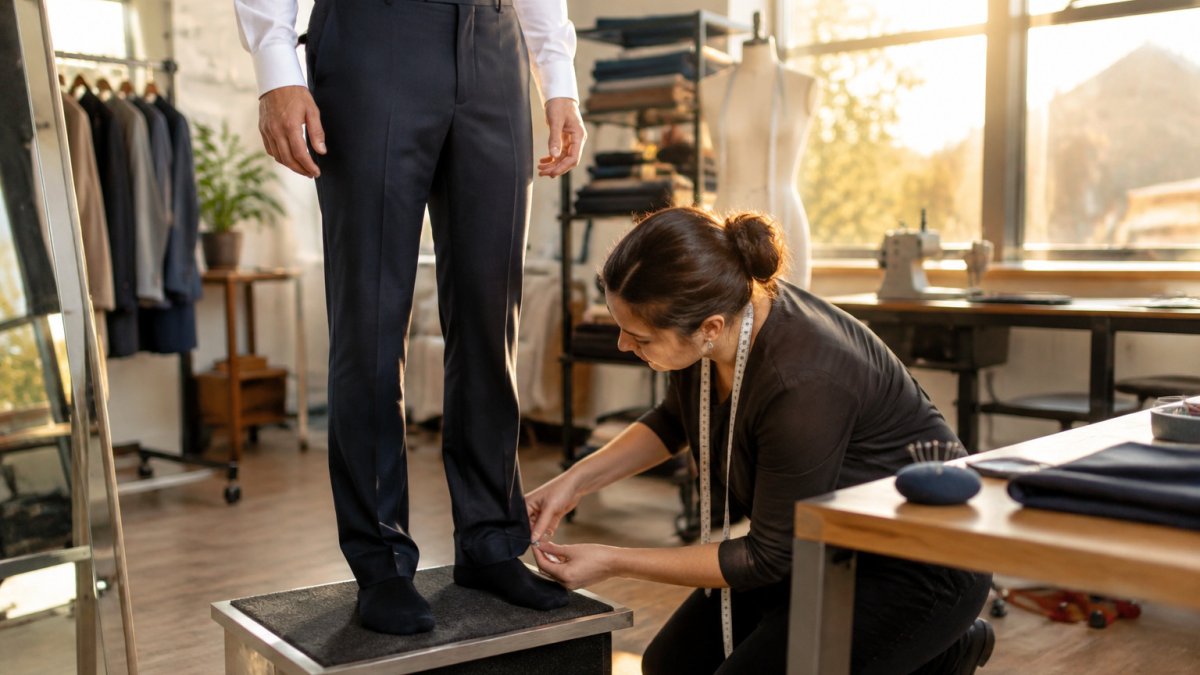
Bring the exact shoes you plan to wear to every fitting. This is one of the simplest ways to get a clean hem that looks right in the photos. Pants hemming is one of the services we handle, and getting the shoe height right before the final pin is essential. To find a local seamstress for pant hemming, learn what to expect and how to prepare your garments. You can check hemming options and related services before you book.
The mistakes below are easiest to avoid when you know what to check at each stage.
| Mistake | Why it happens | Fix |
|---|---|---|
| Booking too late | Tailoring needs several stages and time | Book as soon as you buy the garment |
| Wrong starting size | Some changes, like shoulders, are not feasible | Start with the size that fits shoulders, bust or hips |
| Pants fitted without event shoes | Heel height changes hem length | Bring the exact shoes to every fitting |
| Skipping fittings | One appointment rarely covers the full job | Ask how many fittings are needed and book them |
| Over-altering a garment | Seams, linings and seam allowance set limits | Ask early whether the alteration is feasible |
| Forgetting fitting essentials | Tailor has to guess without key items | Bring the garment, shoes, undergarments and accessories |
Skipping Fittings or Booking Too Few
A single fitting is rarely enough for formal wear. Most garments need more than one appointment: an initial fitting to mark the changes, and a final fitting to check the result before the work is finished. Complex jobs, such as wedding dresses or fitted suits, may need more.
Skipping a fitting means you never see the garment on your body in its near-finished state. Ask your tailor how many fittings the job will require and build them into your schedule from the start. For multi-fitting work, see our custom garment design and dressmaking services. Setting clear expectations at the time you place the order helps prevent surprises later.
Over-Altering a Garment Beyond What Its Construction Allows
Some garments simply cannot be changed by much. Seams, linings, darts and the amount of fabric left in the seam allowance all limit how far a piece can be taken in or let out. Pushing past those limits can leave puckering, strain or a garment that no longer hangs properly.
Ask your tailor early whether the alteration is feasible. A good tailor will tell you if a request risks the garment. Fabric type matters too. Delicate silks, heavily beaded bodices and structured jackets each respond differently to alteration, so a realistic conversation at the start protects both the look and the investment.
Forgetting What to Bring to Your Tailor Fitting
A fitting is only as accurate as the information you bring to it. Forgetting key items means the tailor is guessing, and guesses lead to repeat visits. Use this checklist before every appointment:
- The garment itself, clean and pressed, with any tags or belts it came with.
- The exact shoes you will wear to the event, since heel height changes hem length.
- The undergarments or shapewear you plan to use with the outfit, because they change how a dress or jacket sits.
- Accessories that affect fit, such as a belt, a structured bra, or a wrap that changes the neckline.
- Reference photos that show the look you want, especially for sleeve length, hem break, or jacket suppression.
- A written list of the changes you want, so nothing is missed in conversation.
For suits and jackets, bring the shirt and tie you plan to wear so the tailor can judge collar and cuff show. For gowns and bridesmaid dresses, bring the shoes and any jewelry that sits near the neckline or waist. If you are having a fall jacket or sweater adjusted, bring the layers you expect to wear underneath so the sleeve and body fit are judged correctly. Bringing each planned layer and accessory helps keep the fit cohesive, and Beach Bride & Groom offers another perspective on preparing wedding attire for a fitting.
The clearer your instructions and the more complete your kit, the more efficient the appointment will be. Missing shoes or undergarments is one of the most common reasons a hem or bodice adjustment has to be redone, and it is entirely avoidable.
Watch out: arriving without the event shoes can force a second hem appointment, and arriving without the intended undergarments can change how a bodice or waist fits once you dress for the event.
Booking Your Next Formal Wear Fitting in Calgary
If you have a formal event coming up in Calgary, now is the time to book. Calgary Seamstress has been tailoring garments at Southcentre Mall for 38 years, handling wedding dresses, suits, and everyday alterations. You can see our full range of services on our tailoring page, or review our suit tailoring options if you need a jacket or suit adjusted.
Each fitting is handled with care. Find alterations and suit tailoring in South Calgary, including wedding dress alterations and custom garment creation. Ready to book? Make an appointment online and give your formal wear the fit it deserves.
Frequently Asked Questions
What are the most common mistakes people make when getting formal wear altered?
The most frequent errors are booking too late, buying the wrong starting size, trying on pants without the shoes you will wear, skipping fittings, and altering a garment beyond what its construction allows. Each one can leave a garment looking wrong on the day. At Calgary Seamstress, we recommend setting clear expectations when the order is placed, bringing the intended shoes to every fitting, and asking the tailor to confirm what is realistic before any cutting begins. Most of these mistakes are avoidable with a short conversation at the start.
How far in advance should I book formal wear alterations in Calgary?
Book as early as you can, especially for a wedding dress or a suit you need for a specific event. Lead times generally depend on the work involved and how many fittings are needed. Calgary Seamstress offers a one hour service for urgent needs. Booking early also leaves room for a second fitting if the first one reveals something that needs adjusting.
What should I bring to a formal wear fitting?
Bring the shoes you plan to wear with the garment, since heel height changes how pants and dresses hang. Wear or bring the undergarments you intend to use on the day, because they affect shape and fit. Bring any accessories, a reference photo if you have one, and a list of the changes you want. For formal pants, bring the shoes so the hem can be set correctly. At Calgary Seamstress, fitting is sometimes mandatory.
Can a formal dress or suit be altered too much?
Yes. Every garment is built with seams, linings and fabric that allow only a certain amount of change. Taking in or letting out too far can distort the cut, strain seams or leave visible marks. Some garments, particularly those with delicate fabric or intricate construction, have limited room to move. A good tailor will tell you early if a requested change is not feasible, so you can decide whether to choose a different size or accept a compromise before work begins.