Table of Contents
- Why Professional Pant Hemming Matters
- What to Look for in a Professional Tailor
- How to Find a Local Seamstress for Pant Hemming
- Average Cost of Pant Hemming and What Affects Pricing
- How Long Do Clothing Alterations Take
- Preparing Your Pants for Hemming
- Professional Hemming vs. DIY: A Cost-Benefit Look
- Conclusion
Last Updated: August 18, 2026
Why Professional Pant Hemming Matters
Getting your pants hemmed properly is one of those small decisions that makes an outsized difference in how you look and feel. A well-fitted pair of pants sits correctly at your ankle, moves with your body, and instantly elevates your entire appearance, whether you’re heading to the office or out for the evening. Poor hemming, on the other hand, can ruin an otherwise perfect garment. Crooked stitching, uneven length, or a hem that catches and pulls on the fabric transforms something you love into something you avoid wearing.
This is where finding a local seamstress for pant hemming becomes essential. Professional tailors understand fabric weight, the way different materials respond to stitching, and how to preserve the original integrity of your garment. A skilled seamstress doesn’t just shorten your pants, she maintains the hang, the drape, and the durability of what you’ve invested in.
Many people try DIY solutions first: folding the fabric up, using iron-on tape, or taking scissors to the hem themselves. These shortcuts rarely deliver results you’ll be proud of. The difference between amateur and professional work becomes obvious the moment you put the pants on. At Calgary Seamstress, we’ve seen countless clients bring in garments damaged by previous attempts at hemming. The seams pucker. The original hem is lost. The fabric frays. What started as a cost-saving measure ends up costing far more to repair, or worse, the garment becomes unwearable.
Professional hemming protects your investment. When you choose a qualified tailor who specializes in pant alterations, you’re ensuring that your clothing will fit properly, last longer, and maintain its appearance through repeated wear and washing.
What to Look for in a Professional Tailor
Not all seamstresses approach pant hemming the same way. The difference between a competent tailor and an exceptional one often comes down to attention to detail, experience with different fabric types, and a genuine commitment to understanding what you need.
Experience with Your Fabric Type
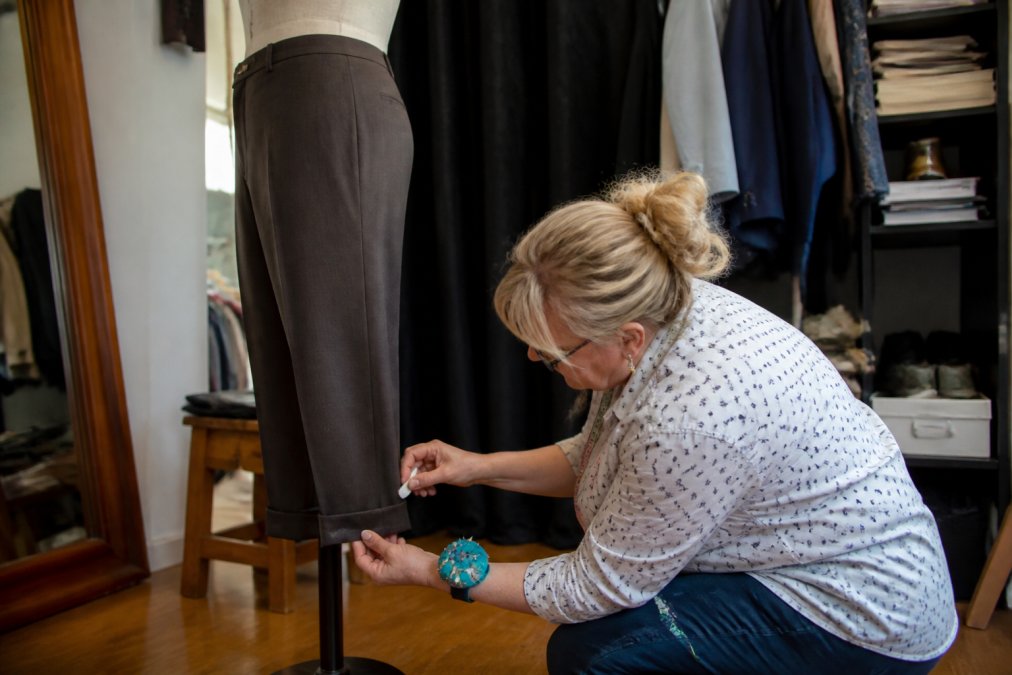
The weight, weave, and fiber content of your pants determine how they should be hemmed. Heavy denim requires a different approach than lightweight cotton or structured wool suiting. A tailor who understands these differences will choose the right stitch type, thread weight, and technique to ensure your hem stays intact through washing and wearing.
When you’re evaluating a local seamstress for pant hemming, ask specifically about their experience with the fabric you’re bringing in. Have they hemmed raw denim before? Do they know how to handle stretch fabrics without distorting them? Can they work with delicate materials like silk or linen? A professional who asks questions about your garment’s care instructions and fabric composition is demonstrating the kind of knowledge you want.
Some fabrics need a blind stitch to remain invisible from the outside. Others benefit from a topstitched hem that becomes a design feature. A seamstress who can explain these options and recommend what works best for your specific pants is worth the investment.
Portfolio and References
Before committing to a tailor, ask to see examples of their work. A professional seamstress should be able to show you photographs of completed alterations or invite you to see finished garments. Look for consistency in their stitching, even hem lines, and evidence that they’ve worked on a variety of garment types.
References matter just as much. If someone you trust has had excellent results with a particular tailor, that’s valuable information. Online reviews and testimonials give you insight into whether other customers experienced the same quality and care. Pay attention to comments about turnaround times, communication, and whether the tailor listened to what the customer wanted.
A professional who takes pride in their work will have no hesitation showing you examples. If a seamstress is vague about their experience or reluctant to share references, that’s a signal to keep looking.
How to Find a Local Seamstress for Pant Hemming
Finding the right tailor in your area takes a bit of effort, but it’s worth the time investment. You’re looking for someone reliable, skilled, and genuinely interested in getting your garment right.
Word of Mouth and Reviews
Start by asking people you know. Friends, family members, colleagues, someone in your circle has likely found a good tailor and can point you in the right direction. Personal recommendations carry weight because they come with real experience. You’ll hear not just whether the work was good, but whether the tailor was easy to work with, whether they met their deadline, and whether the price was fair.
Online reviews on Google, Yelp, and local business directories give you a broader picture of a seamstress’s reputation. Look for patterns in what customers say. Are people consistently mentioning quality work? Do they note that the tailor was attentive to their specific requests? Are there complaints about rushed work or missed deadlines? Read both the positive and negative reviews, they tell you what to expect.
When you find a few candidates with strong reviews, visit their websites or call to get a sense of how they communicate. A professional seamstress will answer your questions clearly, explain their process, and give you a realistic timeline for your work.
Checking Credentials and Quality
Once you’ve narrowed down your options, visit in person if possible. Look at the workspace. Is it clean and organized? Are there finished garments or samples visible? Does the tailor take time to understand what you need, or do they seem rushed?
Ask specific questions about their experience with pant hemming. How long have they been doing alterations? What’s their approach to preserving the original hem when possible? Can they handle special requests, like tapering or cuff adjustments? A professional who asks you detailed questions about how you want your pants to fit is demonstrating the kind of care that leads to excellent results.
Some tailors specialize in certain types of work, wedding dress alterations, suit tailoring, or everyday repairs. A seamstress with deep expertise in pant hemming specifically will likely deliver better results than a generalist who does a bit of everything. That said, many skilled tailors handle multiple garment types with equal proficiency.
Average Cost of Pant Hemming and What Affects Pricing
The cost of pant hemming varies depending on several factors, and it’s worth understanding what influences the price before you commit to a tailor. Pricing depends on the complexity of the work, the fabric type, how quickly you need the alteration, and whether any additional repairs are required alongside the hemming.
A straightforward hem on a standard pair of pants is typically more affordable than hemming a delicate fabric or working with stretch material that requires special handling. If your pants have an original hem that needs to be preserved or if you’re asking for a cuff adjustment in addition to hemming, the cost will reflect that additional work.
When you contact a local seamstress for pant hemming, ask for a quote. Most tailors will give you a price estimate after examining your garment. This is normal practice and helps you make an informed decision. Don’t automatically choose the cheapest option, a tailor who charges a bit more often delivers better quality and takes more time to get the details right.
Some tailors offer package pricing if you bring multiple items for alteration. If you have several pieces that need work, ask whether they offer a discount for bundling.
How Long Do Clothing Alterations Take
Turnaround time matters, especially if you need your pants ready for a specific event or occasion. Understanding the typical timeline for pant hemming helps you plan accordingly and choose a tailor who can meet your deadline.
Standard Turnaround Times
Most professional tailors complete basic pant hemming within one to two weeks. This timeline accounts for the time needed to carefully measure, mark, stitch, and inspect the work. A seamstress who rushes through this process risks delivering subpar results, so a reasonable turnaround time is actually a sign of professionalism.
The exact timeline depends on how busy the tailor is. During peak seasons, back-to-school time, wedding season, or the weeks before major holidays, turnaround times may extend. If you’re working with a specific deadline, mention it when you drop off your pants. A professional seamstress will let you know upfront whether she can accommodate your timeline.
Rush Services and Same-Day Options
Some tailors offer expedited services for an additional fee. If you need your pants hemmed urgently, ask whether rush service is available. Some seamstresses can complete a simple hem in a few days if you’re willing to pay extra. Calgary Seamstress, for example, offers one-hour and 24-hour rush services for clients who need faster turnaround, though availability depends on current workload.
Same-day hemming is possible for straightforward work on uncomplicated fabrics, but it’s not the norm for all tailors. If you need your pants ready quickly, call ahead and discuss your timeline before dropping off the garment. This gives the tailor a chance to assess whether they can deliver without compromising quality.
Preparing Your Pants for Hemming
Getting your pants ready for the tailor sets the stage for a successful alteration. A few simple steps on your end make the seamstress’s job easier and help ensure you get exactly the fit you want.
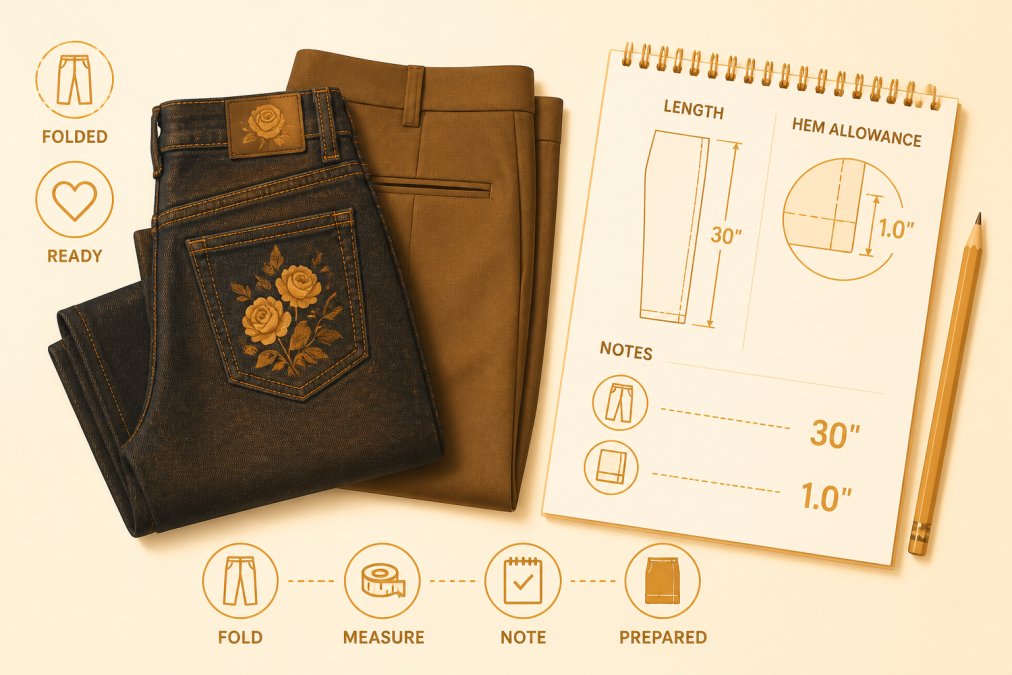
Start by wearing the pants with the shoes you’ll typically pair them with. This matters more than you might think. The heel height of your shoes affects where the hem should sit. Wear them with the exact footwear you plan to use most often, then have someone mark where the hem should fall, typically at or just touching the top of your shoe.
Try the pants on in front of a mirror and get a sense of the length you want. Some people prefer a slight break in the fabric at the ankle, while others like a cleaner, more tapered look that just grazes the shoe. There’s no single "correct" length, it depends on your preference and the style of the pants.
Write down the measurements if possible. Note the current length and the desired length. If you’re having the original hem taken out and replaced, mention this to the tailor. Some seamstresses can preserve the original hem and simply take in the excess fabric, which can save time and maintain the garment’s original integrity.
Bring the pants clean to the tailor. Dirt or stains can interfere with precise measuring and marking, and it’s just more pleasant for everyone involved. If your pants have been worn and washed recently, they’ve settled into their final shape, which means your measurements will be more accurate.
Professional Hemming vs. DIY: A Cost-Benefit Look
The temptation to hem your own pants is real, especially if you’re trying to save money. But the actual cost-benefit analysis usually favors professional work, and not just because of the quality difference.
A DIY approach requires tools: a sewing machine (if you don’t already own one), thread that matches your fabric, needles, scissors, and measuring supplies. If you’re buying these items specifically for hemming, the cost adds up quickly. Even if you have some of these tools, there’s a learning curve. Your first attempt probably won’t look professional. Your second or third might be better, but by then you’ve invested time and potentially ruined a pair of pants in the process.
A professional seamstress has invested years in developing the skill to hem pants correctly the first time. She has industrial-grade equipment, access to specialty threads and materials, and the expertise to handle problem fabrics. When you pay for professional hemming, you’re paying for that expertise and the guarantee that your garment will look good.
There’s also the matter of what your time is worth. An hour spent attempting to hem pants yourself has a cost, the opportunity cost of what else you could be doing. A professional can complete the work in a fraction of that time.
The real cost-benefit advantage of professional hemming becomes clear when you consider the long-term value. Pants that fit properly are pants you’ll actually wear. They’ll last longer because they’re not dragging on the ground or bunching awkwardly at the ankle. A well-executed hem from a professional tailor is an investment that pays dividends every time you put those pants on.
DIY hemming makes sense if you already have sewing skills and the right tools, and if you’re working with a fabric you’re comfortable handling. For most people, most of the time, professional hemming is the smarter choice.
Finding a local seamstress for pant hemming doesn’t have to be complicated, but it does require knowing what to look for. A skilled tailor who understands your fabric, listens to what you want, and takes pride in precise work will transform how your pants fit and feel. When you’re ready to move forward, Calgary Seamstress offers professional pant hemming with same-day and rush service options and can walk you through the process from start to finish. The investment in professional alterations pays for itself in the confidence and comfort of wearing pants that fit exactly right.
Frequently Asked Questions
What should I bring to my pant hemming appointment?
Bring the pants or jeans you need hemmed, the shoes you plan to wear with them (to ensure proper hem length), and any specific requests about the style of hem you want. If you know your desired hem length in centimetres, write it down. Wear the socks or hosiery you'll typically wear with the pants so the seamstress can measure accurately. A professional tailor will also measure while you're standing, so be prepared to try them on during the fitting.
How much does it cost to get a pair of jeans shortened?
The cost of jeans shortening depends on the fabric weight, the type of hem finish you want (blind stitch versus standard), and whether the original hem needs to be preserved. Pricing also varies by seamstress and your location. For an accurate quote, contact a local seamstress directly with details about your jeans and the work required. Many offer free consultations to assess the job.
How long does a tailor take to shorten pants?
Standard pant hemming typically takes 5-10 business days, depending on the seamstress's workload and the complexity of the alteration. If you need the original hem preserved on denim or if tapering is required, it may take slightly longer. Many seamstresses offer rush services or same-day turnaround for an additional fee if your timeline is tight. Always confirm the expected completion date when you drop off your garments.
How do I know if a seamstress is experienced with denim versus dress slacks?
Ask directly about their experience with the specific fabric type you need altered. Experienced seamstresses who work with denim should be familiar with preserving original hems, handling heavy-weight fabrics, and maintaining the integrity of topstitching. For dress slacks, they should understand blind stitching and how to work with delicate fabrics. Request to see examples of their work on similar garments, and don't hesitate to ask for references from previous clients.
This article was written using GrandRanker