Table of Contents
- How Long Do Wedding Dress Alterations Take? Understanding the Timeline
- Rush Wedding Dress Alterations: What to Do When Time Is Short
- Cost of Wedding Dress Alterations in Canada: What Shapes the Price
- Your Wedding Dress Alteration Checklist: What to Bring and Expect
Last Updated: July 30, 2026
Knowing how long wedding dress alterations take is crucial, booking a seamstress too late is the most common mistake we see. Most wedding gown alterations require between six and twelve weeks from first fitting to final pickup, though complex dresses with heavy beading or layered lace can take longer.
How Long Do Wedding Dress Alterations Take? Understanding the Timeline
Wedding dress alteration timelines depend on gown complexity, the number of fittings required, and your bridal specialist’s availability during peak season. Most brides complete the process across three to four appointments spread over six to twelve weeks.
A standard alteration schedule looks like this:
- First fitting (Week 1-2): Measurements are taken, the gown is pinned, and all adjustments are identified.
- Second fitting (Week 3-5): Pinned changes are sewn and checked for additional refinements.
- Third fitting (Week 6-8): Near-final adjustments are confirmed with wedding shoes and undergarments.
- Final fitting (Week 9-12): The gown is complete; you do a full walk-through and take it home.
Simple alterations like a basic hem may need only two appointments. A heavily customized gown with intricate beading, multiple fabric layers, or structural bodice changes can require four or five visits. Fabric and style matter significantly, a satin column gown alters faster than a ballgown with cathedral train and tulle layers. Lace overlay requires hand-stitching around every motif; beading removal and reapplication adds days of labor.
|
Alteration Type |
Typical Number of Fittings |
Estimated Lead Time |
|---|---|---|
|
Basic hem only |
2 |
3-4 weeks |
|
Taking in / letting out bodice |
2-3 |
5-7 weeks |
|
Bustle addition |
2-3 |
4-6 weeks |
|
Full customization (beading, lace, structural) |
4-5 |
8-12 weeks |
|
Rush service |
1-2 |
1-7 days |
Rush Wedding Dress Alterations: What to Do When Time Is Short
Rush alterations are possible for many common adjustments. Hemming, basic taking in, and zipper replacements can often be completed within one to seven days. Complex work like reapplying hand-sewn beading or restructuring a bodice cannot be rushed without compromising quality.
If your wedding is six weeks away or fewer:
- Contact your seamstress immediately with photos and a detailed gown description.
- Be honest about your wedding date; a good specialist will tell you what is achievable.
- Prioritize alterations that affect fit and function over decorative customization.
- Bring your wedding shoes and undergarments to your first appointment.
If your dress arrives late: Call your seamstress the same day. Many experienced tailors can work around a compressed schedule if notified early. Ask specifically about rush fees and what is realistically achievable.
Cost of Wedding Dress Alterations in Canada: What Shapes the Price
Alteration costs for wedding gowns in Canada vary considerably. Pricing depends on gown complexity, type of alterations, fabric delicacy, beading or embellishments, number of fittings, and rush fees. A simple sheath dress costs less than a ballgown with multiple layers, cathedral train, and hand-applied lace.
The most accurate approach is to book a consultation and bring your gown. A seamstress needs to see the actual garment before quoting, as two similar-looking gowns can require very different amounts of work. Prioritize a seamstress whose work you can verify over one who quotes lowest, a poorly executed hem or unevenly taken-in bodice is far more expensive to fix than doing it correctly the first time.
Contact Calgary Seamstress directly for a quote tailored to your specific dress and alteration needs.
Your Wedding Dress Alteration Checklist: What to Bring and Expect
The quality of your fitting depends heavily on what you bring and how prepared you are. Many brides arrive without the right foundation garments or shoes, making accurate hemline and bodice adjustments impossible.
Before your first fitting:
- Confirm your appointment and bring your gown in its garment bag
- Wear or bring the exact undergarments you plan to wear on your wedding day
- Bring your wedding shoes (or shoes of the exact heel height)
- Note specific concerns: areas where the dress gaps, pulls, or feels uncomfortable
At the fitting:
- Stand naturally when measurements are taken
- Communicate clearly about comfort, not just appearance
- Ask the seamstress to explain each pin and what it represents
- Confirm the bustle style and practice bustling the dress yourself
Final fitting checklist:
- Walk, sit, and move as you would at your reception
- Check the hemline from every angle, including stairs
- Confirm the bustle is secure and someone in your wedding party knows how to fasten it
- Inspect all seams, beading, and altered areas
- Ask about garment care between pickup and the wedding day
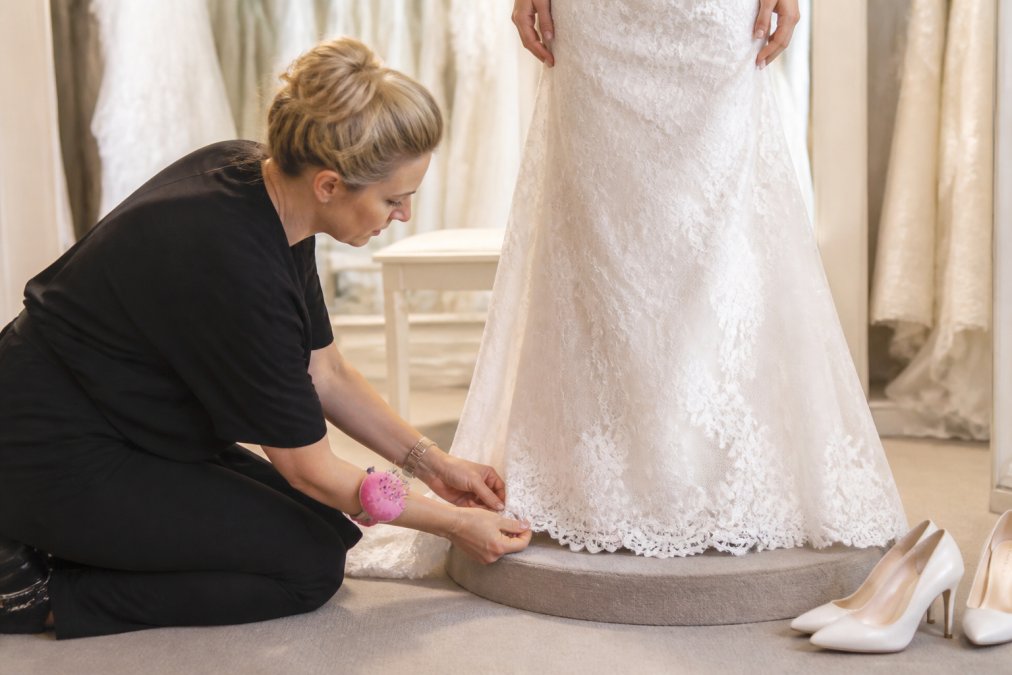
The first fitting is largely diagnostic, the seamstress assesses the gown, identifies adjustments, and creates a plan. A common mistake is focusing only on how the dress looks standing still. Test walking, dancing, sitting, and hugging before taking the gown home.
Wedding dress alterations are one of the few parts of wedding planning where rushing creates visible, irreversible results. The process works best when it starts early with a seamstress who listens carefully and communicates honestly about what is achievable. Calgary Seamstress specializes in wedding gown alterations, handles complex work including beading, lace hemming, and structural bodice adjustments, and offers rush service for tight timelines. Make an appointment online and bring your gown, shoes, and questions.
Frequently Asked Questions
When should I book my first wedding dress alteration fitting in Calgary?
Most bridal specialists recommend booking your first fitting appointment at least three to four months before your wedding date. This gives your seamstress enough lead time to complete multiple fittings, handle any unexpected complexity — such as beading or lace adjustments — and still leave a buffer for final tweaks. If your wedding gown arrived later than expected, contact your bridal salon or alteration specialist immediately to assess whether rush service is needed.
How long do wedding dress alterations take from start to finish?
Wedding dress alterations typically take anywhere from six to twelve weeks, depending on the complexity of the work. Simple adjustments like hemming or taking in the bodice take less time, while intricate work involving lace, beading, or a bustle can extend the timeline significantly. Fabric type also matters — delicate materials like silk require more careful, time-intensive tailoring. Always confirm the expected timeline with your seamstress at your first fitting.
Can I get rush wedding dress alterations if my wedding is only a few weeks away?
Yes, rush wedding dress alterations are possible at some bridal alteration specialists, including options for one-hour or 24-hour turnaround on certain services. However, rush service typically comes with an additional rush fee, and not all complex alterations — such as extensive beading or structural bodice changes — can be safely completed in a compressed timeframe. Contact your seamstress as early as possible to discuss what is realistically achievable without compromising the quality of your gown.
How much do wedding dress alterations cost in Canada?
The cost of wedding dress alterations in Canada varies widely based on the scope of work, the complexity of the gown, the fabric involved, and whether rush service is required. Factors like hemming a multi-layered skirt, adding a bustle, taking in the bodice, or replacing beading all affect the final price. Because every wedding gown is unique, it is best to request a personalized quote from your seamstress after an initial consultation and measurements are taken.
What should I bring to my wedding dress alteration fittings?
Bring your wedding shoes (or shoes with the same heel height), the undergarments you plan to wear on your wedding day, and any shapewear or corset you intend to use. These items directly affect how the hemline falls and how the bodice fits. If you plan to wear a veil or specific jewellery, bring those too. Having everything together at each fitting ensures your seamstress can make accurate adjustments and reduces the risk of surprises at your final fitting.
Is a virtual or remote consultation possible for wedding dress alterations?
A virtual consultation can be a useful first step — particularly for brides who want to discuss the scope of work, ask questions, or get a general sense of timeline and pricing before committing to an in-person appointment. However, actual dress alterations require in-person fittings so your seamstress can take precise measurements, do pinning, and assess the garment construction directly on your body. Virtual consultations cannot replace hands-on fitting sessions for a wedding gown.
This article was written using GrandRanker