Table of Contents
- Average Turnaround Time for Jeans Hemming
- Factors That Affect How Long Jeans Hemming Takes
- Same-Day Pants Alteration and Rush Service Options
- Original Hem vs. Standard Hem: Timeline Differences
- How to Measure Your Jeans for Hemming
- Jeans Hemming Cost and What Influences Pricing
- Preparing Your Jeans for the Tailor
- Conclusion
Last Updated: August 17, 2026
Average Turnaround Time for Jeans Hemming
Professional jeans hemming typically takes 5 to 10 business days, though timelines vary based on your tailor’s workload and job complexity. Most tailors can complete a straightforward hem in about a week while maintaining quality standards.
The timeline reflects precision work: accurate inseam measurement, hem line marking, fit verification, and stitching with either chain stitch or lock stitch depending on the jean’s original construction. Rushing these steps results in hems that pull, pucker, or don’t match the factory finish.
Many tailors offer expedited options for those in a time crunch. Same-day or next-day service exists at a premium cost. The standard 5-10 day window balances quality and affordability.
Factors That Affect How Long Jeans Hemming Takes
Workload and seasonal demand play the biggest role. During wedding season or holidays, tailors are swamped; a five-day job may stretch to three weeks in December. Book early if planning ahead, or ask your tailor directly about current turnaround.
The type of hem matters significantly. An original hem, replicating the factory chain stitch, takes longer than a standard lock stitch hem because it requires matching thread color and ensuring a factory-made appearance. Standard hems are faster but show visible stitching.
Material-Specific Timelines: Why Denim Type Matters
Denim weight and construction directly impact hemming time, requiring different machine setups, needle gauges, and handling techniques.
Raw denim (unwashed, untreated) takes 7-12 days for standard hems and 10-14 days for original hems. Raw denim is stiff and dense, requiring a heavier needle and slower stitch speed. Experienced tailors add time to account for unpredictable shrinkage and fading after the first wash. Discuss shrinkage expectations with your tailor upfront.
Stretch denim (with elastane or spandex) takes 5-8 days. Stretch fabrics require a ballpoint or stretch needle to avoid snagging elastic fibres. The tailor must adjust tension carefully to prevent puckering as the fabric relaxes, but this doesn’t dramatically extend the timeline.
Heavyweight selvedge denim (14-16 oz or heavier) takes 8-14 days, especially for original hems. Selvedge is tightly woven with a distinctive coloured edge that tailors preserve. Original hems on selvedge are particularly labour-intensive due to the dense fabric and need for precision pattern matching.
Standard cotton denim (12-13 oz) takes 5-7 days. Most tailors have optimized their process for standard-weight denim, making turnaround fastest.
Distressed or ripped denim takes 8-12 days regardless of weight. The tailor must work around holes and damage without compromising aesthetics, requiring extra planning and careful stitching.
Combined alterations extend timelines. A simple hem alone might take 7 days; adding tapering or waist adjustments pushes it to 10-12 days. Tapering raw denim or selvedge adds further time.
The tailor’s specific process varies by shop. Some batch similar work for efficiency, meaning your jeans may sit briefly while the tailor collects similar jobs. Professional shops typically batch work, though raw denim or selvedge requiring machine setup changes may move through faster to avoid multiple resets.
Same-Day Pants Alteration and Rush Service Options
Same-day jeans hemming is the exception, not the rule. Quality hemming requires accurate measurement, proper stitching, and thread matching, work that genuinely takes time. Rushing creates risk of inaccurate measurement, sloppy stitching, or poor thread matching.
Some professional tailors offer one-hour, same-day, and 24-hour options for clients needing speed. These expedited services carry premium costs because the tailor rearranges their schedule and works outside normal batch cycles.
Understanding Rush Service Surcharges
One-hour or same-day service typically carries a 50-100% surcharge. If a standard hem costs $25-$35, expect $40-$70 for same-day turnaround, reflecting the tailor’s schedule disruption and extended hours.
24-hour service adds 25-50% to the base price, faster than standard but less disruptive than same-day.
Standard 5-10 day service has no surcharge and is baseline pricing.
When you request rush service, your jeans jump the queue, the tailor measures and marks immediately (often while you wait), and you receive a same-day or next-day fitting appointment. Quality doesn’t suffer, skilled seamstresses work fast without cutting corners, but pricing reflects the workflow disruption.
When Rush Service Makes Sense
Rush hemming is worth the premium for events in 1-3 days, miscalculated timelines, or last-minute purchases. It’s not worth it if you have 2+ weeks before needing the jeans, if you’re getting an original hem (which requires careful thread matching and pattern study), or if combining hemming with other alterations (the tailor can’t rush the entire job).
Seasonal Rush Demand
Rush service availability fluctuates with demand. During back-to-school (August-September), wedding season (May-June), and winter holidays (November-December), many tailors stop offering same-day service due to backlog. Book early in the week rather than Friday, and call ahead to confirm availability.
Original Hem vs. Standard Hem: Timeline Differences
An original hem replicates the factory chain stitch, taking 8-12 days. The tailor removes original stitching, shortens the inseam, and recreates the chain stitch pattern with matching thread. The result looks factory-made, ideal for high-end or selvedge denim.
A standard hem uses lock stitch, taking 5-7 days. The tailor folds fabric to your inseam length and stitches with a standard machine stitch. The hem is clean and functional but shows visible stitching indicating alteration.
For distressed jeans or casual wear, standard hems work well. For raw denim, selvedge, or pristine-looking jeans, original hems are worth the extra time and cost. Jeans / Pants Alterations at Calgary Seamstress specializes in both types with meticulous attention to matching original construction.
How to Measure Your Jeans for Hemming
Before dropping off jeans, know your inseam measurement, the distance from your crotch seam to where you want the hem to fall on your shoe.
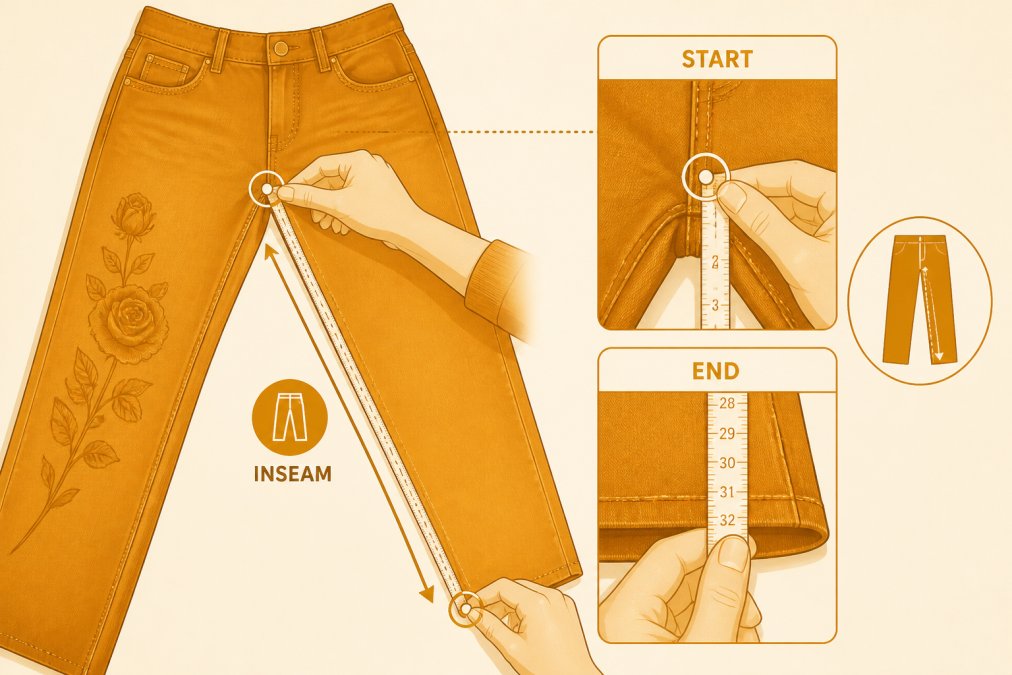
Put on the jeans with shoes you’ll actually wear them with. Heel height changes inseam length; flat shoes versus heels can shift measurement by half an inch or more.
Locate the crotch seam where pant legs meet inside. Place the measuring tape at this point and run it down the inside leg to where you want the hem to end. Most prefer jeans hitting just at the top of the shoe with a slight fabric break.
Measure both legs separately. Legs may differ in length; good tailors account for this.
Write down the measurement in inches or centimeters and note which leg is which if they differ.
Alternatively, have the tailor measure you. Many seamstresses prefer doing this themselves, ensuring accuracy. Wear the shoes you’ll wear with the jeans and let the professional measure your inseam.
Measurement accuracy is critical, a quarter-inch difference is noticeable on a finished hem.
Jeans Hemming Cost and What Influences Pricing
Jeans hemming pricing depends on complexity, hem type, rush service, and location. Contact Calgary Seamstress or your local tailor directly for accurate quotes.
Standard hem pricing is most affordable due to straightforward lock stitch work. Original hem pricing costs more due to thread matching, chain stitch replication, and expertise required.
Rush service surcharges apply for same-day or next-day turnaround. Combined alterations cost more than hemming alone. Denim weight and condition may influence cost slightly.
Get a quote from your tailor rather than estimating. Most shops provide free estimates or charge a small consultation fee. Calgary Seamstress provides accurate pricing based on your specific jeans and required work.
Preparing Your Jeans for the Tailor
Clean your jeans thoroughly. Dirt and lint make it harder for the tailor to see fabric clearly and work with precision. A quick wash or lint roller suffices.
Try them on with the shoes you’ll wear them with. This final check ensures the planned length is what you want.
Mark the hem line if your tailor prefers. Some ask you to mark with a pin or chalk; others prefer measuring from scratch. Ask your tailor’s preference.
Bring special requests in writing. If you want an original hem or have concerns about distressed areas, write it down to prevent miscommunication.
Ask about the timeline upfront. Get a specific completion date, not just "about a week."
Get a receipt or claim ticket. Keep this proof of what was ordered and when it should be ready.
Inspect finished work before leaving. Try jeans on in the shop if possible. Check that the hem is even, stitching is clean, and length matches your request.
Professional jeans hemming ensures perfect fit and longevity. The typical 5-10 business day timeline reflects the care required to do it right. Understanding the process helps you plan accordingly, whether you need quick turnaround or meticulous original hem work.
Calgary Seamstress offers both standard and expedited hemming with expert attention to matching your jeans’ original construction. When ready, make an appointment online or visit the shop to discuss your specific needs and timeline.
Frequently Asked Questions
How long does it typically take to get jeans hemmed?
Standard jeans hemming usually takes 5-10 business days, depending on the tailor's workload and the complexity of the alteration. Rush or same-day options are available at many tailors for an additional fee. The exact timeline depends on whether you're preserving the original hem or creating a new one, and how busy the shop is during that season.
What is the difference between a standard hem and an original hem?
A standard hem involves the tailor cutting off excess fabric and creating a new hem from scratch using fresh stitching. An original hem preserves the factory-finished edge of the jeans, which many people prefer for authenticity and durability. Preserving the original hem typically takes longer because it requires more precision work, and the tailor must carefully fold and stitch to match the existing finish.
Can jeans hemming be done the same day?
Yes, many tailors offer same-day or rush jeans hemming services, though availability depends on current workload. Same-day turnaround usually costs more than standard service. To qualify for same-day hemming, you typically need to drop off your jeans early in the day and pick them up later that evening. Check with your tailor about rush service surcharges and whether they can accommodate your timeline.
What factors affect how long jeans hemming takes?
Several factors influence jeans hemming timelines: denim weight (heavier fabrics take longer to stitch), whether you want the original hem preserved or a new hem created, seasonal demand at the tailor shop, and the tailor's current workload. Distressed denim or jeans with special features like cuffs or tapering also require additional time. Rush service availability further depends on the tailor's schedule and staffing.
This article was written using GrandRanker