Table of Contents
- Why Proper Transport Matters for Your Wedding Dress
- What to Bring to a Wedding Dress Fitting Appointment
- How to Transport a Wedding Dress Without Creasing
- How to Transport a Wedding Dress With a Train
- Wedding Dress Alterations Appointment Checklist
- Handling Your Dress During the Drive
- What to Do if Your Dress Gets Wrinkled en Route
- Frequently Asked Questions
Last Updated: October 19, 2026
Why Proper Transport Matters for Your Wedding Dress
Your wedding dress is one of the most important garments you’ll ever own, and knowing how to transport a wedding dress safely protects your investment. The fabrics, beading, and construction deserve careful handling from the moment you leave the bridal shop until you arrive at the seamstress. Improper transport can cause wrinkles, creases, and damage that takes hours to repair. A dress crushed in the back seat or stuffed into a car trunk can develop permanent fold lines. Delicate fabrics like silk, tulle, and lace tear easily under pressure. Beading and embellishments snag on rough surfaces.
At Calgary Seamstress, we’ve seen dresses arrive in conditions that required extensive restoration work. The good news: most transport damage is preventable with the right approach.
Start planning your transport method as soon as you book your first fitting appointment. Don’t wait until the day before your appointment to figure out how you’ll get the dress to the seamstress.
Proper transport protects your investment and saves time during alterations. Your seamstress can focus on fitting adjustments instead of repairing damage. You’ll feel confident knowing your dress arrived in perfect condition.
What to Bring to a Wedding Dress Fitting Appointment
Before you transport your wedding dress to the seamstress, gather everything you’ll need for the appointment. Showing up prepared makes the fitting faster and more effective.
Bring these essentials:
- Your wedding dress (in a clean garment bag or container)
- Undergarments you’ll wear on your wedding day (bra, shapewear, slip)
- Wedding shoes (the exact pair you’ll wear)
- Any jewelry you plan to wear (necklace, earrings, bracelets)
- Photos or inspiration images of styles you like
- A list of specific concerns (too loose, too tight, hem length, neckline adjustments)
- Your wedding date and timeline for alterations
- Contact information for your wedding venue or photographer (if relevant to the fitting)
Wearing the correct undergarments matters more than most brides realize. Your dress will fit differently depending on what’s underneath. If you’ll wear a strapless bra, bring it. If you’re planning shapewear, wear it to the fitting.
Your shoes change how the dress hangs, especially the hem length. A dress hemmed with flat shoes will be too long if you wear heels on your wedding day. Bring the exact shoes you’ll wear.
The seamstress can only work with what you show them. Accurate fittings happen when you bring everything you’ll wear on your wedding day.
How to Transport a Wedding Dress Without Creasing
Learning how to transport a wedding dress properly keeps it wrinkle-free and ready for alterations. The method you choose depends on distance, vehicle type, and dress complexity.
Choosing the Right Container
Your container protects the dress during transport. Different options work for different situations.
Garment bags are the standard choice for most brides. Use a breathable garment bag, not plastic. Plastic traps moisture and can cause mildew on delicate fabrics. A quality garment bag protects the dress from dust and minor impacts.
Dress boxes work well for shorter distances. Many bridal shops provide boxes designed for wedding dresses. These boxes have tissue paper and dividers to keep the dress stable.
Clean white sheets are an affordable option if you don’t have a garment bag. Lay clean white sheets flat and wrap the dress loosely. Avoid colored fabric that might bleed dye onto the dress.
Never use dry cleaning bags. They’re too thin and create static electricity that attracts dust.
Packing and Positioning Your Dress
How you pack the dress inside its container matters as much as the container itself.
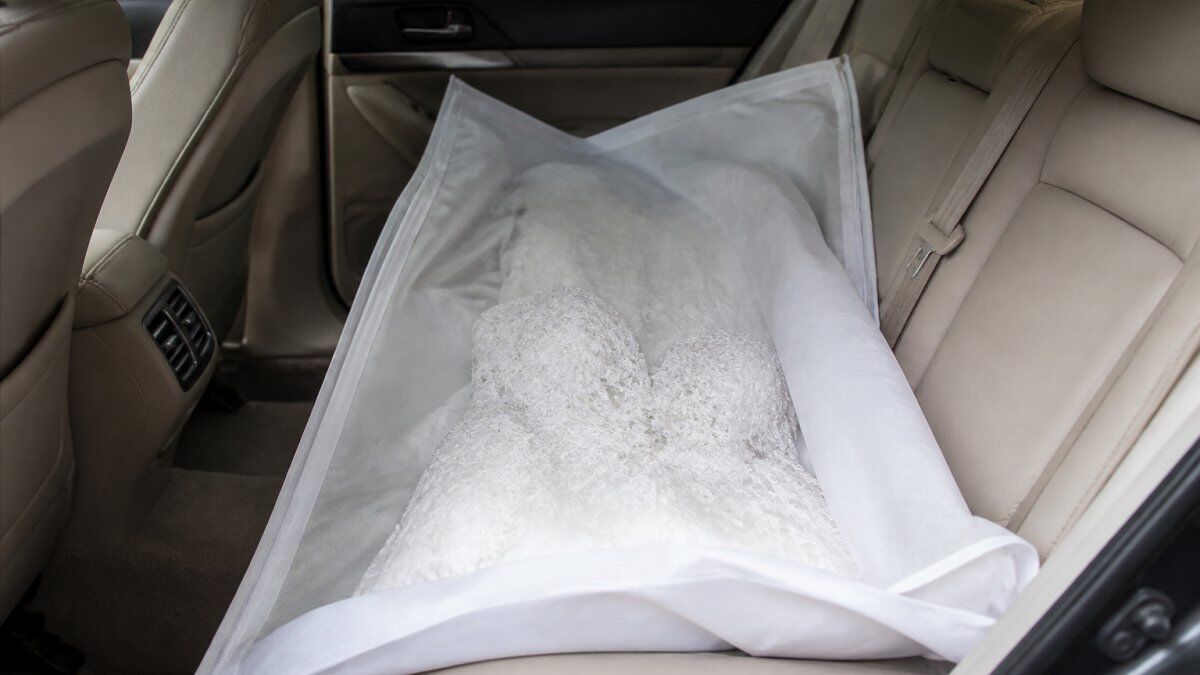
Lay the dress flat, never folded. Hanging a dress for transport causes wrinkles at the hanger point. Folding causes permanent creases that are hard to remove.
Use acid-free tissue paper between layers of fabric. Tissue prevents fabrics from sticking together and protects beading. Regular tissue or newspaper can damage delicate materials.
Stuff the bodice gently with tissue to help it hold its shape. Don’t overstuff. The goal is light support, not compression.
Lay the skirt flat with the hem relaxed. If the dress is very full, arrange it in a spiral pattern so the layers don’t press against each other.
Keep the train separate if possible. Lay it flat alongside the dress or fold it loosely on top.
Place heavier items (shoes, jewelry) on the bottom of your container. Never place anything on top of the dress.
How to Transport a Wedding Dress With a Train
Trains add beauty but create transport challenges. A long train can easily drag on the car floor or get caught in doors.
Fold the train carefully using the accordion method. Start at the hem and fold the train back and forth in sections. This keeps the train compact without creating sharp creases.
Pin the train to the dress bodice with T-pins or safety pins during transport. This prevents the train from sliding around. Remove the pins before arriving at the seamstress’s location.
Use a separate garment bag for the train if your main bag isn’t large enough. Keep both bags in the car together so nothing gets left behind.
Never tie the train in a knot. Knots create permanent wrinkles and can damage delicate fabrics.
For very long trains (cathedral or longer), consider having someone help you carry the dress into the seamstress’s location. Two people managing the dress and train is safer than one person trying to juggle everything.
A train caught in a car door can tear the delicate hem and train fabric. Always check that the entire dress is inside the vehicle before closing any doors.
Wedding Dress Alterations Appointment Checklist
Use this checklist to prepare for your appointment and ensure you don’t forget anything important.
- Dress is clean and in a garment bag or box
- Undergarments match what you’ll wear on your wedding day
- Wedding shoes are in the car
- Jewelry you plan to wear is packed
- You’ve written down specific alteration requests
- Your wedding date is confirmed
- You have photos of styles you like (if applicable)
- You know your dress’s current measurements
- You’ve allowed enough time for alterations before your wedding
- Contact information for the seamstress is saved in your phone
- You have a plan for picking up the dress after alterations
If your wedding is sooner, ask about rush services when you book your appointment. Calgary Seamstress offers flexible alteration timelines, including rush services for brides on tight schedules.
Handling Your Dress During the Drive
The drive to the seamstress is when most transport damage happens. A few smart choices protect your dress.
Place the garment bag flat on the back seat, never standing upright. Laying it flat distributes weight evenly and prevents the dress from shifting.
Use the center of the back seat if possible. This position keeps the dress away from doors and windows.
Secure the garment bag with a seatbelt if it’s large enough, or place it so it won’t slide during turns or stops.
Keep the temperature moderate. Don’t blast the air conditioning directly on the dress. Extreme temperature changes can affect delicate fabrics.
Avoid rough roads if you can. Bumpy drives cause the dress to bounce and shift inside its container.
Don’t place anything on top of the garment bag, even for a short distance. The weight of a purse or jacket can create wrinkles.
Avoid eating or drinking in the car while transporting the dress. Spills are a real risk.
Drive smoothly. Gentle acceleration and braking prevent the dress from sliding around. Aggressive turns cause the garment bag to shift.
If you’re transporting the dress in hot weather, consider driving during cooler parts of the day. Early morning or late afternoon is better than midday heat.
What to Do if Your Dress Gets Wrinkled en Route
Despite your best efforts, wrinkles sometimes happen. Don’t panic. Most wrinkles can be fixed before your fitting appointment.
Hang the dress immediately when you arrive at the seamstress’s location. Many wrinkles release naturally once the dress hangs for 30 minutes to an hour.
Use steam, not an iron. A handheld garment steamer is safe for delicate wedding dress fabrics. Hold the steamer away from the fabric and let the steam do the work. Never touch the steamer directly to beading or embellishments.
Let the seamstress know about any wrinkles when you arrive. They have professional equipment and experience removing wrinkles from wedding dresses.
Avoid the dryer. Never put a wedding dress in a clothes dryer, even on low heat. Heat can damage delicate fabrics and set wrinkles permanently.
Don’t use wrinkle release spray on the entire dress. These products can leave stains on some fabrics. If you use spray, test it on an inconspicuous area first.
For stubborn wrinkles, the seamstress may recommend professional steaming or pressing. This is often included as part of the alteration process.
Most wrinkles release naturally once the dress hangs for 30 minutes to an hour. Give gravity time to work before trying other methods.
Transporting your wedding dress to the seamstress safely sets the stage for perfect alterations. The care you take now means your dress arrives ready for fitting, not requiring damage repair.
When you need professional wedding dress alterations in Calgary, Calgary Seamstress specializes in custom fitting and meticulous craftsmanship. Our team handles delicate fabrics, complex beading, and intricate designs with precision. We offer flexible alteration timelines, including rush services for brides on tight schedules. Make an Appointment Online to book your wedding dress fitting and discover how proper tailoring transforms your dress into a flawless fit that reflects your unique style.
Frequently Asked Questions
Should I hang my wedding dress or lay it flat when transporting it to the seamstress?
Laying your dress flat is usually safer than hanging it during transport. Hanging can create creases at the hanger points and cause the fabric to stretch. If you must hang it, use a padded hanger and secure it to prevent swinging. For most trips, laying the dress flat on clean tissue paper in your vehicle’s back seat minimizes wrinkles and stress on seams.
What should I bring to my wedding dress alterations appointment?
Bring the dress, any undergarments or shoes you’ll wear on your wedding day, a list of specific alterations you need, photos or sketches of any custom changes, and your original receipt or documentation if available. Wear the undergarments you plan to wear during the wedding so the seamstress can fit accurately. Bring a notebook to write down recommendations and timelines discussed during your appointment.
How do I transport a wedding dress with a long train without damaging it?
Carefully fold or roll the train loosely using acid-free tissue paper as you lay the dress flat. Never let the train drag on the vehicle floor or hang outside the car. Use the back seat or cargo area where the train can rest fully supported. If your vehicle is small, consider removing the train before transport if it’s detachable, or ask your seamstress if you can bring it separately in a clean box.
How far in advance should I book my wedding dress alterations appointment?
Book your appointment as soon as you’ve purchased your dress. This allows time for multiple fittings and adjustments. If your wedding is sooner, Calgary Seamstress offers rush services. Contact your seamstress early to discuss your timeline and confirm they can accommodate your wedding date.