Last Updated: November 11, 2026
Quick Summary
Shortening sleeves on winter jackets starts with measuring the cuff to sit at your wrist bone, about 2 to 3 cm above the base of your thumb, then adding 2 to 3 cm for the hem allowance before cutting. The method depends on construction: lined jackets require opening the lining, down jackets must be cut along a baffle seam and sealed immediately, and tapered or taped-shell sleeves are usually best left to a professional.
- Measure with the layers you actually wear, since a jacket fitted over a t-shirt sits short over a sweater.
- Cut down sleeves along a stitched baffle seam, never through a down channel, and seal the edge right away.
- Cuff-first shortening only suits straight sleeves with simple stitched cuffs and no functional hardware.
- Choose hem-first for tapered sleeves, since trimming from the cuff leaves the opening too wide for the original cuff.
- Bring down-filled, taped-shell, or hardware-cuffed jackets to a professional before any stitching begins.
Table of Contents
- Why Winter Jacket Sleeves Need Shortening and What You Risk
- How to Measure Jacket Sleeve Length Before You Cut
- Tools and Materials for Shortening Sleeves on Winter Jackets
- How to Shorten Sleeves on a Lined Jacket
- How to Shorten Down Jacket Sleeves Without Damaging Insulation
- Jacket Sleeve Shortening from the Cuff: What to Know
- When to Choose a Professional Alteration in Calgary
- Book Your Sleeve Alteration at Calgary Seamstress
- Frequently Asked Questions
Why Winter Jacket Sleeves Need Shortening and What You Risk
Shortening sleeves on winter jackets is an alteration where a small mistake can get expensive fast. A sleeve that ends past your knuckles catches on door handles and soaks up slush. But cut too much and you lose the cuff, the draft seal, and the weatherproofing that made the jacket worth buying.
Jacket alterations are a common job for tailors, and the same pattern shows up often: people cut first and measure second. That order can cost you a jacket.
How Lined, Down, and Padded Jackets Differ
Not every winter jacket behaves the same way under a needle. Here is what changes:
- Lined jackets hide a separate inner layer. You must open the lining to reach the sleeve seam.
- Down jackets hold loose insulation inside channels. Cut carelessly and feathers escape by the handful.
- Padded jackets use stitched quilting. Shortening can throw off the quilt lines near the cuff.
- Shell jackets often have taped seams and elastic cuffs that are hard to rebuild.
The construction decides the method. Treat a down jacket like a simple wool coat and you will be sweeping up feathers for a week.
Watch out: cutting through a down channel before sealing it releases insulation that is very hard to put back.
How to Measure Jacket Sleeve Length Before You Cut
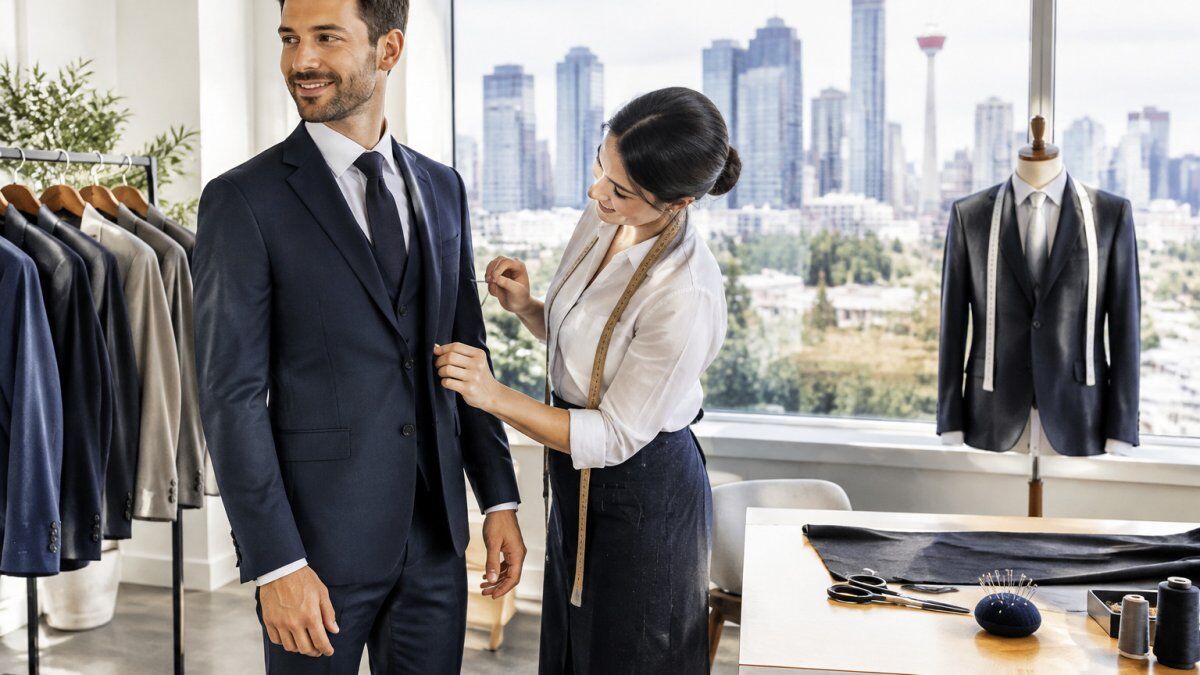
The correct sleeve length places the cuff at the wrist bone, roughly 2 to 3 cm above the base of your thumb, with your arm relaxed at your side.
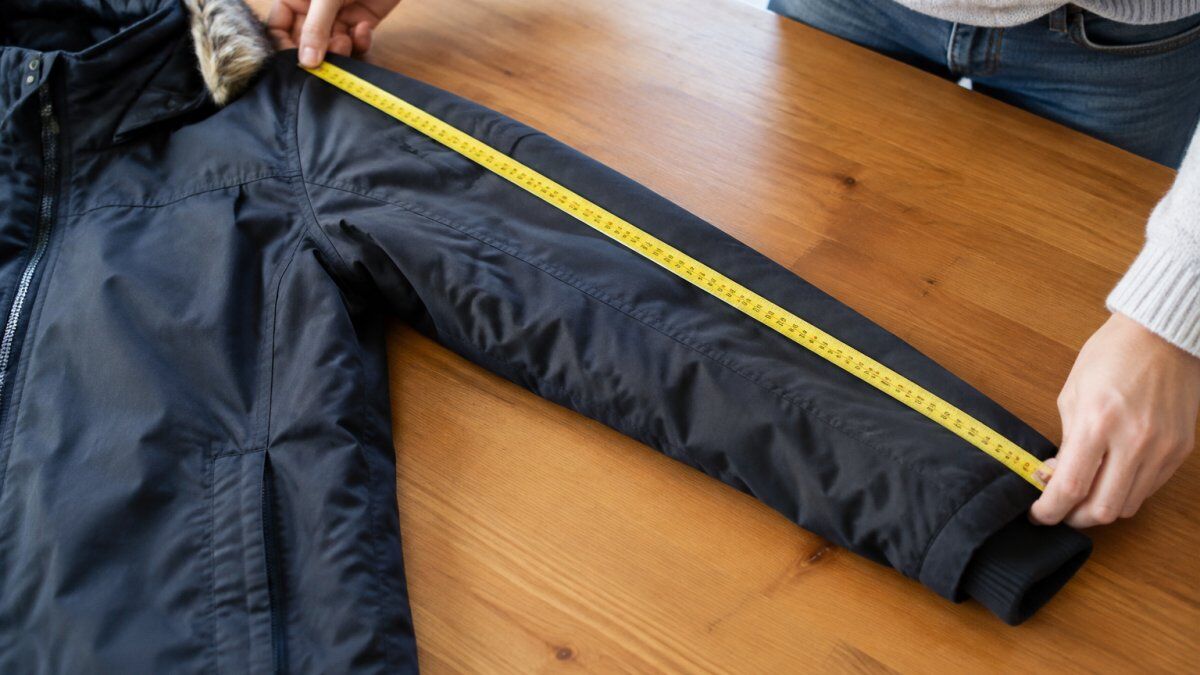
Here is how to measure jacket sleeve length properly:
- Put the jacket on over a light sweater, not a thick hoodie.
- Stand naturally with arms down. Do not stiffen your arm.
- Find the wrist bone on the outside of your wrist.
- Have someone run a measuring tape from the shoulder seam down the outside of the arm.
- Mark where you want the finished cuff to sit.
- Measure the distance from the current cuff to that mark. That is your cut amount.
- Add 2 to 3 cm for the hem allowance.
- Check both sleeves. Bodies are rarely perfectly symmetrical.
What most guides miss: measure with the layers you actually wear. A jacket measured over a t-shirt will sit short over a sweater.
If you discover the sleeves are already too short, we can lengthen a jacket rather than cut it. Check our jacket lengthening service before you commit to a trim.
Tools and Materials for Shortening Sleeves on Winter Jackets
A winter jacket is not a cotton shirt. The tools that work on a blouse will fail on a down-filled or taped-shell sleeve, so build the kit around the jacket’s construction rather than a generic sewing box.
Core kit for any winter jacket sleeve:
- Sharp fabric scissors reserved for fabric only (a separate pair for paper keeps them sharp)
- A seam ripper with a fine point for unpicking lining and cuff seams
- Tailor’s chalk or a washable fabric marker in a contrasting color
- A flexible measuring tape
Add these for specific constructions:
- Down and padded jackets: a fine microtex or sharp needle (size 70/10 to 80/12) to minimize channel punctures, plus seam sealant or a tight double-stitch plan to contain feathers.
- Waterproof and taped-shell jackets: seam tape or seam sealant if you will cut through or near taped seams, and clips instead of pins to avoid puncturing the membrane.
- Ribbed or elastic cuffs: a stretch needle and, if the cuff is being rebuilt, matching rib knit or elastic.
- Lined jackets: a bodkin or turning tool to help rethread the lining, and a hand-sewing needle fine enough to catch only the lining when reattaching it.
What to avoid:
- Dull scissors crush insulation and fray cut edges instead of slicing cleanly.
- Standard pins leave permanent holes in waterproof and coated fabrics.
- Cotton thread weakens when wet and is a poor match for outerwear that sees slush and snow.
- A standard sewing machine needle can snap or skip on thick, multi-layer cuff seams; size up and test on a scrap of the same fabric first.
Watch out: cutting through a down channel or a taped seam before you have a sealing plan releases insulation or breaches weatherproofing that is difficult to restore.
If you are unsure which tools your jacket’s construction demands, bring it in, our seamstress services include jacket tailoring and cuff work, and we can tell you before any cutting starts whether the job is a home project or a professional one.
How to Shorten Sleeves on a Lined Jacket
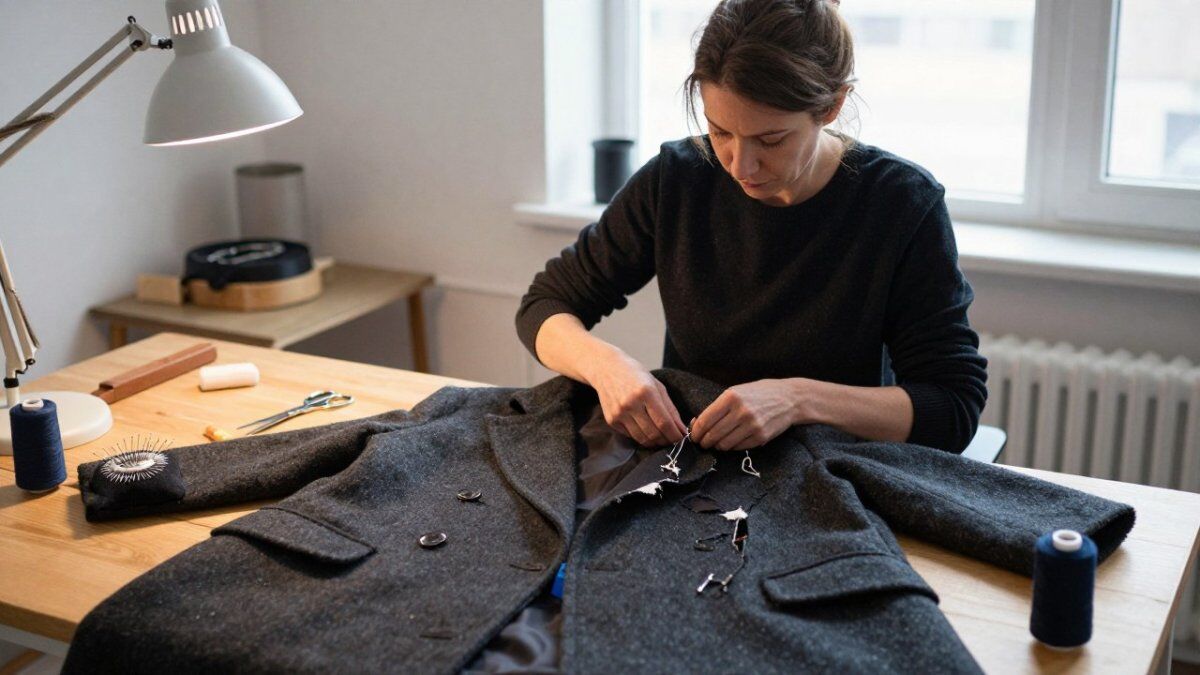
Shortening sleeves on a lined jacket means opening the lining, adjusting the outer sleeve, then closing the lining again. The lining is the hard part, not the hem.
Step by step:
- Turn the sleeve inside out. Work from the cuff end.
- Open the lining seam. Use a seam ripper to unpick the lining where it meets the sleeve hem, about 8 to 10 cm of opening.
- Separate the layers. Pull the outer fabric away from the lining gently.
- Mark the new length. Use your measurement plus the seam allowance.
- Trim the outer sleeve. Cut cleanly across the marked line.
- Fold and press. Turn the hem under and press with a cloth between the iron and fabric.
- Stitch the new hem. Machine stitch or hand stitch for a cleaner finish.
- Trim the lining. Cut the lining to match, leaving it slightly shorter than the shell.
- Reattach the lining. Hand stitch the lining back to the sleeve hem, catching only the lining.
If the lining is already worn or torn, fix it while the sleeve is open. Our guide on repairing a wool coat lining walks through that job in more detail.
How to Shorten Down Jacket Sleeves Without Damaging Insulation
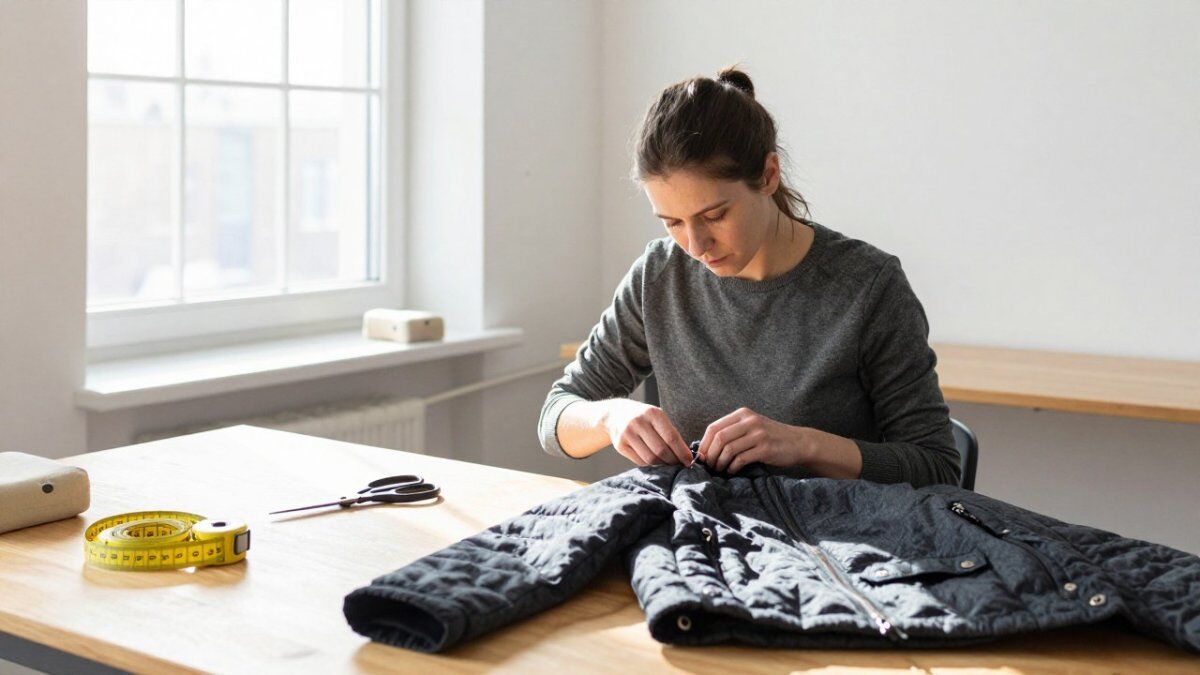
Down jacket sleeves can be shortened, but the insulation has to be contained at every stage. The trick is to work with the baffles, not against them.
- Find the baffle line. Locate the stitched channel nearest your cut mark.
- Cut along a seam, not through a channel. This keeps feathers inside a closed pocket.
- Seal the opening immediately. Pin and stitch the cut edge shut before moving on.
- Use a fine needle and light pressure. Heavy stitching compresses the down.
Expect a small amount of down loss no matter how careful you are. Work over a clean floor so you can see how much escapes.
Jacket Sleeve Shortening from the Cuff: What to Know
Cuff-first shortening is the faster method and the one most DIY tutorials show, but it only works on some winter jackets. Because the cuff-first method depends on preserving the sleeve’s proportions, measure carefully before cutting, just as Molina Faith and Friends emphasizes the importance of accurate measurements when sizing a shirt.
When cuff-first works well:
- Straight or only slightly tapered sleeves where the cuff opening still matches the trimmed sleeve width.
- Jackets with a simple stitched cuff and no functional hardware.
- Shell and lined jackets where the cuff seam is accessible and the lining can be reattached cleanly.
When cuff-first fails or gets risky:
- Tapered sleeves. Trim from the cuff and the opening becomes too wide for the original cuff to sit right, leaving a gap or a puckered seam. Lay the sleeve flat and compare the width at the cuff versus the elbow, if they differ a lot, go hem-first.
- Down and padded sleeves. Unpicking and reattaching a cuff near a baffle can release insulation, and the reattached seam must be tight enough to contain feathers. This is a common place for home jobs to go wrong.
- Waterproof and taped shells. Every needle hole in a taped seam is a potential leak. Rebuilding a cuff on a technical shell usually requires seam sealing afterward, which is hard to do invisibly at home.
- Cuffs with functional hardware. Snaps, elastic, storm cuffs, and adjustable closures are difficult to reattach without specialized equipment, and a misaligned reattachment compromises the draft seal.
| Method | Best For | Main Risk |
|---|---|---|
| Cuff-first | Straight sleeves, intact simple cuffs | Cuff will not fit a tapered sleeve; insulation or weatherproofing breach on technical jackets |
| Hem-first | Tapered sleeves | Loses the original cuff finish |
| Full reconstruction | Down, padded, and technical shells | Higher cost, longer turnaround |
A practical test before you commit: put the jacket on over the layers you actually wear, mark the desired finished cuff position, then measure the distance from the current cuff to that mark.
Watch out: reattaching a cuff on a down or taped-shell sleeve without sealing the new seam can leave the wrist colder and wetter than before you started.
When to Choose a Professional Alteration in Calgary
Some jobs are worth doing at home. Others are not. Bring the jacket to a professional when:
- The jacket is down-filled or heavily padded
- The cuffs have snaps, elastic, or storm seals
- The sleeve is tapered
- The shell fabric is waterproof or taped
Calgary winters are hard on outerwear. A sleeve that lets cold air in at the wrist makes the whole jacket feel useless on a -20°C morning. Getting the fit right matters more here than in a milder climate.
Our seamstress services cover jacket tailoring, cuff work, and complex repairs. If something goes wrong mid-job, we can also repair a rip in your jacket rather than replace it.
Book Your Sleeve Alteration at Calgary Seamstress
Sleeve length is a fit issue, and fit is what Calgary Seamstress focuses on. Our suit tailoring and blouse and top alterations services are available for related garments.
One-hour and 24-hour rush service options are available when your timeline is tight. Ready to get started? Book an appointment.
Have questions about turnaround, location, or what to bring? Our frequently asked questions page covers the practical details.
Shortening sleeves on winter jackets rewards patience and punishes guesswork. If you would rather hand the job to someone who does this daily, we are ready to help.
Frequently Asked Questions
Can you shorten the sleeves on a winter jacket?
Yes, most winter jacket sleeves can be shortened, but the method depends on construction. Lined jackets require opening the lining seam, while down jackets need careful handling to avoid losing insulation. Padded sleeves often have a fixed cuff that limits how much can be removed. Shortening sleeves on winter jackets works best when you measure twice, allow a seam allowance, and finish the hem to match the original stitching.
How do you shorten sleeves on a lined winter coat?
Turn the jacket inside out and unpick the lining seam near the cuff. Separate the lining from the outer fabric, mark your new length with pins, and cut the outer fabric only, leaving a seam allowance. Fold and press the new hem, then reattach the lining by hand stitching or machine. Finish with a topstitch if the original cuff had one. This keeps the sleeve alteration clean and preserves the jacket’s shape.
Can you shorten down jacket sleeves without damaging the insulation?
It is possible, but risky. Down and padded sleeves have insulation that can shift or escape when cut. Work slowly, seal the cut edge quickly, and avoid trimming more than a few centimetres. If the sleeve has baffles or a fixed cuff, the alteration may not be reversible. For expensive or heavily insulated jackets, a professional alteration in Calgary is often the safer choice.
When should you take a winter jacket to a tailor instead of altering it at home?
Choose a professional when the jacket is down-filled, has a waterproof membrane, or features a complex cuff or lining. These constructions carry a high risk of damaging insulation or weatherproofing. A tailor can also advise on alteration limits and reversibility. If you are unsure about measuring jacket sleeve length or finishing the hem, book an appointment at Calgary Seamstress for a precise fit.