Last Updated: November 5, 2026
Quick Summary
To size a custom fall jacket, measure yourself over the layers you plan to wear underneath, starting with shoulder width, chest, waist, hips, sleeve length and jacket length. Measure twice, write each number down, and use a soft tape held snug but not tight. Shoulder width is the hardest number to adjust later, so get it right first.
- Measure in the clothes you plan to wear under the jacket, since a bulky sweater changes chest and shoulder numbers by a significant margin.
- Use a soft tape measure, not a metal one, and keep it snug but not tight.
- Shoulder width is the most common measuring error and the hardest fit to fix after the jacket is made.
- Measure twice, and if readings differ by more than about half an inch, take a third and use the middle number.
- When you are between sizes, consider which measurement is off, and what you plan to wear underneath.
Table of Contents
- Why Custom Fall Jacket Sizing Is Different From Off-the-Rack Sizing
- What to Wear and How to Prepare for Measuring
- How to Measure for a Custom Jacket Step by Step
- Planning Fall Jacket Layering Fit for Calgary Weather
- Sleeve Length and Jacket Length Guide
- Matching Your Measurements to a Size Chart and Choosing Between Sizes
- Booking Your Custom Jacket Fitting in Calgary
- Frequently Asked Questions
Why Custom Fall Jacket Sizing Is Different From Off-the-Rack Sizing
Off-the-rack jackets are cut for an average body. Custom jackets are cut for yours. That difference matters most in fall, when you layer a sweater or hoodie under a jacket and need room to move without looking bulky.
Store sizes follow broad bands like small, medium and large. A medium might fit your chest but pull across your shoulders. A custom jacket starts from your own measurements, so each seam can sit where your body actually sits. You can see a finished fall jacket to picture the fit you are aiming for.
The goal is simple: a jacket that feels right when you put it on, and keeps feeling right once you add a layer underneath.
What to Wear and How to Prepare for Measuring
Measure in the clothes you plan to wear under the jacket. A thin t-shirt gives a different reading than a chunky knit sweater, and that gap can change your chest and shoulder numbers by a significant margin.
Before you start, gather these items:
- A soft tape measure, not a metal one
- A pen and paper, or a notes app
- A mirror, or a partner to help you
- A fitted top you would wear under the jacket
Stand up straight with your arms relaxed at your sides. Keep the tape snug but not tight. If it digs in, loosen it. Measure twice and write each number down before moving on.
How to Measure for a Custom Jacket Step by Step
Work through these measurements in order. Each one builds on the last, so keep your posture the same throughout. Measure over the layer you plan to wear under the jacket, keep the tape level and snug, and write each number down before moving to the next.
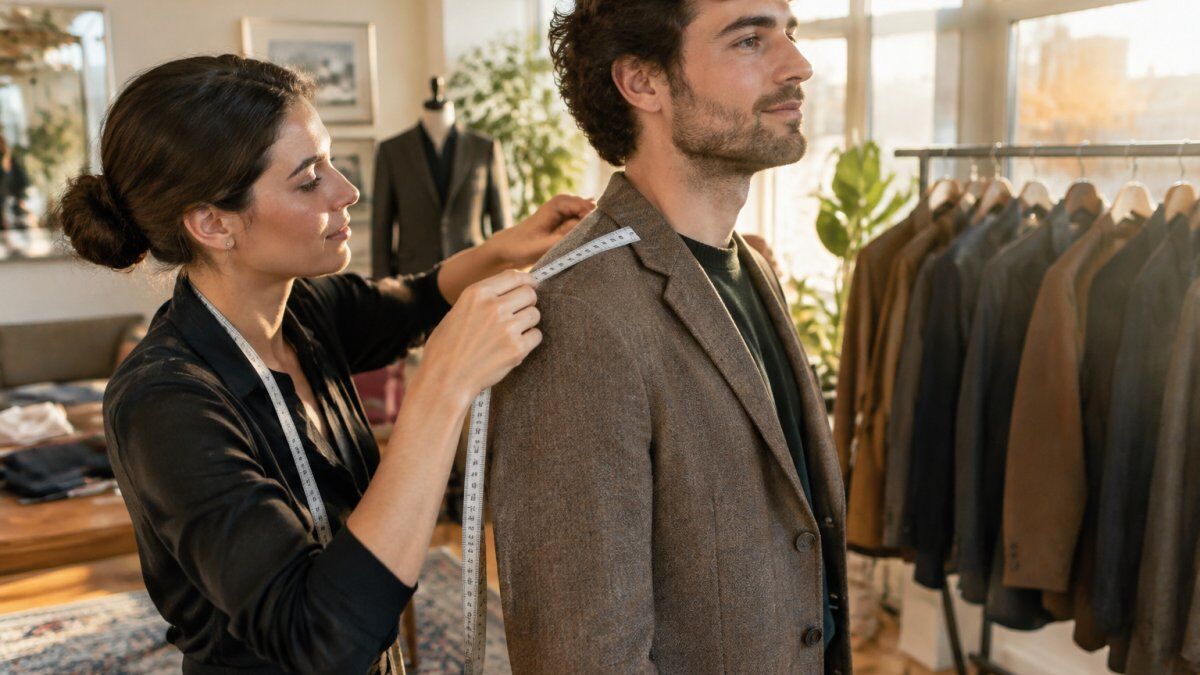
- Shoulder width – across your back, from the bony point of one shoulder to the other. Keep the tape straight and level, not dipping toward the shoulder blades.
- Chest or bust – around the fullest part, with the tape level under your arms and across the shoulder blades.
- Waist – around your natural waistline, usually the narrowest point, with the tape level all the way around.
- Hips – around the fullest part of your hips, usually a few inches below the waist.
- Sleeve length – from the shoulder seam, down the arm, to the wrist bone, with the arm relaxed and slightly bent.
- Jacket length – from the base of your neck down to where you want the hem to sit.
Write each measurement down the moment you take it, and note whether you measured over a t-shirt, a sweater, or a hoodie. For more on garment fitting measurements and fitting communication, see this guide. That note matters later when you compare your numbers with a size chart or hand them to a fitter.
Tape Placement and Posture
Stand up straight with your arms relaxed at your sides and your feet together. Keep the tape snug but not tight. If it digs in, loosen it.
Measure twice and write each number down before moving on. If two readings differ by more than about half an inch, take a third and use the middle number. Ask another person to help with shoulder width and sleeve length, since those are hard to read accurately on your own.
Watch out: measuring over a bulky sweater when you plan to wear a thin one, or the reverse, shifts chest and shoulder numbers by a significant margin and throws off the whole fit.
Shoulder Width and Shoulder Seam Placement
Shoulder width is the measurement that most often goes wrong. Measure across the back from the bony point of one shoulder to the other. Keep the tape straight across your back, not dipping down.
The shoulder seam should sit at the edge of your shoulder bone. If the seam slides down your arm, the shoulders are too wide. If it sits up near your neck, they are too narrow. Shoulder fit is hard to fix after the jacket is made, so get this number right first.
Chest, Waist and Hip Circumference
Chest or bust is taken around the fullest part, with the tape level all the way around. Breathe normally and do not hold your breath or pull in your stomach.
Waist and hip numbers control how the jacket shapes around your body. A relaxed fall jacket can skip a tight waist, but a fitted one needs accurate numbers. Take the hip measurement around the widest point, usually a few inches below the waist.
Sleeve Length and Back Length
Sleeve length runs from the shoulder seam, down the arm, to the wrist bone, with the arm relaxed and slightly bent. Measuring with a straight, locked arm gives a reading that is too short once you bend your elbow. Keeping the elbow slightly bent preserves the sleeve length needed for movement, and the same care with measuring leather jackets helps maintain a comfortable fit throughout.
Back length runs from the base of your neck down to where you want the hem to sit. Decide the hem point before you measure, because a cropped jacket and a hip-length jacket need very different back-length numbers.
Here is a quick reference for the six core measurements, what each one covers, and how to take it.
| Measurement | Where to measure | Key note |
|---|---|---|
| Shoulder width | Across the back, bony point to bony point | Keep tape straight and level |
| Chest or bust | Fullest part, tape level under arms | Breathe normally |
| Waist | Natural waistline, narrowest point | Tape level all the way around |
| Hips | Fullest part, a few inches below waist | Widest point |
| Sleeve length | Shoulder seam to wrist bone | Arm relaxed and slightly bent |
| Jacket length | Base of neck to desired hem | Decide hem point first |
Planning Fall Jacket Layering Fit for Calgary Weather
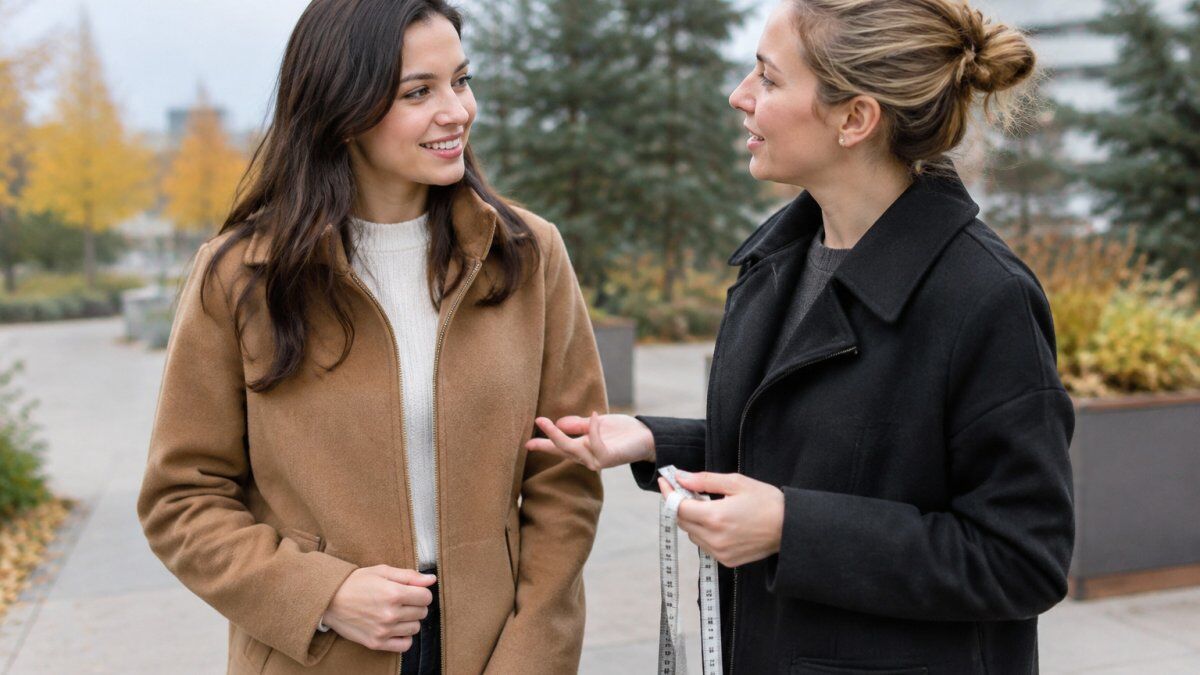
Calgary falls can swing from mild afternoons to cold, windy evenings. Read a Calgary parent’s guide to preparing outerwear for winter for more on layering through the season.
Plan for the heaviest layer you expect to wear under the jacket. If you usually wear a thick knit, add room in the chest and upper arms. A common mistake is measuring in a t-shirt, then finding the jacket too tight the first cold morning.
Ask for room to lift your arms and reach forward without the back riding up. This is the single most useful fit check for a layering jacket. Test it in the fitting room with the layer you plan to wear.
Sleeve Length and Jacket Length Guide
Sleeve length should end at the wrist bone when your arm hangs relaxed. Too short, and your wrists show in the cold. Too long, and the sleeve bunches over your hands.
Jacket length depends on your style and how you plan to wear it. A cropped fall jacket usually hits at the waist. A classic length covers the hips. A longer coat-style jacket falls below the hip and works well in wind. Tell your fitter where you want the hem to sit so they can match it to your plans.
Matching Your Measurements to a Size Chart and Choosing Between Sizes
Most size charts list chest, waist, hips and shoulder width in ranges. Compare each of your numbers with the chart, and note which size each one points to. If your numbers fall into two sizes, you are between sizes.
Measure in one unit and convert before you compare, using 1 inch equals 2.54 centimetres. A chest reading of 102 cm is about 40 inches; a 41-inch chest is about 104 cm.
When you are between sizes, work through these questions in order:
- Which measurement is off? If only the chest is between sizes, the decision is easier than if the shoulders are between sizes. Shoulder width is the hardest number to adjust after the jacket is made.
- What will you wear underneath? Plan for the heaviest layer you expect to wear. If you usually wear a thick knit, lean toward the larger size or ask for extra room in the chest and upper arms.
- How do you want it to feel? Choose the smaller size for a sleek, tailored look. Choose the larger size for more room over layers.
- Can the jacket be adjusted? Custom sizing is cut from your numbers rather than picked from a shelf. If you need a jacket taken in or let out after purchase, Blouse / Top Alterations cover fit changes on lighter layers, and Suit Tailoring is the closest match for structured jackets that need precise shoulder and chest work.
Fit preference also matters. A slim fit sits close to the body. A regular fit allows comfortable movement. A relaxed fit gives extra room for layers and easy wear.
Watch out: picking a size up to gain layering room can leave the shoulders too wide, which is the one fix a tailor cannot easily make.
Booking Your Custom Jacket Fitting in Calgary
Once you have your measurements, book a fitting so a professional can check them against your body. Our guide explains what to expect at a fitting appointment and how to prepare before you book. A short fitting catches problems a tape measure can miss, like a shoulder seam that sits slightly off.
Calgary Seamstress is located in Calgary Southcentre Mall. Before committing, you can learn how to choose a tailor for custom garments by weighing experience, consultation questions and fitting process. You can make an appointment online to choose a time that works for you. Bring your written measurements and the layers you plan to wear with the jacket.
Frequently Asked Questions
How do I measure myself for a custom jacket?
Use a flexible tape measure and stand naturally with your arms relaxed at your sides. Measure around the fullest part of the chest, the natural waist and the fullest part of the hips. Measure shoulder width from the edge of one shoulder bone to the other, along the back. Record each number in centimetres and in inches so you can compare against any size chart. Have someone else take the measurements if you can, since accuracy drops when you measure yourself alone.
How much room should a fall jacket have for layering?
A fall jacket meant to go over a sweater or hoodie needs extra room in the chest and upper arms, but the shoulders should still sit at your natural shoulder point. Try the jacket on over the layer you plan to wear most often. You should be able to lift your arms and reach forward without the back pulling tight. In Calgary’s changeable fall weather, a slightly roomier cut gives you flexibility to add or remove a layer.
What should I tell a tailor about the fit I want?
Describe your fit preference in plain terms: slim, regular or relaxed. Mention what you plan to wear underneath and whether you want the jacket to sit at the hip or longer. Bring any jacket that fits you well so the tailor can compare the cut. Tell them about any movement needs, such as reaching for a bike handlebar or carrying a bag on one shoulder, so the fit can be planned around how you actually wear it.
Can a tailor adjust a jacket that feels tight across the shoulders?
Shoulder fit is one of the harder things to change after a jacket is made, because it affects the whole structure of the garment. Book a fitting before you commit so the shoulder measurement is checked against your body and not only a size chart.
Custom fall jackets fit best when the measurements come from your own body and a fitting confirms them. If you are ready to start, book your fitting with Calgary Seamstress and bring your numbers along.