Table of Contents
- What Separates High Quality Clothing Alterations From Average Work
- Your Clothing Alteration Quality Checklist
- Signs of Poor Clothing Alterations to Watch For
- What to Check at a Tailor Fitting
- How Long Do Clothing Alterations Take
- Questions to Ask Before You Hand Over Your Garment
- Frequently Asked Questions
Last Updated: October 12, 2026
What Separates High Quality Clothing Alterations From Average Work
High quality clothing alterations are garment adjustments where the stitching, structure, and finish look like they were part of the original piece, not added afterward. The best work is nearly invisible to anyone but the wearer. This guide from Calgary Seamstress covers how to spot that standard before you pay for it. Understanding the fundamental construction of a garment provides the necessary context to tell if clothing is high quality before you even consider bringing it to a tailor.
Most people judge alterations by fit alone. That misses half the story. A hem can sit at the right length and still be a poor job if the stitch line wobbles or the fabric puckers.
When we assess clothing alterations in Calgary, we look at three layers:
- Fit: Does the garment move with you, or pull when you sit?
- Structure: Are seams, linings, and hems rebuilt to match the original?
- Finish: Is the stitching even, tight, and matched to the fabric?
A tailor who nails all three is doing real work. A tailor who only nails the first is guessing.
Fit is the easiest thing to check and the easiest thing to fake. Structure and finish are where quality shows, and they’re the parts most customers never think to look at.
Your Clothing Alteration Quality Checklist
Use this clothing alteration quality checklist when you pick up any garment. It takes two minutes and catches problems before you leave the shop.
- Stitch length matches the original garment seams
- Thread color blends with the fabric, not just the general tone
- Hems lie flat with no ripples or waves
- Seams are pressed open and flat, not bulky
- Zippers run smoothly through the full length
- Linings sit smooth with no twisting or bunching
- No loose threads, chalk marks, or pin holes remain
- The garment hangs straight on the hanger
Run your hand along every seam. A quality finish feels smooth and even. A rushed one feels lumpy or stiff.
Check the inside of the garment, too. That’s where shortcuts hide. The Canadian Centre for Occupational Health and Safety guidance on textile and fabric handling notes that proper fabric care and handling protects both the worker and the garment, which is a good reminder that quality shops treat the inside of a jacket with the same care as the outside.
Signs of Poor Clothing Alterations to Watch For
Poor clothing alterations usually show up as puckering, mismatched thread, uneven hems, or seams that pull when you move. Each one points to a shortcut taken during the job.
Watch for these warning signs:
- Puckered seams: The fabric bunches along the stitch line. This means the tension was wrong or the tailor rushed.
- Wavy hems: A hem should fall flat. Waves mean the fabric was stretched during sewing.
- Visible stitch holes: Old seams should disappear once the new stitch is in. If you can see the old holes, the work was rushed.
- Mismatched thread: Thread should match the fabric, not just the color family. A navy jacket needs navy thread, not black.
- Stiff, bulky seams: Good tailors press seams flat. Bad ones leave them thick and obvious.
- Zippers that catch: A replacement zipper should glide. If it snags, it was installed wrong.
The most common mistake we see is a customer accepting a garment because the length looks right. Length is the easy part. Everything else is what you’re paying for.
If a shop won’t let you try the garment on before you pay, walk away. A tailor who skips the final fitting is skipping the step that catches every other problem.
What to Check at a Tailor Fitting
A tailor fitting is your chance to catch problems while they can still be fixed. Bring the shoes and undergarments you’ll wear with the garment, and speak up about anything that feels off.
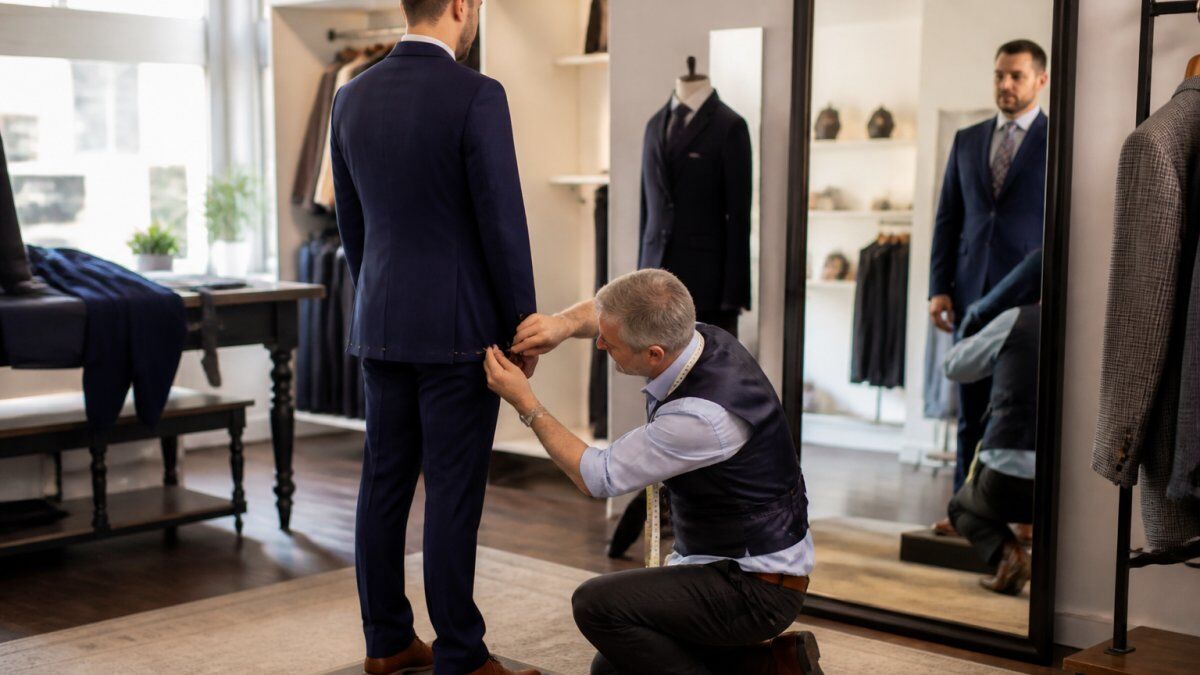
Here’s what to check at a tailor fitting, in order:
- Stand naturally. Don’t pose. The garment should fit how you actually stand.
- Sit down. A jacket that pulls across the back when seated needs more room.
- Raise your arms. Sleeves shouldn’t ride up past your wrist.
- Walk a few steps. Pants should break cleanly over your shoes.
- Check the mirror from the side. Look for pulling at the shoulders and hips.
Ask the tailor to pin the changes while you watch. You’ll see exactly what’s moving and why.
A fitting is a conversation, not a formality. If something feels wrong, say so. The Competition Bureau of Canada guidance on service contracts and consumer rights explains that you have the right to clear terms before work begins, so ask what’s included and what happens if a fix is needed later.
How Long Do Clothing Alterations Take
Most simple clothing alterations take three to seven days. Complex jobs like wedding dress alterations or full suit rebuilds can take two to four weeks, depending on the shop’s schedule and the fabric.
Timelines shift based on a few things:
- The type of garment: A pant hem is quick. A lined jacket is not.
- The fabric: Delicate fabrics like silk and lace need hand work and more time.
- The season: Wedding and event season fills shops fast.
- Rush options: Some shops offer same-day or next-day service for a premium.
If your event is close, ask about rush service up front. Some shops offer one-hour and 24-hour rush service for urgent jobs, which helps when a wedding or gala is days away.
Plan for at least one fitting after the first round of work. Good tailors build that into the timeline. If a shop promises a perfect fit with no follow-up, that’s a red flag.
Questions to Ask Before You Hand Over Your Garment
Ask these questions before you leave your garment with any tailor. The answers tell you more about quality than any sign in the window.
- “Can I see examples of similar work?” A good shop has photos or references ready.
- “What’s included in the quoted price?” Ask about fittings, pressing, and follow-up adjustments.
- “Who does the actual sewing?” Some shops send work out. You want to know.
- “What’s the turnaround time, and is rush available?” Get a date in writing.
- “What happens if I’m not happy with the fit?” A quality shop stands behind its work.
- “Do you handle zippers, cuffs, and original jean hems?” Complex jobs separate skilled tailors from basic ones.
For wedding dress alterations, ask specifically about experience with your dress style. A tailor who mostly does suits may not know how to handle a beaded bodice or a delicate train.
If you’re searching for clothing alterations near me, start with these questions. A shop that answers them clearly and without hesitation is usually the one worth your trust.
Bring a photo of how you want the garment to fit. Even a rough reference image helps your tailor understand your goal faster and cuts down on back-and-forth fittings.
Frequently Asked Questions
How can you tell if clothing alterations are high quality?
Check the stitching first. High quality clothing alterations use stitches that match the original thread color and tension, with no puckering along the seam. The hem should hang evenly on both sides when you stand naturally. Seams inside the garment should lie flat against your body without twisting. If you had a zipper replaced, it should glide smoothly without catching. Ask to see the work in natural light before you leave the fitting room, since overhead lighting hides uneven hems and loose threads.
What should I check during a clothing alteration fitting?
Bring the shoes and undergarments you plan to wear with the garment. Stand and sit in front of a mirror, then walk a few steps to see how the fabric moves. Raise your arms if it is a jacket or dress bodice. Check that the shoulders sit flat, the waist does not gap when you turn, and the hem breaks where you want it. Run your fingers along the inside seams to feel for lumps or loose threads. Speak up about anything that feels off, because a good tailor expects adjustments at the fitting stage.
What are signs that a suit alteration was done poorly?
Puckered seams along the shoulders or lapels are the clearest warning. The jacket collar may lift away from your neck instead of sitting flat. Sleeves can hang at different lengths, or the buttons may sit off-center after the waist was taken in. Check the lining too: if it pulls or bunches when you move your arms, the tailor did not account for the fabric’s natural drape. Visible stitching on the outside of the jacket, especially in a contrasting thread color, is another sign the work was rushed.
How long do clothing alterations take?
Timelines depend on the garment and how busy the shop is. A simple pant hem can be ready in a day or two. Suit jacket adjustments often take about a week because they involve multiple fittings. Wedding dress alterations usually need several weeks and at least two or three fittings, so book early. Some shops offer rush service for an added fee, but complex work still needs enough time to be done properly. Ask for a written timeline when you drop off your garment.
Handing over a cherished garment takes trust, and finding a tailor who earns it can feel like a gamble. Calgary Seamstress handles wedding dress alterations, suit tailoring, and everyday repairs like zipper replacements and pant hemming, all from our shop in Calgary Southcentre Mall. Every piece gets the same careful attention, whether it’s a bridal gown or a pair of jeans. Make an appointment online and let our team give your garment the fit it deserves.