Table of Contents
- How to Choose Wedding Dress Fabric That Suits Your Day
- 1. Silk Charmeuse: The Classic Bridal Choice
- 2. Duchess Satin: Structure That Holds Its Shape
- 3. Chiffon: Light, Airy, and Flattering
- 4. Crepe: Modern and Comfortable for Long Days
- 5. Lace: Texture, Detail, and Romance
- 6. Tulle: Volume and Movement for Layered Gowns
- 7. Mikado: Structured Silk With a Subtle Sheen
- Matching Fabric to Your Alteration Timeline
- Frequently Asked Questions
Last Updated: October 2, 2026
How to Choose Wedding Dress Fabric That Suits Your Day
The 7 best fabrics for custom wedding dresses are silk charmeuse, duchess satin, chiffon, crepe, lace, tulle, and Mikado. Each one behaves differently on the body, and the right pick depends on your venue, the season, and how you want to move. At Calgary Seamstress, we handle wedding dress alterations and custom dress making for brides across Calgary, AB, and the fabric conversation is where most fittings begin. Get it right and the gown falls beautifully. Get it wrong and no amount of tailoring rescues it.
Fabric choice is really three decisions stacked together: weight, drape, and structure. Weight decides how the gown feels after six hours. Drape decides how it moves when you walk. Structure decides whether the silhouette holds its shape or collapses by the reception.
Weight, Drape, and Structure
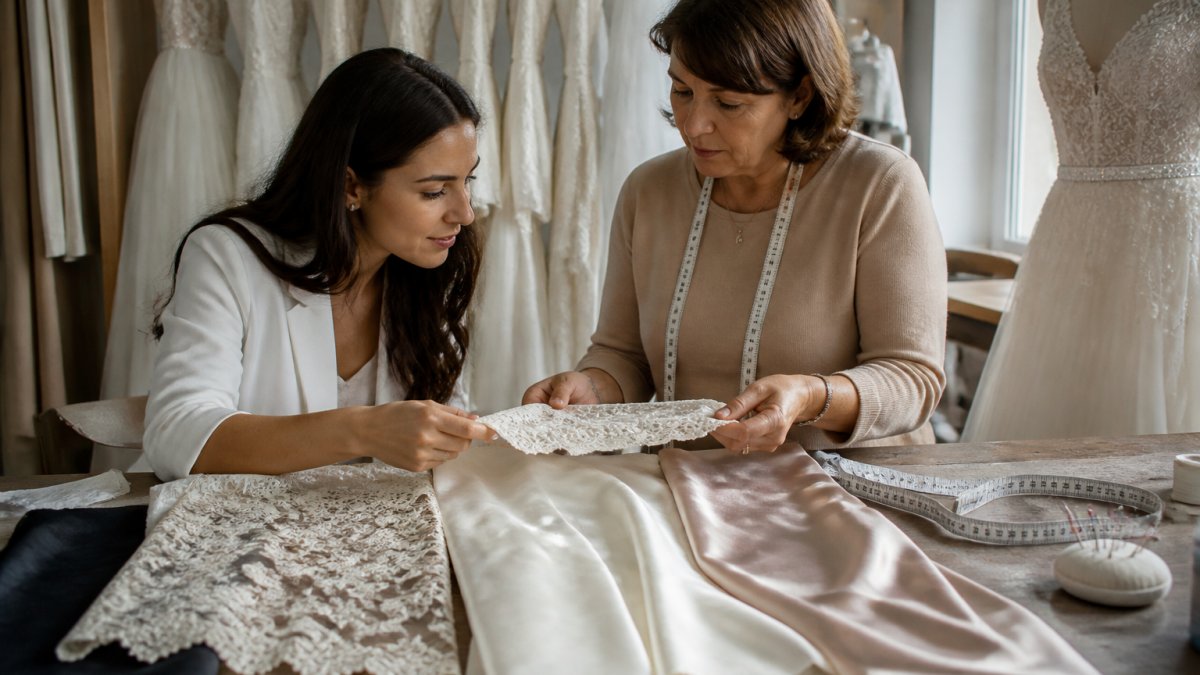
Heavy fabrics like duchess satin and Mikado hold a sculpted shape but trap heat. Light fabrics like chiffon and tulle float and photograph well, though they need layers to avoid looking thin. Medium weights such as crepe and silk charmeuse sit in between, which is why they suit long events. A common mistake is choosing fabric from a flat swatch alone. Always see it draped over a dress form or on your own body first.
Season and Venue in Calgary
A February hotel wedding in Calgary calls for a different fabric than a July ceremony in the Rockies. Winter venues need weight and coverage, so duchess satin or Mikado earns its place.
1. Silk Charmeuse: The Classic Bridal Choice
Silk charmeuse is the fabric most people picture when they imagine a wedding gown. It has a glossy front and a matte back, and it pours over the body rather than sitting away from it.
Pros: Beautiful drape, photographs with a soft sheen, feels cool against the skin, and takes dye and detailing well.
Cons: It shows every bump and seam line, creases easily, and water marks are difficult to remove.
For custom work, charmeuse suits bias-cut gowns and simple silhouettes where the fabric does the talking. It is a poor match for heavily structured bodices.
2. Duchess Satin: Structure That Holds Its Shape
Duchess satin is a heavyweight satin woven to stand up on its own.
Pros: Holds a sculpted silhouette, resists wrinkling, and supports internal boning and corsetry well.
Cons: It is heavy and warm, it can look stiff in photos, and it costs more than most alternatives.
Brides marrying in a Calgary winter venue often choose duchess satin for exactly this reason: it holds structure indoors and adds warmth. It is not the fabric for a beach or garden ceremony.
3. Chiffon: Light, Airy, and Flattering
Chiffon is a sheer, lightweight fabric that floats away from the body. It is almost always layered over a lining or a structured base, which is why it flatters so many body types.
Pros: Forgiving over the midsection, moves beautifully, breathes well in warm weather, and works for sleeves, overlays, and skirts.
Cons: It frays during sewing, snags on jewelry, and needs multiple layers to look substantial.
If you want sleeves or a soft, romantic overlay, chiffon does the job better than almost anything else.
Ask your seamstress to show you chiffon over two different linings. The same fabric reads as casual or formal depending entirely on what sits underneath it.
4. Crepe: Modern and Comfortable for Long Days
Crepe has a matte, slightly textured surface and a fluid drape. It is the fabric behind the clean, minimal gowns that have dominated bridal design for the past several years.
Pros: Comfortable for long wear, hides creases and minor flaws, photographs without glare, and suits both fitted and flowing shapes.
Cons: It can look plain without careful seaming, and cheaper versions pill over time.
Crepe is a fabric often recommended to brides facing a 10-hour day. It moves with you, and it does not fight back.
5. Lace: Texture, Detail, and Romance
Lace is a patterned fabric, not a plain one, and it carries the detail work in most traditional gowns. It appears as a full overlay, a bodice panel, or a trim along hems and sleeves.
Pros: Adds texture and depth, hides seam lines, works as an overlay on almost any base fabric, and reads as timeless in photos.
Cons: It snags on rings and rough surfaces, it is difficult to alter once cut, and quality varies enormously.
For custom gowns, lace is usually combined with a base fabric rather than used alone. Chantilly lace over silk charmeuse, or a lace bodice on a crepe skirt, gives you texture without losing structure.
6. Tulle: Volume and Movement for Layered Gowns
Tulle is a fine netting, and it is the reason ballgowns and A-lines have volume. On its own it is see-through; layered, it builds shape.
Pros: Creates dramatic volume, lightweight despite the bulk, and available in soft or stiff grades for different effects.
Cons: It catches on everything, itches against bare skin, and needs many layers to look full.
Soft tulle drapes and suits romantic skirts. Stiff tulle holds a shape and suits structured ones. The grade you choose changes the entire gown.
7. Mikado: Structured Silk With a Subtle Sheen
Mikado is a firm, silk-blend fabric with a low, subtle luster. It sits between duchess satin and crepe in both weight and appearance.
Pros: Holds structure without the stiffness of satin, resists creasing, and looks refined rather than shiny in photographs.
Cons: It is one of the pricier options, it shows pin marks if handled roughly, and it has little stretch.
Mikado is the choice for brides who want a clean, sculpted gown without the high shine of satin. It is also one of the easiest structured fabrics to alter, which matters when your timeline is tight.
| Fabric | Weight | Best For | Main Trade-Off |
|---|---|---|---|
| Silk charmeuse | Light | Bias-cut, simple gowns | Shows every flaw |
| Duchess satin | Heavy | Ballgowns, winter venues | Warm and stiff |
| Chiffon | Light | Sleeves, overlays, summer | Needs layering |
| Crepe | Medium | Long-wear, modern shapes | Plain without seaming |
| Lace | Varies | Texture and detail | Snags and hard to alter |
| Tulle | Light | Volume and skirts | Itchy and catches |
| Mikado | Medium-heavy | Sculpted, clean gowns | Higher cost |
Matching Fabric to Your Alteration Timeline
A wedding dress alteration timeline in Calgary usually runs six to eight weeks from first fitting to final pickup, and fabric affects that schedule. Lace and chiffon take longer because they fray and need hand finishing.
Cost works the same way. Custom wedding dress cost in Calgary depends less on the fabric alone and more on the construction hours it demands. Lace appliqué and hand-set detailing add time. A crepe sheath with clean seams takes far less.
Never buy fabric before your first fitting. Fabric bought online often arrives narrower or lighter than described, and a seamstress cannot cut around a shortage. Bring the fabric to your fitting instead.
If you are searching for wedding dress alterations near me, book a consultation early and bring your fabric, your inspiration photos, and your venue date. Calgary Seamstress handles wedding dress alterations and custom dress making from our studio, and we will tell you honestly which of the 7 best fabrics for custom wedding dresses fits your design.
Frequently Asked Questions
What is the most durable fabric for a custom wedding dress?
Mikado and duchess satin hold up best. Both are tightly woven, resist creasing, and keep their shape through a full day of wear. Silk charmeuse is beautiful but shows marks more easily, and chiffon or tulle can snag on jewellery and heels. If you want a gown that survives the ceremony, photos, and dancing without constant fussing, a structured silk-blend or pure silk satin is the safer pick.
Which wedding dress fabric is best for a summer wedding in Calgary?
Crepe and chiffon breathe better than heavy satin, so they stay comfortable through a warm July ceremony and an evening reception. Silk crepe in particular drapes close to the body without trapping heat. If you love the look of satin, choose a lighter-weight version and keep the lining breathable. A seamstress can line a summer gown in cotton or silk instead of polyester to reduce heat build-up.
How does fabric choice affect the cost of a custom wedding dress?
Fabric is often the largest single line in a custom gown budget. Silk charmeuse, Mikado, and fine lace cost more per metre than polyester satin or basic tulle, and lace with hand-applied detail costs more again. A fabric with a wide repeat or a directional pattern also needs more yardage, which raises the total. Ask for a written fabric quote before you commit so there are no surprises.
How long does a wedding dress alteration timeline in Calgary usually take?
Most bridal alterations take four to eight weeks from first fitting to final pickup, depending on how many rounds of adjustment your gown needs. Beading, lace reapplication, and full bodice restructuring add time. Book your first fitting at least three months before the wedding date. Rush options exist for tighter timelines, but starting early gives your seamstress room to get the fit exactly right.
Can Calgary Seamstress help me source high-quality bridal fabrics?
Yes. Bring your inspiration photos, colour preferences, and budget, and the team can guide you toward fabrics that suit your gown design and the season. You can also see finished work in person, including hand-painted and custom pieces, before you commit. Book an appointment online to review swatches and talk through options for your custom wedding dress.
Choosing fabric is the decision that shapes everything after it, and it is the one most brides rush. Calgary Seamstress can guide that choice with a fitting that accounts for your venue, your date, and how you want to move. Our team specializes in wedding dress alterations and custom dress making, with one-hour and 24-hour rush service available when your timeline tightens. Make an appointment online and let us build a gown that fits the day you have planned.