Table of Contents
- Why the Timing of Wedding Dress Alterations Matters When You’re Losing Weight
- Your Wedding Dress Alterations Timeline: A Step-by-Step Schedule
- How Much Can a Wedding Dress Be Taken In?
- Building a Wedding Dress Fittings Schedule Around Your Weight Loss Goals
- What to Bring to a Wedding Dress Fitting
- Common Mistakes to Avoid When Timing Alterations for Weight Loss
- Frequently Asked Questions
Last Updated: October 13, 2026
Why the Timing of Wedding Dress Alterations Matters When You’re Losing Weight
If you’re losing weight before your wedding, the timing of your wedding dress alterations can make or break the final fit. Start too early and the dress may not fit by the big day. Start too late and there’s no room for error.
At Calgary Seamstress, we’ve helped hundreds of brides in Calgary and across AB navigate this exact situation. The key is simple: wait until your weight is stable, then move fast.
Most brides should book a first consultation 3 to 4 months before the wedding. That gives you time for multiple fittings without cutting it close.
But weight loss adds a wrinkle. A dress fitted at your current size won’t fit if you lose more weight afterward. So the real question isn’t just when to start. It’s when to stop losing and when to lock in the fit.
Below, we’ll walk you through a step-by-step timeline, show you how much a dress can realistically be taken in, and flag the mistakes that cost brides time and money.
The biggest mistake is booking alterations too early while still actively losing weight. If the dress gets fitted, then the bride loses more, the final fit will be loose. Book your first consultation once your weight has held steady for at least two weeks.
Your Wedding Dress Alterations Timeline: A Step-by-Step Schedule
The standard wedding dress alterations timeline runs 3 to 4 months out for a consultation, then fittings at 8, 4, and 2 weeks before the wedding. Weight loss doesn’t change this schedule much, but it does change when you should stop dieting.
Here’s the full breakdown.

Step 1: Book Your First Consultation 3 to 4 Months Out
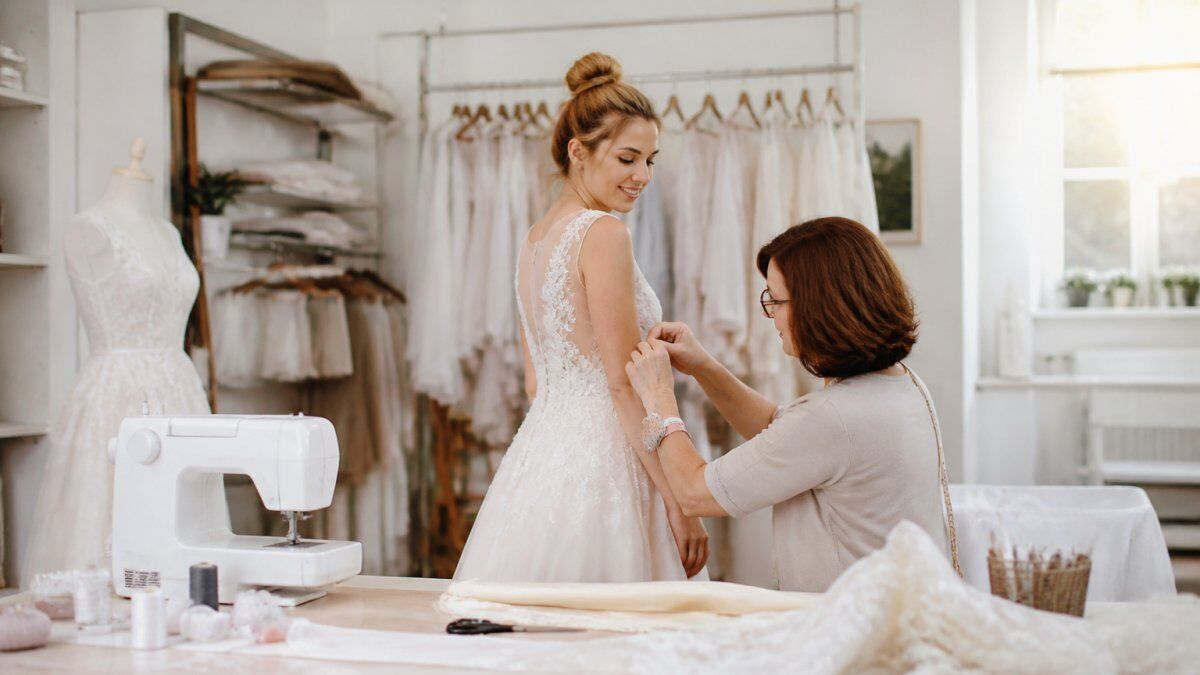
Your first consultation is where the plan gets built. At this meeting, your seamstress measures you, inspects the dress, and discusses what changes are possible.
Come with a clear picture of your weight loss goal. If you plan to lose more weight, say so. A good seamstress will factor that into the alteration plan.
For brides in Calgary, booking early matters. Local shops fill up fast during wedding season, so lock in your spot as soon as your date is set.
Step 2: Schedule Fittings at the 8, 4, and 2 Week Marks
Three fittings is the sweet spot for most dresses:
- 8 weeks out: First major fitting. Take in the bodice, adjust the hem, fix the straps.
- 4 weeks out: Second fitting. Fine-tune the fit after any weight changes.
- 2 weeks out: Final fitting. Confirm everything sits right and the dress is ready.
If you lose a significant amount of weight between fittings, tell your seamstress right away. Small changes can be handled at the next fitting. Big changes may need an extra appointment.
Stop actively losing weight about 3 to 4 weeks before the wedding. This gives your seamstress a stable body to fit the dress to. Crash dieting in the final month is the fastest way to end up with a dress that gapes or pulls.
::: Stabilizing your physical measurements during these final weeks also provides the ideal window to finalize any cosmetic dental treatments to ensure your smile is as perfectly tailored as your gown.
How Much Can a Wedding Dress Be Taken In?
A wedding dress can usually be taken in 1 to 3 sizes, depending on the fabric and construction. Simple dresses with basic seams have more room to work with. Beaded or heavily structured gowns are trickier.
The limit comes down to two things:
- Seam allowance: How much extra fabric is built into the dress.
- Design details: Lace, beading, and boning can’t always be moved without damage.
Taking a dress in is easier than letting it out. If you’re between sizes, buy the larger one. A seamstress can always remove fabric, but adding it back is much harder.
For weight loss brides, this matters. If you’re planning to lose more than one dress size, wait until you’re closer to your goal before starting alterations.
Building a Wedding Dress Fittings Schedule Around Your Weight Loss Goals
Your wedding dress fittings schedule should match your weight loss pace, not the other way around. If you’re losing slowly and steadily, the standard 8-4-2 week plan works well. If you’re losing faster, you may need to delay the first fitting.
Ask yourself these questions before booking:
- How much weight do I plan to lose?
- How fast am I losing it?
- When will I hit my goal weight?
If your goal weight is more than a month away, wait. Booking alterations before you’re close to your target means paying for work that may need to be redone.
A simple rule: start alterations when your weight has been stable for two weeks and you’re within 5 pounds of your goal.
What to Bring to a Wedding Dress Fitting
Bring the shoes and undergarments you’ll wear on your wedding day. These change how the dress sits, and your seamstress needs to see the full picture.
Here’s your fitting checklist:
- Wedding shoes (or shoes of the same heel height)
- The bra or shapewear you plan to wear
- Any jewelry that sits near the neckline
- Your veil or hair accessories, if they affect the fit
- A photo of your wedding day hairstyle, if it changes the neckline
- A trusted friend or family member for a second opinion
Wear minimal makeup to avoid marks on the dress. And bring water. Fittings can take an hour or more.
The shoes and undergarments you bring to your first fitting set the foundation for every adjustment after. Get these right on day one, and the rest of the process runs smoothly.
Common Mistakes to Avoid When Timing Alterations for Weight Loss
The most common mistake is starting too early. Brides book alterations months in advance, keep losing weight, and end up with a dress that no longer fits.
Other mistakes we see:
- Crash dieting before the final fitting. Rapid weight loss changes your body shape, not just your size.
- Skipping the 2-week fitting. That last check catches small issues before the wedding.
- Not telling your seamstress about weight loss plans. Honesty here saves time and money.
- Buying a dress that’s too small. Always size up if you’re between sizes.
- Waiting too long to book. Booking early is important.
If you’re searching for “wedding dress alterations near me” in Calgary, book early and be upfront about your goals.
Losing weight before your wedding adds pressure to an already busy season. The right alterations timeline removes that stress. Calgary Seamstress specializes in wedding dress alterations, with fittings built around your schedule and your goals. We offer one-hour and 24-hour rush service, plus custom design work if you want something entirely your own. Visit us at Calgary Southcentre Mall or book online to start your fitting plan today. Get started with Calgary Seamstress and walk down the aisle in a dress that fits you perfectly.
Frequently Asked Questions
When should I start wedding dress alterations if I’m trying to lose weight?
Book your first consultation about three to four months before the wedding so the seamstress can assess the dress and plan the alterations. Keep losing weight steadily until roughly one month out, then stop active dieting so your final measurements hold. The last fitting should happen about two weeks before the wedding, leaving a small buffer for any final tweaks.
Should I wait until I reach my goal weight before altering my wedding dress?
Waiting too long is risky. Most wedding dress alterations need four to eight weeks of lead time, and rush work costs more and limits options. Start the process on schedule and tell your seamstress about your weight loss plan. A skilled fitter can build in extra allowance and adjust the dress at each fitting as your measurements change, so waiting until the very end rarely pays off.
How much weight can a wedding dress be altered to accommodate?
Most dresses can be taken in by one to two sizes, which is roughly 10 to 20 pounds of weight change, depending on the fabric, beading, and construction. Dresses with lace, heavy beading, or structured corsets have tighter limits because the seamstress has less room to reshape seams without damaging the design. Losing more than two sizes often means the dress needs to be rebuilt or replaced.
What should I do if my weight changes between wedding dress fittings?
Call your seamstress as soon as you notice a meaningful change, ideally more than two weeks before the wedding. Bring the dress in for a quick reassessment so the fitter can decide whether to adjust seams, take in the bodice, or add a corset back for flexibility. Small fluctuations of a few pounds are normal and usually don’t require changes, but larger shifts need to be addressed before the final fitting.