Table of Contents
- What Separates Calgary’s Top Bridal Alteration Shops
- 1. Calgary Seamstress: Wedding Dress Specialists in Southcentre Mall
- 2. Custom Wedding Dress Design and Couture Alterations
- 3. Bridal Fitting Timeline: When to Book Your Alterations
- 4. The Cost of Wedding Dress Alterations in Canada: What to Expect
- 5. How to Prepare for Bridal Alterations: Your First Fitting Checklist
- Emergency Alterations and Post-Wedding Preservation in Calgary
- Conclusion: Choosing the Best Bridal Alteration Shop for You
- Frequently Asked Questions
Last Updated: September 29, 2026
What Separates Calgary’s Top Bridal Alteration Shops
Finding bridal alteration shops in Calgary that treat a wedding gown as more than just another hem job is harder than it should be. This guide from Calgary Seamstress breaks down what actually matters when you’re trusting someone with the most photographed garment you’ll ever wear.
1. Calgary Seamstress: Wedding Dress Specialists in Southcentre Mall
Calgary Seamstress is our top pick because it combines bridal specialization with a location that makes fittings genuinely convenient. The studio sits inside Southcentre Mall, so you can park once and knock out a fitting, a shoe check, and undergarment shopping in a single trip.
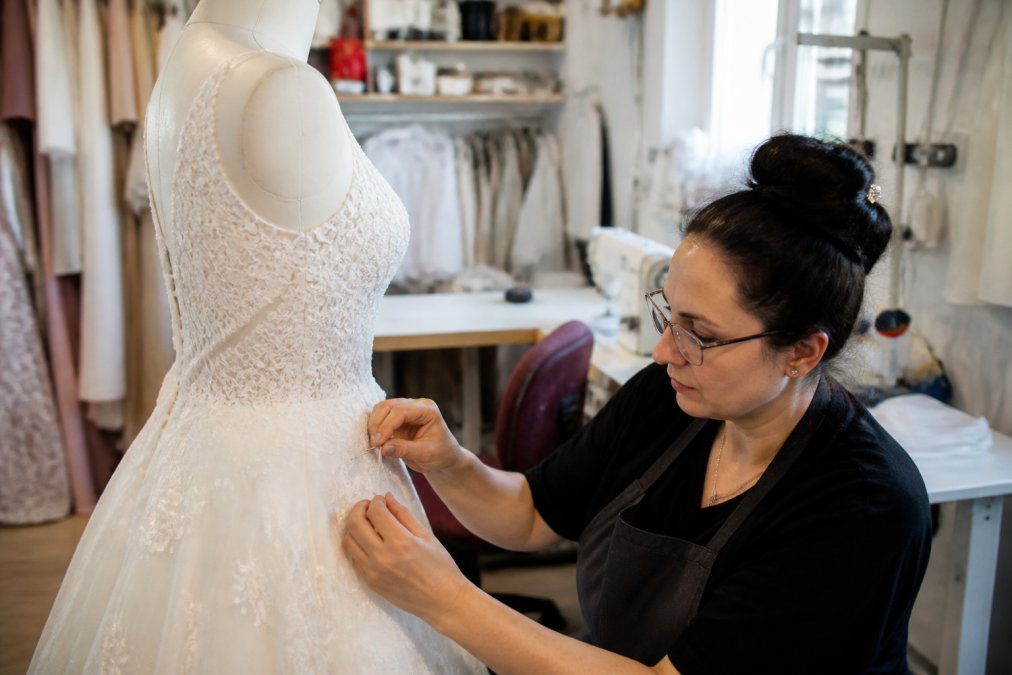
Book your first bridal fitting about 8 to 10 weeks before the wedding, and bring the exact undergarments and shoes you’ll wear on the day. Fitting a gown without them is guesswork, and it usually means a second round of alterations.
2. Custom Wedding Dress Design and Couture Alterations
Custom wedding dress design is the process of building a gown from measurements and design choices rather than altering an existing dress. Couture alterations apply the same hand-finishing approach to a gown you already own.
How long does custom wedding dress design take?
Custom design typically takes several months from first consultation to final fitting, depending on fabric sourcing and how many design revisions you want. Start the conversation as early as possible. If your date is close, alterations to an existing gown are usually the more realistic route.
3. Bridal Fitting Timeline: When to Book Your Alterations
The bridal fitting timeline is the schedule of appointments between buying your gown and wearing it. Most brides need two to three fittings, with the final one roughly two weeks before the wedding.
Work backward from your date:
| Timing | Appointment | What Happens |
|---|---|---|
| 8-10 weeks out | First fitting | Pinning, measuring, discussing changes |
| 4-6 weeks out | Second fitting | Checking fit, refining seams and hem |
| 2-3 weeks out | Final fitting | Confirming fit, adding bustle, pressing |
| 1 week out | Pickup | Last check, steaming, transport plan |
Waiting until four weeks out to book your first fitting is the most common mistake brides make. If the gown needs a corset back conversion or major bodice adjustment, that timeline leaves no room for error.
4. The Cost of Wedding Dress Alterations in Canada: What to Expect
The cost of wedding dress alterations in Canada varies widely based on how much work the gown needs, the fabric, and how close you are to the date. There is no flat rate, and any shop that quotes one without seeing your dress is guessing.
What drives the price of each alteration type
Expect the following factors to move the number:
- Hemming: priced by the number of layers and the fabric type. A multi-layer gown with a horsehair braid finish takes far longer than a clean single-layer hem. Floor-length gowns with a train usually cost more than a standard hem because the train edge has to be finished separately.
- Bodice adjustment: taking in or letting out a bodice is priced by complexity. A simple side-seam take-in is the cheapest version. Rebuilding a structured bodice with boning, adding a corset back, or letting out a gown with no seam allowance left all push the price up.
- Bustle: priced by the number of points and the style. A single-point bustle is the least expensive; a French or ballroom bustle with multiple attachment points takes more time and more hidden hardware.
- Beading repair or lace applique: priced by area and detail. Hand-sewn beading and reattaching vintage lace are slow, meticulous work, and the cost scales with how much of the gown is affected.
- Rush service: a premium on top of standard pricing. The closer to the wedding date, the higher the premium, because the shop has to reshuffle its schedule.
A realistic way to budget
Rather than ask ‘how much are alterations,’ ask for an itemized estimate at your first fitting. A reputable shop will list each adjustment separately so you can decide what is essential and what is optional. Custom construction and heirloom restoration are priced separately again, because they are design work rather than alterations.
A few practical money-savers:
- Buy a gown that fits your largest measurement and take it in, rather than buying small and hoping it can be let out. Letting out is limited by seam allowance and often costs more.
- Bring your shoes and undergarments to the first fitting. Getting hem length right the first time avoids paying for a second round.
- Ask about the rush premium before you commit, not after. If your date is flexible, booking outside peak season (roughly May through September in Calgary) can reduce both the premium and the pressure.
Ask for the itemized estimate in writing at the first fitting. It protects you from surprise add-ons later and makes it easy to compare two shops on the same tasks.
5. How to Prepare for Bridal Alterations: Your First Fitting Checklist
Knowing how to prepare for bridal alterations saves you a wasted appointment. Arrive with the right items and questions, and your first fitting does twice the work. This is also where specialized fabric handling comes in: silk, tulle, and heavily beaded gowns behave differently under a needle, and the prep you do before the fitting affects how well the seamstress can work.
What to bring:
- Your wedding shoes, or shoes the same height
- The undergarments you’ll wear on the day
- Any shapewear or bra you plan to use
- Hair accessories if they affect the neckline
- Photos of how you want the gown to look
- A written list of your must-fix issues, in priority order
What to wear:
- Something easy to change in and out of
- Minimal jewelry that won’t snag fabric
What to ask:
- How many fittings will I need?
- What’s the itemized estimate?
- When is the final fitting?
- What happens if the fit isn’t right?
- How do you handle my gown’s specific fabric?
Specialized fabric handling: why it matters at the fitting
Not every gown can be treated the same way. A few common cases:
- Silk and silk blends: silk shows every needle mark and can water-spot, so the seamstress needs to work with fine needles and avoid over-pinning. Ask whether the shop uses silk-specific techniques.
- Tulle and organza: these are sheer and fray easily, so hems and seams are often finished with a rolled hem or a fine bias binding rather than a standard fold. A shop that treats tulle like cotton will leave a visible, bulky edge.
- Heavy beading and lace applique: beads and sequins have to be removed before a seam is sewn and reattached afterward, which is slow hand work. Ask how the shop protects the beading during pressing, because a hot iron can melt or dull it.
- Structured bodices with boning: these need to be opened and re-closed carefully so the internal structure stays aligned. A corset back conversion is a different job again and should be quoted separately.
How the first fitting actually runs
A typical first fitting starts with you in the gown, shoes, and undergarments, so the seamstress can see the true hem line and bodice fit. Pins mark where the gown needs to come in, let out, or be shortened. You will be asked to stand naturally, walk, and sometimes sit, because a gown that fits while standing still can still pull when you move.
The single most important thing you can do before your first fitting is bring the exact shoes and undergarments. Hem length and bodice fit both depend on them, and getting this wrong means paying for a second round of alterations. The second most important thing is telling the shop what your gown is made of, so they can plan the right technique before they touch it.
Emergency Alterations and Post-Wedding Preservation in Calgary
Emergency alterations cover the last-minute fixes that happen in the final days: a broken zipper, a popped seam, a strap that won’t stay. Shops offering rush service can often turn these around in a day or less, which is why confirming rush availability before you commit matters.
Conclusion: Choosing the Best Bridal Alteration Shop for You
The right bridal alteration shop is the one that treats your gown like it matters and gives you a timeline you can trust. Calgary Seamstress handles wedding dress alterations, custom design, suit tailoring, and everyday repairs from its Southcentre Mall studio, with one-hour and 24-hour rush service when timing gets tight. Precision in these adjustments ensures that your garment maintains its structural integrity, a principle that remains essential when managing the complexities of formal dress alterations.
Frequently Asked Questions
How far in advance should I book bridal alterations in Calgary?
Book your first fitting at least 8 to 12 weeks before your wedding date. Most Calgary bridal alteration shops need 4 to 6 weeks for standard work, but peak wedding season from May to September fills up fast. If your gown needs major restructuring or custom beading, start 4 to 6 months out. Rush services exist but cost more and limit your choice of seamstress.
What is the average cost of wedding dress alterations in Canada?
The cost of wedding dress alterations in Canada varies widely based on garment construction and fabric. Request a written quote after your first fitting so there are no surprises.
Do I need to bring my wedding shoes to my first fitting?
Yes. Bring your bridal shoes, undergarments, and any jewelry you plan to wear. Your seamstress uses your shoe height to set the hem length correctly. If you change heel height later, the hemline shifts. Wearing the right undergarments ensures the bodice adjustment reflects how the dress will actually sit on your wedding day. This one step prevents costly rework.
Can a wedding dress be taken in more than two sizes?
Yes, but it depends on garment construction. A dress with generous seam allowances and simple lines can often be taken in two to three sizes. Heavily beaded gowns or dresses with delicate lace applique have less room to work with because the fabric manipulation risks damaging the detail. A skilled bridal seamstress will assess your gown and tell you honestly what is achievable without compromising the design.