Table of Contents
- First Wedding Dress Fitting: What to Expect at Your Appointment
- Wedding Dress Alterations Timeline in Canada: When to Book
- Wedding Dress Fitting Undergarments: What to Wear Underneath
- What to Bring to Your Wedding Dress Fitting Appointment
- How to Test Your Gown for Comfort and Movement
- Communicating Honestly With Your Seamstress
- Hidden Alteration Costs, Body Fluctuations, and Post-Fitting Storage
- Conclusion
Last Updated: July 29, 2026
Knowing how to prepare for wedding dress fitting appointments is the difference between a smooth alteration process and a stressful scramble in the weeks before your wedding. At Calgary Seamstress, we’ve guided countless brides through every stage of the fitting process, and the same avoidable mistakes come up again and again. Below, we’ll walk you through exactly what to expect, what to bring, how to communicate with your seamstress, and how to handle the financial and logistical surprises that most bridal guides skip.
First Wedding Dress Fitting: What to Expect at Your Appointment
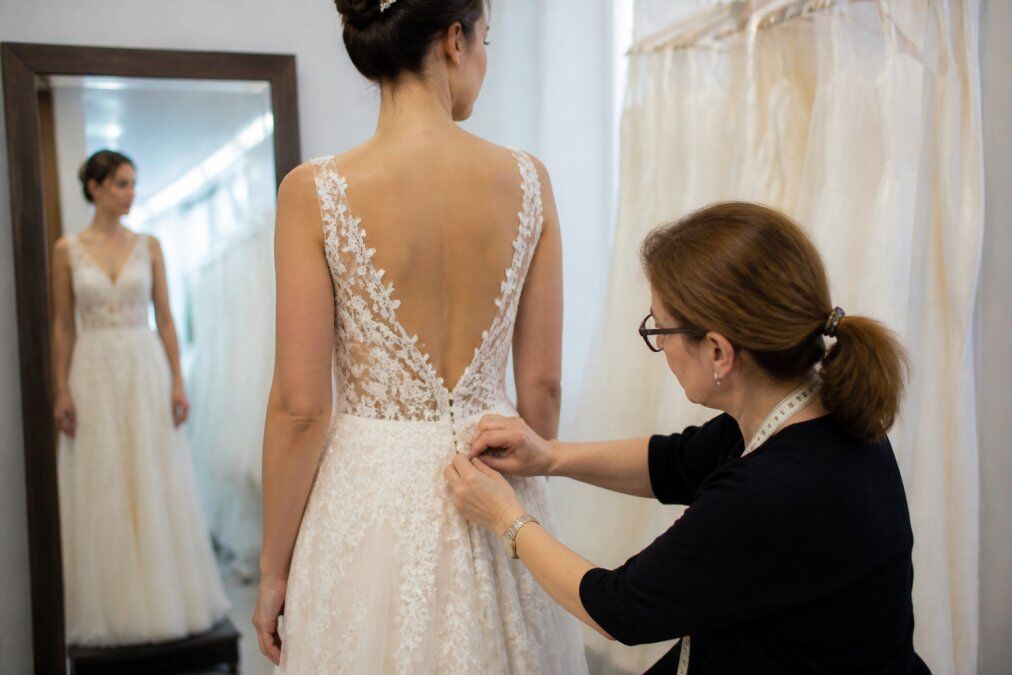
A first wedding dress fitting is an assessment session, not a finished-product reveal. Your seamstress will put the gown on your body, evaluate where it sits against your natural silhouette, and mark the adjustments needed. Pins go in. Chalk marks appear. The dress will likely look rough at this stage, and that is completely normal. Understanding this upfront saves anxiety, many brides expect to see the finished look and feel deflated when the gown is still held together with pins.
How Many Fittings Will You Need?
Most brides need between two and four fittings, depending on how much alteration work the gown requires. A dress needing only a basic hem and minor bodice adjustments may be done in two sessions. A heavily beaded fit and flare silhouette requiring significant structural work could need three or four. Rush timelines compress this, which is why booking early matters.
What Happens During the Fitting Session
The seamstress will assess the bodice fit first, checking how the fabric sits across the bust, ribs, and waist. She’ll evaluate the hemline relative to your shoe height, check the back closure, and note any areas where the dress structure needs reinforcement or reduction. If your gown has lace, beading, or a bustle, those elements require additional attention because altering them without disrupting the pattern takes extra time and skill.
Take photos at every fitting, especially after pinning. You’ll want a visual reference of what was adjusted and where, so you can compare at the next appointment and catch anything that was missed.
Wedding Dress Alterations Timeline in Canada: When to Book
The most reliable guidance from bridal professionals across Canada points to starting the alteration process four to six months before your wedding date. This timeline gives your seamstress enough room to complete multiple fittings without rushing. The final fitting should land no earlier than two weeks before the wedding day, and ideally closer to one week, to account for any last-minute body fluctuations.
According to Bridal Guide’s alteration timeline recommendations, brides who begin alterations at least four months out report significantly less stress in the final weeks before their wedding. Book your first fitting appointment as soon as you have your dress in hand. Seamstresses in Calgary, especially those with strong reputations, fill up quickly during peak bridal season from May through September.
Rush Alterations: What to Do If You’re Short on Time
If your wedding is six weeks away or less, you are not out of options, but you need to act immediately. Calgary Seamstress offers one-hour and 24-hour rush alteration services for exactly this situation. Rush work is possible, but it requires a compressed fitting schedule and willingness to commit to decisions quickly.
Be transparent with your seamstress about your timeline from the first conversation. A professional will tell you honestly what is achievable and what is not.
Booking rush alterations without disclosing your full timeline to the seamstress is a common mistake. If she doesn’t know about a hidden bustle, beading repair, or a second dress for a reception, the timeline estimate will be wrong and your final fitting could fall too close to the wedding day.
Wedding Dress Fitting Undergarments: What to Wear Underneath
Showing up in the wrong undergarments is one of the most common and most consequential mistakes brides make at their fittings. The seamstress is fitting the dress to your body as it will appear on the wedding day. If you arrive in a padded everyday bra and then switch to a strapless bra on the actual day, the fit will be off. Wear exactly what you plan to wear on your wedding day, every single time you come in for a fitting.
Choosing the Right Strapless Bra or Shapewear
For most wedding gowns, a strapless bra is the correct choice, but not all strapless bras are equal. A low-quality strapless bra that slips during your fitting will affect how the bodice gets pinned, resulting in alterations that don’t hold when you’re wearing a supportive version.
If you plan to wear shapewear, bring it to every appointment. Shapewear changes your silhouette enough that it affects the hemline length, the waist seam placement, and how the dress closure sits at the back. As documented in The Knot’s wedding dress fitting guide, undergarment choices are among the top reasons brides experience fit issues on their wedding day that were not present during fittings.
What to Bring to Your Wedding Dress Fitting Appointment
Preparation here is straightforward, but the details matter.
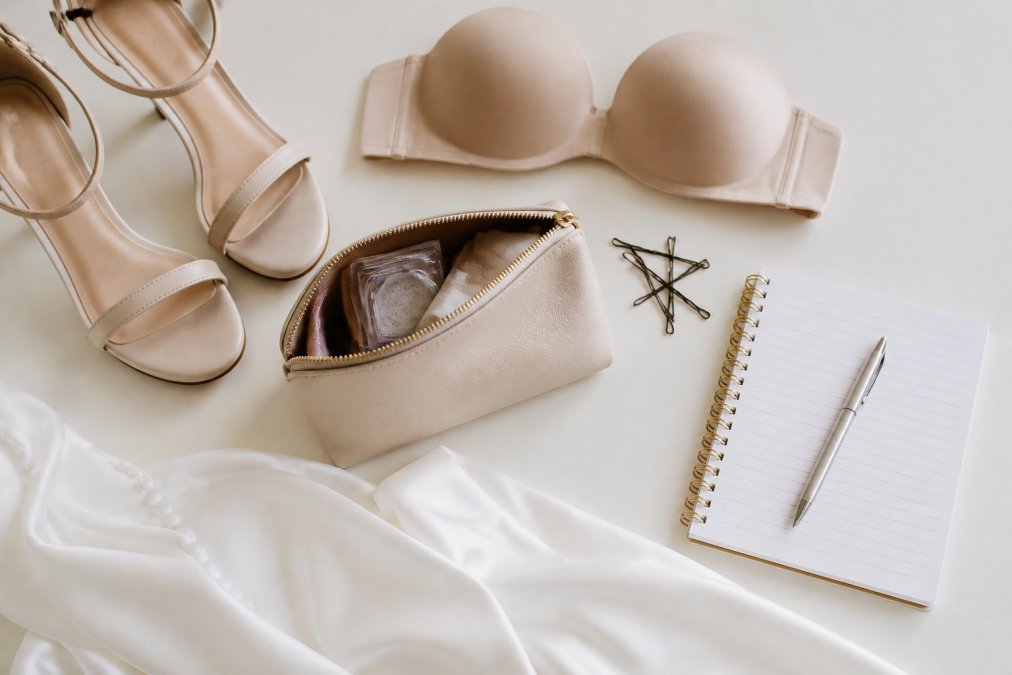
Bring the following to every appointment:
- Your wedding shoes: The heel height determines the hemline. Bring the actual shoes you’ll wear, not a similar pair. Even a half-centimetre difference in heel height changes where the hem falls.
- Your undergarments: Strapless bra, shapewear, or any undergarment you plan to wear. Bring the same ones every time.
- Your accessories: If you plan to wear a belt, sash, or statement necklace, bring them. These affect how the bodice and neckline look in proportion.
- Hair pins or a hair tie: Put your hair up if you plan to wear it up on the day. This affects how the back of the dress and any buttons or closures look and feel.
- A notepad: Write down every adjustment discussed. Memory is unreliable, especially when you’re excited or anxious.
- A trusted support person: One person whose opinion you genuinely trust.
How to Test Your Gown for Comfort and Movement
Fit is not just about how the dress looks standing still. A wedding day involves sitting, dancing, hugging, climbing stairs, and possibly navigating uneven outdoor terrain. Your fitting appointment is the right time to test all of it.
At each fitting, run through these movements deliberately: sit down fully and hold the position for 30 seconds; raise both arms above your head; take a full stride forward and then a wide step to the side; bend forward slightly as you would to hug a shorter guest; and if your gown has a bustle, practice engaging and disengaging it. The seamstress can make adjustments to improve comfort and movement, but only if you tell her what’s bothering you.
Communicating Honestly With Your Seamstress
A skilled seamstress can fix almost anything, but she cannot fix what she doesn’t know about. Honest feedback is not rude, it’s the entire point of the fitting process. Vague feedback creates vague results. "It feels a little tight" is less useful than "the bodice digs into my ribs on the left side when I sit down."
Bring one support person whose taste you trust and who will be honest with you. Bringing a large group creates conflicting opinions and makes it harder to focus on what you actually feel. If something doesn’t feel right after an adjustment, say so at the appointment rather than waiting until the next one.
Hidden Alteration Costs, Body Fluctuations, and Post-Fitting Storage
Budgeting for Bridal Alterations: What Drives the Cost
Bridal alteration pricing varies based on the complexity of the gown’s construction, the fabric type, the number of layers, the presence of beading or lace, and the number of fittings required. A simple hemline on a single-layer chiffon dress costs less than a hemline on a heavily beaded ballgown with multiple layers of tulle. Bustles, sleeve alterations, and structural bodice work each add to the total.
For an accurate estimate, contact Calgary Seamstress directly or book a consultation. A quote given without seeing the gown is rarely reliable. A useful reference point: Brides Canada’s overview of wedding dress alteration costs outlines the categories of work that typically drive bridal alteration costs.
| Alteration Type | Complexity Level | Factors That Affect Cost |
|---|---|---|
| Hemline adjustment | Low to High | Number of layers, beading, fabric type |
| Bodice taking in or letting out | Medium | Seam structure, boning, lace alignment |
| Bustle addition | Medium | Gown weight, fabric, bustle style |
| Strap or sleeve alteration | Medium to High | Lace, beading, fabric matching |
| Full silhouette restructure | High | Dress construction, lining, boning |
| Zipper or closure replacement | Low to Medium | Closure type, fabric access |
Handling Weight Changes Between Fittings
Body fluctuations between fittings are normal and expected. The most practical approach is to avoid making major dietary changes in the months leading up to your wedding with the specific goal of fitting into the dress. Stability is the goal.
If you know you’re actively losing weight, tell your seamstress at the first appointment. She can build in extra seam allowance and time the final fitting closer to the wedding date to account for the change. The same applies if you expect to gain weight.
Schedule your final fitting no more than one to two weeks before the wedding. This minimizes the impact of any last-minute body changes and gives your seamstress the most accurate snapshot of your body to work from.
Storing and Transporting Your Dress After Each Fitting
After each fitting, the dress should be stored hanging in a breathable garment bag, away from direct sunlight, humidity, and heat. Plastic dry-cleaning bags trap moisture and can cause fabric yellowing over time.
When transporting the dress to and from appointments, lay it flat in the back seat or trunk if the gown is too full to hang in a vehicle. Avoid leaving the dress in a hot car, particularly during Calgary’s summer months. For the final transport to your venue, assign this task to a specific, reliable person well in advance.
| Fitting Stage | Storage Method | Transport Tip |
|---|---|---|
| Between fittings | Breathable garment bag, hanging | Lay flat if too full to hang in vehicle |
| After final fitting | Breathable garment bag, cool dry space | Assign a dedicated transport person |
| Wedding morning | Hanging, steamed if needed | Arrive at venue at least 90 minutes early |
Wedding dress alterations require skill, timing, and clear communication, and getting all three right starts long before you step into the fitting room. If you’re looking for meticulous craftsmanship and a seamstress who will genuinely listen to what you want, Calgary Seamstress specializes in wedding dress alterations and is located at Calgary Southcentre Mall for convenient access. With rush services available for tight timelines and expert handling of complex alterations including beading, bustles, and structural work, the team is equipped to take your dress from off-the-rack to perfectly yours. Make an appointment online and bring your shoes.
Frequently Asked Questions
When should I schedule my wedding dress fittings in Canada?
Most bridal seamstresses in Canada recommend scheduling your first wedding dress fitting four to six months before your wedding date. This allows enough time for multiple fittings and any complex bridal alterations. Your final fitting should typically fall one to two weeks before the wedding. If your date is sooner, ask your seamstress whether a rush service is available, some Calgary alteration specialists offer expedited turnaround options.
What should I bring to my first wedding dress fitting?
Bring the undergarments you plan to wear on your wedding day, especially your strapless bra or shapewear, along with your wedding shoes or shoes of the exact same heel height. A photo of your planned hairstyle helps the seamstress assess the neckline and back of the bodice. Bring any accessories like a belt or sash, and a list of fit concerns. A trusted support person is also welcome at most bridal boutiques.
What should I wear to a wedding dress fitting in Canada?
Wear the exact undergarments and wedding shoes you plan to wear on your wedding day. This is the single most important preparation step for a wedding dress fitting. The hemline, bustle, and bodice structure are all pinned relative to your shoe height and undergarment silhouette. Wearing different shoes or skipping shapewear even once can affect how the seamstress sets the dress structure, leading to corrections at later appointments.
How many wedding dress fittings do I typically need?
Most brides need two to four fittings depending on the complexity of their gown and the extent of the bridal alterations required. A fit-and-flare or heavily beaded or lace gown may need more sessions than a simpler silhouette. Your first fitting establishes the overall fit; subsequent fittings refine the bodice, hemline, and bustle. The final fitting confirms everything is seamless and ready for your wedding day timeline.
Can I bring someone with me to my wedding dress fitting?
Yes, most bridal salons and seamstress studios welcome one or two support people. Choose someone whose opinion you genuinely trust and who will give honest feedback rather than simply agree with everything. Too many voices in the fitting room can create confusion and make it harder to communicate clearly with your seamstress. Let your support person know their role beforehand, encouragement and practical observations are most helpful.
What if my body changes between fittings?
Minor body fluctuations are completely normal and a skilled seamstress will account for them. Most wedding gowns are intentionally left with a small amount of seam allowance through the fitting process for exactly this reason. If you anticipate a significant change, due to fitness goals or other factors, be upfront with your seamstress from the start. Honest communication early on allows the tailoring plan to stay flexible and avoids costly corrections closer to your wedding date.
How much do wedding dress alterations cost in Calgary?
Alteration costs vary depending on the complexity of your gown, the fabric, the number of customizations needed, and how many fittings are required. Heavily beaded, lace, or structured gowns generally involve more labour than simpler styles. Because every dress is different, it is best to bring your gown in for a consultation to receive an accurate quote tailored to your specific needs rather than relying on general estimates.
This article was written using GrandRanker