Table of Contents
- What Affects the Cost of Wedding Dress Alterations
- Common Types of Alterations and Their Pricing
- Wedding Dress Alteration Timeline: When to Start and How Long It Takes
- Wedding Dress Alteration Checklist: What to Bring and Prepare
- How to Budget and Avoid Hidden Alteration Fees
- DIY vs. Professional Alterations: When to Call a Bridal Seamstress
- Conclusion
Last Updated: August 15, 2026
What Affects the Cost of Wedding Dress Alterations
The average cost of wedding dress alterations varies widely depending on several interconnected factors that go beyond simple hemming. Understanding what drives these costs helps you budget accurately and avoid surprises when you meet with a bridal seamstress.
The complexity of your gown is the primary cost driver. A simple A-line dress with minimal embellishment costs far less to alter than a heavily beaded couture gown with intricate lace appliqués. The fabric itself matters enormously, delicate silks, stretch materials, and layered tulle require different handling than structured taffeta or matte crepe. A seamstress working with beading or hand-sewn embellishments must move carefully around existing work, which takes time and skill.
Your body’s measurements relative to the gown’s original size determine the scope of work. Taking in a dress by half an inch is straightforward. Taking in three inches across the bodice requires reconstructing seams, potentially removing and resetting boning, and repositioning cups or structural elements. Letting out a dress has limits, seam allowances vary, and some fabrics won’t accommodate major expansion. The more extensive the fit adjustment, the higher the cost.
Location and seamstress experience influence pricing significantly. A bridal specialist with years of wedding dress experience typically charges more than a general tailor, but their expertise prevents costly mistakes on expensive garments. Local market rates matter too, pricing in urban centres differs from smaller communities.
The timeline you’re working with affects cost as well. Rush services or expedited fittings often carry premium fees. If you need alterations completed in two weeks rather than six, expect to pay more for priority scheduling.
The Canadian Seamstresses Guild notes that transparent pricing begins with understanding these variables during your initial consultation.
Common Types of Alterations and Their Pricing
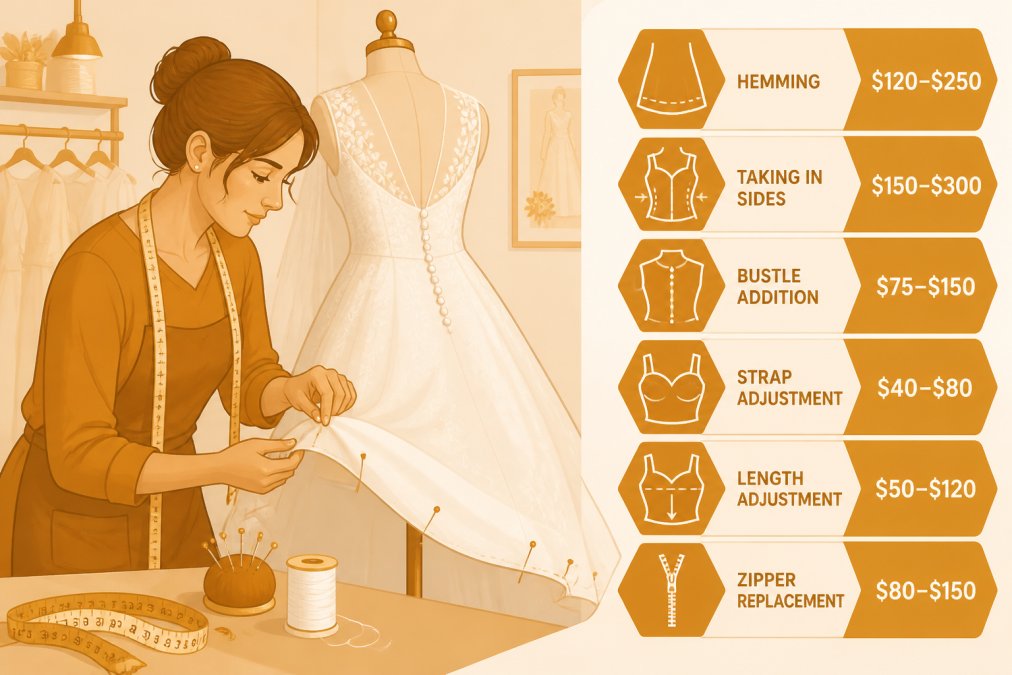
Most wedding dress alterations fall into predictable categories, each with its own complexity level and cost range. Knowing what you’re paying for helps you evaluate quotes and make informed decisions.
Hemming and Train Work
Hemming is the most common alteration. A straightforward hem on a simple gown typically costs less than hemming a dress with a train, layers, or intricate hem details. When a train is involved, the seamstress must ensure the train falls correctly and hangs evenly, which requires additional fitting appointments and adjustment.
Bustle work, adding a bustle so the train can be lifted for dancing, is a separate service that adds to the cost. A single-point bustle is simpler than a multi-point bustle that distributes weight across several points. The stitching must be invisible and strong enough to support the fabric’s weight throughout your reception.
Lace hem finishing requires special attention. Rather than cutting through delicate lace, a skilled seamstress preserves the lace edge, which takes longer and commands higher fees. This detail work distinguishes professional bridal alterations from standard tailoring.
Bodice and Fit Adjustments
Taking in or letting out the bodice affects the dress’s structure. If your gown has boning, the seamstress must carefully remove, reposition, and reset it, a time-intensive process. Cups that don’t fit correctly require adjustment or replacement, which adds labour and sometimes material costs.
Shoulder seams often need adjustment to prevent gaping or pulling. Moving a shoulder seam by even a quarter-inch requires resewing the armhole and adjusting the sleeve cap. This precision work is why experienced bridal seamstresses charge more than general tailors.
Side seams take adjustments well and are typically less expensive to modify than bodice work. A seamstress can take in or let out side seams without affecting the overall structure, making these adjustments straightforward and relatively affordable.
Beading, Lace, and Embellishment Work
Intricate beadwork or hand-sewn embellishments dramatically increase alteration costs. Moving beads, resewing lace appliqués, or repositioning sequins requires meticulous hand work that cannot be rushed. If alterations require removing beading to access seams, and then resewing it afterward, you’re paying for significant labour.
Some seamstresses charge hourly rates for embellishment work rather than flat fees, because the time required is difficult to estimate. A dress with scattered beading takes less time than one with dense, all-over beadwork.
Lace appliqués sewn onto the dress must be carefully repositioned if the dress is being taken in. This delicate work can cost substantially more than simple seam adjustments on an unadorned gown.
Wedding Dress Alteration Timeline: When to Start and How Long It Takes
The wedding dress alteration timeline is one of the most important factors in your planning. Starting too late creates stress and limits your options; starting too early means multiple fittings across months.
Most bridal experts recommend beginning alterations eight to ten weeks before your wedding. This timeline allows for two to three fitting appointments, with adequate time between fittings for the seamstress to complete work. Your first fitting typically happens four to six weeks before the wedding, when major adjustments are planned.
The time required for alterations depends on complexity. A simple hem on an unadorned dress might take two to three weeks. A dress requiring bodice adjustments, hemming, and bustle work typically needs four to six weeks. Complex gowns with extensive beading or lace work may require six to eight weeks.
Between fittings, allow at least one to two weeks for the seamstress to complete the work. If you have a fitting, then need another adjustment, the process extends. This is why spacing your fittings across eight to ten weeks, rather than cramming them into the final month, reduces stress.
Rush services are available but come at a premium. A seamstress offering one-hour or 24-hour rush service can accelerate timelines, but you’ll pay more, and availability may be limited. Plan for standard timelines whenever possible.
Wedding Dress Alteration Checklist: What to Bring and Prepare
Arriving prepared for your fitting appointment ensures the seamstress can work efficiently and accurately. Bring the right items and wear the right undergarments so the dress fits as it will on your wedding day.
Wear the undergarments you plan to wear under your dress during the ceremony. This means your wedding-day bra, shapewear, and any slips or petticoats that will be under the gown. The dress’s fit changes significantly depending on what’s underneath, so wearing your actual wedding undergarments is essential.
Bring your wedding shoes. The heel height affects how the hem falls and how the train drapes. Altering a dress while wearing flats, then wearing three-inch heels on your wedding day, throws off all the measurements. Your seamstress needs to see the dress with your actual shoes.
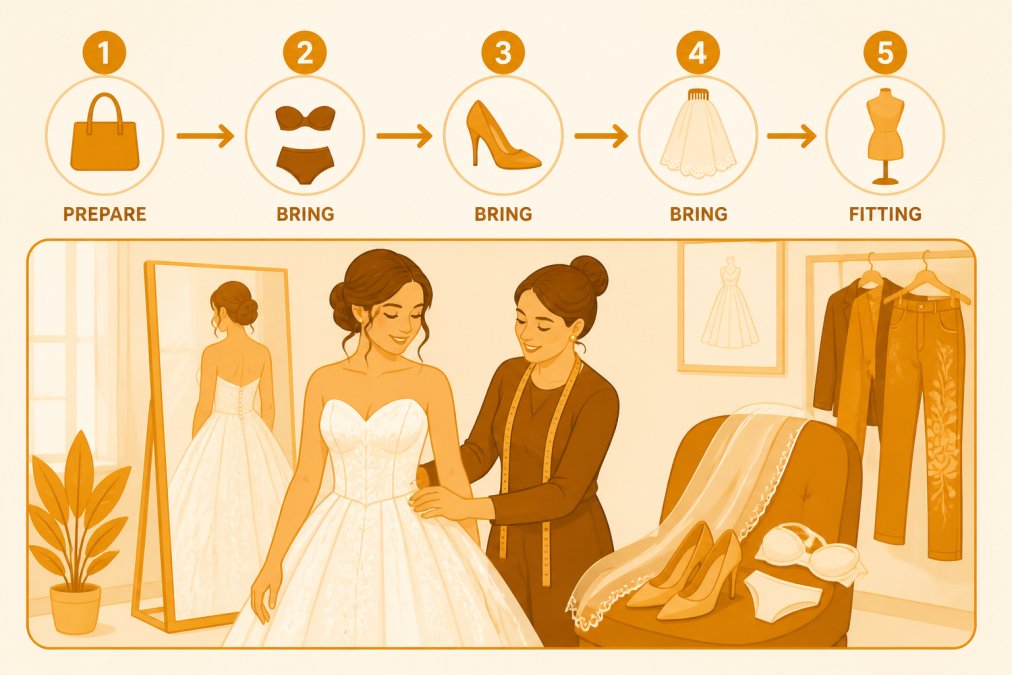
Bring any accessories you’ll wear, your veil, jewelry, or a belt. These items affect how the dress hangs and how the seamstress approaches certain alterations. A veil adds weight and changes the dress’s balance; a belt affects bodice fit.
Bring photos or descriptions of your wedding venue and reception activities. If you’re dancing extensively or moving around a lot, the seamstress can adjust the hem length or bustle accordingly. If you’re having a formal, stationary ceremony, different adjustments apply.
Write down specific concerns or requests before your appointment. Note areas where the dress pulls, gaps, or feels uncomfortable. Be specific: “The left shoulder seam gaps” is more useful than “The shoulders feel loose.”
Bring a trusted friend or family member if it helps you feel confident. However, keep the number of opinions limited, too many voices create confusion. One supportive person is ideal.
How to Budget and Avoid Hidden Alteration Fees
Budgeting for alterations requires understanding what’s included in quoted prices and what costs extra. A transparent seamstress explains these details upfront; a vague quote is a red flag.
Ask for a detailed written estimate that breaks down each alteration separately. Instead of a single “alterations: $400” line, you want to see hemming, bustle, bodice adjustments, and any other work listed individually with costs. This clarity prevents surprise charges later.
Clarify what’s included in the initial quote. Does it cover multiple fittings, or is each fitting charged separately? Are minor adjustments after the final fitting included, or do they cost extra? What happens if you need adjustments after your wedding, is there a time limit on free revisions?
Ask about rush fees explicitly. If the seamstress offers expedited service, get the cost in writing. Some charge a flat rush fee; others add a percentage to the total. Knowing this in advance prevents sticker shock.
Understand fabric-specific charges. If your dress has extensive beading, lace appliqués, or delicate embellishments, ask if those require additional fees beyond standard alteration costs. A seamstress might charge hourly for beadwork rather than including it in a flat fee.
Discuss what happens if alterations need revision. Most reputable seamstresses include minor tweaks after your final fitting at no extra charge. But if you request significant changes after approving the final fit, expect to pay for additional labour.
Get everything in writing. A signed estimate protects both you and the seamstress. It prevents misunderstandings about what’s included, what costs extra, and what the timeline is.
DIY vs. Professional Alterations: When to Call a Bridal Seamstress
Some alterations are genuinely DIY-friendly; others require professional expertise. Knowing the difference saves you from costly mistakes on an expensive garment.
Simple hemming on an unadorned dress is one of the few alterations a skilled home sewer can handle. If you have sewing experience and the dress has a basic, straight hem with no lace or beading, you might manage this yourself. However, wedding dress hems are visible from behind as you walk down the aisle, an uneven or poorly finished hem is immediately noticeable. The cost savings rarely justify the risk.
Anything involving the bodice, fit, or structural elements requires a professional. Taking in a dress requires understanding how to adjust seams without distorting the shape, repositioning boning without creating visible bumps, and ensuring cups still fit correctly. A mistake here ruins an expensive garment.
Beading and lace work demands professional hands. Removing and resewing beads or lace appliqués requires precision, patience, and an understanding of how to preserve delicate details. One slip with scissors or a needle damages irreplaceable embellishment.
Bustle work absolutely requires a professional. A bustle must support the dress’s weight while remaining invisible and comfortable. An improperly constructed bustle fails during your reception, a disaster you cannot fix on the day.
A professional bridal seamstress brings expertise that protects your investment. Calgary Seamstress specializes in wedding dress alterations, understanding the unique demands of bridal gowns and the importance of getting every detail right. The cost of professional alterations is an investment in peace of mind and a dress that fits flawlessly on your wedding day.
The decision between DIY and professional comes down to the alteration’s complexity and your skill level. When in doubt, consult a professional. A brief consultation costs little and clarifies whether you can safely tackle something yourself.
Choosing the right bridal seamstress is as important as the alterations themselves. You’re entrusting someone with one of the most important garments you’ll ever wear. Calgary Seamstress offers expert wedding dress alteration services with meticulous attention to fit, comfort, and the details that matter. With specialized experience in bridal gowns and a commitment to flawless craftsmanship, they understand how to transform your dress into the perfect fit for your day. Make an Appointment Online to discuss your alterations and start the process with confidence.
Frequently Asked Questions
How much does a standard wedding dress alteration package cost?
A standard wedding dress alteration package typically ranges from $200 to $600, depending on the complexity of work needed. This usually covers hemming, basic fit adjustments to the bodice and seams, and minor alterations. More complex work—such as adding bustles, extensive beading repairs, or multi-part alterations—can push costs to $800 or higher. Always request a detailed quote from your bridal seamstress before committing, as pricing varies based on fabric type and the specific adjustments your gown requires.
When should I start my wedding dress alterations?
Begin alterations 2–3 months before your wedding date. This timeline allows for an initial consultation, multiple fittings (typically 2–4 sessions), and adjustments between appointments. If your wedding is sooner, many bridal seamstresses offer rush services; however, these may incur additional fees. Starting early also gives you buffer time if unexpected adjustments are needed closer to your wedding day.
Why is hemming a wedding dress so expensive?
Hemming a wedding dress costs more than hemming regular pants because of the fabric complexity, train length, and precision required. Bridal gowns often feature delicate fabrics like silk, tulle, or lace that demand specialized handling. If your dress has a long train or multiple layers, the seamstress must hem each layer separately and ensure the hem is perfectly level. Hand-stitching (often preferred for bridal work) is more time-intensive than machine work, which increases labor costs. Expect to pay $75–$200 for a basic hem, or more if the dress has embellishments or a complex train.
What should I bring to my wedding dress fitting appointment?
Bring your wedding dress, the undergarments you plan to wear on your wedding day (including the correct bra and shapewear), and your wedding shoes with the heel height you'll wear. These items ensure accurate fitting because undergarments and shoes affect how the dress drapes and fits. Also bring any jewelry or accessories you'll wear, a list of specific concerns or requests, and photos of inspiration if you want particular style adjustments. Arriving with these items helps your bridal seamstress provide precise measurements and realistic expectations for your alterations.
This article was written using GrandRanker