Table of Contents
- Can a Size 14 Wedding Dress Be Altered to a 10?
- How Many Sizes Can a Wedding Dress Be Altered?
- What to Wear Under a Wedding Dress for Fittings
- Wedding Dress Alteration Cost in Calgary
- Your Wedding Dress Fitting Timeline
- Common Mistakes That Ruin a Four-Size Take-In
- Conclusion: Book the Consultation Before You Panic
- Frequently Asked Questions
Last Updated: October 4, 2026
Can a Size 14 Wedding Dress Be Altered to a 10?
Yes, a size 14 wedding dress can often be altered to a size 10, but whether your specific gown can drop four sizes depends on its seam allowances and construction. We see this question every week from brides across Calgary, AB who found a sample gown or ordered before a change in size.
The honest answer is that four sizes is a significant reduction. It sits at the edge of what most gowns can handle without altering the design.
A wedding dress alteration of this scale is not just about taking in side seams. It affects the bodice, the zipper, the lining, and sometimes the cups and boning. The good news: a skilled seamstress can often make it work. The catch: some gowns simply cannot accommodate such a drastic change, no matter who performs the work.
Below, we explain what changes, how to test your gown’s limits, and how to plan the timeline before your wedding day.
What Actually Changes When You Drop Four Sizes
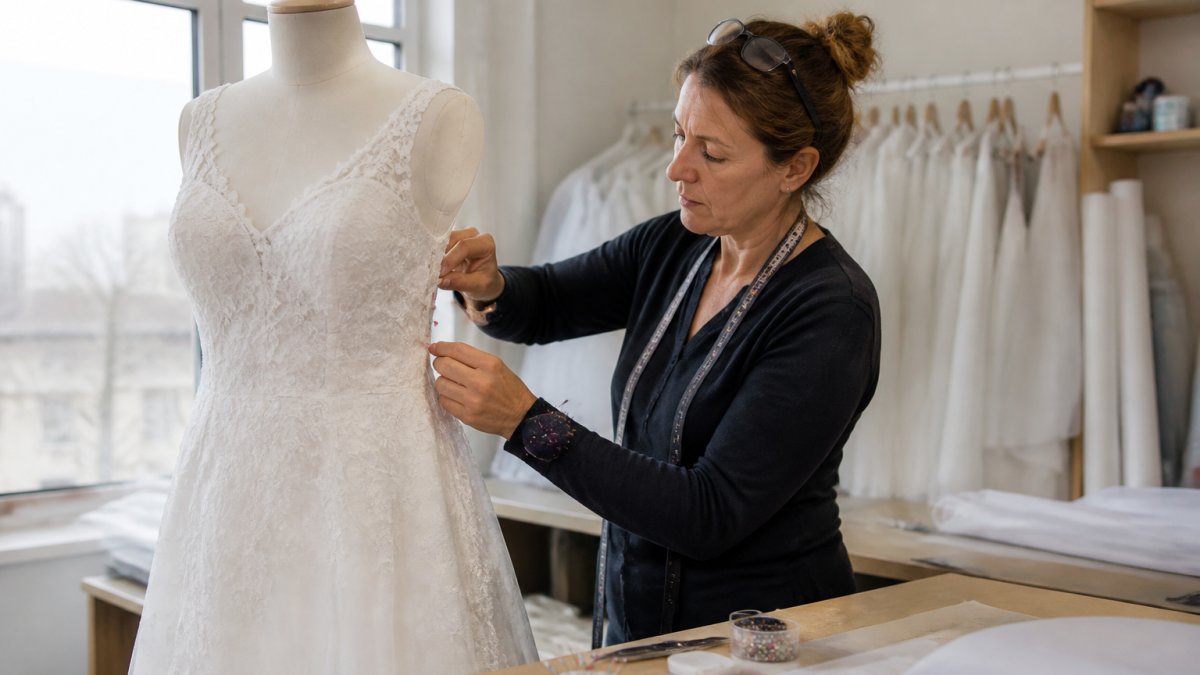
Dropping four sizes means removing fabric from almost every seam. Your seamstress will open the side seams, take in the back, reset the zipper, and reshape the bodice.
Here is what typically gets adjusted:
- Side seams, taken in on both sides
- Center back seam, often the biggest change
- Zipper or corset back, reset to fit the new width
- Bust cups and boning, repositioned to match
- Shoulder straps or sleeves, shortened to sit right
- Lining, trimmed to match the outer dress
Each change impacts the next one. That is why a four-size take-in is a substantial reconstruction, not a quick fix.
The Seam Allowance Test: Your First Real Answer
Seam allowance is the extra fabric hidden inside the dress seams. It is the single biggest factor in whether your gown can shrink four sizes.
Most gowns provide about 2.5 to 5 centimeters (1 to 2 inches) of extra fabric at each seam. A four-size drop usually requires more than this. If the allowance is too small, the seams will pucker or the dress will pull.
Here is how to check before you commit:
- Turn the dress inside out and find the side seams
- Look for a wide strip of fabric beyond the stitch line
- Check the center back seam too, since it often has more room
- Ask your seamstress to measure the allowance at each key seam
If the allowance is tight, a corset back can add flexibility. It provides more room to adjust without cutting new fabric.
How Many Sizes Can a Wedding Dress Be Altered?
Most wedding dresses can be safely altered down by two to three sizes. Four sizes is possible on some gowns, but it depends on the seam allowance, the fabric, and the construction.
Beaded or heavily structured gowns are more challenging to resize. Delicate lace and chiffon can show needle marks if a seam is opened more than once. Simple fabrics like satin or crepe handle larger alterations better.
Never let anyone cut the seam allowance before the final fitting. Once that extra fabric is gone, it cannot be restored. Many brides learn this too late.
Why Bridal Sizing Does Not Match Street Sizing
Bridal sizing runs smaller than street sizing, and it varies by designer. A bridal 14 is often closer to a street 10 or 12.
This matters because a bride who wears a street 10 may actually need a bridal 14. So “dropping to a 10” can mean different things depending on the label.
Always go by your body measurements, not the number on the tag. Your seamstress will measure your bust, waist, and hips and match them to the gown’s size chart.
What to Wear Under a Wedding Dress for Fittings
What you wear under your wedding dress for fittings impacts how the gown sits. The right undergarments ensure an accurate fit.
Bring or wear these to every fitting:
- The exact bra or cups you plan to wear on the day
- Seamless underwear in a nude tone
- Any shapewear you intend to use
- Shoes with the same heel height as your wedding shoes
If you plan to skip a bra, inform your seamstress at the first fitting. The cups and bodice support are constructed based on that decision.
Wear the same undergarments to every fitting. Switching bras between visits can alter the fit by a full size and undo previous work.
Wedding Dress Alteration Cost in Calgary
Wedding dress alteration costs in Calgary depend on the extent of work the gown requires. A four-size take-in demands more hours than a simple hem, thus incurring a higher cost.
Pricing is influenced by the gown’s fabric, construction, and the number of fittings needed. We do not provide a flat rate, as no two dresses are identical.
To receive an accurate estimate, book a consultation. We will examine your gown, measure the seam allowances, and provide a clear quote before commencing any work.
We also offer a one-hour or 24-hour rush service for clients with tight timelines.
Your Wedding Dress Fitting Timeline
A wedding dress fitting timeline should ideally begin three to four months before the wedding. This allows ample time for two or three fittings and a final check.
Plan it as follows:
- 3 to 4 months out: First fitting and measurements
- 6 to 8 weeks out: Second fitting after major alterations
- 2 to 3 weeks out: Final fitting and any minor adjustments
- 1 week out: Pickup, pressed and ready
A four-size take-in requires more time than standard alterations. Start early. If your wedding is approaching quickly, consider our rush service.
Common Mistakes That Ruin a Four-Size Take-In
The most significant error is delaying your appointment. A four-size change necessitates multiple fittings, and rushing the process can result in suboptimal seams.
Other common mistakes include:
- Losing or gaining weight after the final fitting
- Purchasing a gown four sizes too large with the intention of altering it to save money
- Neglecting to check the seam allowance before purchasing
- Changing undergarments between fittings
- Allowing a friend or family member to pin the dress instead of a professional
Each of these actions increases risk. A dress that fits perfectly at the last fitting can still shift if your body changes afterward.
The seam allowance is paramount. Verify it before you buy, and schedule your first fitting at least three months in advance.
Conclusion: Book the Consultation Before You Panic
A four-size take-in presents a genuine challenge, but it is often manageable with the right gown and skilled expertise. The key is an early, transparent assessment.
At Calgary Seamstress, we specialize in wedding dress alterations and custom work. We offer one-hour and 24-hour rush services. As a local Calgary small business located at Southcentre Mall, we handle complex alterations with precision, from zippers and cuffs to complete bodice reconstructions.
If you are searching for wedding dress alterations near me in Calgary, book a consultation. We will inspect your seam allowances, measure your gown, and provide an honest evaluation of what is feasible. Schedule an appointment online and let us help your dress achieve the perfect fit.
Frequently Asked Questions
Can a wedding dress be taken in two sizes?
Yes, reducing a dress by two sizes is a routine alteration for most gowns and rarely causes structural issues. Taking a dress from a size 14 to a size 10 is a four-size reduction, which is a different undertaking: it requires examining the seam allowance within the bodice, the placement of boning, and whether the lace or beading pattern can be seamlessly re-matched at the new seam line. A seamstress will pin the gown on you and confirm what is possible before any cutting begins.
How many sizes can a wedding dress usually be altered?
Most gowns can be taken in two to three sizes without noticeable changes to the design. Four sizes is achievable on many dresses, but it depends more on the construction than the number itself. A gown with ample internal seam allowances, a simple silhouette, and minimal beading at the side seams can accommodate a larger reduction. A heavily embellished mermaid cut with narrow seams might require panel reconstruction rather than a straightforward take-in.
Will taking in a wedding dress change its shape or details?
It can, and that is the primary risk with a four-size reduction. Adjusting the side seams can affect lace motifs, beading patterns, and any detailing along the side seams. The waistline can also shift upwards. A skilled seamstress will strategically plan the new seam lines to accommodate the embellishment pattern so that the design remains cohesive, and will show you where the new seams will be located before making any cuts.
When should I book wedding dress alterations in Calgary?
Book your first fitting approximately eight to twelve weeks before the wedding, ensuring you have your gown and shoes with you. This timeframe allows for two or three fittings and a final press. If your wedding is less than six weeks away, consider rush service. Rush timelines are contingent on the shop’s current workload, so confirm availability before committing.