Table of Contents
- Why Fabric Choice Defines Your Bespoke Suit Jacket
- Start With the Season: Seasonal Suit Fabric Recommendations
- A Practical Suit Fabric Weight Guide
- Weave, Texture, and How the Cloth Behaves
- How to Care for Custom Suit Fabrics
- How to Judge Fabric Quality Before You Commit
- How Your Tailor Helps You Choose the Right Fabric
- Frequently Asked Questions
Last Updated: September 16, 2026
Why Fabric Choice Defines Your Bespoke Suit Jacket
Your bespoke suit fabric matters more than any other decision in the bespoke process. A suit jacket is only as good as the fabric it’s cut from, and learning how to choose the right fabric for a bespoke suit jacket separates a garment you wear twice a year from one you reach for every week. This guide from Calgary Seamstress walks through the factors that actually change how a jacket looks, feels, and wears over time.
Here’s the part most guides skip: fit gets all the attention, but fabric decides how the jacket drapes, how it handles a Calgary winter, and whether it still looks sharp after three seasons of wear. The Campaign for Wool’s guide to natural fibres explains why wool remains the benchmark for tailoring.
Fabric determines drape, durability, and comfort more than any other single choice. Get the cloth right and the tailoring has something to work with. Get it wrong and even a perfect cut fights the material.
Start With the Season: Seasonal Suit Fabric Recommendations
Seasonal suit fabric recommendations begin with one question: what will the weather do to you in this jacket? For Calgary, that means planning for both a cold, dry winter and a short, warm summer.
Summer and Warm-Weather Fabrics
Lighter, breathable cloths keep you comfortable when temperatures climb. Look for high-twist wools, linen, and cotton blends. These fabrics let air move and resist clinging. Linen wrinkles, and that’s part of its character, but a wool-linen blend gives you most of the breathability with fewer creases. Fresco and other open-weave wools work well for business settings where you want structure without heat.
Winter and Cold-Weather Fabrics
Heavier flannels, tweeds, and wool-cashmere blends hold warmth and hang with weight. Flannel has a soft, brushed surface that feels substantial. Tweed adds texture and shrugs off light snow. For a jacket you’ll wear through a Calgary January, a mid-to-heavy weight wool flannel is hard to beat. The Woolmark Company’s fabric care guidance is a useful reference for matching cloth to climate.
A Practical Suit Fabric Weight Guide
Suit fabric weight is measured in grams per square meter (gsm), and it tells you more about a cloth than any marketing label. This guide gives you a working range.
| Weight (gsm) | Typical Cloth | Best Season | Wearability |
|---|---|---|---|
| 200-240 | High-twist wool, linen | Summer | Light, breathable, creases easily |
| 250-280 | Tropical wool, blends | Spring, fall | Versatile year-round pick |
| 300-340 | Worsted wool, flannel | Fall, winter | Holds shape, drapes well |
| 350-450 | Heavy flannel, tweed | Winter | Warm, durable, less forgiving |
Most people building a first bespoke jacket land in the 250-280 gsm range. It’s the sweet spot for year-round wear in a variable climate.
Ask your tailor to let you feel the cloth between your fingers, not just look at a swatch book. A 280 gsm worsted and a 280 gsm flannel behave completely differently, and your hand knows before your eye does.
Weave, Texture, and How the Cloth Behaves
Weave decides how a fabric looks up close and how it lives through a long day. A plain weave is tight and smooth, which makes it formal and hard-wearing. Twill has diagonal lines and hides wrinkles well, which is why it’s common in business suits. Herringbone and birdseye add subtle pattern without shouting.
Texture matters for character. A smooth worsted reads as sharp and professional. A brushed flannel reads as relaxed and warm. Neither is better; they simply suit different rooms. When you’re weighing how to choose the right fabric for a bespoke suit jacket, hold two swatches side by side and picture each one under office lighting.
How to Care for Custom Suit Fabrics
Caring for custom suit fabrics comes down to rest, air, and restraint. Wool is self-cleaning to a degree, so brush your jacket after wearing it and hang it on a broad wooden hanger to let it recover. Rotate your jackets so no single one takes daily punishment.
Spot-clean spills promptly with a damp cloth rather than scrubbing. Dry cleaning strips natural oils, so limit it to once or twice a season unless something demands it. Store winter cloths in a breathable garment bag, never plastic, and keep them away from direct sun.
Over-dry-cleaning is the fastest way to dull a fine cloth. Many people clean a jacket after every wear, which breaks down the fibres and shortens its life. Air and brush first; clean only when it’s genuinely needed.
How to Judge Fabric Quality Before You Commit
Judging fabric quality is easier than it sounds once you know what to check. A quality cloth has a dense, even weave with no visible gaps when held to light. It springs back when you crumple a corner in your hand rather than staying creased. The surface should feel consistent, without slubs or thin patches. Developing a discerning eye for these tactile characteristics provides the necessary foundation to assess fabric quality when shopping through digital storefronts.
Ask what the fibre content actually is. A “wool blend” can mean anything from 90 percent wool to a token amount, and the difference shows up in how the jacket ages. Super numbers (like Super 120s) describe fibre fineness, not quality on their own. A higher number feels finer but wears faster. For everyday jackets, a mid-range cloth often outlasts a delicate high-super one.
How Your Tailor Helps You Choose the Right Fabric
A good tailor narrows the bespoke suit fabric swatch book before you ever feel overwhelmed. The best fabric is the one that matches how you’ll actually wear the jacket, and that’s a conversation, not a catalogue.
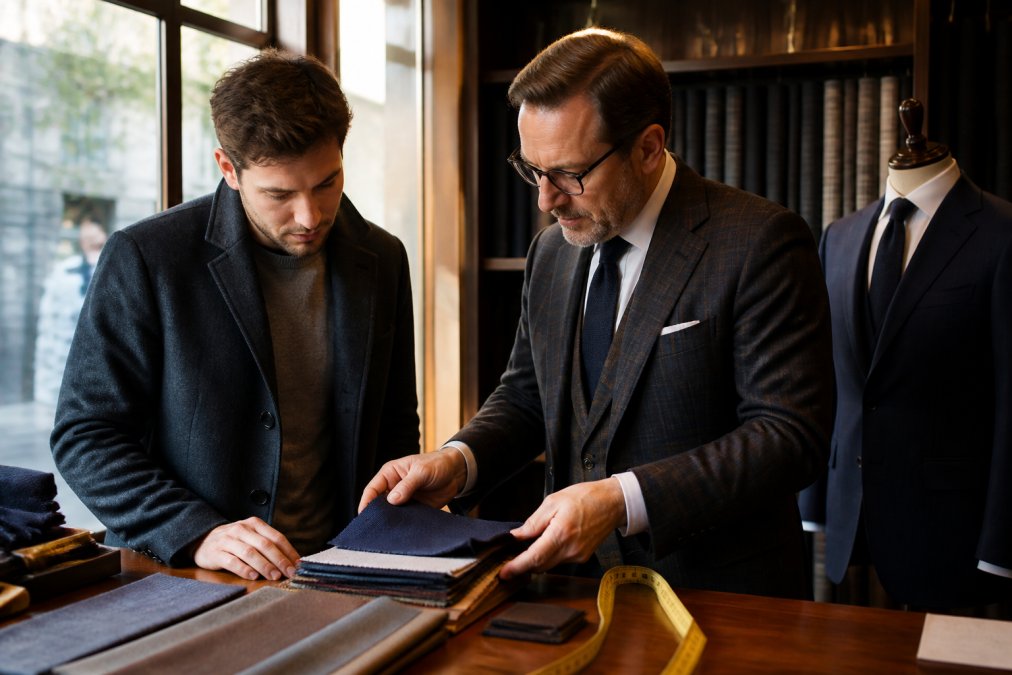
Bring your intended use to the appointment: daily office wear, a wedding, a single formal event. Mention the season and whether you run warm or cold. At Calgary Seamstress, our suit tailoring service pairs you with cloths suited to Calgary’s climate and your routine, and our skilled artisans handle everything from jacket adjustments to full bespoke construction. If you’re searching for suit fabric guidance near me, a fitting room beats a screen every time. You can book an appointment online to start the conversation.
Frequently Asked Questions
What is the best fabric for a year-round suit in Calgary?
A mid-weight worsted wool in the 260 to 310 gsm range handles most of the year. It breathes enough for warm office days and holds its shape through cooler months. Pair it with a second jacket in a lighter or heavier cloth if you wear suits daily. Your tailor can show you swatches in person so you feel the weight and drape before deciding.
What is the Super number in wool fabric and does it matter?
The Super number refers to the fineness of the wool fiber, measured in microns. Higher numbers like Super 150s feel softer and smoother, but they wrinkle more and wear faster than lower numbers like Super 100s. For everyday business wear, Super 100s to 130s gives a good balance of comfort and durability. Save the highest Super numbers for special-occasion jackets you wear a few times a year.
How does fabric weight affect the drape of a bespoke jacket?
Heavier fabrics, roughly 300 gsm and up, drape with more structure and resist wrinkling through a long day. Lighter fabrics under 250 gsm feel cooler but can cling and crease more easily. The right weight depends on how you wear the jacket: a structured business suit calls for mid-to-heavy cloth, while a summer wedding jacket works better in something lighter.
Does the Calgary climate influence which suit fabric I should choose?
Yes. Calgary swings from hot summer days to deep winter cold, so one jacket rarely covers everything. A breathable wool or wool-linen blend works for summer events, while a flannel or heavier tweed handles winter. Many clients order two jackets in different weights rather than compromise on a single cloth. Your tailor can match the fabric to the seasons you actually wear the suit.
Choosing the right fabric can feel like a lot of pressure, especially when the jacket needs to work for years of Calgary seasons. Calgary Seamstress takes the guesswork out of it with hands-on guidance, expert suit tailoring, and bespoke construction built around how you actually dress. Get started with Calgary Seamstress and walk out with a jacket that fits your life, not just your measurements.