Last Updated: November 9, 2026
Quick Summary
Custom outerwear is made to your measurements, so it fits your body and lasts longer than off-the-rack alternatives. When you consider why invest in custom designed outerwear for Calgary winters, the strongest case is fit, since a jacket cut for your shoulders, sleeves and torso feels warmer and looks sharper.
- Standard sizes are cut for an average frame, while custom work follows your shoulders, sleeve length and torso.
- Shoulder seams should sit at the edge of your shoulder bone, and cuffs should reach the base of your thumb.
- Compare jackets by cost per wear: total price divided by the number of times you wear it.
- A custom jacket worn about 42 times per season costs roughly $5.36 per wear over four seasons at $900.
- Book a consultation and bring a well-fitting jacket, design photos and your preferred fabrics.
Table of Contents
- Why Custom Outerwear Is Worth Considering
- Custom Outerwear vs. Off-the-Rack: What Actually Differs
- How a Jacket Should Fit Your Body
- Quality Jacket Construction: What to Look For
- Choosing a Fall Jacket Fabric for Calgary Weather
- Cost Versus Long-Term Value and Cost Per Wear
- Booking Your Custom Outerwear Consultation
- Frequently Asked Questions
Why Custom Outerwear Is Worth Considering
Custom outerwear is a jacket or coat made to your measurements, in fabrics and details you choose, and many people ask why invest in custom designed outerwear when they can buy off the rack. For many people in Calgary, that means a warmer, better-fitting piece that lasts longer than an off-the-rack alternative. The question is whether the extra time and cost pay off over the years you wear it.
Here are the main reasons people decide to invest:
- Fit that suits your body. Standard sizes are cut for an average frame. Custom work follows your shoulders, sleeve length and torso.
- Design choices you control. Pick the collar, pocket placement, lining, zipper style and colour.
- Movement and comfort. A jacket cut for your posture lets you reach, drive and lift without the fabric pulling.
- Durability. Better seams, heavier stitching and quality fabric hold up through repeated wear.
- A piece that is yours. Few other people will own the same jacket, which matters if you care about personal style.
The strongest case for custom work is fit. A jacket that sits correctly feels warmer and looks sharper, even with the same fabric as a cheaper one.
Custom Outerwear vs. Off-the-Rack: What Actually Differs
Custom and ready-to-wear jackets are not always different in the same ways. A ready-to-wear jacket is cut to a fixed size chart and sold as-is. A custom jacket starts with your measurements and a pattern made for you.
The differences that matter most in practice are:
- Fit: Custom work is built around your body. Ready-to-wear needs alterations, and alterations have limits.
- Materials: You choose the shell, lining and insulation rather than accepting what the retailer stocked.
- Construction: You can ask for reinforced stress points, better zippers or a particular seam finish.
- Lead time: Custom takes longer. Plan several weeks ahead, especially before winter.
Ready-to-wear still makes sense when you need a jacket this week, your size is common, or the budget is tight. A custom jacket is a better fit when the fit problem is persistent or you want a specific design.
How a Jacket Should Fit Your Body
A jacket that fits well has a few clear signs. Check these before you accept any piece, custom or not.
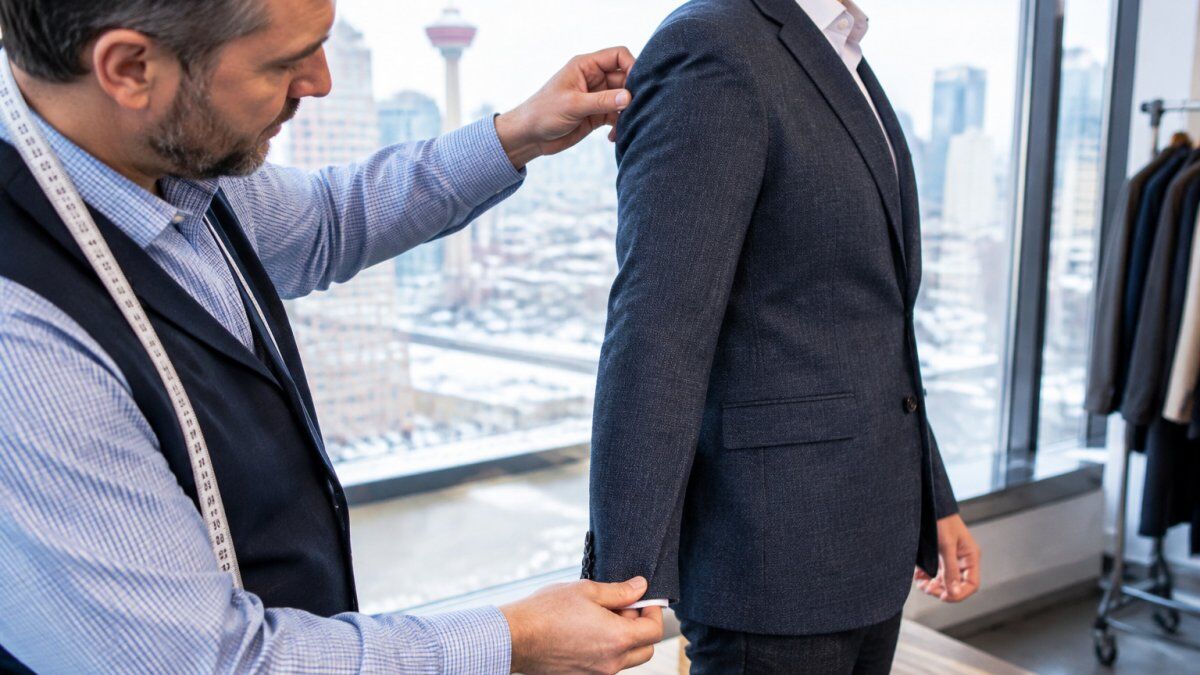
- Shoulders: The seam should sit at the edge of your shoulder bone, not sliding down your arm.
- Sleeves: The cuff should reach the base of your thumb with your arms relaxed.
- Chest and torso: You should be able to layer a sweater underneath without pulling at the buttons or zipper.
- Length: For most winter jackets, the hem should cover your hips and keep the cold out.
- Movement: Raise your arms and reach forward. The back should not tighten or ride up sharply.
Watch out: A jacket that is too tight across the back will restrict movement and wear out the seams faster. Leave enough room for a light layer underneath.
Quality Jacket Construction: What to Look For
Good construction is mostly invisible, but it decides how long a jacket lasts. When you judge a jacket, look closely at the following:
- Seams: Tight, even stitching with no loose threads. Double-stitched seams at the shoulders and underarms hold up better.
- Zippers: Heavy-duty zippers that run smoothly. Check that the zipper tape lies flat.
- Lining: A lining that moves with the shell and is attached securely at the hem and cuffs.
- Buttons and closures: Buttons should be sewn with a shank so they sit well off the fabric.
- Pockets: Pocket openings should be reinforced, since they take the most stress.
A common mistake is judging a jacket only by its outer fabric. The interior construction often tells you more about how long it will last.
Choosing a Fall Jacket Fabric for Calgary Weather
Calgary’s autumn can swing from mild afternoons to cold, windy evenings, and snow is possible earlier than many people expect. The right fabric choice depends on how you will use the jacket, not just on how it looks. Think in layers: shell, insulation and lining each do a different job.
Shell fabrics are the outer layer and decide wind and water resistance:
- Wool blends: Warm for their weight, breathable and good at shedding light moisture. A dense wool melton or wool-nylon blend handles cool, dry days well and layers cleanly over a sweater.
- Tightly woven cotton or canvas: Holds up to wind and daily wear with less insulation. Good for shoulder-season jackets where you want structure and abrasion resistance more than warmth.
- Technical synthetic shells: Resist wind and water well and dry quickly. Pair them with a removable insulating layer so the same jacket works from mild fall afternoons into early winter.
Insulation decides warmth. Down gives the most warmth for its weight but loses effectiveness when wet and needs careful cleaning. Synthetic insulation stays warm when damp, dries faster and costs less, which suits Calgary’s variable, sometimes snowy shoulder season.
Linings and seams affect comfort and durability. A smooth lining lets you layer a sweater underneath without friction, and a lining attached securely at the hem and cuffs keeps the shell from bunching. Look for sealed or tightly stitched seams on wind-facing panels, and storm flaps behind the zipper to block drafts on windy days.
Hardware and closures matter in cold weather. Heavy-duty zippers that run smoothly with gloves on, sturdy snaps and buttons sewn with a shank, and reinforced pocket openings all extend the jacket’s working life. These are the parts that fail first on cheaper jackets.
Ask yourself three questions before choosing: How much time do you spend outside? Do you need wind protection more than warmth? Will you wear it over a sweater or over a suit? Refining these specific requirements ensures that your final garment serves as a functional investment rather than a seasonal mistake, a guide for Canadian shoppers that emphasizes the necessity of matching technical specifications to your unique daily habits.
Watch out: Choosing a heavy insulation for a jacket you will mostly wear in mild fall weather will leave you overheated and less likely to reach for it. Match the insulation to the season you will actually wear it in, and favor a removable liner if you want one jacket to cover more of the year.
Cost Versus Long-Term Value and Cost Per Wear
The sticker price is only part of the picture. A better way to judge a jacket is cost per wear: the total price divided by the number of times you wear it. That single number lets you compare a custom piece against a cheaper jacket you replace every season or two.
Here is how the math works in practice. A fall jacket worn three days a week through a Calgary fall and early winter, roughly 14 weeks, gets about 42 wears per season. Over four seasons that is about 168 wears.
Several factors can move a custom quote up or down, and knowing them helps you compare quotes fairly:
- Shell fabric: Wool blends, tightly woven cotton, canvas and technical shells sit at different price points. Specialty or imported fabrics cost more than standard stock cloth.
- Insulation: Uninsulated shells cost less than down or synthetic-insulated versions. Removable liners add cost but extend the wearing season.
- Construction details: Reinforced stress points, storm flaps, sealed seams, higher-grade zippers and custom linings each add labor and materials.
- Design complexity: Asymmetric closures, multiple panel seams, patch pockets and contrast linings take more pattern work and sewing time than a simple cut.
Care and repair belong in the same calculation. Dry cleaning a wool coat a couple of times a season, reproofing a technical shell, and replacing a zipper or lining after several years are real costs, but they are usually far below the price of a new jacket.
Watch out: Comparing a custom quote against a sale-rack price without accounting for expected lifespan and number of wears will make the custom option look more expensive than it is. Run the cost-per-wear math on both before you decide.
Ask for a written, itemized quote before you commit. A quote that breaks out fabric, insulation, construction details and fittings lets you see where the money goes and compare it fairly against what you already own and what you would otherwise buy.
The numbers below show how the cost-per-wear math works for a custom jacket compared with an off-the-rack one.
| Item | Value | Note |
|---|---|---|
| Wears per season | About 42 | Three days a week over roughly 14 weeks |
| Wears over four seasons | About 168 | Based on 42 wears per season |
| Custom jacket price | $900 | Lasts four seasons |
| Custom cost per wear | About $5.36 | $900 divided by about 168 wears |
| Off-the-rack jacket price | $250 | Replaced every second season |
| Off-the-rack cost per wear | About $5.95 | Over four years, about 84 wears |
Booking Your Custom Outerwear Consultation
If you have decided a custom jacket is right for you, the next step is a consultation. Bring a few things to make the first visit productive:
- A jacket you already own that fits well or badly, so we can see what to copy or fix
- Photos or sketches of the designs you like
- Your preferred fabrics and colours, or questions about what suits Calgary weather
- A clear idea of how and where you will wear the jacket
You can book a consultation at Calgary Seamstress to get started.
You can also look at finished work before you decide. Our brown wool parka and black leather-like parka show the kind of custom outerwear we make for Calgary winters.
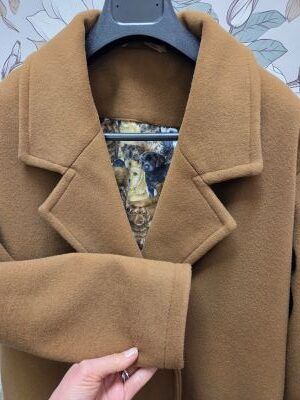

Custom outerwear is worth considering when fit, fabric and construction matter to you. Calgary Seamstress builds jackets around your body and your local climate, so you get a piece that is warm, comfortable and made to last. Book a consultation to talk through your ideas.
Frequently Asked Questions
What are the benefits of custom-designed outerwear?
Custom outerwear is cut to your measurements, so the shoulders, sleeves and body length sit where they should. You can choose the fabric, lining, colour and hardware, which means the jacket reflects your own style rather than a standard size chart. Because it is made to fit and built with chosen materials, it can hold its shape well.
Is custom outerwear better than off-the-rack clothing?
It depends on what you need. Off-the-rack jackets are faster to buy and cost less at the outset, which suits occasional use or a tight budget. Custom outerwear takes longer and usually costs more, but the fit is tailored to you and the construction and fabric can be specified. The Brown Wool Parka and the Black Leather Like Parka at Calgary Seamstress are each listed at $500.00.
How should a well-fitting jacket fit?
The shoulder seam should sit at the edge of your shoulder, not slide down your arm. The sleeve should end near the base of your thumb with a little of your shirt cuff showing. You should be able to wear a sweater underneath and still move your arms freely. The body should close without pulling across the chest or creating horizontal wrinkles. A tailor can check these points during a fitting and mark where adjustments are needed.
What should I look for in the quality of a custom jacket?
Check the seams for even stitching and no puckering, the lining for secure attachment at the hem and armholes, and the zipper or buttons for smooth operation and firm attachment. Ask what fabric is used and how it is constructed, since weight, weave and finish affect warmth and wear. Good tailoring work should look neat on the inside as well as the outside. Request to see examples of finished garments before you commit.