Last Updated: November 4, 2026
Quick Summary
Preparing winter school clothes for Calgary means using a three-layer system: a moisture-wicking base layer, an insulating fleece or wool mid-layer, and a windproof, waterproof outer shell. Skip cotton, since it holds sweat against the skin and makes kids cold. Add waterproof boots with deep tread, mittens, a toque, and wool socks.
- Warmth comes from trapped air, not thickness, so thin layers beat one bulky parka.
- Merino wool and synthetic base layers wick sweat; cotton is the fabric to limit.
- Mittens keep fingers warmer than gloves because the fingers share warmth.
- Wash waterproof shells sparingly with technical wash and air dry them.
- Ask your school what wind chill keeps kids indoors and whether snow pants are required.
Table of Contents
- Why Calgary Winters Demand More Than a Warm Coat
- Winter Layering for Kids: The Three-Layer System That Works
- Best Fabrics for Cold Weather School Clothes
- Tailoring Services for Winter School Coats: Getting the Fit Right
- Boots, Mittens, and Toques: Accessories That Keep Kids Warm
- Budget-Friendly Gear Sourcing and Maintenance Tips
- Navigating School Winter Clothing Policies and Playground Readiness
- Book a Coat Fitting or Alteration at Calgary Seamstress
- Frequently Asked Questions
Why Calgary Winters Demand More Than a Warm Coat
Preparing winter school clothes in Calgary means planning for wind chill, sudden dumps of snow, and playgrounds that turn to ice by recess. A single warm coat is not enough.
Thin winter planning often shows up as hems dragging through slush, zippers seized up, and coats that never fit right over a sweater. This guide walks you through the full system, from base layers to boots, so your child stays warm from the school commute to the last bell.
Here is the core idea most parents miss. Warmth comes from trapped air, not thickness. A thin wool base layer under a fleece mid-layer under a windproof shell will beat one bulky parka almost every time. That is the layering system, and it is the foundation of everything below.
Watch out: cotton undershirts are the most common mistake. Cotton soaks up sweat and holds it against the skin, which is exactly how kids get cold halfway through the day.
Winter Layering for Kids: The Three-Layer System That Works
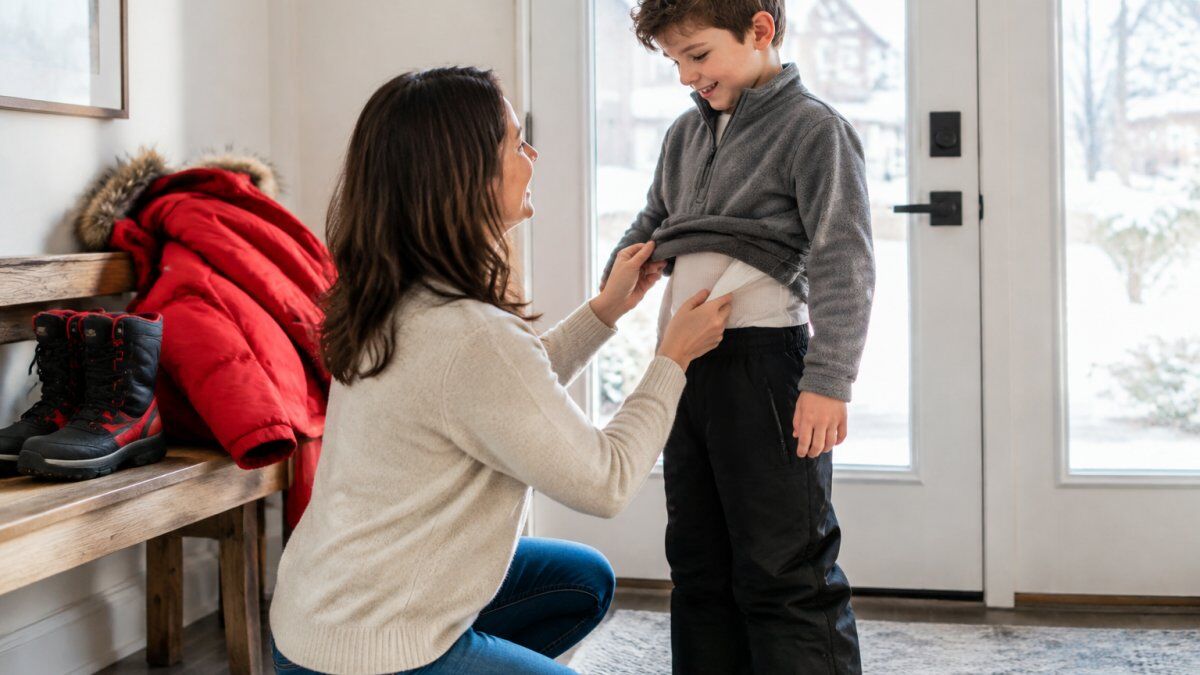
The three-layer system is a method of dressing in which a moisture-wicking base layer, an insulating mid-layer, and a windproof outer shell work together to keep a child warm and dry. Each layer has one job, and together they handle Calgary’s unpredictable weather far better than a single heavy garment.
Base Layer: Moisture-Wicking Fabrics
The base layer sits against the skin and moves sweat away from the body. Look for synthetic fibers or merino wool. Skip cotton entirely for active days.
Mid Layer: Fleece and Wool for Insulation
Fleece, wool sweaters, and quilted cardigans trap body heat. This is the layer kids shed first when a classroom runs warm, so pick one that packs easily into a backpack.
Outer Shell: Windproof and Waterproof Protection
The outer shell blocks wind and wet snow. A waterproof, windproof jacket with a good hood does more for comfort than extra thickness underneath.
| Layer | Job | Best Materials | School-Day Tip |
|---|---|---|---|
| Base | Wicks sweat | Synthetic, merino wool | One spare in the backpack |
| Mid | Traps heat | Fleece, wool, quilted knits | Pick one that packs flat |
| Shell | Blocks wind and wet | Waterproof, windproof shell | Check the hood and cuffs |
Best Fabrics for Cold Weather School Clothes
The best fabrics for cold weather school clothes are merino wool, polyester fleece, and tightly woven synthetics, because they hold warmth while staying breathable. Cotton is the one fabric to limit, since it holds moisture and loses insulation when damp. The useful question is not which fabric is warmest but which fabric does which job, because each one behaves differently when a child sweats on the walk to school and then sits in a warm classroom. Balancing these thermal properties with the physical demands of the playground requires careful attention to choosing durable clothes that withstand both the biting frost and the daily wear of an active school year.
Merino wool is a common base-layer choice because it stays warm when slightly damp and resists odor. Synthetic base layers, usually polyester, wick moisture and dry quickly. Polyester fleece is a common mid-layer that traps air and packs flat into a backpack. For outer shells, look for labels that state waterproof and windproof rather than “warm,” which tells you nothing about wind chill. A shell rated waterproof with taped seams and a windproof membrane blocks both wet snow and the wind that drives Calgary’s effective temperature down.
Watch out: a jacket labeled only “thermal” or “warm” may have no windproof membrane at all, so check the hangtag for waterproof and windproof claims before you buy.
Care matters as much as fiber choice. Wash waterproof shells sparingly with a technical wash rather than regular detergent, and air dry them so the water-repellent finish survives. Wash wool cold and lay it flat to dry. Fleece tolerates warm washes but not high heat, which flattens the loft that does the insulating. If you want a coat built to your own specifications, we offer custom designs, including a brown wool parka and a black leather-like parka.
Tailoring Services for Winter School Coats: Getting the Fit Right
A winter coat that is too big lets cold air swirl around the body, and one that is too small cannot fit a mid-layer underneath. Tailoring services for winter school coats solve both problems by adjusting the fit without losing the insulation.
If your child’s winter coat is a large, we can make it snug without buying a new one. See how on our coat resizing service page.
Boots, Mittens, and Toques: Accessories That Keep Kids Warm
Accessories do more work than most parents expect. A toque stops heat loss from the head, mittens keep fingers warmer than gloves because the fingers share warmth, and waterproof boots with real traction keep feet dry on icy playgrounds.
- Toque: covers the ears, packs flat in a backpack
- Mittens vs gloves: mittens win for warmth on the coldest days
- Wool socks: one pair, not two, to avoid sweaty feet
- Winter boots: waterproof with deep tread for traction
- Neck warmer: seals the gap between coat and chin
One small fix many parents ask us about: wind sneaking between a jacket cuff and mittens. We add a small extension of soft material to close that gap, explained on our warm hands alteration page.
Budget-Friendly Gear Sourcing and Maintenance Tips
You do not need to rebuy everything each fall. Good maintenance stretches gear across siblings and seasons, and a few repairs beat a new purchase almost every time.
- Wash waterproof shells sparingly and air dry them
- Fix a broken zipper instead of replacing the coat
- Patch small tears before they spread
- Hand down base layers first, shells last
- Check hems and cuffs each October
A broken zipper is a common reason parents replace a coat that is otherwise fine. We repair zippers, so read our zipper repair service page before you shop.
Navigating School Winter Clothing Policies and Playground Readiness
Most Calgary schools expect kids to go outside unless conditions are extreme, so playground readiness matters as much as classroom comfort. The practical problem is that school handbooks vary widely: some require indoor shoes and a change of clothes, some ask for snow pants below a certain temperature, and some leave the call to the teacher on duty. Read your school’s handbook at the start of the season and ask the office two questions: what temperature or wind chill keeps kids indoors, and whether snow pants are required or optional. That single conversation prevents most morning arguments.
Label everything. A name inside the coat, boots, and mittens saves a fortune at lost-and-found, and a second label inside the mid-layer helps when kids shed layers at recess and forget where they put them. Pack a spare pair of socks and mittens in the backpack through the wet months, because a soaked pair at 10 a.m. means a cold afternoon.
Calgary’s freeze-thaw cycles are the local twist most generic guides skip. Snow melts at noon and refreezes by pickup, so traction and waterproofing matter more here than raw warmth alone. Chinook winds can push temperatures up and down within a single school day, which is why the layering system in this guide beats one heavy coat: a child can shed the mid-layer at noon and put it back on for the walk home. Boots with deep tread and a waterproof upper handle the slush-and-ice cycle better than insulated fashion boots with smooth soles.
For uniforms that take a beating in winter, our guide on school uniform repair covers the fixes that keep them wearable, and our studio can adjust a coat so it layers cleanly over a sweater without bunching at the shoulders. If the issue is a pair of school trousers that no longer sits right over long johns, our Jeans / Pants Alterations service can take in or let out the fit so the layers underneath stay comfortable.
Book a Coat Fitting or Alteration at Calgary Seamstress
Getting winter school clothes right comes down to fit, layers, and a little upkeep. A coat that fits properly keeps a child warmer than a thicker one that hangs loose.
At our studio in Southcentre Mall, we handle coat resizing, zipper repairs, cuff and hem work, and custom outerwear. We offer one-hour and 24-hour rush service. We are a local Calgary small business.
Get started with Calgary Seamstress and give your child a winter coat that fits, lasts, and keeps the cold where it belongs. Book an appointment online and we will take it from there.
Frequently Asked Questions
What are the best layering techniques for Calgary school children?
Start with a moisture-wicking base layer made of synthetic fibers or merino wool, add a fleece or wool mid-layer for insulation, and finish with a windproof, waterproof outer shell. Avoid cotton undershirts because they hold moisture and lose insulation when damp. This three-layer system lets kids adjust for changing temperatures throughout the school day and during the commute.
Should I have winter school clothes tailored for better heat retention?
Yes, a proper fit matters. A coat that is too loose lets cold air circulate, while one that is too tight restricts movement and layering. A proper fit helps the garment seal out wind and snow more effectively. A well-fitted coat also lasts longer and looks neater.
How do I ensure school clothes are durable enough for Alberta winters?
Look for reinforced knees and elbows, tightly woven fabrics, and quality zippers. Wash outerwear according to care labels and re-waterproof as needed. For hand-me-downs or thrifted finds, a quick alteration to fix hems or replace a broken zipper extends the life of the garment. Rotating two pairs of mittens and two hats also reduces daily wear.
Are there specific clothing standards for Calgary schools during winter?
Policies vary by school and school board. Many Calgary schools expect children to come dressed for outdoor recess and may require indoor shoes and a full set of spare clothes. Check your school’s handbook or ask the teacher about outdoor time expectations. Label all items clearly and pack a spare toque and mittens in the backpack for unexpected snow days.