Last Updated: November 5, 2026
Quick Summary
Before booking custom suit tailoring in Calgary, ask about fabric weight for fall, whether the jacket is fused or canvassed, how many fittings are included, and what the alteration policy covers after pickup. Get a written, itemized quote so you know exactly what the price includes.
- Mid-weight wool, often around 280 to 320 grams per square metre, handles Calgary’s shifting fall temperatures well.
- A canvassed jacket uses a hair-canvas layer stitched by hand, which moulds to your body and tends to last longer than fused construction.
- Ask how many fittings are included in the price, since most of custom work’s timeline is spent between fittings.
- Ask what window, if any, is included for adjustments after pickup, and get the terms in writing.
- Request a written quote that itemizes fabric, lining, buttons, thread, interfacing and fittings rather than a single lump figure.
Table of Contents
- Why the First Conversation Matters More Than the Measurements
- How to Choose Suit Fabric for Fall Wear
- Questions About Construction: Fused Versus Canvassed
- Understanding the Fitting Schedule and Bespoke Suit Tailoring Timeline
- Asking About Costs, Alterations and Suit Alteration Costs in Calgary
- Questions About Local Climate and Alteration Policies
- Booking Your First Custom Suit Consultation in Calgary
- Frequently Asked Questions
Before you hand over a suit jacket, a pair of trousers, or a fabric swatch, the first conversation with your tailor decides most of the outcome. Clients who arrive with a clear picture of what they want, and what they expect the process to look like, tend to end up with garments they wear for years. Those who skip the questions often end up disappointed, even when the craftsmanship is excellent.
This guide covers the questions worth asking before you commit to custom suit tailoring in Calgary. We walk through fabric choice for the fall season, the construction questions that separate good work from poor work, the fitting schedule and timeline, costs and alteration policies, and how to book a first consultation.
Why the First Conversation Matters More Than the Measurements
Measurements tell a tailor your size. The first conversation tells them how you live, what you wear, and what the suit has to do.
Ask yourself these questions before you book:
- What occasions will this suit cover, such as office days, client meetings, or formal events?
- How often will you wear it, and in what weather?
- Do you have a garment you already love that you want to replicate?
A good tailor will ask these same questions. Custom suit tailoring works best when the tailor understands the purpose of the garment, not just its dimensions.
How to Choose Suit Fabric for Fall Wear
Fabric weight matters more in Calgary than many people expect. Autumn here swings from mild afternoons to cold, windy evenings, so a suit that works in September may feel wrong by November.
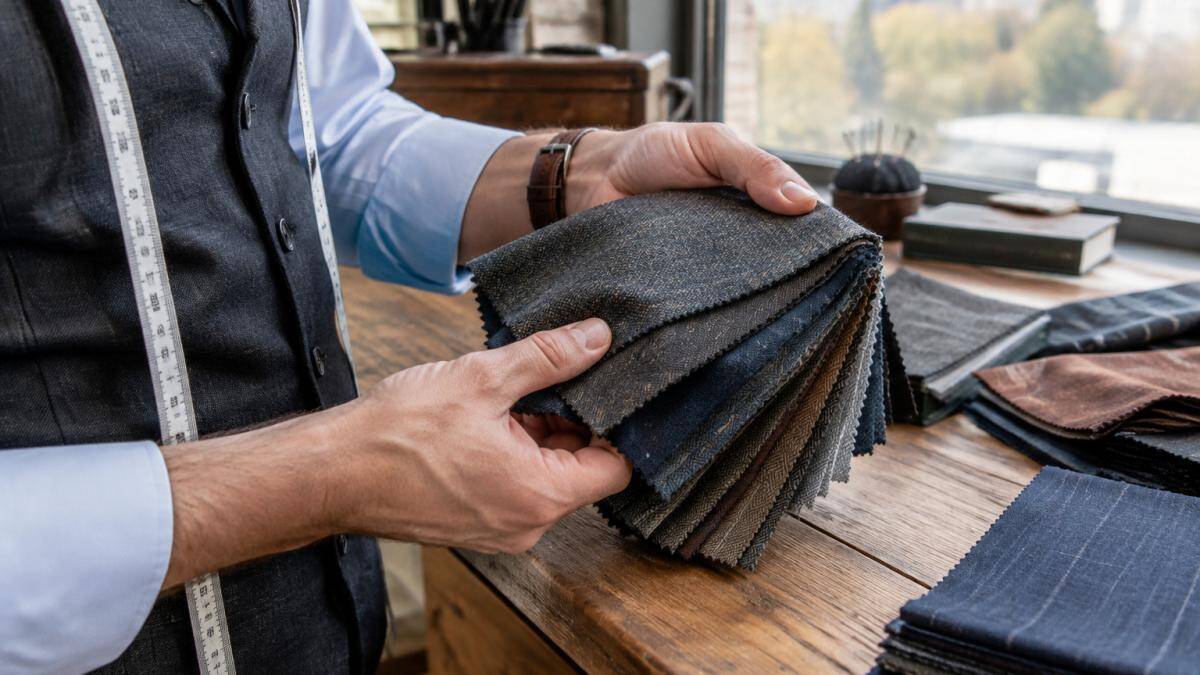
Ask your tailor these questions about fabric:
- What weight is best for fall? Mid-weight wool, often around 280 to 320 grams per square metre, handles shifting temperatures well.
- What does the “super count” mean? Higher numbers usually mean finer wool, which feels softer but wears less durably. Lower super counts tend to hold their shape longer.
- Will the fabric breathe indoors? Heated offices and restaurants can get warm, so a fabric that stays comfortable across environments is practical.
Many people choose a flannel or tweed for fall. These fabrics add texture and warmth, though they can look heavier than a worsted wool. Ask to see swatches in natural daylight, since colour shifts under store lighting.
A common mistake is picking the fabric from a photo. Ask to touch the swatch and hold it up to a window before you commit.
Questions About Construction: Fused Versus Canvassed
Construction is where quality shows, and it is the question most clients forget to ask.
- Is the jacket fused or canvassed? A fused jacket glues the interlining to the fabric. It is cheaper and faster to make, and it can look flat over time. A canvassed jacket uses a hair-canvas layer stitched by hand, which moulds to your body and tends to last longer.
- Is it half-canvas or full-canvas? Half-canvas covers the chest only. Full-canvas runs the full length of the front, giving the most natural drape.
- How is the shoulder padded? Shoulder padding should suit your frame. Ask to see how the padding is attached, since it affects the silhouette for years.
Your tailor should explain the trade-offs plainly. Good work costs more, and a clear answer about construction tells you the tailor knows the craft.
Understanding the Fitting Schedule and Bespoke Suit Tailoring Timeline
Custom work takes time, and most of that time is spent between fittings, not at them. Ask about the full process before you agree to anything, and ask what each stage is for, a tailor who can explain the purpose of each fitting is a tailor who knows the craft.
Custom suit work generally proceeds through several fittings, and each stage is worth understanding before you commit. Ask your tailor to explain the sequence and how many visits to expect.
Ask your tailor:
- How many fittings are included in the price, and how many are typical for a first suit?
- What is the realistic turnaround from first fitting to pickup, and does that change in the fall?
- How long should I plan for if I need the suit by a specific date?
- What happens if I need to reschedule a fitting, does that push the pickup date?
Plan ahead, and plan around the season. A suit ordered close to an event leaves little room for a re-cut, so booking early protects both the timeline and the quality.
Ask any tailor how they handle a short deadline, and decide whether that trade-off suits you.
Custom work takes time, and most of it passes between fittings. The table below sets out the questions to settle with your tailor and what each one covers.
| Question | What to ask | Why it matters |
|---|---|---|
| Fittings | How many are included in the price | Shows what a first suit typically needs |
| Turnaround | Time from first fitting to pickup | Changes in the fall season |
| Deadline | How far ahead to book | Leaves room for a re-cut |
| Rescheduling | Effect on pickup date | Protects your timeline |
Asking About Costs, Alterations and Suit Alteration Costs in Calgary
Price transparency is part of a fair relationship, but “how much” is the wrong first question. The better question is what the quote is built from, because two tailors can name the same number for very different reasons. Ask every tailor for a written quote that itemizes the components rather than a single lump figure.
Useful questions include:
-
What does the quote include? Fabric, lining, buttons, thread, interfacing, and the number of fittings should all be listed. A quote that omits fittings is not a quote; it is a starting point.
-
Is the fabric priced per metre or per garment? Fabric is usually the largest line item, and the metreage depends on your size, the pattern, and whether the cloth has a directional weave or a check that must be matched at the seams. Ask how much cloth your suit will consume.
-
Are there charges for rush work or additional fittings? Ask how fittings are priced and what is included before you commit.
-
What does a suit alteration cost in Calgary, and how does it compare to a fully custom garment? Ask for an itemized quote for the specific alterations you need, and ask how the cost compares to a custom garment.
Ask the tailor to walk you through the quote line by line and to explain which trade-offs are involved if the budget is tighter.
On alterations after pickup: ask what window is included for minor adjustments, what counts as minor, and whether the policy covers fit changes from weight fluctuation. Ask what window, if any, is included for adjustments after pickup, and get the terms in writing. Ask whether the tailor offers a warranty on stitching or on the fit itself, and how they handle a garment that does not match the agreed design. That answer tells you more about the shop than the price does.
For a quote based on your specific request, contact Calgary Seamstress directly or book a consultation through our website.
Questions About Local Climate and Alteration Policies
Calgary’s climate affects tailoring decisions, and few guides mention it.
Ask your tailor how the garment and its lining suit Calgary’s wind, snow and dry indoor air, what happens if the fit changes after weight gain or loss, and whether a warranty on stitching or fit is offered.
Booking Your First Custom Suit Consultation in Calgary
A first consultation is the right place to ask every question in this guide. Come prepared:
- Bring a suit or jacket you already like, if you have one
- Note the occasions and weather you plan to wear the suit in
- Write down your questions about fabric, construction, and timeline
- Set aside enough time for measurements and a fabric review
When you are ready, you can book your appointment through the Calgary Seamstress booking page. Our team can walk you through fabric options and the fitting schedule before you commit.
Asking the right questions up front leads to a suit that fits well and holds up through Calgary’s long fall and winter seasons.
Frequently Asked Questions
What should I bring to my first custom suit fitting?
Bring a shirt and shoes you would normally wear with a suit, plus any existing suit or jacket you like the fit of. Note the occasions you plan to wear the suit for, such as office work, fall events or formal dinners, because these shape fabric weight and colour choices. A tailor can take measurements from scratch, but a reference garment helps them understand your preferred shoulder line, jacket length and trouser break. Bring a list of questions too, so you can compare answers on fabric, timeline and alteration policy before committing.
How many fittings are typically required for a custom suit?
Custom suits typically involve more than one fitting. Ask your tailor to explain the fitting stages for your garment. The number depends on how much adjustment the first fit needs and how closely you want the silhouette matched to your posture. Ask your tailor to walk you through the fitting schedule before you book, so you know how many visits to plan for and how much time to set aside.
How long does the custom suit tailoring process take in Calgary?
Timelines vary with the tailor’s workload, the fabric you choose and how many fittings the suit needs. Ask for the expected completion date at your consultation, and ask what happens if fabric has to be sourced or if a fitting is missed. Suits that are not rushed usually take several weeks from first measurement to final pickup. Ask about availability when you book. For a quote, request one through the booking page.
Should I ask about the origin of the suit fabric?
Yes. Ask where the fabric is produced, what fibre content it has and how it is weighted, because these affect how the suit drapes, wrinkles and wears over several seasons. Ask whether the tailor sources fabric locally or from overseas mills, and how that affects lead time and availability of matching linings and trims. A reputable tailor will show you swatches and explain the trade-offs between weights for fall and winter wear.