Table of Contents
- Why Wedding Dress Alterations Go Wrong (and How to Prevent It)
- Mistake 1: Starting Wedding Dress Alterations Too Late
- Mistake 2: Skipping the Right Undergarments and Shoes
- Mistake 3: Ignoring These Wedding Dress Fitting Tips
- Mistake 4: Getting the Bustle Wrong
- Mistake 5: Choosing the Wrong Alterations Specialist
- Conclusion: A Flawless Fit Starts With the Right Choices
- Frequently Asked Questions
Last Updated: October 6, 2026
Why Wedding Dress Alterations Go Wrong (and How to Prevent It)
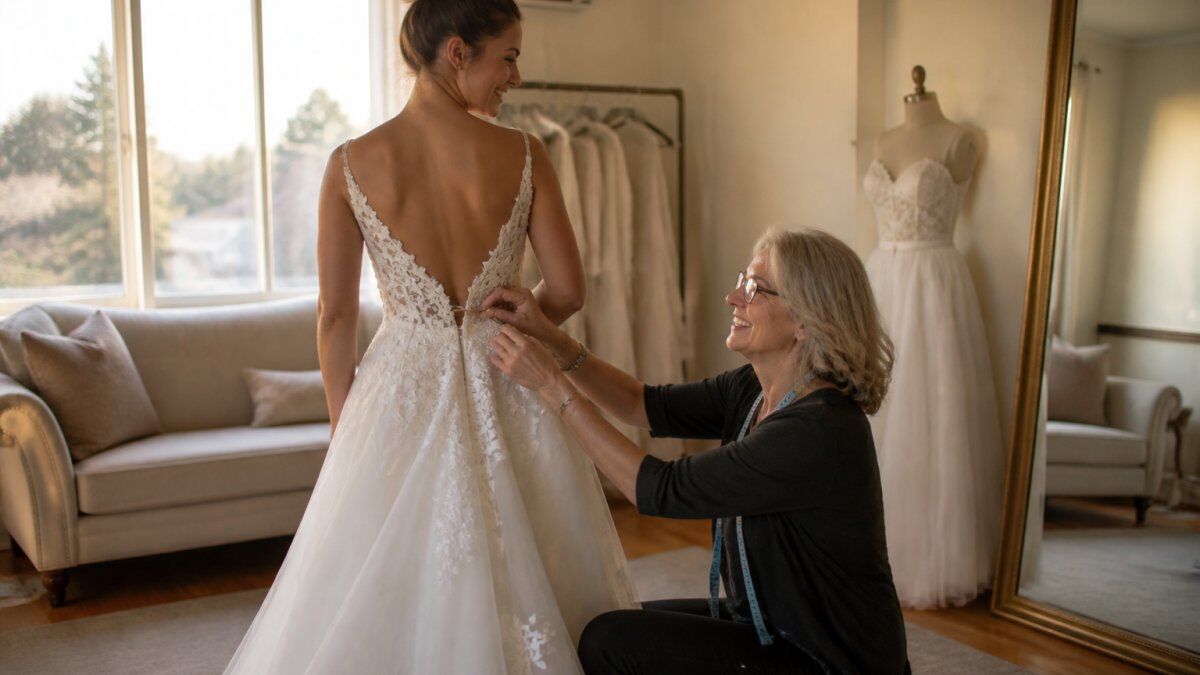
Most brides book their first fitting too late, ask for the wrong changes, or trust the wrong hands. Those are the three ways common wedding dress alteration mistakes to avoid turn into panic three weeks before the big day. At Calgary Seamstress, we have pinned many hems and reset many bustles for brides, and the same small errors show up again and again.
The good news: every one of them is preventable. This guide walks through the five mistakes we see most often, plus a realistic timeline, a packing list for your fitting, and the questions to ask before you hand over your gown.
Wedding dress alterations are not a single appointment. They are a sequence of fittings that each depend on the one before. Rush the sequence and something will not fit on the day.
Mistake 1: Starting Wedding Dress Alterations Too Late
The biggest mistake is treating alterations as a last-minute errand. Most gowns need two to three fittings, and each one needs breathing room for the work itself.
Brides often assume the dress arrives ready to wear. It rarely does. Even a gown ordered in your size needs the hem, straps, and bodice adjusted to your body.
A Realistic Wedding Dress Alteration Timeline
A wedding dress alteration timeline should start the moment your gown arrives, not the month of the wedding.
- 3 to 4 months out: First fitting. Bring your shoes and undergarments.
- 6 to 8 weeks out: Second fitting. Adjust fit and mark the bustle.
- 2 to 3 weeks out: Final fitting. Confirm the hem, straps, and bustle.
- 1 week out: Pickup, pressed and ready.
If your wedding is six weeks away, say so at booking. Our team offers a one-hour and 24-hour rush service for tight timelines, but the earlier we see the gown, the calmer the process.
Mistake 2: Skipping the Right Undergarments and Shoes
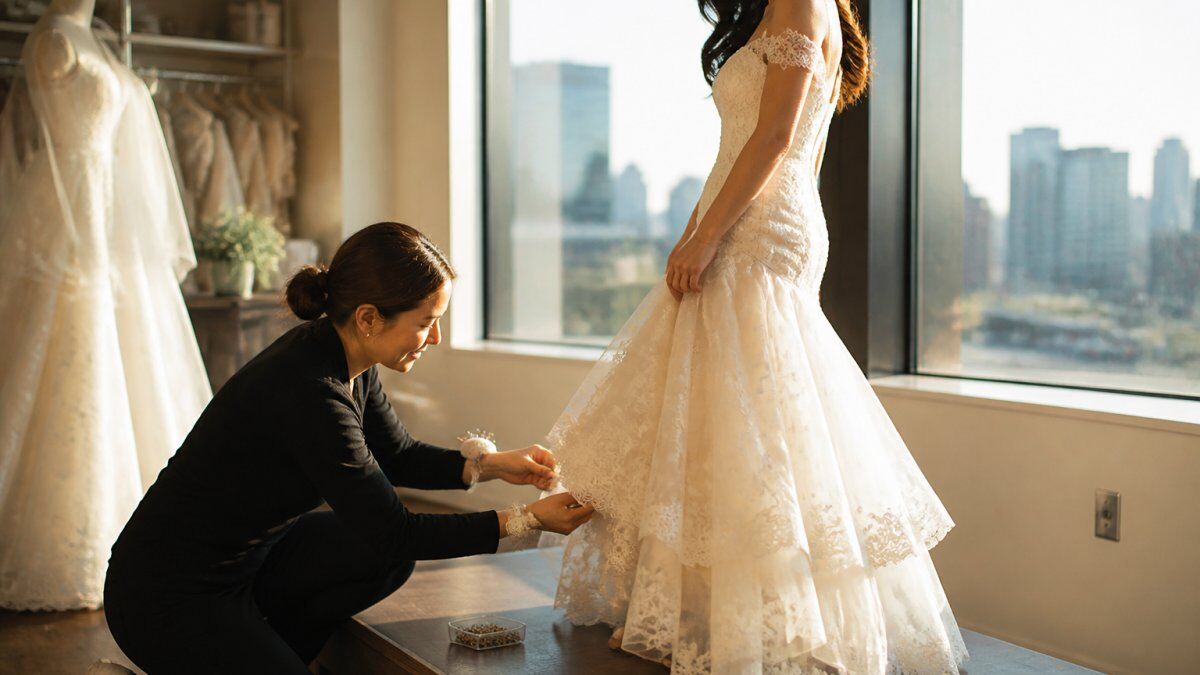
The single most common cause of a bad hem is the wrong shoes. A gown hemmed in flats will drag in heels, and no amount of pinning on the day fixes it.
Bring the exact shoes you will wear, even if they are not broken in yet. Bring the bra, shapewear, or slip you plan to wear underneath. These change how the bodice sits and how the waistline falls.
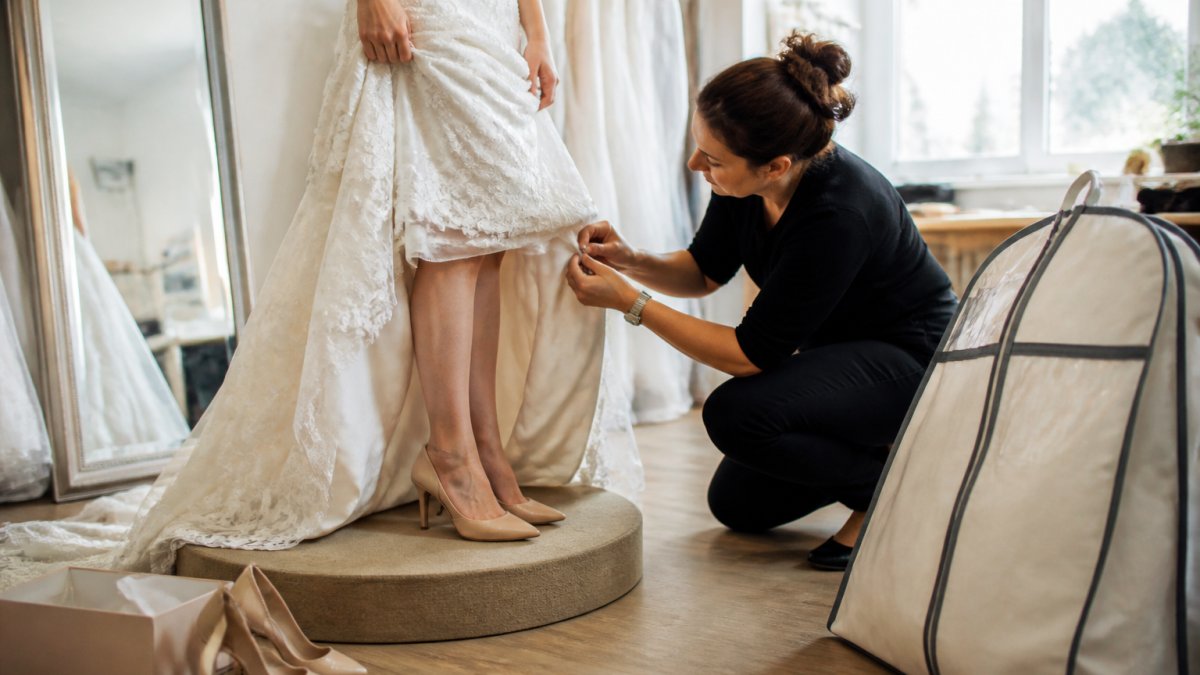
Arriving in different shoes than your wedding pair is the fastest way to a crooked hem. If you switch shoes later, expect to pay for a second hem adjustment.
Mistake 3: Ignoring These Wedding Dress Fitting Tips
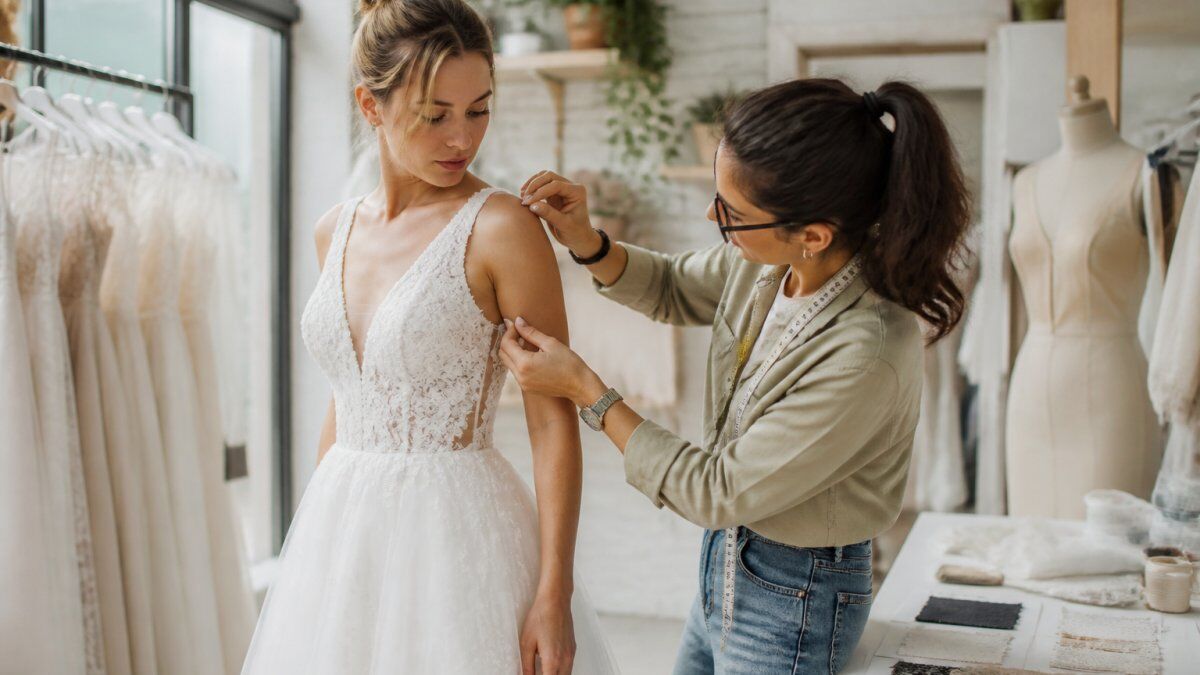
A fitting is a working session, not a viewing. Come prepared and speak up about anything that feels off.
Here are the wedding dress fitting tips we give every bride:
- Wear or bring the exact undergarments and shoes.
- Bring a trusted friend, not a crowd.
- Say something the moment a seam feels tight or a strap digs in.
- Ask how each change affects the overall shape.
- Take photos from the front, back, and side.
What to Bring to a Wedding Dress Fitting
Knowing what to bring to a wedding dress fitting saves an entire return trip. Pack a small bag with your shoes, undergarments, any jewelry you plan to wear, and a photo of your venue if the train length matters. Bring your phone to snap progress shots.
If you are coming from another tailor and worried about puckered seams, ask to see photos of past work.
Mistake 4: Getting the Bustle Wrong
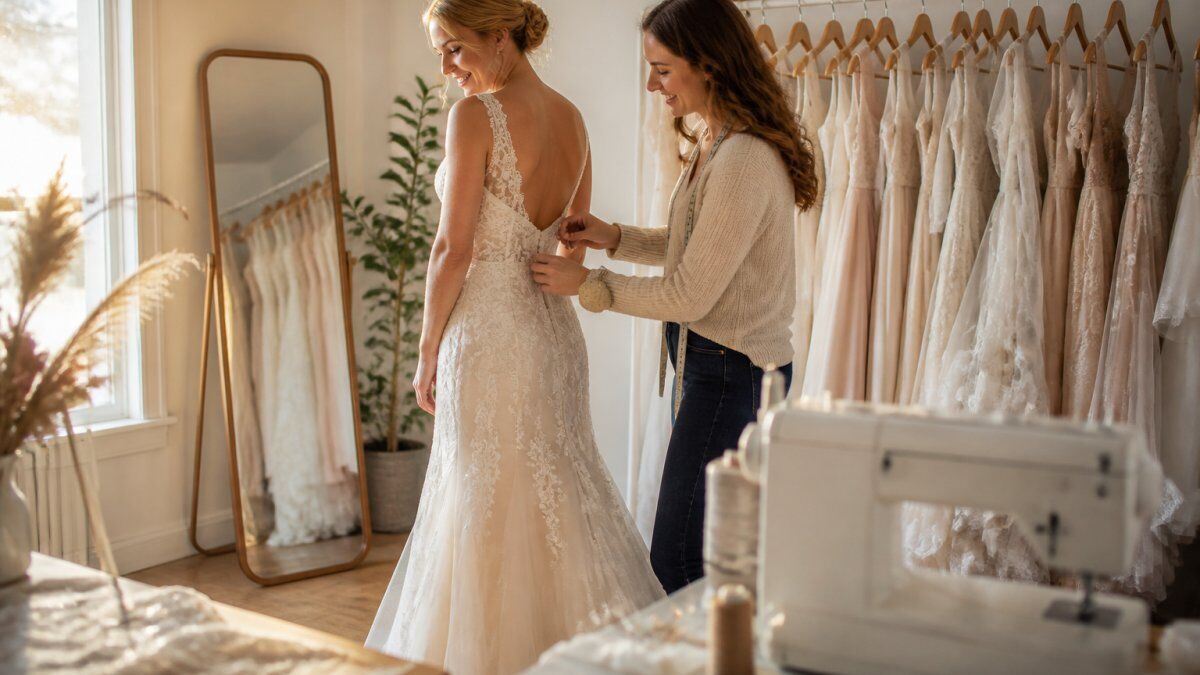
A bustle that sags, snaps, or pulls the gown out of shape ruins the reception photos. Most wedding dress bustle mistakes come from deciding the style on the spot instead of testing it.
There are several bustle types, and each suits a different train and fabric. Ask to see the bustle done up, walk in it, and sit down in it. If a hook pulls, it needs a stronger anchor point.
Test the bustle twice: once at your final fitting and once at pickup. Bustle points can shift slightly after pressing, and catching it early is far easier than fixing it mid-reception.
Mistake 5: Choosing the Wrong Alterations Specialist
The person holding the scissors matters as much as the gown. A specialist who works on wedding dresses daily understands structure, lining, and lace in a way a general tailor may not.
Look for someone who asks questions, shows past work, and explains the trade-offs of each change. Ask about turnaround time and whether rush service is available. For brides searching for wedding dress alterations near me in Calgary, visiting the shop in person tells you more than any ad.
Calgary Seamstress works out of Calgary Southcentre Mall and handles complex alterations, from delicate lace to structured bodices. Our team also tailors suits, hems jeans and pants, and adjusts blouses and tops, so the same careful hands can prepare your partner’s outfit too.
Brides who want a local specialist they can visit in person, ask questions, and see finished work before committing.
Conclusion: A Flawless Fit Starts With the Right Choices
Every mistake in this guide comes down to timing and trust. Start early, bring the right shoes and undergarments, speak up at each fitting, and choose a specialist who shows you their work.
At Calgary Seamstress, we specialize in wedding dress alterations and custom garment design, with a one-hour and 24-hour rush service when your timeline is tight. We are a local Calgary small business.
Make an appointment online with Calgary Seamstress and walk into your wedding knowing your dress fits exactly the way it should.
Frequently Asked Questions
What are the most common wedding dress alteration mistakes?
The most frequent mistakes include starting alterations too late, bringing the wrong undergarments or shoes to fittings, requesting changes to the dress structure without understanding the cost, and choosing a specialist who does not have bridal experience. Each of these can lead to a rushed timeline or a fit that feels off on the wedding day. Booking early and communicating clearly with your seamstress prevents most of these issues.
When should I start wedding dress alterations?
Most brides should begin alterations about three to four months before the wedding. This allows time for two to three fittings without rushing. If your dress needs major restructuring, such as resizing the bodice or adding sleeves, start closer to five or six months out. Rush services exist, but they limit your options and add stress. Confirm your timeline with your seamstress at the first appointment.
What should I bring to a wedding dress fitting?
Bring the exact shoes you will wear on your wedding day, the undergarments you plan to wear, and any accessories like a veil or jewelry that affect how the dress sits. If you have a hair appointment planned, bring the same hair clip or style you will use. Also bring a trusted friend or family member whose opinion you value, but keep the group small so the fitting stays focused.
How many fittings do I need for a wedding dress?
Most wedding dresses require two to three fittings. The first fitting handles major adjustments like hemming, taking in the bodice, and adjusting straps. The second refines the fit and addresses the bustle. A third may be needed for final tweaks or if the dress has complex details like lace appliques. Your seamstress will recommend the right number based on your dress and timeline.