Table of Contents
- Understanding Custom Garment Fitting Fundamentals
- How to Measure for Custom Clothing Accurately
- What to Wear to a Bespoke Fitting Appointment
- How Many Fittings for a Custom Suit and Other Garments
- Preparing Your Base Garments for Fitting Success
- Communicating Your Fit Preferences to Your Tailor
- Common Fitting Adjustments and How to Expect Them
- Testing Fit with Muslins and Mock-Ups
Understanding Custom Garment Fitting Fundamentals
Custom garment fitting is the process of adjusting, designing, or tailoring clothing to match your exact body measurements, proportions, and style preferences. Unlike off-the-rack clothing that follows standardized sizing, custom garment fitting ensures each piece works with your unique silhouette, posture, and movement patterns.
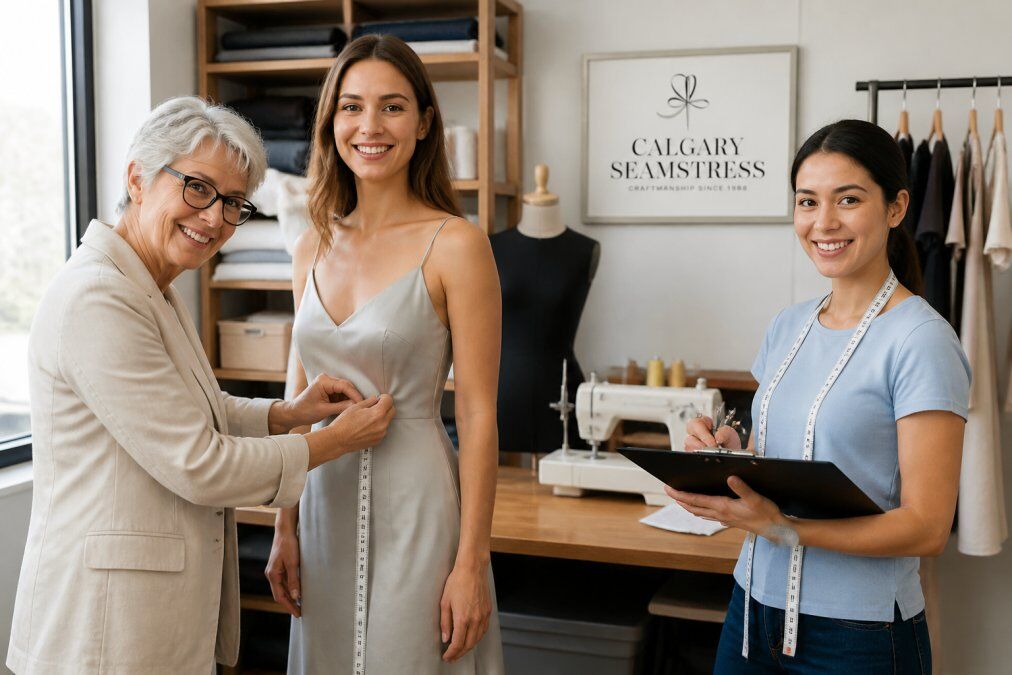
At Calgary Seamstress, we’ve worked with clients who discovered that the real problem was the garment itself. A proper fit transforms how you feel in clothing, you stand taller, move more freely, and project confidence because the fabric works with you instead of against you.
The most common mistake is assuming fit is subjective. It’s not. Fit is measurable. A seam that sits two centimetres off-centre creates visible drag. A sleeve that’s one centimetre too long changes your entire silhouette.
How to Measure for Custom Clothing Accurately
Essential tools and techniques
Taking accurate body measurements is the foundation of successful custom garment fitting. Start with a flexible measuring tape, the kind used in sewing. Measure over undergarments or thin clothing that matches what you’ll wear under the finished garment.
Stand naturally in front of a mirror without sucking in your stomach or pulling your shoulders back. Your tailor needs measurements of your actual body, not your aspirational posture. Have someone else take measurements if possible, as self-measurement often leads to twisted tape and inconsistent numbers.
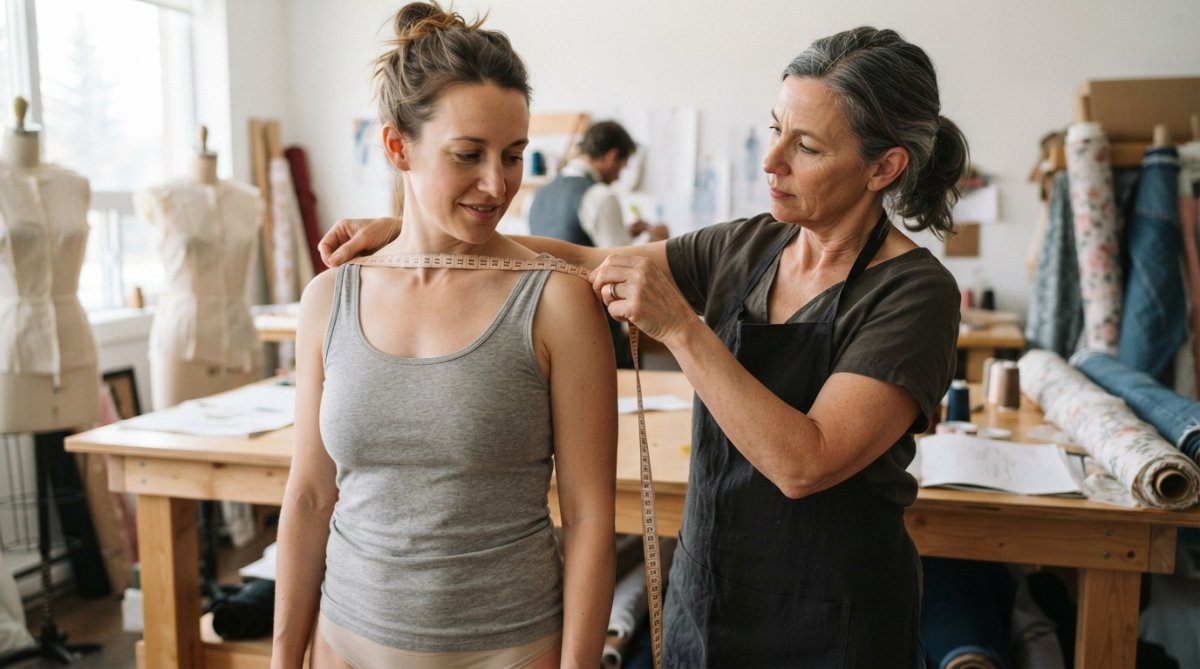
Key measurements for most garments include bust (across the fullest part), waist (at your natural waist line), hip (at the fullest part), shoulder width (from shoulder point to shoulder point), sleeve length (from the back neck down to your wrist), and inseam (from your inner thigh to your ankle). For fitted garments, also measure the armscye (the depth of the armhole) and waist suppression (how much the garment tapers from bust to waist).
Measure twice, record once. A single measurement error compounds through the entire fitting process.
Recording measurements for precision
Record measurements clearly in centimetres to avoid conversion errors. Create a simple table with the measurement name, number, and date. Many tailors ask you to bring a well-fitting garment you already own so they can measure it and compare it to your body measurements. This helps them understand your fit preferences and whether you prefer ease or a more structured silhouette.
Store your measurements somewhere accessible. If you’re working with Calgary Seamstress or another tailor over multiple projects, having consistent measurements on file speeds up each fitting and reduces back-and-forth adjustments.
What to Wear to a Bespoke Fitting Appointment
What you wear to a fitting appointment directly affects how accurately your tailor can assess fit and make adjustments. Wear undergarments similar to what you’ll wear under the finished garment. If you’re fitting a wedding dress, wear the bra and shapewear you plan to use on the day. If you’re fitting a suit jacket, wear a dress shirt and the undershirt you normally pair with suits.
Choose neutral, fitted clothing that lets your tailor see your body’s actual shape. Avoid loose sweaters, baggy t-shirts, or layered outfits that hide your silhouette. Your tailor needs to see how the garment sits on your shoulders, how it drapes at your waist, and whether it follows your body’s natural lines.
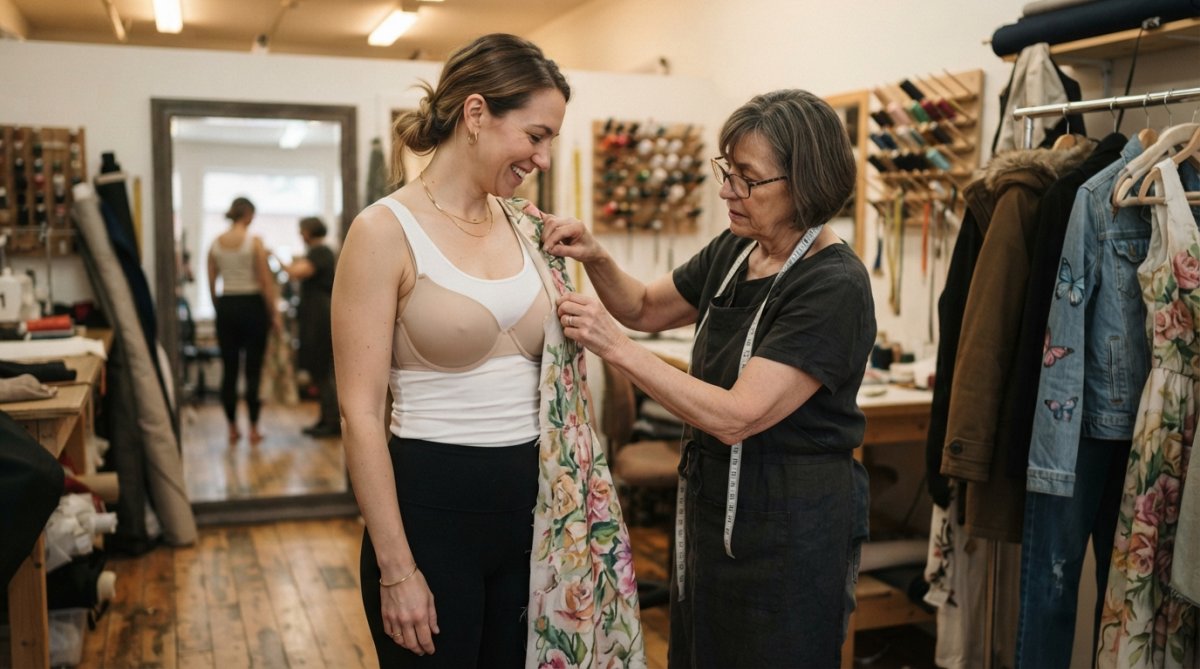
Wear the shoes you’ll wear with the finished garment. Heel height changes your posture and affects how hemlines and jacket lengths should sit. Bring any accessories or jewelry you plan to wear, as a necklace changes how a neckline should sit and a belt affects where your waist measurement should fall.
Avoid fitting appointments on days when you’re bloated, retaining water, or feeling unusually swollen. Schedule fittings when you’re at your baseline normal, and your tailor can make adjustments that work year-round.
How Many Fittings for a Custom Suit and Other Garments
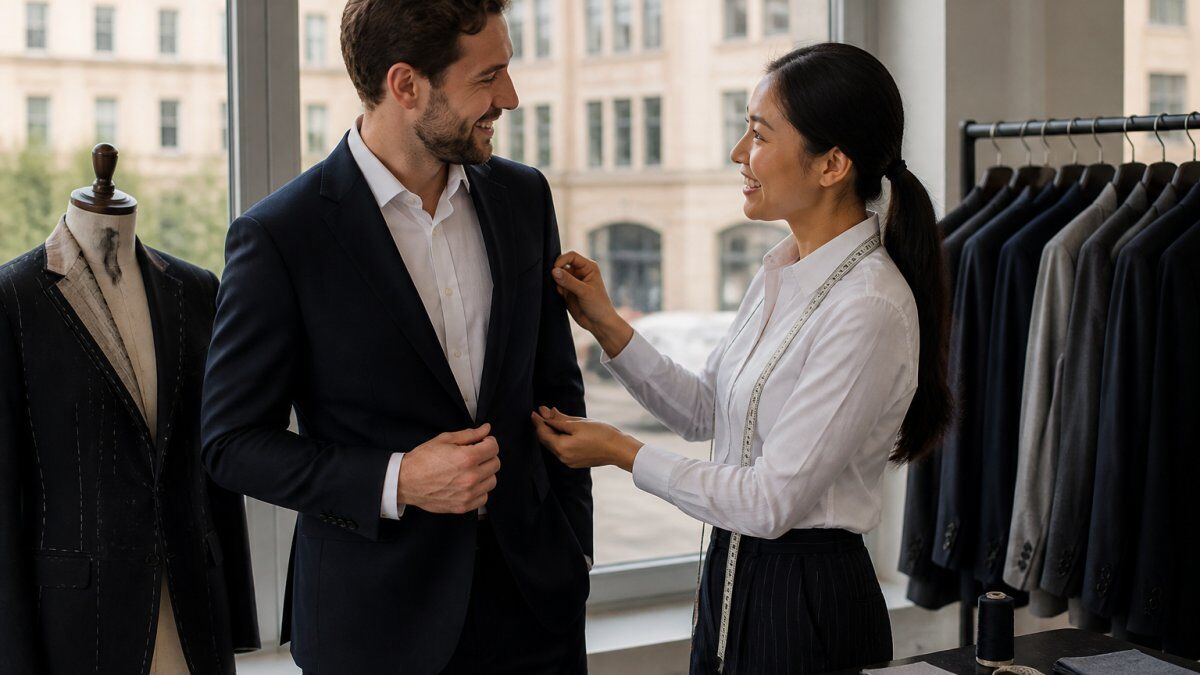
The number of fittings depends on the complexity of the garment and how much adjustment is needed. For a custom suit, expect 2-3 fittings: the first assesses overall silhouette and major adjustments, the second checks those adjustments and identifies fine-tuning needs, and a third handles final details.
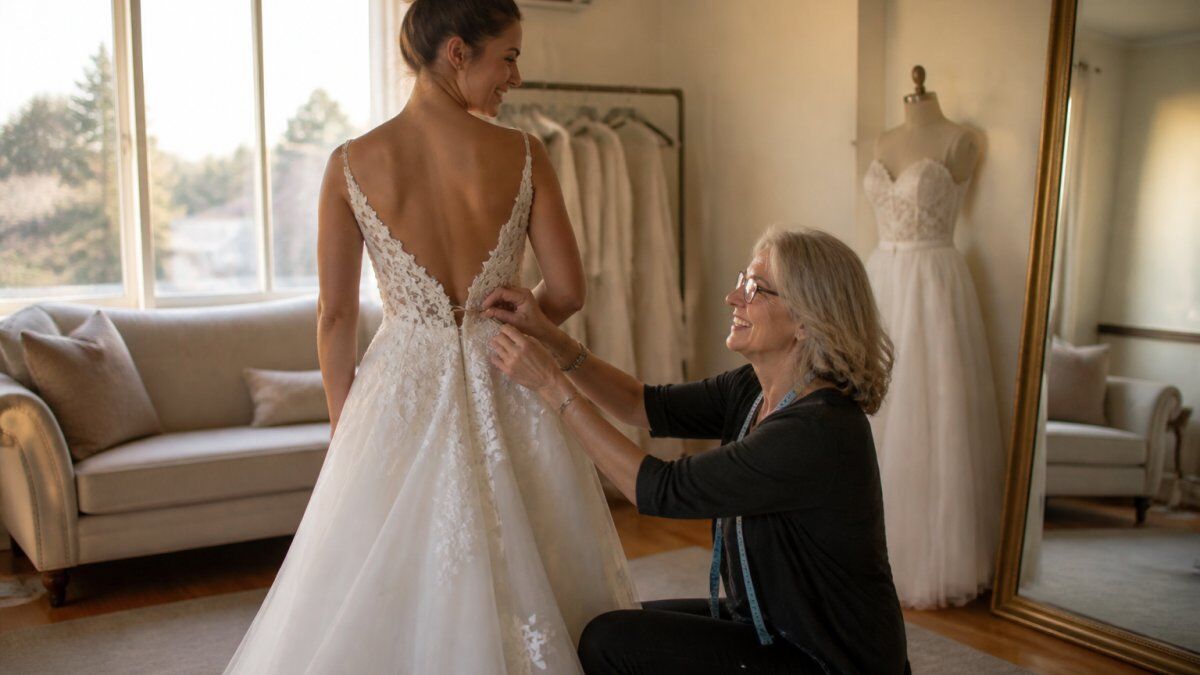
For a wedding dress, many brides need 3-4 fittings to establish basic fit, address bodice and waist details, fine-tune comfort, and do a final confidence check before the wedding. For simpler alterations like hemming pants or adjusting a jacket sleeve, one fitting may be enough. If you’re making multiple changes to the same garment, two fittings give better results.
Brides with complex dress designs or significant fit concerns should plan for 4 fittings to allow time for major adjustments, fine-tuning, and a final check before the big day.
Preparing Your Base Garments for Fitting Success
Your base garments have an enormous impact on how custom garments fit. A well-fitting bra is non-negotiable. If your bra doesn’t support you properly or sits too high or too low, it changes your entire silhouette. For fitting appointments, wear the exact bra you’ll use with the finished garment.
Shapewear, if you use it, should be smooth and supportive without creating visible lines or bulges. If you plan to wear shapewear under your custom piece, wear it to your fitting so your tailor can account for the slight smoothing and shaping it provides.
Slip dresses, camisoles, or undershirts also matter, as they affect how the outer garment drapes. For pants and skirts, wear the underwear style you normally pair with that garment type, as visible panty lines change how a waistband should sit.
Communicating Your Fit Preferences to Your Tailor
Clear communication between you and your tailor is where many custom garment fittings succeed or fail. Be specific about what you want. "I want the waist to sit one centimetre higher and the sleeve to be less puffy at the shoulder" gives your tailor actionable direction. If you have a reference garment that fits the way you want, bring it so your tailor can measure it as a guide.
Describe how you want the garment to feel, not just how it should look. Do you want ease for movement, or do you prefer a close, structured fit? Be honest about your lifestyle and how you’ll actually wear the garment. Ask questions about what’s possible, as some adjustments are straightforward while others require significant reconstruction.
Common Fitting Adjustments and How to Expect Them
Understanding the most common fitting adjustments helps you recognize what your tailor is addressing and why.
Hemming is the most common adjustment. Hemlines need to match your proportions and the shoes you’ll wear. For dress hems, your tailor typically folds the fabric to the desired length and stitches it in place. For jeans, many tailors preserve the original hem by opening the inseam and restitching the original hem at the new length.
Tapering adjusts how fitted a garment is through the torso, arms, or legs. If a jacket is too wide through the chest or a dress is too loose at the waist, your tailor takes in the seams to create a more fitted silhouette.
Dart adjustments shape the garment to follow your body’s contours. If darts point to the wrong place on your body or create unflattering wrinkles, your tailor can reposition or adjust them.
Shoulder adjustments address how the shoulder seam sits on your actual shoulder point. If the seam is too far forward or back, it creates drag lines and an awkward fit. This is a more complex adjustment but transforms how a garment fits.
Sleeve adjustments ensure sleeves end at the right spot on your wrist and that the sleeve opening isn’t too tight or too loose.
Waist suppression adjusts how much the garment tapers from bust to waist. If you have a defined waist, your tailor can increase suppression to emphasize it. If you prefer a straighter silhouette, they can reduce it.
Avoid making multiple major adjustments at once. If a garment needs hemming, tapering, and shoulder adjustments, do the shoulder work first so other adjustments are easier to assess.
Testing Fit with Muslins and Mock-Ups
For custom garment design or complex bespoke projects, testing fit with a muslin, a test garment made from inexpensive fabric, can save time and money. A muslin uses your exact measurements and the same pattern as your final garment, but it’s made from cheap cotton so adjustments can be made without wasting expensive fabric.
You wear the muslin, your tailor assesses fit, marks adjustments directly on the fabric, and then adjusts the pattern before cutting your final garment. Muslins are especially valuable for wedding dresses, formal gowns, or garments in expensive or difficult-to-work-with fabrics. The cost of a muslin, typically one-third to one-half the cost of the finished garment, is worth it for peace of mind and a perfect final fit.
For alterations to existing garments, your tailor may pin or chalk-mark adjustments and have you wear the garment for a few minutes to confirm the fit before making permanent changes. When working with Calgary Seamstress or any professional tailor, ask whether a muslin makes sense for your project.
The difference between a garment that fits and one that fits flawlessly is precision, communication, and patience through the fitting process. Each fitting reveals what works and what needs adjustment. When you work with a tailor who listens to your preferences and has the skill to execute adjustments cleanly, the result is a garment that feels as good as it looks.
At Calgary Seamstress, we specialize in exactly this process. Whether you’re bringing a wedding dress for alterations, designing a custom suit, or adjusting everyday clothing, we combine meticulous craftsmanship with genuine attention to how you want to feel in your clothes. Make an Appointment Online to start your custom garment fitting journey, and discover how the right fit transforms your wardrobe.
Frequently Asked Questions
What should I wear to a custom tailoring appointment?
Wear well-fitting undergarments that match what you'll wear with the finished garment, neutral-colored fitted clothing, and shoes you plan to wear with the piece. Avoid bulky layers, loose clothing, or heavily padded bras, as they distort measurements and prevent your tailor from seeing your true silhouette. This ensures accurate custom garment fitting and realistic expectations for how the final piece will drape on your body.
How many fittings does a custom suit typically require?
Most custom suits require 2-3 fittings: an initial fitting to check pattern adjustments and overall silhouette, a second fitting to refine seam allowances and sleeve length, and sometimes a final fitting for minor tweaks before completion. The exact number depends on the complexity of alterations needed and how closely your measurements align with the base pattern. Your tailor will advise you after the first appointment.
How do I know if a custom garment fits correctly?
A well-fitting garment should feel comfortable without restriction, follow your body's natural lines without pulling or bunching, and allow full range of motion. Check that seams sit where they should (shoulder seams at your shoulder point, armscye curves smoothly), darts point toward your fullest point, and there's appropriate ease for movement. The silhouette should enhance your proportions rather than fight against them, and you should feel confident and supported.
What measurements do I need for custom clothing?
Essential measurements include bust/chest, waist, hips, shoulder width, sleeve length, inseam, and rise (for pants). For dresses, also measure bodice length and total length. For jackets, measure across the back shoulders and jacket length. Always use a soft measuring tape, keep it snug but not tight, and have someone assist you for back measurements. Record each measurement twice to ensure accuracy, as even small variations affect fit in custom garment construction.
Should I use a muslin or mock-up before the final garment?
Yes, especially for complex designs or if you're uncertain about fit. A muslin (test garment made in inexpensive fabric) lets you see how the pattern works on your body and make adjustments before cutting expensive fabric. This is particularly valuable for bespoke pieces, wedding dresses, or garments with intricate details. It catches fit issues early and gives you confidence that the final version will meet your expectations.
What are the most common fitting adjustments?
Common adjustments include hemming (length), tapering (narrowing seams), adjusting darts for proper bust or waist suppression, modifying armscye for sleeve fit, adjusting shoulder slope, and taking in or letting out seams. Waist suppression and dart placement are especially important for achieving the right silhouette. Your tailor will identify which adjustments your body needs based on how the garment drapes and where it pulls or gaps.
This article was written using GrandRanker