Table of Contents
- Can You Tailor a Dress Two Sizes Down?
- Dress Alteration Limitations You Need to Know
- How Long Do Dress Alterations Take?
- Cost of Wedding Dress Alterations in Canada
- When to Buy a Smaller Size vs. Larger Size
- Professional Tailoring vs. DIY Alterations
- Common Mistakes When Altering Wedding Dresses
- Conclusion
Last Updated: August 7, 2026
Can You Tailor a Dress Two Sizes Down?
Yes, you can tailor a dress two sizes down, but success depends heavily on the dress construction, fabric type, and seam allowance. The common "two-size rule" reflects the practical limits of garment alteration when working with fitted pieces like wedding dresses. However, this isn’t a hard ceiling. Some dresses can be altered more dramatically, while others cannot be safely reduced by even one full size.
At Calgary Seamstress, we’ve worked with hundreds of brides navigating this exact question. The reality is more nuanced than the rule suggests. Understanding the actual limitations upfront helps you make smarter buying decisions and set realistic expectations about cost and timeline.
The Two-Size Rule and Why It Exists
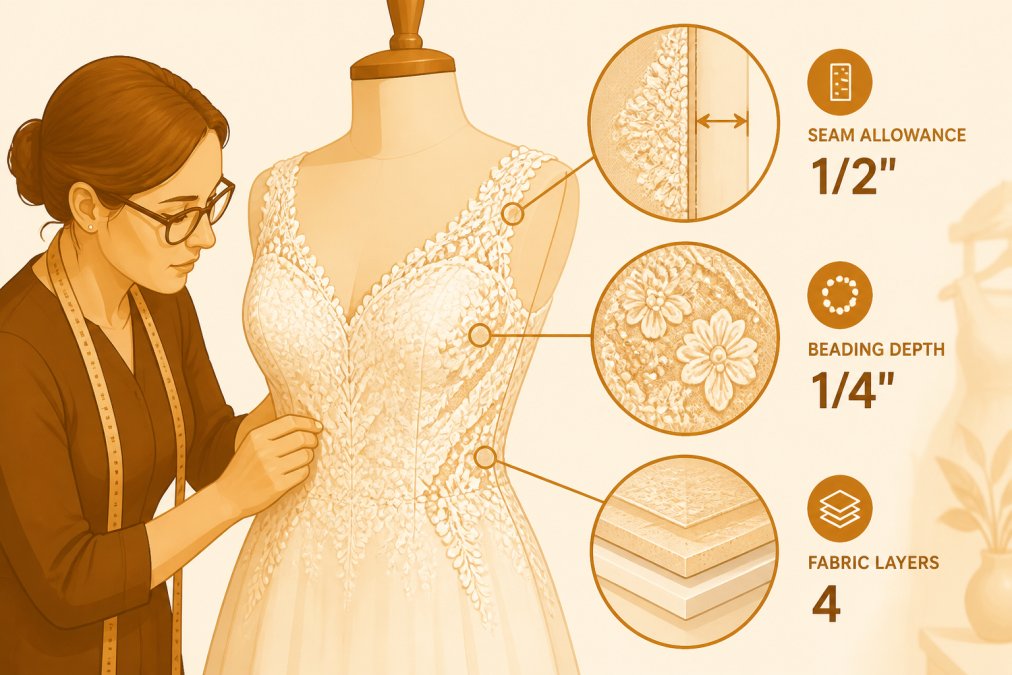
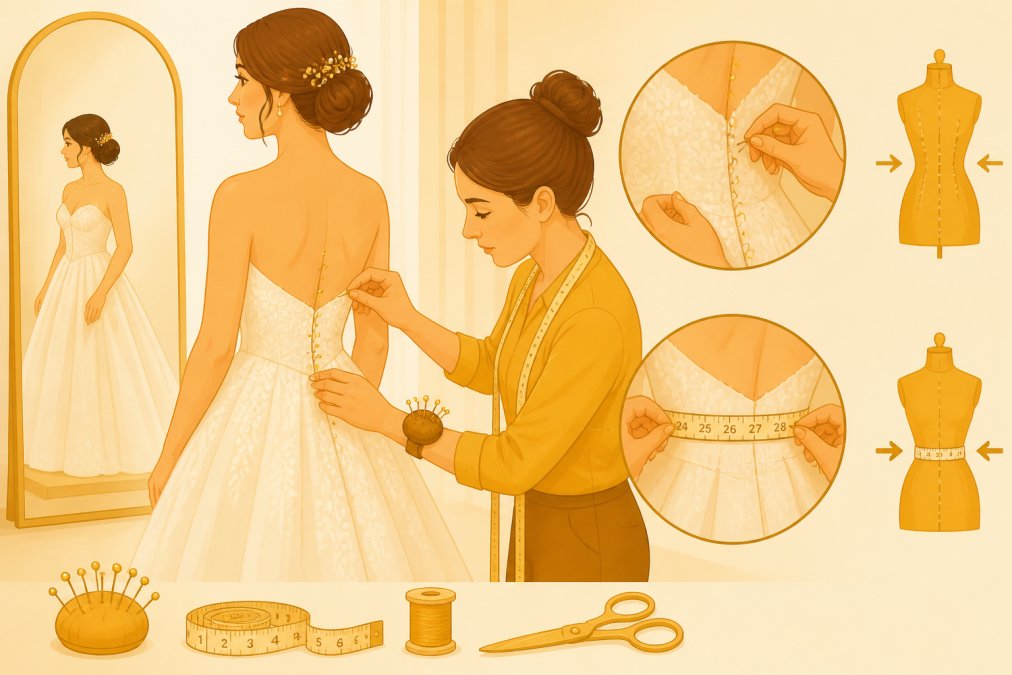
The two-size guideline emerged from decades of tailoring experience. Garment construction assumes a specific amount of fabric in the seams, typically between 1.3 and 3.8 centimeters of seam allowance on each side. When you reduce a dress by two sizes, you’re removing roughly 2.5-5 centimeters of fabric from the side seams, which consumes most or all of that built-in allowance.
A professional tailor can take in a dress by removing fabric from the side seams, darts (the tapered folds that shape the bodice), and sometimes the back seam. Once you’ve used up the seam allowance, you hit a hard limit, there’s nowhere left to stitch without compromising structural integrity.
The two-size rule also accounts for silhouette preservation. A dress designed for a size 12 has proportions engineered for that size. The neckline depth, armhole placement, and bodice length are all calibrated accordingly. When you reduce the dress by two sizes, these proportions shift, and the overall silhouette may feel different from the original designer intent.
The two-size rule assumes a standard dress with typical construction. A heavily beaded gown, a dress with intricate lace overlays, or a garment made from delicate or stretchy fabrics operates under different constraints entirely.
Fabric Type and Seam Allowance Matter Most
The fabric composition of your dress determines how forgiving it is during alterations. Natural fabrics like silk, satin, and linen are predictable and respond well to tailoring. Synthetic blends and stretch fabrics behave differently. A dress with 5-10% elastane (spandex) will pull differently when altered, potentially creating puckering or uneven tension in the seams.
Seam allowance is the hidden variable most brides overlook. A dress with generous seam allowance (3.8 centimeters or more) can be taken in more dramatically than one with minimal allowance (1.3 centimeters). The only way to know your dress’s seam allowance is to have a professional tailor inspect it.
Lace fabrics present a special challenge. If your dress features a lace overlay or all-over lace construction, the pattern must align when seams are moved. Taking in a lace dress by two sizes requires repositioning the lace pattern along the altered seams, a labor-intensive process that can add significantly to your alteration cost.
Dress Alteration Limitations You Need to Know
Taking in a wedding dress by two sizes is possible, but you’ll encounter real constraints that affect both feasibility and cost.
Beading, Lace, and Complex Construction
Heavily embellished dresses cannot be altered the same way as simple satin gowns. When you take in a beaded bodice by two sizes, you’re moving the seams inward, which disrupts the bead placement. A tailor must either remove and reapply beads along the new seam line (extremely time-consuming and expensive) or work around existing beads by adjusting darts and other seams.
Lace overlays demand pattern alignment. Moving the seams shifts where the lace pattern falls on your body. The cost of altering a lace dress is typically 30-50% higher than altering a plain satin dress of the same size reduction.
Dresses with complex construction, multiple layers, structured boning, or integrated shapewear, are harder to take in because the tailor must adjust each layer proportionally.
Structural Integrity and Silhouette Preservation
A wedding dress is engineered as a complete system. The bodice, waistline, and skirt proportions work together to create the intended silhouette. When you reduce a dress by two sizes, you’re compressing that system, and the result can feel off, a neckline that sits differently, an armhole that feels tighter, or a waistline that no longer aligns with your natural proportions.
Professional tailors protect structural integrity by working with darts, side seams, and back seams rather than simply removing width uniformly. However, there are limits. If a dress is designed with a very fitted silhouette and minimal seam allowance, taking it in by two full sizes may require so much manipulation that the dress no longer looks like the original design.
The bodice is the most critical area. If your dress has a fitted, boned bodice, the tailor must adjust the internal structure as well as the outer seams.
How Long Do Dress Alterations Take?
The timeline for wedding dress alterations depends on the complexity of the work and the tailor’s current workload. A simple hem takes 1-2 weeks. Taking in a dress by two sizes requires significantly more time.
For a standard dress alteration involving taking in the side seams and darts, expect 4-8 weeks for a single fitting and completion. This timeline assumes one fitting appointment to assess and pin the dress, initial alterations completed within 3-4 weeks, a second fitting to check fit and make adjustments, and final completion within 1-2 weeks after the second fitting.
Rush services are available but come at a premium cost. Calgary Seamstress offers 24-hour rush service for clients with urgent timelines. However, rush turnaround is typically available for simpler alterations rather than complex work like repositioning beading or restructuring a bodice.
Beaded or heavily embellished dresses take longer, sometimes 8-12 weeks, because the detailed work cannot be rushed without compromising quality. Lace dresses also require extended timelines due to the precision needed for pattern alignment.
Don’t purchase a dress two weeks before your wedding expecting to have it altered. Start the alteration process as soon as you’ve purchased the dress.
Cost of Wedding Dress Alterations in Canada
The cost of altering a wedding dress by two sizes in Canada typically ranges from $300-$800 for a standard gown, depending on the tailor, location, and dress complexity.
Basic alterations, hemming, taking in side seams by one size, adjusting darts, fall at the lower end of this range. A straightforward two-size reduction on a simple satin dress without beading typically costs $400-$600.
Complex alterations cost significantly more. If your dress features beading that must be repositioned, lace that requires pattern alignment, or structural elements like boning that need adjustment, expect to pay $600-$1,000 or more.
Additional factors affecting cost include tailor experience and reputation, dress material, number of fittings, rush service, and geographic location. Urban centers like Calgary may have higher labor costs than smaller towns.
At Calgary Seamstress, we provide transparent pricing after an in-person consultation. Our team assesses your dress’s construction, fabric type, and the specific alterations needed before quoting a final price.
When to Buy a Smaller Size vs. Larger Size
The decision to buy a dress smaller or larger than your current size should be based on the dress’s construction and your confidence in the alteration process.
Buy smaller if:
- The dress is made from stable, non-stretch fabric (silk, satin, cotton blends)
- The dress has generous seam allowance
- The dress has minimal beading or embellishment
- You have at least 8-12 weeks before your wedding
- You’re comfortable investing $400-$800 in alterations
Buy larger if:
- The dress is heavily beaded or features intricate lace
- The dress is made from stretch fabric or delicate material
- The dress has complex construction
- You’re unsure about the exact fit you’ll need
- Your wedding is fewer than 8 weeks away
The risk of buying too small is that the dress cannot be properly altered without compromising quality or exceeding your budget. The risk of buying too large is that letting out a dress is often more difficult and expensive than taking it in, and many dresses don’t have enough seam allowance to let out significantly.
Professional Tailoring vs. DIY Alterations
Taking in a wedding dress is not a DIY project for most people, despite what online tutorials suggest.
Professional tailors have the expertise to assess seam allowance, adjust multiple layers simultaneously, preserve the dress’s silhouette, and handle delicate fabrics without damage. They understand how to work with beading, lace, and complex construction.
DIY alterations on a wedding dress typically result in visible puckering or uneven tension in the seams, disrupted beading or lace patterns, loss of the dress’s original silhouette, seams that fail under stress, or damage to delicate fabrics that cannot be repaired.
For a wedding dress, a garment you’ll wear once and potentially keep as a keepsake, professional tailoring is the only reasonable choice. The cost of professional work is far less than the cost of a ruined dress or the stress of wearing a poorly fitting gown on your wedding day.
Calgary Seamstress specializes in wedding dress alterations because this work demands precision, expertise, and care. Our team understands the emotional significance of your dress and approaches every alteration with meticulous attention.
Common Mistakes When Altering Wedding Dresses
Waiting too long to start alterations: Many brides purchase their dress and wait until a few weeks before the wedding to begin alterations. Start the alteration process as soon as you purchase the dress.
Assuming any tailor can handle wedding dresses: Not all tailors have experience with wedding gowns. When choosing a tailor, ask specifically about their experience with wedding dresses and request to see photos of previous work.
Underestimating the cost: Brides often budget $200-$300 for alterations and are shocked to learn the actual cost is $500-$800. Get a detailed quote before committing.
Not communicating specific concerns: If you’re particular about fit or want the hem at a precise length, tell your tailor explicitly. Bring reference photos and ask questions during fittings.
Attempting alterations yourself: Sewing a simple hem is manageable. Taking in a wedding dress is not. The risk of permanent damage is too high.
Choosing the cheapest option: A tailor who charges $600 for a complex alteration may deliver better results than one who charges $300, because they have the expertise to handle intricate work.
Not planning for multiple fittings: Most alterations require at least two fittings. Budget time for these appointments and understand that alterations are iterative.
Altering a wedding dress by two sizes is achievable, but it requires planning, realistic expectations, and professional expertise. The two-size rule exists because it reflects the practical limits of garment construction, but it’s not a guarantee. Instead, think of it as a guideline that helps you understand when alterations become challenging or expensive.
The best approach is to work with a professional tailor who can inspect your specific dress, assess its construction and seam allowance, and give you an honest answer about what’s possible.
At Calgary Seamstress, we offer a detailed consultation for every wedding dress alteration. Our team examines your dress, discusses your fit goals, and provides transparent pricing and timeline estimates. Contact us to schedule a fitting appointment and get started on the alteration process early, your wedding day will be better for it.
Frequently Asked Questions
How many sizes can you tailor a dress down without ruining it?
Most wedding dresses can be altered down one full size safely, and sometimes two sizes if the seam allowance and fabric type allow it. The limiting factor is seam allowance, the extra fabric inside the seams. If the dress was constructed with minimal seam allowance (common in high-end gowns), taking it in more than one size risks compromising structural integrity. Beaded or heavily embellished dresses face even tighter limits. A professional alteration specialist will assess your specific dress during a fitting appointment to determine what's realistic.
What's the cost of wedding dress alterations in Canada?
Wedding dress alteration costs in Canada vary based on complexity and the extent of work needed. Simple hemming or basic taking-in might start around $150-$300, while major alterations involving multiple seams, bustles, or complex construction can exceed $500. Heavily beaded or lace-overlay dresses cost more because the alteration specialist must work around the embellishments carefully. Request a detailed quote after a fitting appointment so you understand exactly what work is involved and what you'll pay.
Can a dress with beading or lace be altered down two sizes?
Altering a beaded or lace-overlay dress two sizes is extremely difficult and often not recommended. The seamstress must remove beading from seams, take in the garment, then reattach the beading, a labor-intensive process that can damage delicate details. Lace overlays that are sewn to the underlying fabric complicate taking-in work because you cannot simply move the seams without distorting the lace pattern. Most alteration specialists recommend limiting changes to one size maximum for heavily embellished dresses.
How long do wedding dress alterations typically take?
Standard wedding dress alterations usually take 4-8 weeks, depending on complexity and how busy the alteration specialist is. Simple hemming might take 2-3 weeks, while major work involving multiple seams, bustles, or beading can stretch to 8 weeks or longer. If you need alterations urgently, some tailors offer rush services, though these cost more. Plan your alteration timeline carefully, aim to have your dress fitted and alterations started at least 8-10 weeks before your wedding date to allow for fittings and adjustments.
This article was written using GrandRanker