Last Updated: November 2, 2026
Quick Summary
Custom vs ready to wear clothing quality depends on how a garment is made, not on the label. Ready-to-wear is cut to standard sizes, while custom clothing is built to your own measurements, so fit differs most. Judge any garment on seams, lapels, buttonholes, lining and hems.
- Ready-to-wear is cut for an average body in each size, so fit can miss some measurements.
- Custom garments start from your own measurements, which helps shoulder and chest fit.
- Score seams, lapels, buttonholes, lining and hems on both garments using the same checklist.
- Seam allowances decide whether an off-the-rack piece can be altered later.
- Ask for fibre content, weight and care instructions before buying any fall jacket or sweater.
Table of Contents
- Custom vs Ready-to-Wear: What the Terms Mean
- How Fit Differs Between Custom and Ready-to-Wear
- How to Assess Clothing Construction
- Fabric Quality for Fall Jackets and Sweaters
- Clothing Fit and Alterations: What a Good Garment Allows
- Custom Garment Design for Beginners in Calgary
- Booking Your Next Garment Fitting in Calgary
- Frequently Asked Questions
Custom vs Ready-to-Wear: What the Terms Mean
Custom vs ready to wear clothing quality is not the same question as custom clothing quality alone, and most comparisons treat the two as if they were. At Calgary Seamstress, we see clients weigh these options every week, usually when a jacket that looked right on the rack fits poorly in the shoulders. For a side-by-side look at what tailoring and buying new involve in Calgary, see Tailoring vs Buying New Clothes: Cost Analysis for Calgary.
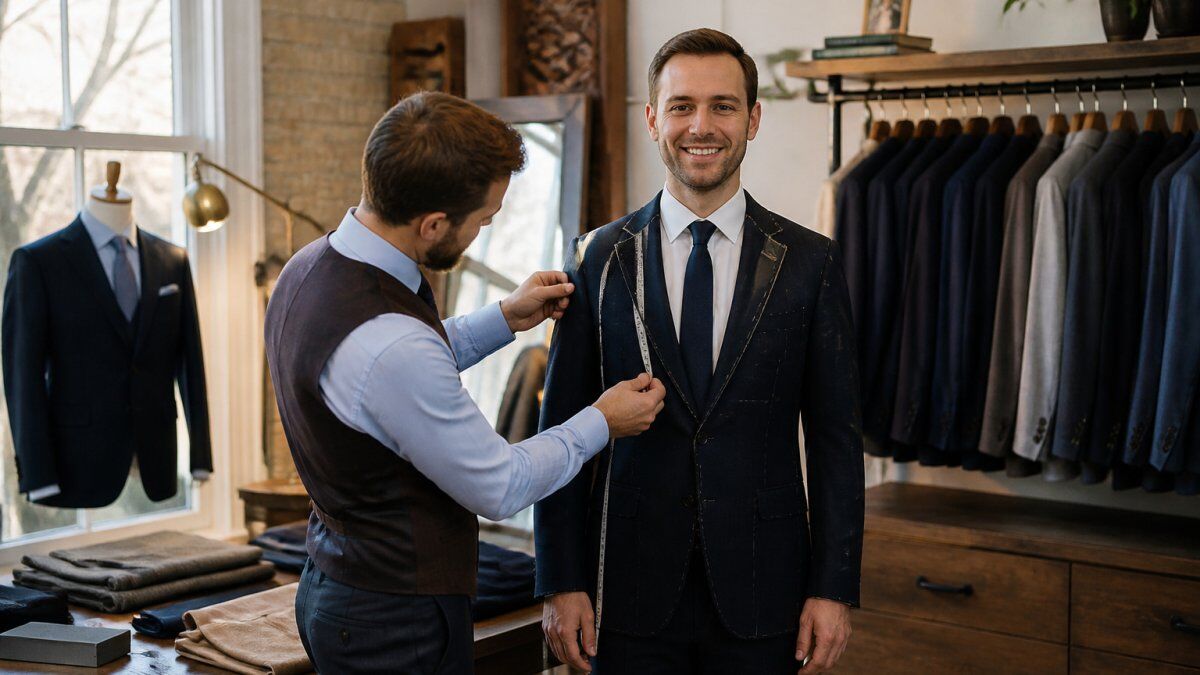
Ready-to-wear, often called RTW, is clothing made in standard sizes and sold as is. Custom clothing is made to your own measurements, sometimes from a pattern drafted for you and sometimes from a design you bring in. To see how custom garment design is applied to tailored pieces, explore that page. Made-to-measure sits in between: a base pattern is adjusted to your body. Bespoke is the most individual route, with a pattern drafted from scratch for one client.
Those definitions matter because custom vs ready to wear clothing quality depends on the method used, not on the label. A ready-to-wear jacket can be well constructed. A custom piece can be poorly made. The categories describe how a garment is sized and produced, not how good it will be. Since production method shapes sizing and construction without guaranteeing quality, learning to spot mass produced clothing can add useful context when judging how a garment was made.
How Fit Differs Between Custom and Ready-to-Wear
Ready-to-wear is cut for an average body in each size. Most people fit some measurements well and others poorly, which is why a jacket can close across the chest and still pull at the sleeves. Custom work starts from your own measurements, so the starting point is different.
Fit affects more than appearance. A shoulder seam that sits off the bone changes how the sleeve hangs and how the jacket moves. Custom garments can be cut to those details. Ready-to-wear can only be altered within limits, and a major change in shoulder or chest fit may not be practical at all. Where a ready-to-wear piece needs changes to length or waist, a service like Jeans / Pants Alterations can handle the smaller adjustments, though shoulder and chest fit usually sit beyond what alterations can reach.
Body shape matters here too. Clients with broad shoulders, a short torso or a long arm often find that standard sizes fit one area and miss another. Custom cutting handles those differences directly, which is one of the clearest advantages of the made-to-measure route.
How to Assess Clothing Construction
Construction is where quality shows, whatever the price or the method. The useful move is to stop comparing labels and start scoring the same features on both garments.
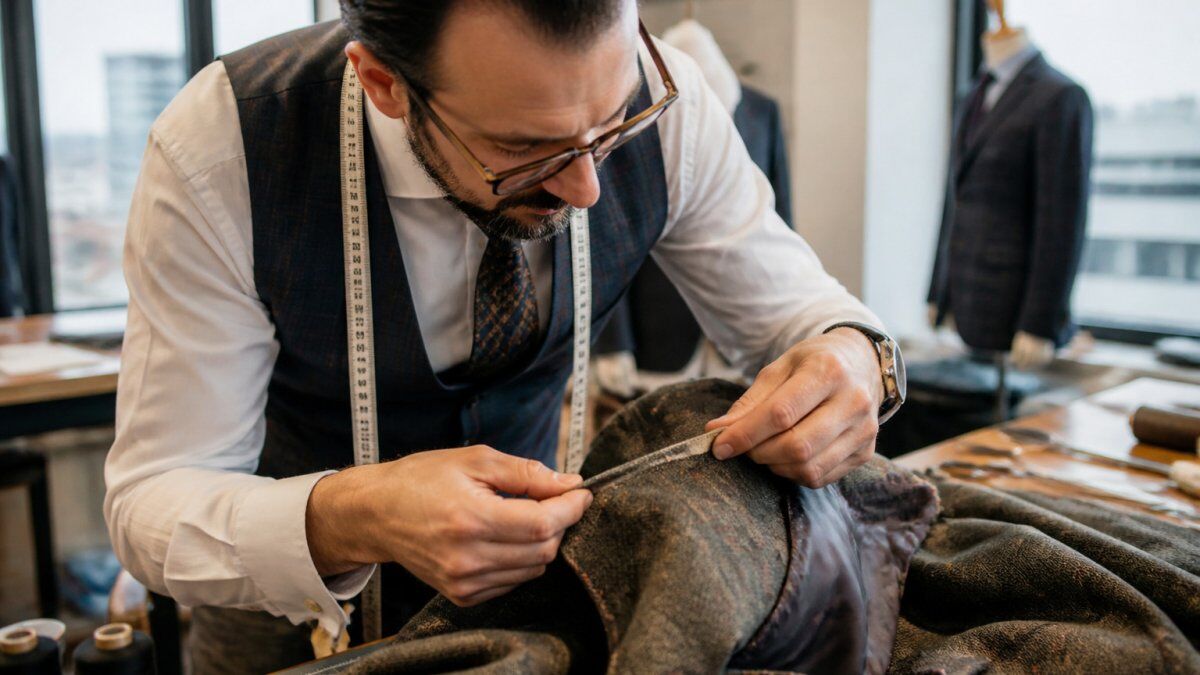
Seams and stitch density. Turn the garment inside out. Look for even stitching with no puckering, skipped stitches, or loose threads, and check that seams lie flat when the garment is at rest.
Lapels, collars, and roll. A lapel should roll smoothly from the break point and sit flat against the chest without bubbling or a hard crease. Press the lapel gently: if it springs back with a soft roll, the interlining is doing its job.
Buttonholes and buttons. Buttonholes should be finished cleanly on both sides, with no raw edges or loose threads inside the slit.
Lining and ease. The lining should be smooth, with enough ease to move comfortably and no visible tension at the seams. A lining cut too tight will pull at the shoulders and shorten the garment’s life.
Hems and finishing. The hem should be even all the way around, with the stitching barely visible from the outside.
A like-for-like scoring method. Hold a ready-to-wear jacket and a custom jacket of similar cloth side by side and score each on the five points above, plus fit at the shoulder and chest. Most people find the gap is smaller than they expected on seams and finishing, and larger on roll, lining ease, and shoulder fit. That is the honest comparison, and it tells you where the extra cost of custom is actually going.
Watch out: a custom garment is not automatically well made. If a maker cannot show you finished examples or explain how seams, linings, and fronts will be built, ask for those details before you commit.
The table below sums up the construction features worth scoring on both custom and ready-to-wear garments.
| Feature | What to check | Why it matters |
|---|---|---|
| Seams and stitch density | Even stitching, no puckering, flat seams | Armhole and side seams take the most stress |
| Lapels and roll | Smooth roll from the break point | Shows whether the front is canvassed or fused |
| Buttonholes and buttons | Clean finish, firmly attached buttons | Buttons on heavy wool need anchoring through the interlining |
| Lining and ease | Smooth lining with enough ease | Tight linings pull at shoulders and shorten life |
| Hems and finishing | Even hem, clean inside finish | Raw edges signal shortcuts in making |
| Like-for-like scoring | Score both garments on the same five points plus shoulder and chest fit | Shows where the extra cost of custom goes |
Fabric Quality for Fall Jackets and Sweaters
Fabric often decides how a fall jacket or sweater performs over several seasons. Wool, cotton blends, and tightly knit synthetics each behave differently in cold, dry or wet weather. A heavier wool holds its shape and blocks wind better. A lightweight blend may look sharp but lose structure after a few washes.
Custom work lets you choose the cloth for the garment’s job, not just its look. Ready-to-wear options are limited to what the manufacturer stocked for that season. In both cases, ask about fibre content, weight and care instructions before buying. Those three details tell you more about durability than the brand name does.
Clothing Fit and Alterations: What a Good Garment Allows
Alterations are a practical test of quality, and they are also where the real cost of a garment shows up over time. A well-constructed ready-to-wear garment can usually be taken in, let out, or shortened within its seam allowances.
Seam allowances are the budget line nobody mentions. A jacket with generous seam allowances can be let out a size or taken in cleanly; a jacket cut close to the pattern has almost no room to move.
Body type and fit outcomes. Clients with broad shoulders, a short torso, a long arm, or asymmetry between left and right often find that standard sizes fit one area and miss another.
Total cost of ownership. Compare the garment price plus the likely alterations, maintenance, and repair over the seasons you expect to wear it. A cheaper coat that needs a new lining after two winters can cost more than a better-built one that needs nothing.
Repairs follow the same logic. A small tear or a broken zipper on a jacket is often easy to fix, and a garment worth keeping is usually worth repairing.
Calgary timing and logistics. Fall is the busiest season for outerwear alterations, so book early if you want a coat ready before the first cold snap.
Watch out: an alteration that looks simple on the hanger can become structural once the lining is opened. Ask the tailor to explain what the change involves before you agree, and get the likely turnaround in writing.
Custom Garment Design for Beginners in Calgary
If you have never commissioned a custom garment, you do not need a finished design to start. Many clients arrive with a photo, a rough sketch or a single detail they like, such as a collar shape or a pocket placement. A good maker turns that into a plan through a fitting conversation.
Calgary’s winters make the choice of fabric and lining especially important for outerwear. Ask how a design will handle wind, snow and the layering you plan to wear underneath. Our team at Calgary Seamstress works through these details with clients before any cutting begins, so the final garment suits the way you will actually wear it. For a tailored jacket built to your measurements, Suit Tailoring is the closest service we offer to that kind of made-to-measure work.
Clients who want a design of their own can start with an original sketch or a style they admire. Submit an original design idea and see how one-of-a-kind garments are built from it. Custom pieces can also be built from a reference you bring in, adapted to your measurements and the fabric you choose.
Booking Your Next Garment Fitting in Calgary
When you are ready to compare options, start with what you need the garment to do. Before booking, read how to choose a tailor for custom garments, including which consultation questions to ask. Note the season, the fabric you prefer and how much you plan to spend. Then ask any maker, custom or ready-to-wear, to show you finished examples and explain how they handle fit and construction.
A fitting is the clearest test. At Calgary Seamstress, fittings are where we check measurements, adjust the pattern and confirm the fabric before the garment is finished. You can book a fitting through our booking page, and we can talk through whether a custom piece or an alteration of something you already own makes the most sense.
Frequently Asked Questions
Is custom clothing better quality than ready-to-wear clothing?
Not automatically. Custom garments are cut to your measurements, which usually gives a better fit, and you can choose the fabric and construction. Ready-to-wear can still be well made, especially at higher price points with sound seams, interlining and finishing. Judge each garment on the same features: stitch density, seam allowances, lining, buttonholes, fabric weight and how it sits on the body. A quality check on both options gives a fair answer for your situation.
What is the difference between custom-made and ready-to-wear clothing?
Ready-to-wear garments are produced in standard sizes and sold as finished pieces. Custom-made garments are cut and sewn to your individual measurements, often after a fitting or two. Custom work allows fabric, lining and design choices that off-the-rack pieces do not offer. Ready-to-wear is faster to buy and usually costs less upfront, while custom work takes longer and costs more but can fit more precisely.
Does custom clothing last longer than ready-to-wear clothing?
Durability depends mainly on fabric weight, construction and care, not on how the garment was sourced. A well-constructed ready-to-wear jacket can outlast a poorly made custom piece. Custom garments do tend to last longer when the maker reinforces stress points and chooses durable fabric. When you compare two options, look at seam strength, reinforcement at pockets and cuffs, and whether the lining and buttons are securely attached.
How can you tell if a ready-to-wear garment is well made?
Check the seams for puckering and even stitch length, look inside at the lining and seam finishes, and test the buttonholes and zippers by working them several times. Pull gently at the seams and pockets to see whether the fabric holds. Check that patterns such as stripes or plaids match at the seams. Fabric should feel substantial rather than thin, and the garment should lie flat and move comfortably when you sit and reach.
Can a tailor make ready-to-wear clothing fit like custom clothing?
A tailor can often bring a ready-to-wear garment close to a custom fit through alterations such as taking in or letting out seams, shortening sleeves and hemming pants. Alterations cannot change the underlying cut or the fabric, so a garment that is badly proportioned for your body may still fit imperfectly. Good candidates for alteration are pieces with sound construction and fabric that can be adjusted without damage.
What should beginners know before designing a custom garment in Calgary?
Bring a clear idea of how you want to wear the garment, along with reference images and a few fabric samples if you have them. Expect at least one fitting, since fit is usually refined in stages. Ask how the maker handles fabric selection, lining and finishing, and what the timeline looks like before you commit. Calgary Seamstress can help beginners work from a rough concept through to a finished garment, and you can book an appointment through the booking page.



0 Comments