Last Updated: November 17, 2026
Quick Summary
The best way to hem sweaters depends on the knit. Check the stitch type, gauge and construction first, then choose a method that keeps the fabric stretchy. Hand blind stitching is the most forgiving for beginners, while a twin needle works well on stable ribbing and medium knits.
- Study the knit on the wrong side to identify stockinette, ribbing, cables or fine gauge.
- Do not cut hand-knit or single-ply sweaters, since the yarn can unravel from the cut edge.
- Keep the ribbed waistband intact if you like its snug fit at the hip.
- Use a loose blind stitch by hand, which takes 45 to 90 minutes for a full sweater.
- Try on the sweater with your planned shoes and pin the new length before cutting.
Table of Contents
- Assessing Your Sweater Knit Before You Hem
- How to Hem a Sweater Without a Sewing Machine
- Sewing a Sweater Knit Hem With a Twin Needle
- How to Hem Fine-Gauge Sweater Knit Without Stretching It
- How to Finish a Curved Sweater Hem
- Comparing Methods by Skill Level and Sweater Type
- Booking Your Sweater Hem at Calgary Seamstress
- Frequently Asked Questions
Assessing Your Sweater Knit Before You Hem
Before you pick up scissors or a needle, look closely at the sweater. If your bulky winter garment needs a sleeve adjustment instead, you can follow this step-by-step sleeve shortening guide. Knowing how to hem sweaters starts with the knit, which decides which hem method will work and which one will ruin the garment.
At Calgary Seamstress, the first thing we check is the knit itself. That habit saves more sweaters than any clever technique does.
Checking Knit Type, Gauge and Construction
Start by identifying the knit. Look at the stitches on the wrong side of the fabric, where the structure is easiest to read.
- Stockinette: smooth V-shaped stitches on the right side, with a tendency to curl at the edges
- Ribbed: alternating columns of knit and purl, which stretch and recover well
- Cable or textured: raised patterns that may be harder to hem evenly
- Fine-gauge: tightly packed, thin knit, often merino or cashmere blends
Gauge matters too. A fine-gauge sweater has more stitches per inch, so a hem that looks neat on a chunky knit can look bulky or puckered on a fine one. Stretch the fabric gently in both directions. If it snaps back, it will usually hem well.
The Stop/Go Test: When Not to Cut a Sweater
Not every sweater should be shortened. Run through this checklist before you cut, because a bad cut on a knit is often irreversible.
Do not cut if any of these apply:
- Hand-knit or single-ply yarn: Hand-knitted sweaters and single-ply garments unravel from a cut edge in a way machine-knit fabric does not. The yarn has no backup structure, so one snip can send a ladder up the entire body.
- Ribbed waistband you want to keep: Cutting through a ribbed hem destroys the recovery that holds the sweater in place at the hip. If the ribbing is the feature you like, shorten above or below it instead of through it.
- Highly textured or cable patterns: Cables and raised stitches do not fold flat. A folded hem will fight the pattern and pucker, and the cut will interrupt the vertical lines of the design.
- Fragile or worn knit near the hem: If the fabric near the bottom edge is thinning, pilling heavily, or already has small holes, cutting removes the stable edge and the damage spreads upward.
- Shaped or decorative bottom edge: A scalloped, split, or shaped hem is a design feature. Cutting it off changes the garment’s silhouette, not just its length.
- Cropped styles designed to sit at a specific point: A cropped sweater is drafted to hit at a set spot on the body. Shortening it further throws off the proportions of the whole garment.
A common pattern: Many sweaters that seem too long only need a different tuck, a different length of ribbing, or a looser fit through the body.
Watch out: If you are unsure whether the knit will unravel, test on the inside of the hem allowance first. Snip a single stitch on the wrong side and tug gently.
How to Hem a Sweater Without a Sewing Machine
Hand hemming is the most forgiving method for a beginner learning how to hem sweaters.
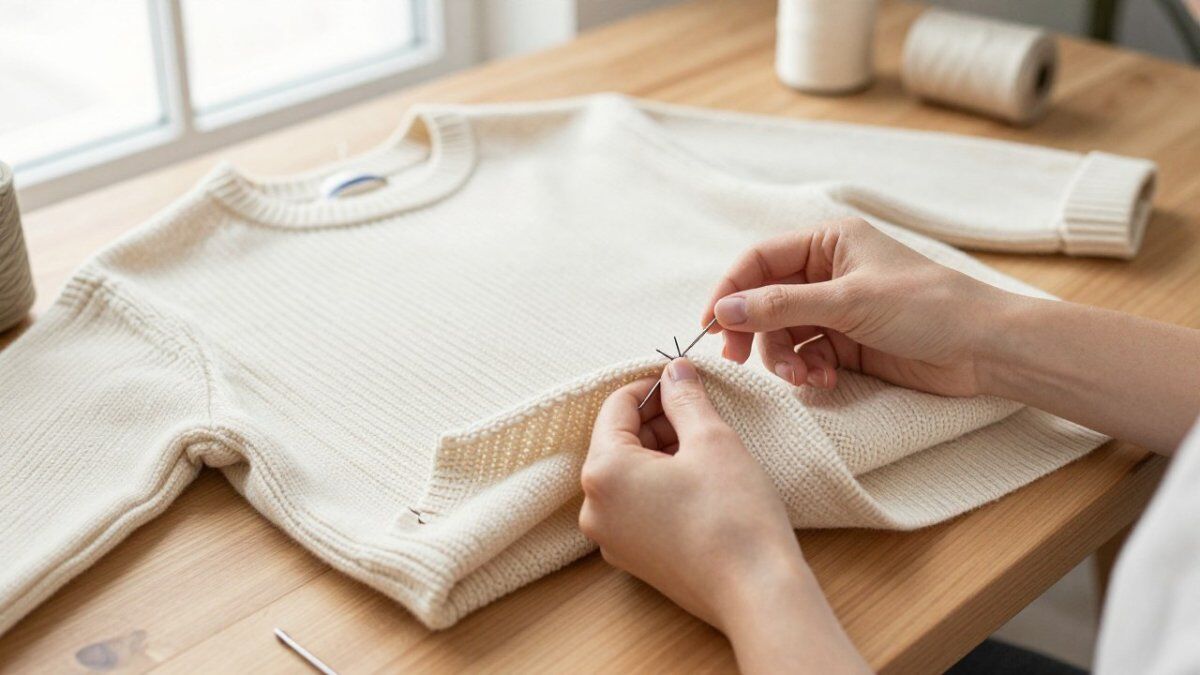
Use a fine needle and matching thread. Work with a blind stitch so the stitches barely show on the outside.
!Hands hand-stitching a folded hem on a cream knit sweater at a bright wooden table in a Calgary home workspace
Basic steps for a hand hem:
- Try the sweater on and mark the desired length with pins or chalk.
- Lay it flat and measure the same distance from the bottom edge all the way around.
- Trim the excess, leaving about 2 cm of extra fabric for the fold.
- Fold the raw edge up and pin it in place.
- Stitch the fold with a loose blind stitch, working slowly around the circle.
- Press lightly with a steam setting if the fabric allows it.
Hand hems take longer than machine hems, often an hour or more for a full sweater. The payoff is a finish that moves with the knit.
Sewing a Sweater Knit Hem With a Twin Needle
A twin needle gives a machine hem that looks professional and keeps some stretch. It works best on stable knits like ribbing and medium-weight stockinette.
Set your machine to a stretch stitch if it has one. Use a twin needle sized for knits, and thread both needles with matching thread.
Test your settings on a scrap of the same knit first. If the seam puckers or the thread snaps, adjust the tension or try a slightly longer stitch length.
How to Hem Fine-Gauge Sweater Knit Without Stretching It
Fine-gauge knits stretch out of shape easily, so handle them gently. Keep the fabric supported on a flat table and avoid pulling it while you sew.
Many sewers find that a narrow, tightly folded hem works best here. A careful hem preserves the sweater’s shape, and Shray Apparel can be a useful next stop when considering cotton knits for everyday wear.
If the knit starts to curl at the edge, a small amount of steam helps it relax before you stitch.
How to Finish a Curved Sweater Hem
Sweaters with a curved hem, such as high-low styles or hems that flare at the sides, need extra care. Curves can pucker if you fold them too tightly.
Clip the seam allowance at small intervals along the curve, cutting only up to the stitching line. This lets the fabric lie flat. Then fold and stitch in short sections, easing the fabric as you go rather than forcing it.
!Close-up of a curved hem being pinned flat on a knit sweater
Comparing Methods by Skill Level and Sweater Type
Choosing the right method depends on your experience and the sweater in front of you. Use this summary to decide, then read the trade-offs below the table, because the table alone will not tell you which method suits a given knit.
| Method | Skill Level | Best For | Time Needed | Main Trade-Off |
|---|---|---|---|---|
| Hand blind stitch | Beginner | Any knit, delicate sweaters, hand-knits | 45 to 90 minutes | Slowest, but most forgiving and keeps stretch |
| Twin needle machine hem | Intermediate | Ribbing, medium-weight stockinette | 20 to 30 minutes | Fast and factory-like, but puckers on fine or unstable knits |
| Narrow folded hem | Intermediate | Fine-gauge knits | 30 to 45 minutes | Neat on thin fabric, but shows every wobble |
| Curved hem finish | Advanced | High-low or flared styles | 45 to 60 minutes | Handles curves, but clipping too far causes holes |
| Serged or overlocked edge | Intermediate | Stable knits, raw-edge styles | 15 to 25 minutes | Fast and clean, but adds bulk and needs a serger |
| Knit-back (re-knitting the edge) | Advanced | Fine-gauge, heirloom, visible hems | 2 hours or more | Most invisible, but slow and easy to drop stitches |
Matching the Method to the Sweater
- Chunky or loose knits: Hand blind stitch or a serged edge. A twin needle will stretch the stitch line and pucker on a loose gauge.
- Fine-gauge merino or cashmere: Narrow folded hem or knit-back. These knits show every needle mark, so a bulky machine hem looks wrong.
- Ribbed waistbands: Twin needle if you are keeping the ribbing; hand stitch if you are reattaching it.
- Cable and textured knits: Hand blind stitch only. Folding a cable flat fights the pattern.
- Curved or high-low hems: Curved hem finish with clipped seam allowance, or hand stitch if the curve is gentle.
Preserving or Recreating the Ribbed Waistband
The ribbed hem is the hardest part of a sweater to replace, so decide early whether you are keeping it.
- Keep it: Shorten above the ribbing and reattach the band, or take in the sides instead of cutting the hem.
- Remove it: Cut above the ribbing, then finish the new raw edge with a folded hem or a knit-back edge. The sweater will lose the snug fit at the hip.
- Recreate it: Only worth it on a valuable sweater. You need matching yarn and a ribber or hand-knitting skill, and the new ribbing rarely matches the original tension exactly.
How Much Length to Remove
Remove only as much length as you need. Cutting too much changes the proportions of the whole garment, especially on a cropped or boxy style. Try the sweater on with the shoes you plan to wear, pin the new length, then measure from the pins to the original hem all the way around. If the difference is more than about 5 cm, check the proportions in a mirror before you cut, because a large removal can make the body look short relative to the sleeves.
DIY Versus Professional
A DIY hem costs you time and a small amount of thread and needles. A professional hem costs more but protects the garment, especially on fine-gauge, hand-knit, or ribbed sweaters where a mistake is permanent.
If you are not sure which method fits your sweater, our team at Calgary Seamstress can look at the knit and recommend the safest route. Pants hemming and alterations are another option when you want a professional finish on a fast timeline, . For urgent deadlines, see our same-day and rush alteration options.
Time needed for a hand blind stitch hem
Booking Your Sweater Hem at Calgary Seamstress
Some sweaters are worth handing to a professional, especially expensive knits, heirloom pieces, or garments with complicated edges.
When you visit, bring the sweater you want shortened and the shoes you plan to wear with it, so we can check the length accurately. You can book your appointment with Calgary Seamstress online.
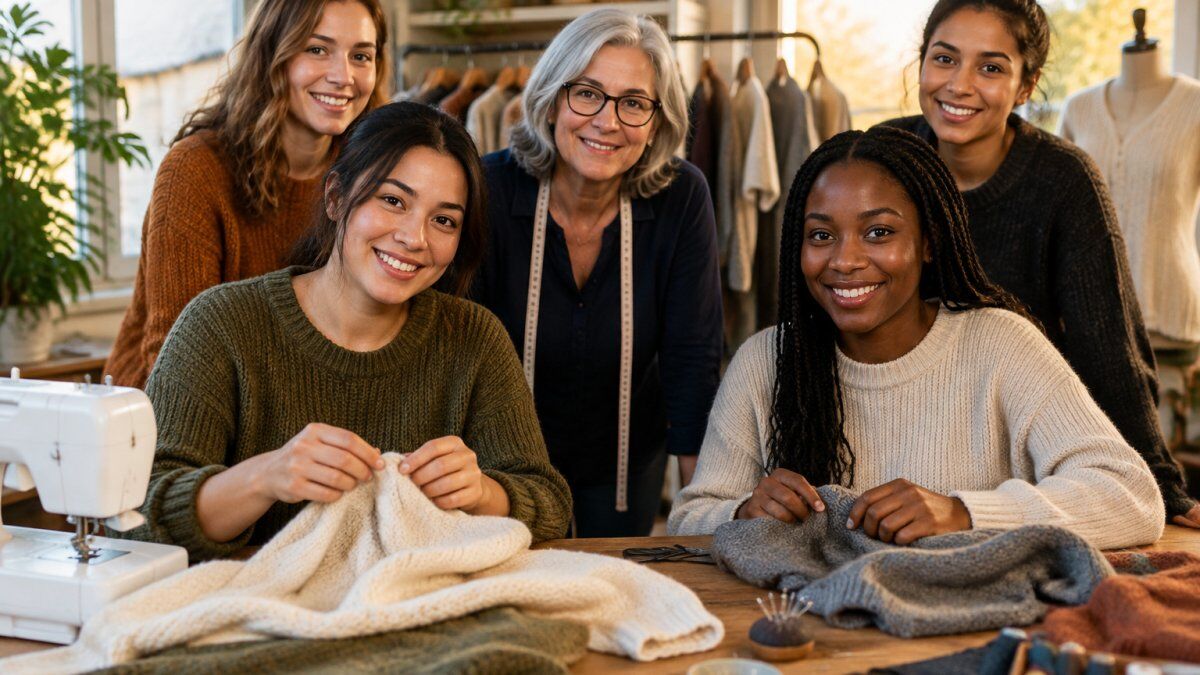
Calgary Seamstress helps local customers get a clean, lasting hem on sweaters, jackets and everyday knits. Our team in Southcentre Mall will check your knit, recommend the right method and handle the work carefully.
Frequently Asked Questions
Can you hem a sweater without a sewing machine?
Yes. Hand stitching works well for most knit sweaters because the stitches can be set with enough give to follow the fabric. Use a fine ballpoint or jersey needle, a thread that matches the sweater, and a loose running stitch or a catch stitch. Fold the hem up to the length you want, pin it evenly all the way around, and check that the sweater lies flat before you start. Hand hemming takes longer than machine hemming, but it lets you control stretch closely, which is useful on delicate or fine-gauge knits.
How do you shorten a knitted sweater without it unraveling?
Cut only after you have marked the new length and confirmed the sweater is the right fit. Before cutting, stabilize the cut line with a line of narrow stitching or a fabric adhesive recommended for knits, so the loops cannot run. Leave enough fabric for a hem allowance, usually more than you think, because the raw edge needs room to be folded and secured. Avoid cutting through ribbing unless you plan to recreate it, since ribbing that is cut without stabilizing will ladder quickly.
What stitch should you use to hem a sweater?
For most sweaters, a twin needle on a sewing machine gives a flexible, professional hem, and a catch stitch works well by hand. A straight stitch tends to snap when the knit stretches, so avoid it on stretchy fabric. Choose a stitch that has some give and match the thread weight to the knit. Test on a scrap of the same sweater fabric first to check how much the stitch pulls the edge before you work on the garment itself.
When should you take a sweater to a professional tailor?
Take a sweater to a professional when the knit is very fine, heavily textured, or hand-knit, since these are difficult to hem without visible stitching. A tailor is also a good choice when the sweater has a shaped or curved hem, a ribbed waistband you want to keep, or a valuable or sentimental piece you cannot afford to damage. Calgary Seamstress offers suit tailoring and jeans and pants alterations, and you can book an appointment online if a DIY attempt feels too risky.