
Last Updated: November 4, 2026
Quick Summary
Care for tailored garments by brushing and airing them after each wear, dry cleaning wool suits only when visibly soiled, and giving each piece at least a day of rest between wears. Store them on wide contoured hangers with breathing room, and book a tailor when seams, lining or buttons need repair.
- Dry clean a wool suit only when visibly soiled, not after every outing.
- Brush tailored garments after each wear, working downward along the fabric nap.
- Give each garment at least a day of rest between wears to let fibers recover.
- Steam a suit jacket by holding the steamer a few centimetres from the fabric.
- Store wool in breathable cotton or canvas bags, never plastic, and inspect mid-season.
Table of Contents
- Start With a Care Routine Built Around Your Tailored Garments
- Dry Cleaning Frequency for Wool Suits: Less Often Than You Think
- Brushing, Airing Out, and Spot Cleaning Between Washes
- Best Hangers for Tailored Suits and How to Store Them
- How to Steam a Suit Jacket Without Damaging the Fabric
- Rotate Your Suits and Protect Them From Calgary’s Dry Air
- Travel Care and Off-Season Storage for Tailored Garments
- When to Book a Professional Tailor for Maintenance
- Frequently Asked Questions
Start With a Care Routine Built Around Your Tailored Garments
Custom tailored garments are clothing pieces cut and sewn to one person’s measurements, and they need a care routine built around their fabric and structure rather than a generic wash-and-wear habit. Adopting a disciplined approach to these preservation techniques is essential to maintain designer clothing and ensures that every investment piece remains a cornerstone of your wardrobe for decades.
Here is the core principle. Wool and other natural fibers clean themselves more than most people expect. They need air, rest and a good brush far more often than they need a cleaner.
Below, we walk through a full maintenance routine for Calgary, AB, from daily habits to seasonal storage.
Government of Canada guide to caring for textile and wool products
Dry Cleaning Frequency for Wool Suits: Less Often Than You Think
Dry clean a wool suit only when it is visibly soiled, not after every outing. Wool is a resilient natural fiber that benefits from rest and airing between wears.
Over-cleaning is a common mistake. The solvents used in dry cleaning strip natural oils from wool over time.
Winter in Calgary makes this worse. Dry air plus repeated cleaning is a rough combination for wool.
Signs a Suit Actually Needs the Cleaner
Let the garment tell you. Clean it when you notice:
- Visible dirt on cuffs, collar or lapels
- Odor that airing out for a day does not fix
- Perspiration marks, especially under the arms or down the back lining
- A spill or stain that spot cleaning cannot lift
A quick sniff test and a look under good light will tell you more than the calendar will.
Brushing, Airing Out, and Spot Cleaning Between Washes
Brushing and airing out are the two habits that replace most trips to the cleaner. Both take minutes and protect fabric integrity.
Brush your tailored garments after each wear with a soft garment brush. Work downward along the fabric nap, from shoulders to hem.
Then hang the suit on a proper hanger in open air for a few hours before it goes back in the closet.
How to Spot-Clean a Stain Without Spreading It
Act fast, blot don’t rub, and work from the outside of the stain inward. Here is the method we recommend:
- Blot the excess with a clean white cloth. Never rub, which pushes the stain deeper.
- Test any cleaning solution on an inside seam or hem first.
- Dab with a cloth dampened in cold water and a drop of mild detergent.
- Work inward from the stain edge so you do not create a ring.
- Blot dry with a clean towel, then air dry away from direct heat.
For grease or oil, blot first, then apply a small amount of cornstarch, let it sit, and brush it away. If the stain is set or large, stop and let a professional handle it. Watch out: rubbing a stain on wool can permanently damage the fabric nap.
Best Hangers for Tailored Suits and How to Store Them
Wide, contoured hangers that match the jacket’s shoulder width are a good choice for tailored suits. Cedar hangers can help the shoulder shape and deter pests.
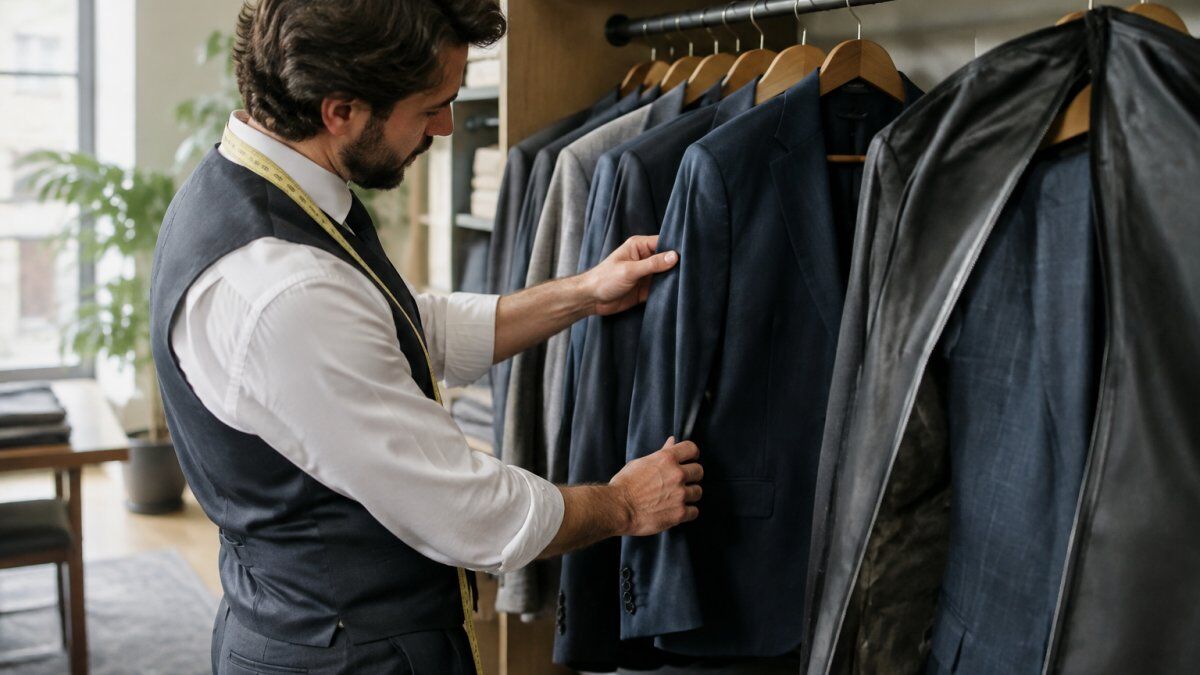
Skip thin wire and plastic hangers. They leave shoulder dents and pull the jacket out of shape over time.
Store suits with breathing room. Cramming them together crushes the fabric and traps moisture. Leave a hand’s width between garments.
How to Steam a Suit Jacket Without Damaging the Fabric
Steam a suit jacket by holding the steamer a few centimetres from the fabric and letting the steam pass through, never pressing the head against the cloth.
Work in sections: shoulders, chest, sleeves, then back. Let the jacket hang and dry fully before you put it away.
A few rules keep steaming safe:
- Check the care label first. Some linings and blends do not tolerate steam well.
- Use distilled water in the steamer to avoid mineral spots.
- Keep the steamer moving. Holding it in one spot can over-wet the fabric.
- Skip the iron on structured areas. Pressing flattens the shoulder shape and can leave a shine.
Understanding how your jacket’s fabric behaves makes this easier. Our guide to choosing the right fabric for a bespoke suit jacket explains which fibers steam well and which need a gentler approach.
Rotate Your Suits and Protect Them From Calgary’s Dry Air
Suit rotation is the simplest longevity habit there is: give each garment at least a day of rest between wears. Rest lets fibers recover their shape and lets moisture escape.
Calgary’s dry air adds a specific challenge. Low humidity in winter pulls moisture from wool, leaving it brittle and more likely to crack at folds. A few adjustments help:
- Keep a humidifier in the room where you store garments.
- Avoid radiators and heat vents. Never store suits against a heat source.
- Condition the air, not the fabric. Do not add moisture directly to wool.
- Brush more often in winter, since dry fibers attract and hold dust.
If you are searching for reliable garment care near me in Calgary, a local tailor who knows the climate is worth the relationship. Our guide on how to find a reliable tailor in Calgary covers what to ask and what to check.
Travel Care and Off-Season Storage for Tailored Garments
Travel and off-season storage are where most tailored garments quietly lose their shape. A little planning prevents both, and the off-season window matters most in Calgary, where jackets and wool sweaters come out of rotation for months at a time.
Packing Tailored Jackets for Travel
For a short trip, the safest method is to carry the jacket in a breathable garment bag and hang it the moment you reach your destination.
A small travel kit earns its space: a soft garment brush, a lint roller, a compact travel steamer, and a clean white cloth for spot blotting.
Packing a jacket while it is still damp from a day of wear can trap moisture against the lining.
Off-Season Storage: What Actually Protects Wool
Before anything goes into storage, it needs to be clean.
Use breathable cotton or canvas garment bags, never plastic. Plastic traps humidity and creates the warm, dark, still environment moths prefer.
Store in a cool, dark, dry space away from exterior walls, which can wick damp in Calgary’s freeze-thaw cycles.
Check stored garments once mid-season. Look for small holes, fine webbing, or a musty smell, all early signs of pests or damp.
Calgary Fall and Winter Rotation
As jackets and sweaters move into heavy rotation from October through March, build a simple rhythm: brush after each wear, air for a few hours before returning to the closet, and give each piece at least a day of rest. When a garment leaves rotation for the season, clean it, bag it, and log the date so you know when to inspect next.
When to Book a Professional Tailor for Maintenance
Most tailored garments fail slowly, not suddenly. The difference between a jacket that lasts a decade and one that lasts three is usually whether small structural problems were caught before they spread. The threshold for booking a tailor is not “when it looks bad”, it is when the structure, not just the surface, is compromised.
The Home-Care vs. Professional-Repair Line
Home care handles surface and shape: brushing, airing, steaming, spot cleaning, and correct hanging. Professional repair begins when the garment’s construction is involved, seams, lining, interlining, buttons, or fit.
Bring a garment in when you notice any of the following:
- Lining wear at the underarm or seat. Lining fails before the outer fabric does. A tear that starts small will spread along the seam and eventually pull the outer fabric out of shape. Re-lining is often a practical option for a tailor, usually less costly than replacing a jacket.
- Loose or missing buttons. A button that pulls free usually signals a worn thread shank or a stress point in the fabric behind it. Reattaching with a proper shank and reinforcing the backing prevents the fabric from tearing at the buttonhole.
- Sagging or stretched shoulders. Often caused by thin wire or plastic hangers over time. A tailor can assess whether the shoulder pad has shifted and whether the jacket can be re-shaped or needs structural work.
- Worn cuffs, collars or elbows. These are the first points to show abrasion. A tailor can sometimes turn a cuff or reinforce the area before it becomes a visible hole.
A Simple Maintenance Calendar
A yearly check-in keeps tailored garments in rotation longer. A practical rhythm for Calgary wearers:
- After each wear: brush, air, and hang on a wide hanger.
- Monthly during heavy season: inspect underarms, cuffs and button threads.
- At the end of fall and winter: a professional once-over before off-season storage, this is when small repairs are cheapest and when stains are freshest.
- Annually: a fit and structure check on your most-worn jackets.
Watch out: a jacket that has been sitting unworn for a season can develop a set crease along the fold line. Do not try to press it out at home, as this can flatten the shoulder.
If you need suit and formalwear maintenance, our team handles suit and formalwear tailoring, from jacket and pant adjustments to vest work. You can also explore suit adjustments in Calgary for precise fitting and repairs. When a garment needs more than a quick fix, our suit tailoring service covers structural repairs and fit corrections, and you can book an appointment online when you are ready to bring it in.
A simple rhythm keeps tailored garments in rotation longer.
| When | What to do |
|---|---|
| After each wear | Brush, air, and hang on a wide hanger |
| Monthly during heavy season | Inspect underarms, cuffs and button threads |
| End of fall and winter | Professional once-over before off-season storage |
| Annually | Fit and structure check on most-worn jackets |
Frequently Asked Questions
How often should I dry clean my custom tailored suit?
Wool suits generally only need dry cleaning when there is visible dirt, a stain, or lingering odor. Dry cleaning frequency for wool suits should stay low because the solvent strips natural oils from the fibers over time. Between cleanings, brush the fabric after each wear, air the suit overnight, and spot-clean small marks right away. If you wear the same suit weekly, build a rotation so each jacket rests for at least a day before wearing it again.
What is the best way to store tailored jackets during the Calgary winter?
Use a breathable garment bag, not plastic, and hang the jacket on a wide wooden or cedar hanger that supports the shoulder shape. Calgary’s winter air is dry, so keep the closet away from heating vents and radiators that can dry out wool fibers. Leave a little space between garments for air circulation. Add cedar blocks to deter moths, and check stored pieces monthly for signs of pests or creasing.
How do I remove wrinkles from custom wool garments without damaging the fabric?
Steam is safer than direct heat for wool. Hang the garment in the bathroom while you shower, or use a handheld steamer held a few centimetres from the fabric, moving steadily. For a suit jacket, steam the lining and shoulders first, then the body, and let it dry flat or on a hanger before wearing. Avoid pressing wool with a hot iron directly; if you must iron, use a damp cloth between the iron and the fabric on low heat.
What are the signs my tailored garment needs professional maintenance?
Watch for puckered seams, worn lining at the underarms, loose buttons, a collapsed shoulder shape, or hems that have started to drop. Persistent wrinkles that steaming will not lift and stains that resist spot cleaning are also signals. Small issues are often easier to address before they become larger repairs.